
Why a 3D Figurine Outperforms a Portrait as a Sympathy Gift for Someone Who Lost Their Labrador
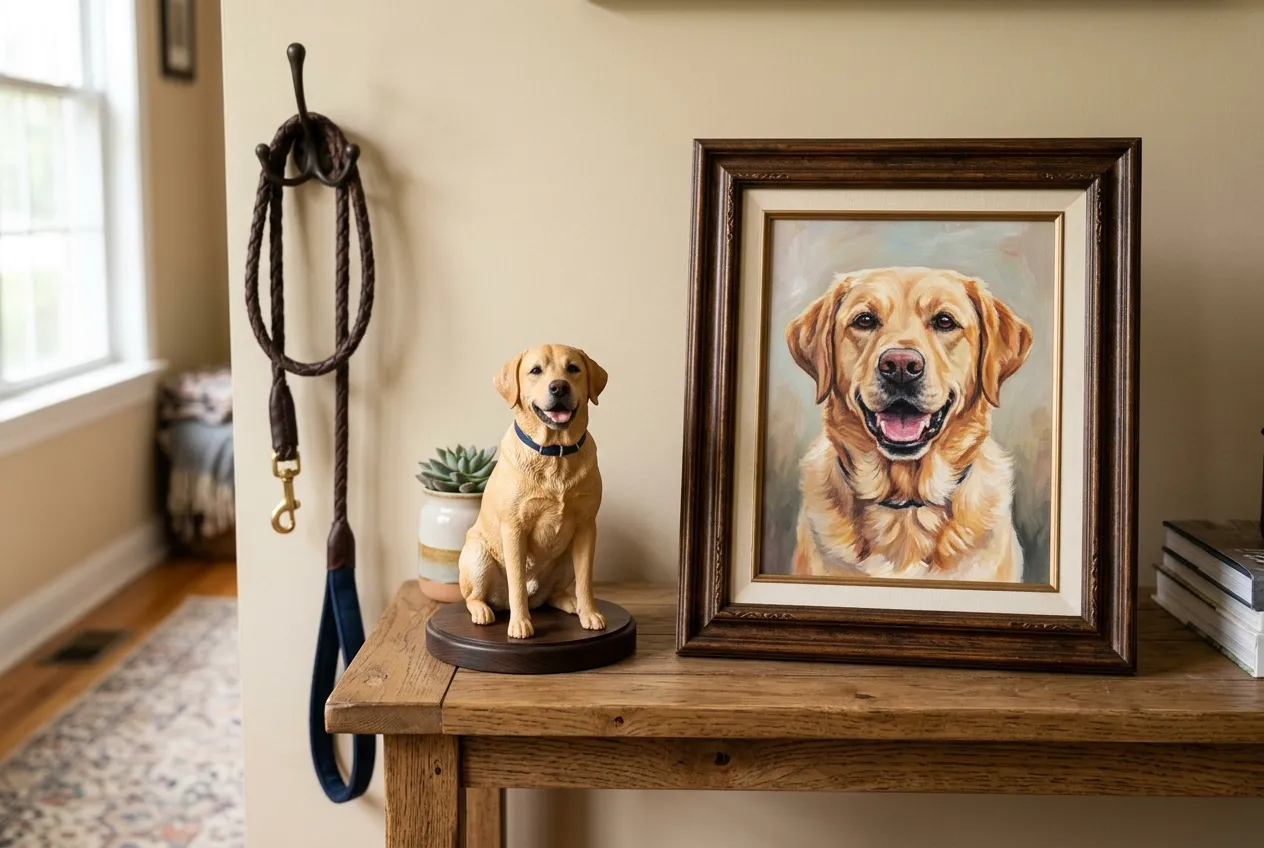
The framed portrait sat on the mantel for three weeks before Sarah realized she'd stopped seeing it. Her eyes would pass right over Charlie's face—that goofy Labrador grin frozen in glossy paper—the way you stop noticing wallpaper. But the figurine her sister sent? She picked it up every morning with her coffee, ran her thumb over the textured fur, felt the weight of him in her palm.
Quick Takeaways
- 3D figurines engage multiple senses — touch and spatial presence trigger deeper memory consolidation than visual-only portraits
- Dimensional objects occupy physical space — creating what psychologists call "continuing bonds" that flat images can't replicate
- Labrador-specific details matter more in sculpture — the breed's muscular build and expressive posture translate better to three dimensions
- Explore custom 3D pet figurines — digitally sculpted and precision-printed to capture your Lab's unique personality
- Grief needs tangible anchors — neuroscience shows physical objects help process loss more effectively than photographs alone
The Neuroscience of Grief and Physical Objects
Here's what most sympathy gift guides miss: your brain processes two-dimensional images and three-dimensional objects through completely different neural pathways. When someone loses their Labrador, they're not just missing what their dog looked like. They're missing the weight of that blocky head resting on their lap. The solid thunk of paws on hardwood. The way Charlie took up space in a room just by existing.
A portrait activates your visual cortex. Full stop.
A figurine? That engages your somatosensory cortex, your spatial reasoning centers, your motor planning regions. You don't just see it—you interact with it. This matters more than most people realize when we're talking about grief processing.
Attachment theory tells us that humans form bonds through repeated physical interaction. You didn't love your Lab because of how he looked in photos. You loved him because of ten thousand small touches—the velvet ears, the cold nose nudges, the way his whole body wiggled when you came home. A three-dimensional object that you can hold, turn over, feel the texture of recreates that tactile relationship in a way a flat image never will.
We've worked with hundreds of families who've lost Labradors specifically. The feedback is consistent: they want to pick something up. They want to feel weight. They want their remaining dog to sniff it, their kids to hold it, their hands to have something to do during those first brutal weeks when muscle memory keeps reaching for a leash that isn't there.
"Grief isn't linear, and neither is memory. The best memorials work in three dimensions."
— The PawSculpt Team
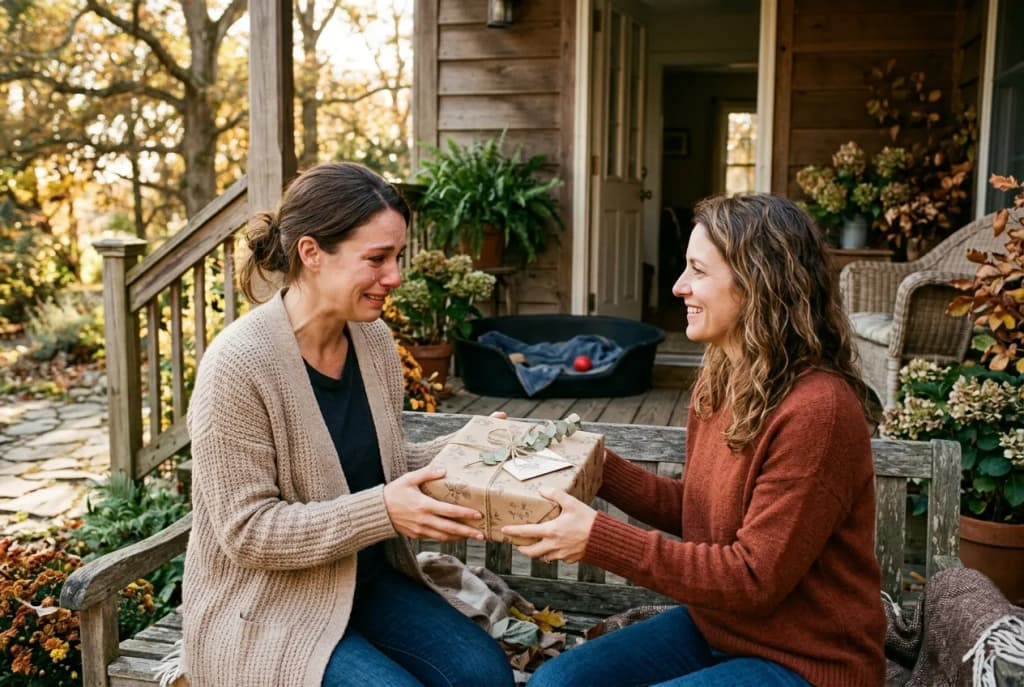
Why Labradors Specifically Benefit from Sculptural Representation
Not all breeds translate equally well to different memorial formats. Labradors—with their distinctive physical presence—actually lose something critical in two-dimensional representation.
Consider the Lab build. That broad chest. The thick, otter tail. The way they sit with their weight shifted slightly forward, always ready to spring up. These are spatial characteristics. A portrait flattens them into a single viewing angle. You lose the stocky proportions, the sense of mass, the three-quarter view that shows how a Lab's head connects to those powerful shoulders.
One family we worked with had a chocolate Lab named Moose—110 pounds of solid muscle and enthusiasm. They'd commissioned a beautiful portrait. Technically perfect. But the mom told us it looked like "any brown Lab." What made Moose Moose was his physical presence. The way he filled a doorway. How you felt him before you saw him.
The figurine captured that. The slight forward lean. The specific angle of his ears (one always flopped funny). The way his tail curved. Suddenly it wasn't "a Lab"—it was their Lab.
Breed-specific considerations for Labradors:
| Physical Trait | Why It Matters in 3D | Lost in 2D |
|---|---|---|
| Otter tail thickness | Defines silhouette from every angle | Appears flat or generic |
| Chest breadth | Creates characteristic stocky profile | Looks narrow from front view |
| Head block shape | Shows breed-specific proportions | Varies wildly by photo angle |
| Paw size | Grounds the figure, shows scale | Often cropped or unclear |
| Coat texture | Labradors have distinctive short, dense fur | Appears as flat color |
The Psychology of "Continuing Bonds" vs. "Letting Go"
Outdated grief counseling used to push "closure" and "moving on." Modern bereavement psychology recognizes something more nuanced: continuing bonds theory. The healthiest grief doesn't erase the relationship—it transforms it.
This is where physical memorials outperform photographs in measurable ways.
A portrait hangs on a wall. It's static. You walk past it. Over time, your brain categorizes it as "background"—the same way you stop consciously seeing your own furniture. Psychologists call this habituation. Your visual system is designed to filter out unchanging stimuli to save processing power.
But an object you can move, hold, place in different locations? That resists habituation. Every interaction is slightly different. You pick up the figurine to dust the shelf. You move it to the windowsill where morning light hits it. Your daughter carries it to her room when she's missing the dog. Each interaction is a small, active choice to engage with the memory.
Here's a scenario that plays out in real homes: It's Tuesday morning. Coffee brewing. You're moving through your kitchen routine on autopilot—the same routine you did a thousand times with your Lab underfoot. Your hand reaches for the figurine on the counter (you moved it there yesterday from the bookshelf). The weight of it, the cool resin under your fingers, the texture of the clear coat—it pulls you present. For thirty seconds, you're not on autopilot. You're remembering the specific weight of Charlie's head. The morning ritual shifts from painful absence to active remembrance.
That's not possible with a portrait. You can't carry a framed print to different rooms. You can't hold it while you cry. You can't let your surviving dog investigate it (and yes, dogs absolutely notice and sniff figurines of their lost packmates—we've heard this dozens of times).
The Practical Realities of Display and Interaction
Let's talk about the unglamorous truth of living with grief memorials. Because this is where dimensional objects prove their worth in ways nobody mentions in sympathy card aisles.
Portraits require wall space and commitment. You hang it, you're done. It's there. If you move it, you've got nail holes to patch. If you're renting, you might not want to put holes in walls at all. If you're in that raw early grief where you can't decide where feels right, a portrait forces a permanent decision you're not ready to make.
A figurine is portable. Forgiving. You can try it on the mantel. Then the bookshelf. Then your nightstand. Then back to the living room. One customer told us she moved her Lab's figurine seven times in the first month—not because she was indecisive, but because different spaces felt right at different times. Morning grief wanted it in the kitchen. Evening grief wanted it by the couch where the dog used to sleep.
Size flexibility matters more than you'd think. A portrait of a 90-pound Labrador is either comically small (loses impact) or dominates a wall (can feel overwhelming when you're raw). Figurines come in sizes that feel proportional to your space. A 6-inch sculpture has presence without demanding attention. You can tuck it on a shelf between books, nestle it among plants, create a small memorial corner that feels intentional but not shrine-like.
And here's something nobody warns you about: grief makes you want to touch things. Your hands need something to do. In the first weeks after loss, people report picking up their pet's collar, holding their favorite toy, running fingers over their bed. A portrait doesn't satisfy that need. A figurine does.
| Memorial Type | Portability | Touch Interaction | Space Flexibility | Multi-Angle Viewing |
|---|---|---|---|---|
| Framed Portrait | Low (wall-mounted) | None (glass barrier) | Fixed location | Single angle only |
| Canvas Print | Medium (leans/hangs) | Minimal (flat surface) | Limited | Single angle only |
| Photo Album | High (stored away) | Page-turning only | Stored, not displayed | Multiple photos |
| 3D Figurine | High (moves freely) | Full tactile engagement | Any surface/room | 360-degree presence |
What Makes a Sympathy Gift Actually Comforting (Not Just Well-Intentioned)
Most sympathy gifts fail a simple test: they require the grieving person to do something. Write in a journal. Plant seeds. Frame photos. Read a book about pet loss. These might be lovely six months later. In week two? They're homework.
The best sympathy gifts are passive comfort. They exist. They require nothing. They're just there when the person is ready.
A portrait requires hanging. Finding the right spot. Getting out the level and hammer. Making a decision about where this memorial will live. For someone barely functioning through grief, that's too much.
A figurine arrives. You take it out of the box. You set it down. Done.
But here's the deeper insight: the best sympathy gifts give the griever control. Grief strips away control. You didn't control when your dog got sick. You maybe didn't control the timing of the end (emergency vs. planned euthanasia). You don't control when waves of sadness hit. A memorial object you can move, hold, put away, bring back out—that returns a tiny bit of agency.
We've heard from customers who put the figurine away for a month because it was too painful. Then brought it back out when they were ready. Try that with a wall portrait. You can't casually un-hang and re-hang a framed piece without it feeling like a whole production.
The gift-giver's perspective matters too. When you're choosing a sympathy gift for someone who lost their Labrador, you're trying to say: "I see your pain. I acknowledge this specific dog mattered. I'm not giving you a generic 'sorry for your loss' gesture."
A portrait requires you to choose the photo. That's presumptuous—what if you pick the wrong one? What if they hate that picture? What if it's not how they want to remember their dog?
A custom figurine created from photos they provide puts them in control. You're giving the gift of the service, the craftsmanship, the final object—but they're directing what it looks like. That's a crucial distinction. You're not imposing your vision of their grief. You're providing a tool for them to memorialize their way.
The Sensory Experience of Remembering
Memory isn't just visual. This is where portraits fundamentally misunderstand how humans process loss and love.
Close your eyes and think about your Labrador. What comes to mind first? For most people, it's not what they looked like. It's how they felt. The weight of their head on your knee. The smoothness of their skull between the ears. The surprising softness of the fur on their chest versus the coarser fur on their back. The solid, warm bulk of them leaning against your leg.
Touch is the most emotionally connected sense. Neuroscience research shows that tactile memories link more directly to the limbic system—your emotional processing center—than visual memories do. This is why a specific texture or temperature can trigger a memory more powerfully than a photograph.
A figurine made from full-color resin 3D printing captures visual details—the exact coat color, the white chest patch, the specific face markings. But it also provides texture. The clear coat over the resin has a subtle smoothness that's pleasant to touch. The three-dimensional form means you feel the curve of the back, the shape of the head, the way the tail connects to the body.
One customer described it perfectly: "I can't pet my dog anymore. But I can hold this. It's not the same, but it's something. My hands needed something."
That's not morbid. That's neurobiology. Your motor cortex has patterns ingrained from years of petting, scratching, touching your dog. Those neural pathways don't disappear when the dog does. A tactile object gives those pathways somewhere to go.
Temperature matters too. Labradors are warm. Solid. When you pick up a figurine, it's cool at first—then warms slightly in your hand. That temperature change is a small sensory experience. It's not trying to replace the dog. It's providing a different kind of comfort—the comfort of an object that responds to your touch, even in that small way.
Compare that to a portrait behind glass. Cold. Flat. Reflective. You see your own reflection as much as you see the image. There's a barrier—literal and psychological.
Why "Lifelike" Matters Less Than "Life-Capturing"
Here's a counterintuitive insight: the goal of a memorial isn't photorealism. It's essence-capturing.
Some people worry that a figurine won't look "exactly like" their dog. They've seen cheap resin statues that look generic. They've seen clay sculptures that are more artistic interpretation than accurate representation. So they default to a portrait—at least that's literally a photo, right?
But here's what we've learned from thousands of orders: people don't want a perfect replica. They want the thing that makes them say "That's him."
For Labradors, that's often about posture and personality more than millimeter-accurate facial features. Labs have distinctive ways of sitting (the "Lab sit" with one hip cocked). They have characteristic head tilts. They have that goofy, open-mouthed smile that's more about energy than exact tooth placement.
A skilled 3D sculptor working from your photos isn't trying to create a museum-quality anatomical model. They're trying to capture what made your Lab your Lab. The slight ear flop. The way the tail curved. The alert-but-relaxed posture. The specific expression you saw a thousand times.
Digital sculpting allows for this in ways traditional art doesn't. The artist can model the figure, send you a digital preview, adjust based on your feedback ("Can you make the ears a bit floppier?" "His tail curved more to the left"), and refine until it clicks. Then that digital model gets 3D printed in full color—the coat patterns, the eye color, the nose pigmentation all printed directly into the resin, voxel by voxel.
The result isn't trying to fool you into thinking your dog is sitting on the shelf. It's trying to trigger that recognition response: "Yes. That's the way he sat. That's his face."
A portrait can be photographically accurate and still feel wrong if the photo captured an off moment, a weird angle, an expression that wasn't characteristic. A figurine built from multiple reference photos can synthesize the most "them" version.
The Conversation-Starter Effect
Grief is isolating. People don't know what to say. They avoid mentioning your dog because they don't want to "remind you" (as if you've forgotten for even five minutes). The result: you end up protecting other people from your grief, which is exhausting.
A figurine on a visible shelf does something a portrait often doesn't: it invites conversation naturally.
When someone visits and sees a framed portrait, they might glance at it. They might not comment—is it weird to bring up the dead dog? Are you supposed to acknowledge it? The social script is unclear.
But a figurine—especially one that's clearly custom-made, clearly high-quality—people ask about it. "Oh, is that your dog? That's so detailed! Where did you get that made?"
Suddenly you have permission to talk about Charlie. To tell the story. To say his name out loud. To share the funny quirks the figurine captures. That's therapeutic in ways grief counselors will tell you matter enormously.
Grief needs witnesses. You need people to acknowledge that this specific being existed and mattered. A figurine that prompts "Tell me about your dog" is doing grief work that a portrait hanging silently on a wall often doesn't.
And for the gift-giver: you're not just giving a memorial. You're giving a tool for storytelling. For keeping the dog's memory active in conversations. For making it easier for the grieving person to share their loss without having to force it into awkward small talk.
The Multi-Generational Memorial Advantage
Here's something people don't think about in the immediate aftermath of loss: how will you remember this dog in five years? Ten years? How will your kids remember the Lab they grew up with?
Photographs fade—literally and figuratively. Digital files get lost in hard drive crashes. Prints yellow. But also, photographic memory fades. In ten years, you'll have a harder time conjuring the three-dimensional reality of your dog from a flat image.
A physical object persists differently. It continues to occupy space. It gets passed down. We've had customers tell us their custom figurine has become a family heirloom—the kids who grew up with that Lab are now adults, and the figurine sits on a shelf in the family home as a tangible link to childhood.
For children specifically, three-dimensional objects create stronger memory anchors. Child development research shows that kids process and remember physical objects more effectively than photographs. A child who lost their childhood dog at age eight will have a clearer, more emotionally connected memory at age twenty if they had a figurine they could hold, rather than just photos they occasionally looked at.
This matters for Labradors especially because they're family dogs. They're in the center of household life. They're in every family memory from a certain era. A figurine becomes a physical marker of that era—"Remember when we had Bailey? Remember how she'd steal socks?"—in a way that's more powerful than scrolling through phone photos.
Cost-Benefit Analysis: Investment vs. Impact
Let's be direct about money, because it matters when you're choosing a sympathy gift.
A quality custom portrait from a pet artist: $150-$400 depending on size and artist. Framing adds another $50-$150. You're looking at $200-$550 for a finished, framed piece.
A custom 3D figurine: pricing varies by size and complexity, but you're in a similar range for a quality piece. (Visit pawsculpt.com for current pricing and options.)
So cost isn't the differentiator. The question is: which delivers more emotional value per dollar?
Consider longevity. A portrait behind glass is fragile. It's susceptible to sun fading. The frame can break. It's awkward to move if the person relocates. A resin figurine is durable. UV-resistant. You can pack it in bubble wrap and move it across the country. It'll look the same in ten years.
Consider versatility. A portrait has one use: wall display. A figurine can sit on a shelf, a desk, a mantel, a nightstand, a memorial garden shelf, a bookcase. It can travel—people have told us they bring their figurine when they scatter ashes, or to the vet's office for a final goodbye, or to a pet loss support group.
Consider the revision process. Most portrait artists work from a single photo you provide. If you don't love the result, revisions are complicated and often cost extra. Digital sculpting with preview approval means you see the figurine before it's made. You can request adjustments. The final product is something you've actively shaped. (Check the specific revision policy when you order—these details vary.)
Here's the uncomfortable truth: some sympathy gifts end up in closets. The recipient appreciates the gesture but doesn't connect with the object. It feels like an obligation to display. With a figurine, we've found the opposite—people actively choose where to put it. They move it around. They interact with it. That's not just better emotional value. That's the gift actually doing its job.
When a Portrait Might Actually Be the Better Choice
Intellectual honesty requires acknowledging when the thing you're advocating for isn't the right answer.
A portrait makes more sense if:
- The recipient has explicitly said they want a portrait (listen to people)
- They have a specific photo they're deeply attached to and want preserved exactly as-is
- They have limited surface space but available wall space
- They're very visual-primary in how they process memory (some people genuinely are)
- They already have figurines of other pets and want variety in their memorial style
- Budget is extremely tight and they have a friend/family member who can create a portrait as a personal gift
A portrait might be easier if:
- You're giving the gift remotely and shipping logistics matter (though figurines ship fine—we do it constantly)
- The recipient is elderly and has established memorial traditions that involve framed photos
- Cultural or religious traditions favor two-dimensional representations
But here's the key: if you're defaulting to a portrait because it's "what people do" or because you haven't considered alternatives, that's worth rethinking. The best sympathy gift is the one that matches how the specific person grieves and remembers.
The Creation Process: What to Expect
If you're considering a custom figurine as a sympathy gift—either for yourself or someone else—understanding the process helps set expectations.
Photo requirements matter. For Labradors specifically, you want:
- Multiple angles (front, side, three-quarter view if possible)
- Clear shots of the face, especially the eyes and expression
- Full-body photos that show proportions and posture
- Photos that capture the dog's characteristic expression (that Lab smile, the alert ear position, the relaxed sit)
- Good lighting that shows coat color and markings accurately
The digital sculpting process starts with a 3D artist studying your photos and building a model in specialized software. This isn't automated—it's a skilled craftsperson making decisions about proportions, expression, posture. They're interpreting two-dimensional photos into three-dimensional form.
You'll typically receive a digital preview. This is crucial. You can see the figurine from all angles before it's made. You can request adjustments. This is where you say "Can you make the tail a bit thicker?" or "His ears were a bit floppier" or "That expression is perfect."
Once approved, the model goes to a full-color 3D printer. This is where the technology gets interesting. Unlike traditional 3D printing that prints in one color and requires painting, full-color resin printing builds the figurine with color embedded in the material itself. The printer deposits resin voxel by voxel (think 3D pixels), mixing colors as it goes. Your Lab's chocolate coat, the lighter chest, the dark nose—all printed directly into the resin.
The only manual step is applying a clear protective coat. This seals the surface, adds a subtle sheen, and protects against UV and handling. It's not paint—it's a clear varnish that lets the printed colors show through while adding durability.
The result has a distinctive look: vibrant color, fine detail, and a subtle texture from the 3D printing process. It's not trying to look like carved wood or molded plastic. It looks like what it is—a high-tech, full-color 3D print. That authenticity is part of the appeal.
For specific timelines, revision policies, and service guarantees, visit the website directly—these details can vary based on current capacity and order volume.
Displaying and Caring for a 3D Memorial Figurine
Once you have the figurine, a few practical considerations help it last and look its best.
Placement options:
- Shelves at eye level create natural interaction (you see it, you pick it up)
- Mantels work well for larger figurines that deserve prominence
- Nightstands or bedside tables for private, personal memorial space
- Desks or workspaces if you want the comfort nearby during the day
- Memorial corners with other pet items (collar, favorite toy, ashes urn)
- Garden shelves or outdoor covered spaces (though direct weather exposure isn't ideal)
Care is minimal:
- Dust with a soft cloth or duster (the clear coat makes this easy)
- Avoid prolonged direct sunlight (UV-resistant doesn't mean UV-proof)
- Handle with clean hands (oils can dull the finish over time)
- If it gets dirty, wipe gently with a barely damp cloth—no harsh chemicals
- The resin is durable but not indestructible—don't drop it on hard surfaces
What to avoid:
- Submerging in water (it's not waterproof)
- Harsh cleaning chemicals (they can damage the clear coat)
- Extreme temperature changes (don't leave it in a hot car)
- Letting it become a dust collector you never touch (defeats the purpose)
The beauty of a figurine is that it's meant to be handled. The clear coat is there specifically so you can pick it up, hold it, move it around without damaging it. Don't treat it like a museum piece. Treat it like what it is—a tool for remembering.
Combining Memorials: The "And" Approach vs. "Or"
Here's a final insight: you don't have to choose just one memorial type.
Many families end up with a small figurine and a favorite photo in a simple frame. Or a figurine and a paw print impression. Or a figurine and a shadow box with the collar and tags. These aren't competing—they're complementary.
The figurine provides the tactile, three-dimensional, interactive element. The photo provides the exact-moment-in-time capture. The collar provides the actual physical object your dog wore. Each serves a different emotional need.
But if you're choosing one sympathy gift—one thing to send to someone in fresh grief—the figurine edges out the portrait for most people because of its versatility and tactile comfort. It doesn't require them to have other memorial pieces already. It doesn't require wall space or framing decisions. It just exists, ready to provide comfort however they need it.
The Unspoken Gift: Permission to Grieve Publicly
The last thing worth saying about memorial gifts—especially for pet loss—is that they do something subtle and important: they validate the grief.
Pet loss is disenfranchised grief. People minimize it. "It was just a dog." "You can get another one." "At least it wasn't a person." The grieving person often feels they need to hide the depth of their pain.
A high-quality, clearly expensive, custom memorial gift says: "This loss is real. This grief is valid. This specific dog mattered enough to memorialize with care and craftsmanship."
That message matters more than the object itself sometimes.
A figurine sitting on a shelf where visitors can see it is a quiet statement: "I'm not hiding this grief. This dog was important. I'm not apologizing for mourning." That's powerful for someone who's been feeling like they need to "get over it" faster than they're ready to.
For Labradors specifically—dogs who are so often family dogs, kid dogs, everyone's-best-friend dogs—the loss reverberates through a whole household. A memorial that's substantial, visible, and clearly custom-made honors the size of that loss. It matches the scale of the grief to the scale of the memorial.
A portrait can do this too. But a three-dimensional object that takes up physical space, that has weight and presence, that can't be ignored or forgotten—that makes the statement more powerfully.
"The best memorials don't let you forget. They help you remember on purpose."
Making the Decision: Questions to Ask
If you're still weighing options, here are the questions that actually matter:
About the recipient:
- Do they tend to touch things when they're emotional, or are they more visual?
- Do they have wall space available, or is surface space more abundant?
- Have they mentioned wanting a specific type of memorial?
- Do they have other pets whose memorials might inform this choice?
- Are they in the "can't look at photos yet" stage or the "want to see their face everywhere" stage?
About the dog:
- Does the breed have distinctive three-dimensional characteristics (like Labs do)?
- Are there specific photos that capture their personality perfectly?
- What physical traits made this dog recognizable—posture, expression, markings?
- What do people remember most—how the dog looked, or how the dog felt/acted?
About the gift:
- Is this a solo gift or a group contribution (affects budget)?
- How soon do you need it? (Custom work takes time—check current timelines)
- Do you want to be involved in the creation process, or prefer a finished surprise?
- Are you comfortable with the recipient providing photos, or do you need to source them?
About long-term value:
- Will this memorial still be meaningful in five years? Ten?
- Can it move with the person if they relocate?
- Does it require maintenance or special care?
- Could it become a family heirloom, or is it more personal/temporary?
The honest answer for most people grieving a Labrador: a three-dimensional figurine checks more boxes than a portrait. But the most important thing is that you're thinking carefully about what will actually comfort this specific person in this specific grief. That thoughtfulness matters more than which option you ultimately choose.
Frequently Asked Questions
How long does grief last after losing a Labrador?
There's no standard timeline, and anyone who tells you otherwise is oversimplifying. Most people experience the most intense grief in the first two to four weeks—the phase where you're still reaching for the leash, still listening for paws on the floor, still expecting them to be there. That acute phase typically softens over six to twelve months, but "softens" doesn't mean "disappears." You'll have good days and ambush days. Labradors form particularly strong bonds because of their temperament and constant presence, so the adjustment period can be longer than with more independent breeds. The grief doesn't follow a schedule. It follows its own path.
What makes a 3D figurine better than a photo for pet memorials?
The neuroscience is clear: multi-sensory engagement creates stronger memory consolidation and emotional processing. A photo activates your visual cortex. A figurine activates visual, tactile, and spatial processing centers. You can hold it, feel the weight, experience the three-dimensional form. This matters because your relationship with your Lab wasn't just visual—it was physical. The figurine also resists habituation (your brain filtering it out as background) because each interaction is slightly different. You move it, dust it, pick it up. That active engagement keeps the memorial emotionally present in ways a static wall portrait often doesn't.
Can I create a figurine if I only have phone photos of my Lab?
Absolutely. Modern phone cameras are more than sufficient for digital sculpting reference. What matters isn't professional photography—it's having multiple angles and clear lighting. A few good phone photos showing your Lab's face from the front, a side profile, and maybe a three-quarter view give the sculptor what they need to capture proportions and expression. The sculptor can work with what you have and ask for specific additional shots if needed during the preview process. Don't let "I don't have professional photos" stop you from considering a figurine.
How do I choose between a portrait and a figurine as a sympathy gift?
Ask yourself: is this person tactile or visual in how they process emotion? Do they pick things up when they're sad, or do they prefer to look at things? Check their space—do they have available wall space or more surface space? Consider timing: are they in the raw stage where they can't look at photos yet, or are they seeking visual reminders? For most people grieving a Labrador, the figurine wins because Labs are such physical-presence dogs. The memorial that lets you hold something, move it around, and interact with it typically provides more comfort than a static image. But if they've specifically mentioned wanting a portrait, listen to that.
Are 3D printed pet figurines durable enough for long-term display?
Yes, and often more durable than framed portraits. Full-color resin with a protective clear coat is UV-resistant, won't fade like photographs, and handles normal household conditions for decades. The resin won't crack or yellow. The clear coat protects against dust, minor handling, and environmental factors. You can move it, pack it carefully for relocation, and it'll look the same years later. Compare that to a framed portrait: glass can break, prints can fade, frames deteriorate. The figurine is meant to be a lasting memorial, not a fragile keepsake you're afraid to touch.
What photos work best for creating a custom Labrador figurine?
You want variety in angles and clarity in details. Ideal photo set: one straight-on face shot showing expression and eye color, one full side profile showing body proportions and tail, and one three-quarter view that shows how the head connects to the body. Good lighting matters more than professional equipment—natural outdoor light or bright indoor light that shows coat color and markings accurately. For Labs specifically, try to capture their characteristic posture (how they sit, their alert expression) and any unique features like ear flop or tail curve. The sculptor can work with imperfect photos, but more reference material means more accuracy in capturing what made your Lab uniquely yours.
Ready to Honor Your Labrador's Memory?
Every Labrador leaves paw prints on our hearts that never fade. Whether you're honoring a beloved companion who's crossed the rainbow bridge or choosing a meaningful sympathy gift for someone navigating pet loss, a custom figurine captures the physical presence and personality that made their Lab irreplaceable.