
5 Pro Tips for Taking the Perfect Photo of Your Wiggly Dog
The squeaky toy is dead. You’ve squeezed the life out of that rubber chicken for twenty minutes straight, your knees are stained with grass, and your Golden Retriever, Bailey, is currently a blur of golden fur exiting the frame at Mach 2. You check your camera roll: forty-seven photos of a tail, six photos of the grass, and one blurry shot of what might be a snout or possibly a very hairy potato. It’s the universal struggle of the modern dog owner—trying to freeze a creature built for motion into a still image that captures their soul, not just their velocity. We see this every single day at PawSculpt. When customers send us reference photos for their custom figurines, they often apologize for the chaos in the background or the slight motion blur, unaware that the "perfect" studio shot often misses the spark that makes their dog theirs.
Quick Takeaways:
Ditch the "Stay" Command: Forced stillness kills personality. Capture them in the split-second pauses between* actions for authentic expressions.
- The "Sound Surprise" Technique: Use bizarre, novel noises (crinkling water bottles, weird mouth sounds) instead of their name to get that head-tilt alertness.
- Lighting is 80% of the Battle: Avoid high noon sun. Look for "catchlights" in the eyes—the white reflection that makes a dog look alive rather than stuffed.
- Get Lower Than You Think: If your chest isn’t touching the ground, you aren’t low enough. The world looks majestic from their eye level, not yours.
- Burst Mode is Your Best Friend: Don't take one photo. Take thirty per second. The difference between a goofy blink and a soulful gaze is milliseconds.
1. Stop Trying to Make Them Sit (The "Reset Button" Method)
Most guides will tell you to master the "stay" command before you pick up a camera. They are wrong.
A dog in a hard "stay" often looks stiff. Their ears pin back slightly in submission, their eyes glaze over waiting for the release word, and their mouth clamps shut. It’s a photo of obedience, not personality. When we’re sculpting a figurine, we look for the spark—the chaotic joy—and you rarely find that in a military-style sit-stay.
Instead, you want to capture the "micro-pause." This is the split second where a dog stops moving to process information. To get this, you need to use what we call the Reset Button Method.
The Micro-Story:
We recently worked with a client whose Terrier, Barnaby, was a literal tornado. Every photo she sent was a blur. She tried holding him still, which just made him look miserable. We told her to stop posing him. Instead, she threw a ball, let him chase it, and right as he turned back to her—breathless and happy—she snapped the shot. That photo, with his tongue lolling and eyes bright with adrenaline, became the blueprint for one of our most dynamic sculptures.
How to execute the Reset:
Let the dog move. Encourage the wiggle. Then, stop engaging. Turn your back or look at your phone. Your dog, confused by the sudden lack of attention, will eventually stop moving and look at you, often with a "Hey, what gives?" expression. That is your moment.
- The "Boomerang" Trick: Throw a treat or toy away from you. As the dog runs to get it and turns back, they are usually moving in a straight line toward the lens. This is easier for autofocus to track than side-to-side movement.
The Physics of the Pause: Dogs have a natural rhythm. Run, stop, sniff, run. Don't shoot the run; shoot the sniff. Or better yet, shoot the moment they lift their head from* the sniff.
The Insider Secret:
High-energy dogs often have a "buffer" period. If you try to take photos the second you walk into the park, you’re fighting 100% battery life. Play fetch for 15 minutes first. You want to hit the sweet spot where they are panting (which looks like a smile) but not exhausted. A slightly tired dog is a photogenic dog.
2. Master the Art of "Catchlights" (It’s All in the Eyes)
You can have perfect composition, a great background, and a sharp focus, but if the eyes look like black holes, the photo will feel dead. This is the single biggest technical error we see in reference photos submitted for custom figurines. Without light in the eyes, we can’t see the depth of the iris or the direction of the gaze.
We’re talking about catchlights—that tiny white reflection of the sky or a window in the upper corner of the pupil. It’s what gives a living creature vitality.
The Micro-Story:
A customer sent us a photo of her black Lab, Shadow. In the photo, Shadow was a silhouette. "He just looks like a void," she wrote. We asked her to move him five feet. Just five feet. She moved him from the center of the living room to facing the open patio door. Suddenly, the "void" had rich, chocolate-brown eyes full of warmth. The dog hadn't changed; the geometry of the light had.
The Counterintuitive Advice:
Don't put the sun behind you. This is Photography 101, right? "Sun over your shoulder." But for dogs, especially squinty ones, direct sun makes them close their eyes or creates harsh shadows under their brow ridge.
Instead, aim for Open Shade.
This is the lighting you find in the shadow of a building or under a large tree on a sunny day. The light is bright but diffused. It eliminates the harsh contrast that confuses smartphone cameras and ensures the dog’s eyes stay wide open.
Technical Specifics for Eye Contact:
The Treat-to-Lens Line: Most people hold the treat above the camera. This makes the dog look over* the viewer's head. Hold the treat directly against the lens barrel or the side of your phone. You want the dog looking into the soul of the camera, not at the sky.
- Dark Dogs Need Overexposure: If you have a black dog, your camera’s light meter will panic. It sees all that black and tries to make it grey. Manually tap your phone screen on the darkest part of the dog’s fur and drag the little sun icon up slightly. Yes, the background might get too bright, but the dog will look glorious.
3. Get Down (No, Lower. Even Lower.)
If there is one hill we will die on, it is this: You are taking photos from too high up.
When you stand and point your camera down at your dog, you are documenting them. You are showing their size relative to the floor. It’s a "human’s eye view." It creates a psychological distance—you are the dominant observer, they are the small subject.
To capture a dog’s personality, you must enter their world. This means the lens needs to be at their eye level or slightly below.
The Micro-Story:
We were crafting a memorial piece for a Corgi named Mochi. The owner had thousands of photos, but in all of them, Mochi looked like a loaf of bread on the floor. Finally, she found one taken by her 4-year-old niece. The niece was sitting on the carpet. In that photo, Mochi looked heroic—chest puffed out, ears tall, looking like a lion surveying his kingdom. That angle changed the narrative from "cute small dog" to "brave companion."
Why Worm's-Eye View Works:
- The Hero Shot: Shooting slightly upward makes the dog look grander and more majestic. It emphasizes the chest and the stature.
- Background Cleanup: When you shoot down, the background is the floor (rugs, shoes, dirt). When you shoot from the ground, the background becomes the distance (trees, sky, a blurred-out street). This depth makes the photo look professional instantly.
The Physical Reality:
Prepare to get dirty. If you are photographing a Chihuahua, you should be lying flat on your stomach. If you’re photographing a Great Dane, you can kneel. A good rule of thumb: If your knees aren't grass-stained or your elbows aren't dusty, you didn't commit to the shot.
Pro Tip for Phone Users:
Turn your phone upside down. The lens on most smartphones is at the top. By flipping the phone so the camera lens is closest to the ground, you gain an extra 4-5 inches of lowness without having to dig a trench. It sounds silly, but it dramatically alters the perspective.
4. The "Sound Surprise" (And Why "Good Boy" Doesn't Work)
You say your dog’s name probably 50 times a day. "Cooper, stop." "Cooper, come." "Cooper, dinner." To Cooper, his name is just background noise. It rarely triggers a photogenic reaction unless you’re holding a steak.
To get that iconic "head tilt"—ears perked, forehead wrinkled in curiosity, mouth slightly closed—you need to make a noise they have never heard before. You need to be weird.
The Micro-Story:
During a photo session for our own studio portfolio, we had a Bulldog who refused to look at the camera. He was interested in a leaf, a bug, his own foot—everything but the lens. The photographer didn't call his name. Instead, she let out a high-pitched, vibrating brrr-ip! sound with her lips. The Bulldog snapped his head up, stared directly at the lens with total bewilderment, and click. We got the shot.
The Audio Toolkit:
- The Crumple: Keep an empty plastic water bottle in your pocket. Crunching it usually gets an immediate, intense stare.
The Squeaker Transplant: Take the squeaker out of an old toy. Keep it in your mouth or taped to your phone. Squeak it only* when you are ready to fire the shutter. If you squeak it too much, they’ll just charge you to get it.
- The Youtube Assist: There are videos on YouTube specifically designed to get dogs' attention—sounds of doorbell chimes, cats meowing, or wolves howling. Play these from a Bluetooth speaker hidden near the camera.
The "One-Shot" Rule:
Novelty expires fast. The first time you make a duck quack noise, you get the head tilt. The second time, you get a glance. The third time, you get ignored. Have a repertoire of sounds ready and rotate through them. Do not spam the same noise.
The Emotion of the Ears:
Watch the ears. Ears forward means engagement and happiness. Ears back can mean fear or submission (though for some breeds like Greyhounds, "rose ears" are standard). Sound surprises almost always bring the ears forward. When we sculpt, ear position is one of the primary ways we convey mood. A dog with ears forward looks ready for adventure.
5. Burst Mode and the "Spray and Pray" Philosophy
In the days of film, every shot cost money. In the digital age, storage is cheap. There is absolutely no reason to take single photos of a moving animal.
Dogs move faster than human reflexes. The difference between a majestic leap and an unflattering grimace is literally 1/100th of a second. If you are trying to time the shutter press to the "perfect moment," you have already missed it.
The Micro-Story:
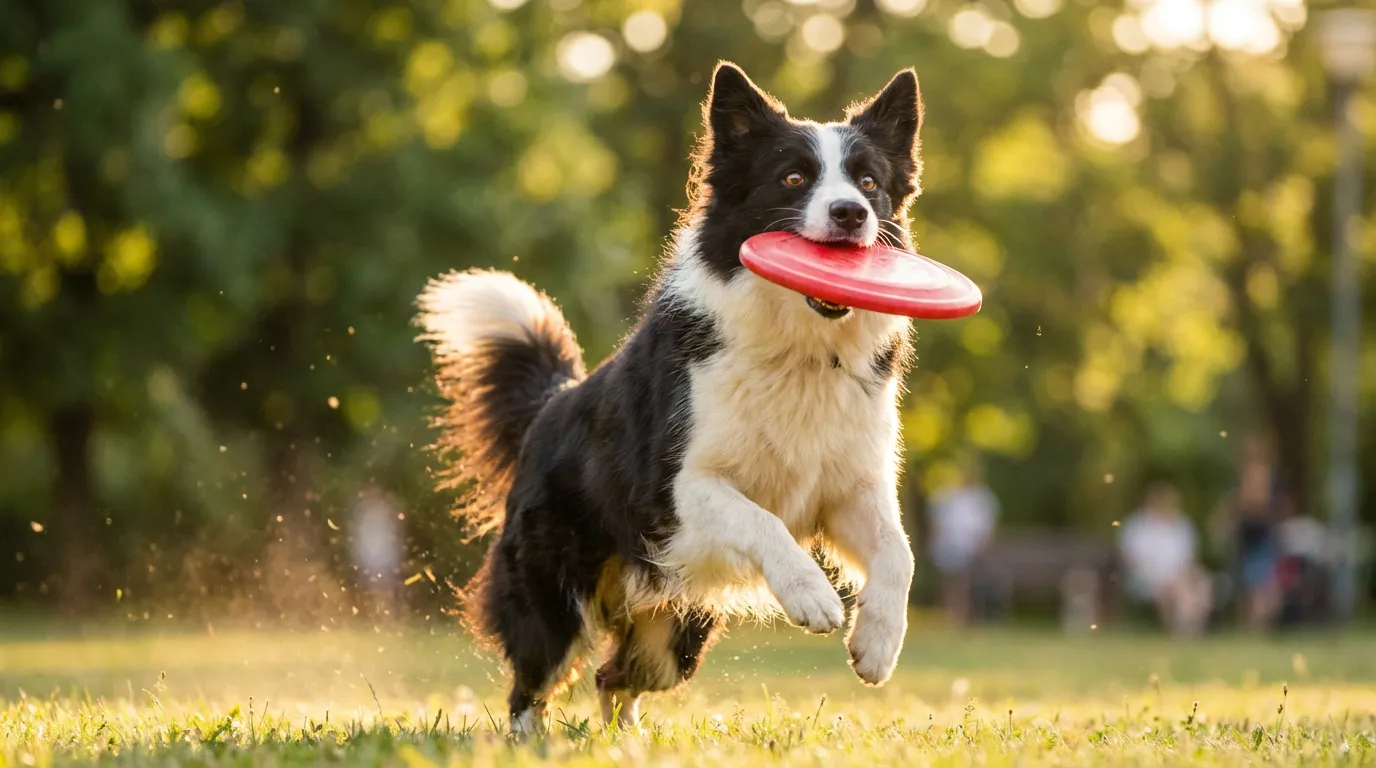
We received a commission for a Border Collie catching a frisbee. The owner sent a "perfect" shot where the dog was mid-air... but his eyes were closed blinking. It was unusable for facial detail. We asked if he had taken it in burst mode. He checked his phone. He hadn't, but he had "Live Photos" on. We were able to scrub through the Live Photo frames and find the split second before the blink where the eyes were laser-focused on the disc. That frame saved the project.
The Technical Setup:
- Shutter Speed is King: If you are using a DSLR or a phone with "Pro Mode," you need a fast shutter speed. 1/1000th of a second is the minimum for a running dog. 1/500th for a walking dog.
- iPhone/Android Burst: Hold down the shutter button (or slide it to the left/up depending on your model) to take a rapid-fire sequence.
- 4K Video Pulls: Here is a trick the pros use. Switch your phone to 4K video at 60 frames per second. Film your dog playing. Later, go through the video frame by frame and take a screenshot of the perfect moment. A 4K screenshot is high enough resolution for social media and usually clear enough for us to use as a sculpting reference.
The "In-Between" Moments:
Burst mode also captures the candid interactions that happen between the poses. The way your dog leans against your leg. The way they shake off water. The way they look at you when they think you aren't paying attention. These are often the photos that make people cry (in a good way) because they capture the relationship, not just the animal.
Why This Matters More Than Likes
We live in a visual culture, and it’s easy to get caught up in taking photos for Instagram likes or family group chats. But at PawSculpt, we view these photos differently. We see them as historical documents of a love story.
A dog’s life is tragically short. We all know this, but we push it to the back of our minds. The photos you take today—the blurry ones, the muddy ones, the ones where they are sleeping in a sunbeam—are the artifacts you will treasure when the leash hangs unused by the door.
Taking the time to get a truly excellent photo isn't about vanity. It’s about preservation. It’s about capturing the specific way their lip got caught on their tooth, or the intelligence behind their eyes, so you never forget the details.
When we create a custom figurine, we aren't just copying a JPEG. We are trying to translate the emotion of that photo into three dimensions. We look for the soul in the pixels. By using these tips—getting low, finding the light, and embracing the chaos—you aren't just taking better pictures. You are honoring the complex, joyful, messy spirit of your best friend.
So, grab the squeaker, lay down in the grass, and let them wiggle. The perfect shot is waiting in the mayhem.
Frequently Asked Questions
What is the best time of day to photograph a black dog?
The "Golden Hour" is your best friend. This is the hour immediately after sunrise or the hour before sunset. The light is horizontal, golden, and soft. For black dogs, this prevents their fur from looking like a flat black blob and allows the camera to pick up texture and shine. Avoid noon at all costs—bright overhead sun will turn a black dog into a shadow and a white dog into a blown-out highlight.Can I take good pet photos with just a smartphone?
Absolutely. In fact, smartphones are sometimes better because they are less intimidating to the dog than a giant DSLR lens that looks like a staring eye. The key is to use "Portrait Mode" to blur the background (simulating a professional aperture) and to clean your lens. 90% of "bad" phone photos are just due to a smudge of finger grease on the lens. Wipe it on your shirt before every session.How do I get my dog to look happy in photos?
A "smile" on a dog is usually a sign of being slightly out of breath. A closed mouth often looks serious or tense. Play fetch for 5-10 minutes before you start shooting. This gets the tongue out and the endorphins flowing. Also, check your own energy. If you are frustrated or shouting "sit," the dog will look worried. If you are laughing and using a high-pitched "baby voice," the dog will look engaged and happy.My dog is afraid of the camera/phone. What do I do?
Desensitization is key. Bring the camera out when you are feeding them or cuddling, but don't take pictures. Just let it be an object in the room associated with good things. When you do start shooting, hold the camera at your hip initially rather than covering your face. Dogs rely on facial cues; when you cover your face with a phone or camera, it can be unsettling for anxious pups.What kind of photos work best for a custom figurine?
For a PawSculpt figurine, we need 360-degree coverage, but the most important shot is the one that captures their "default" expression. We need a photo taken at their eye level (not from above) showing their face clearly. We also love photos that show specific quirks—does one ear flop? Do they have a specific spot pattern on their tail? The more angles you provide, the more accurate the sculpture, but the "soul" comes from that one perfect eye-level portrait.Celebrate Your Pet's Unique Personality
Every pet has quirks and characteristics that make them one-of-a-kind. A custom PawSculpt figurine captures those details—the way they tilt their head, their favorite pose, the spark in their eyes.
Free instant AI preview • 3D artist preview within 7 days • 5 free revisions