
Anticipatory Grief: Loving Your Senior Beagle Through Dementia
When you unclip the leash at the edge of the park—the same park where his nose used to drag him into a frenzy of unseen squirrels and discarded sandwich wrappers—does he just stand there now, staring blankly at the treeline? That specific stillness, where the sturdy, tricolor body of your hound is present but the spark behind those pleading brown eyes has drifted away, is a heartbreak that arrives long before the final goodbye. It’s the cruel paradox of canine cognitive dysfunction (CCD), or dog dementia: mourning a dog who is still breathing at your feet.
For Beagle owners, this shift is particularly jarring. You are used to a dog defined by purpose—a nose that never stops, a bay that rattles windows, and a food motivation that borders on obsession. When those defining traits begin to flicker out, you aren't just dealing with an aging dog; you are dealing with anticipatory grief. You are grieving the loss of his personality while still caring for his body. It is a confusing, exhausting, and deeply lonely place to be.
Quick Takeaways:
- The "Beagle Fade": In scent hounds, dementia often manifests as a disconnection from their nose—they may sniff without processing the scent.
- Anticipatory Grief is Real: You are allowed to grieve the loss of your dog's personality even while they are still alive.
- The 3 AM Guilt: Feeling frustrated by night-pacing or accidents is normal and doesn't negate your love.
- Anchor Memories Now: Don't wait for the end. Capture their "prime" personality with photos or custom figurines while you can still recall the details clearly.
- Routine is Kindness: Shrinking their world (fewer rooms, strict schedules) reduces anxiety for confused seniors.
The Unique Silence of a Beagle with Dementia
We need to talk about the nose. In our experience working with thousands of pet families, we’ve noticed that Beagle owners report a very specific kind of decline that differs from other breeds. A Golden Retriever might lose their desire to fetch; a Border Collie might stop herding. But a Beagle loses their map of the world.
A healthy Beagle lives in a landscape of smells. When dementia sets in, that connection severs. You might notice your dog sniffing the ground, but there’s no enthusiasm behind it. It’s a mechanical action, a muscle memory without the joy of discovery.
The "Ghost Sniffing" Phenomenon
One family described it to us perfectly: "He walks around the backyard with his nose down, but he doesn't track anything anymore. He just walks in circles until he gets stuck in a corner."
This is often the first sign of dog dementia grief setting in for the owner. You realize the "hunter" inside him has retired, leaving a confused senior who doesn't understand why he's outside. Watching this confusion is often more painful than the physical ailments of arthritis or hearing loss because it changes who he is.
The Emotional Rollercoaster: Anger, Relief, and Guilt
Let's be brutally honest about something few people admit in public. Caring for a dog with dementia is incredibly frustrating.
There is a distinct sound that haunts owners of dogs with CCD: the rhythmic click-click-click of nails on hardwood floors at 3:00 AM. Beagles are prone to "sundowning," where their confusion and anxiety spike at night. They pace. They whine. They get stuck behind doors that haven't moved in ten years.
The Secret Thoughts We Don't Share
You might find yourself snapping at him when he urinates on the rug five minutes after coming inside. You might lie awake listening to the pacing, exhausted, thinking, I just want this to be over.And then, immediately, the guilt crushes you.
We want you to know that this cycle—frustration followed by shame—is a standard part of anticipatory pet grief. You aren't a bad owner for feeling angry that your sleep is ruined. You aren't a monster for wondering if euthanasia would bring relief—not just for him, but for you.
The Counterintuitive Truth:
The relief you feel when they finally settle down, or the relief you imagine feeling when the caretaking ends, is not a lack of love. It is a reaction to chronic stress. You are grieving the relationship you used to have, where your dog was a source of comfort, not a source of constant work. Acknowledge the anger. It’s just grief with its teeth bared.
Navigating the "Long Goodbye" with a Scent Hound
When you are in the thick of Beagle end of life care, the standard advice of "cherish every moment" feels impossible. How do you cherish a moment when your dog is staring at a wall?
The key is to adjust your definition of connection. You can no longer connect through complex play or training. You have to connect through simple presence and sensory comfort.
1. Shrink Their World
It seems mean to restrict a dog who used to love roaming, but wide-open spaces are terrifying to a dog with dementia.- The Strategy: Use baby gates to limit him to one or two safe, carpeted rooms.
- Why it works: Less space means fewer choices to make. Fewer choices mean less anxiety. A smaller world feels safer to a confused mind.
2. The "Smell" Therapy
Even if the brain isn't processing scents perfectly, the nose is still a direct line to the comfort centers of the brain.- The Strategy: Instead of long walks, bring the outside in. Bring in a pinecone, a handful of dried leaves, or a new treat.
- Why it works: It provides mental stimulation without the physical disorientation of leaving the house.
3. Touch Anchoring
Dementia often causes a loss of body awareness. Your Beagle might feel like he's floating or untethered.- The Strategy: Firm, rhythmic petting or brushing. Not light tickles, but steady strokes down the back.
- Why it works: It physically grounds them. Many owners report that their pacing Beagles will stop and sigh if they just sit on the floor and maintain firm physical contact for ten minutes.
Preserving the "Real" Him Before the End
One of the hardest parts of anticipatory grief is the fear that the last memories—the confusion, the accidents, the cloudy eyes—will overwrite the decade of happy memories that came before. You worry that when you look back, you’ll only see the sick dog, not the vibrant companion.
This is why we strongly advocate for memorializing your pet before they pass. It sounds backward, but it’s actually a way to reclaim the narrative of their life.
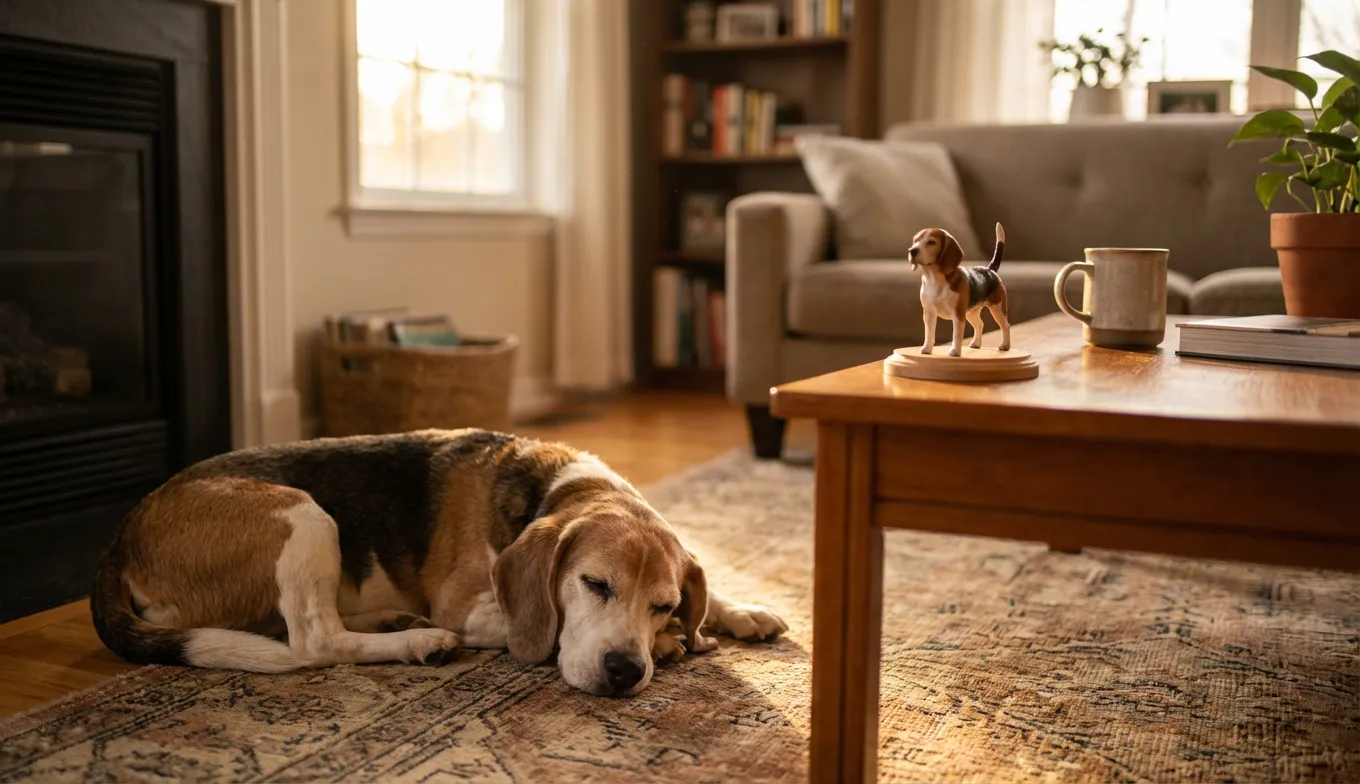
We’ve worked with countless families who send us photos not of their senior dog in decline, but of their Beagle in his prime—mid-howl, ears flying in the wind, or giving that signature "I'm starving to death" look despite having just eaten. Creating a physical anchor, like a custom figurine, serves as a reminder of the dog's true spirit.
It helps you separate the disease from the dog. When you look at a tangible representation of him at his best, it’s easier to remember, This is who he is. The dementia is just what’s happening to him. It helps you advocate for him as he was, rather than just managing him as he is.
When Is It Time? The Beagle Barometer
With physical ailments like cancer, the signs are often clear (pain, lack of mobility). With dementia, the dog is often physically healthy but mentally gone. This makes the decision agonizing.
For Beagles specifically, look at the Food Drive.
Beagles are legendary for their stomachs. A Beagle who refuses a treat is shouting that something is wrong. However, with dementia, they might eat voraciously but forget they’ve eaten.
The "Joy Threshold" Test:
Don't just ask "Is he suffering?" Ask "Is he present?"
- Does he recognize you when you come home, or does it take him a minute to realize who you are?
- Does he seek comfort from you when he's anxious, or does he pull away?
- Is his tail tucking more often than it's wagging?
If the "spark" is gone more than 50% of the time—if he is merely existing rather than living—it may be time to give him the final gift of peace.
Closing Thoughts: The Bravest Love
Loving a senior Beagle through dementia is a quiet, grueling bravery. There are no medals for cleaning up messes at dawn. There is no applause for sitting on the floor with a dog who doesn't quite know why you're there.
But know this: He knows you are safe. Even through the fog of cognitive decline, your scent is the one constant in his crumbling world. You are his anchor.
When the time finally comes to let go, the silence in the house will be deafening. You will miss the clicking nails. You might even miss the caretaking, because it gave you a purpose. But eventually, that heavy fog of anticipatory grief will lift. You will look at a photo, or a keepsake on your shelf, and you won't see the confused senior at the park. You will see your hound—nose to the ground, tail high like a flag, chasing a scent that goes on forever.
Frequently Asked Questions
What are the first signs of dementia in Beagles?
While every dog is different, Beagles often show specific signs related to their senses. You might notice "ghost sniffing" where they sniff the ground without actually tracking a scent, or getting "stuck" in corners of the yard. Other universal signs include disrupting sleep cycles (sleeping all day, pacing all night), staring blankly at walls, and accidents in the house despite being housetrained.How long can a dog live with canine cognitive dysfunction?
There is no set timeline. Some dogs can live with mild symptoms for 18 to 24 months, while others may decline rapidly over a period of weeks. The progression often depends on whether there are concurrent physical issues. The goal isn't necessarily to extend time, but to maintain comfort during the time they have left.Is it normal to feel annoyed with my senior dog?
Yes. We cannot stress this enough: caregiver fatigue is real. When you are sleep-deprived from a dog pacing at 3 AM, or cleaning up the third mess of the day, frustration is a biological response. It does not negate the years of love you have given them. Forgive yourself for these feelings; they are part of the grieving process.How do I create a safe space for a Beagle with dementia?
Think of it as "puppy-proofing" in reverse. Use baby gates to block off stairs and slippery tile floors where they might fall or panic. Keep their world small—limit them to one or two rooms where their bed, water, and food are easily accessible. Nightlights can also help reduce anxiety for dogs who get confused in the dark.How can I remember my dog before the dementia took over?
It is vital to anchor your memories in their "prime" years rather than their final months. Look through photos from 3-4 years ago. Many of the families we work with choose to commission custom pet figurines or portraits based on these earlier photos. Having a physical representation of your dog looking happy, healthy, and alert can help heal the trauma of watching their decline.Honor Their Memory Forever
Your pet's story deserves to be preserved in a way that captures their unique spirit. A custom PawSculpt figurine transforms your cherished memories into a timeless keepsake—every whisker, every marking, every detail that made them irreplaceable.
Free instant AI preview • 3D artist preview within 7 days • 5 free revisions