
Why a Gift Card is an Insult to a Grieving British Shorthair Owner
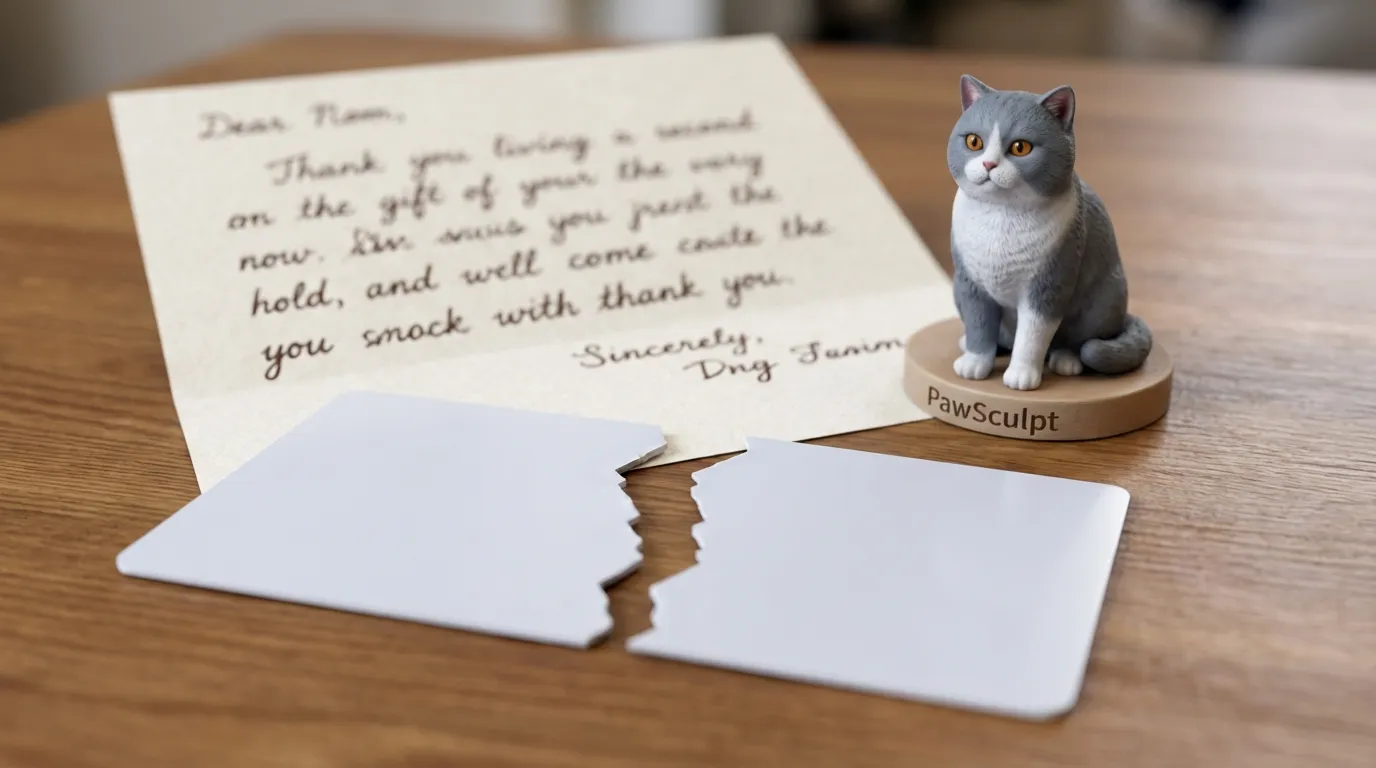
Last month, the bottom left corner of the duvet was permanently depressed by twelve pounds of plush blue-grey fur. Today, the fabric is smooth, cold, and insults you with its perfect, undisturbed flatness. The visual absence of that specific, sturdy shape hits harder than the silence itself.
Quick Takeaways
- Transactional gifts trigger cognitive dissonance — money suggests the loss has a finite market value, clashing with emotional reality.
- British Shorthair owners grieve differently — the breed’s "architectural" presence leaves a uniquely heavy void in the home’s spatial dynamic.
- Validation outweighs distraction — acknowledge the specific personality traits of the cat, not just the generic concept of pet loss.
- Tangible memorials anchor drifting memories — physical tributes like custom 3D figurines provide necessary sensory grounding for the grieving brain.
The Neurochemistry of the "Easy" Gift
When a friend loses a British Shorthair—a breed renowned for its stoic, constant presence—our instinct is to fix the pain. We want to offer a dopamine hit to counteract the cortisol flooding their system. Often, this results in a gift card. A coffee shop voucher. An Amazon credit.
From a psychological perspective, this is a misfire.
Giving a gift card during acute grief creates cognitive dissonance. The bereaved owner is navigating a profound emotional rupture, a loss of attachment that registers in the brain similarly to physical pain. When you hand them a plastic card with a monetary value, you are introducing a market transaction into a relational crisis.
You are essentially saying, "I cannot restore your bond, but here is $25 toward your next purchase."
The brain rejects this trade. It feels hollow because it is hollow. It addresses the consumer, not the mourner. For a British Shorthair owner, whose cat was likely not a lap cat but a constant, heavy, "nearby" presence, the loss is spatial. They don't need a latte; they need their reality validated.
"Grief isn't a problem to be solved. It's a love story that continues after the last chapter."
Why British Shorthair Loss is Architecturally Different
To understand why generic sympathy gifts fail, you have to understand the ethology of the British Shorthair.
These aren't Velcro cats. They don't typically drape themselves over your neck like a Ragdoll. They are the "executives" of the cat world—dignified, watchful, and substantial. They occupy space.
We call this the "Teddy Bear Paradox." They look like plush toys, inviting a squeeze, but they often prefer to sit three feet away, guarding the room.
When a British Shorthair dies, the owner doesn't just miss the affection; they miss the geometry of their daily life.
- The heavy thud of paws landing on the hardwood.
- The round silhouette on the armrest that never moved for four hours.
- The "Cheshire Cat" gaze following them from the hallway.
The house feels physically larger and emptier because these cats possess a gravitational pull. A gift card ignores this biology. It ignores the specific, heavy silence that a British Shorthair leaves behind.
The Science of "Object Permanence" in Grief
Psychologists talk about object permanence—knowing something exists even when you can't see it. In grief, our brains struggle with the reverse: accepting that something doesn't exist when our neural pathways still expect it to be there.
This is where tangible gifts succeed where gift cards fail.
A grieving brain is searching for the object of its attachment. Providing a memorial gift that has weight, texture, or visual specificity helps bridge the gap. It gives the brain a focal point.
We have seen this repeatedly at PawSculpt. Owners of British Shorthairs often mention missing the density of their pet. Because our custom figurines are 3D printed in solid, full-color resin, they possess a physical weight that feels grounding in the hand. It’s not about replacing the pet; it’s about giving the hands something to hold when they reach out into empty air.
The Hierarchy of Sympathy Gifts
If a gift card is the bottom tier, what belongs at the top? We need to move from "transactional" to "relational."
Here is a breakdown of how different gifts impact the grieving brain:
| Gift Type | Psychological Impact | Best For |
|---|---|---|
| Gift Card | Low. Triggers transactional feelings. Can feel dismissive. | Only if the owner is facing financial crisis (vet bills). |
| Flowers | Medium. beautiful but temporary. Watching them wilt can mirror the loss. | Immediate aftermath (first 48 hours). |
| Donation | High. Creates "altruistic healing." Transforms pain into legacy. | Owners who are pragmatic or deeply involved in rescue. |
| Custom Memorial | Very High. Stimulates visual/tactile memory. Validates the specific bond. | Long-term healing and honoring the specific pet. |
Meaningful Alternatives That Honor the Breed
If you want to support a grieving British Shorthair owner, choose a gift that acknowledges the specific dignity and beauty of the animal they lost.
1. The Custom 3D Figurine
Budget: Premium The Psychology: This targets the visual cortex. British Shorthairs have incredibly specific markings—the exact shade of blue-grey, the copper of the eyes, the subtle tabby ghost markings on the tail.Generic statues fail here because they are just "a cat." A custom replica, digitally sculpted and 3D printed in full color, captures the individual. It honors the unique asymmetry of their smile or the way they tucked their paws.
Pro Tip: Look for technology that prints color directly into the material (like our PolyJet process) rather than hand-painted options, which can lose the subtle gradient of British Shorthair fur.
"We've seen families heal by holding something tangible. Grief needs an anchor."
— The PawSculpt Team
2. A Star Map of a Specific Date
Budget: $40 - $80 The Psychology: This appeals to the concept of legacy. By framing the night sky as it appeared on the cat’s adoption day or passing day, you are validating that history happened here. It marks the cat's life as a cosmic event, not just a pet ownership experience.Why for this breed? It matches the quiet, dignified energy of the British Shorthair.
3. A Donation to a Breed-Specific Rescue
Budget: Flexible The Psychology: This utilizes sublimation—a defense mechanism where negative emotions are transformed into positive actions.The Action: Don't just give money to a generic shelter. Find a rescue dedicated to British Shorthairs. Tell the owner, "In honor of Barnaby's incredible life, a donation has been made to help another British Shorthair find a home as loving as yours."
4. High-Quality Photo Book (The "Coffee Table" Tribute)
Budget: $30 - $100 The Psychology: This helps with narrative reconstruction. Grief can fragment memories. Organizing photos into a chronological book helps the owner tell the story of their pet's life from beginning to end, which is a crucial part of the psychological processing of loss.When Money IS the Right Answer (The Exception)
We must acknowledge a counterintuitive insight: sometimes, money is actually the most compassionate gift. But never as a gift card to a retail store.
The Scenario: If the owner spent thousands on emergency vet care, surgery, or palliative care in the final weeks.
The Psychology: Maslow’s Hierarchy of Needs dictates that we cannot process emotional grief (self-actualization/love) if our basic safety (financial security) is threatened.
How to do it right: Do not give a gift card. Write a check or Venmo with a note that says: "Please use this strictly for the vet bills. I want to relieve a tiny fraction of the burden so you can focus on remembering him."
This is no longer a gift; it is an act of service.
"A gift card has a balance. A soul has a legacy. Don't confuse the two."
Navigating the "Replacement" Trap
A common mistake well-meaning friends make is suggesting a new kitten too soon.
"British Shorthairs are so cute, are you going to get another one?"
Do not ask this.
In attachment theory, this suggests the pet is fungible—replaceable like a toaster. For a British Shorthair owner, who loved a specific personality with specific quirks (perhaps a cat that fetched, or one that hated closed doors), the idea of "another one" is insulting.
The grief period for this breed can be deceptively long because they are such stoic animals; the owners often mirror that stoicism. They may not cry in public, but the emptiness of their home is screaming at them.
The Role of Ritual in Healing
Finally, consider gifts that create a ritual. Grief creates a chaotic internal state; rituals provide order.
- A Candle: "Light this when you want to think of him."
- A Garden Stone: "Place this where he used to watch the birds."
- A Figurine: "Place this on his favorite shelf."
These items give the griever permission to pause and feel. They validate the sadness rather than trying to rush past it with a shopping spree.
When we create custom pet figurines, we often hear from customers that the unboxing moment is the first time they've truly cried—and then felt relief—since the loss. That release is vital. It’s the neurochemical process of acceptance beginning to take root.
The bottom line is simple: Your gift shouldn't try to fill the hole in their heart. It should simply stand beside them at the edge of it, holding their hand, acknowledging that the hole is deep, and that the cat who left it was magnificent.
Frequently Asked Questions
Is it rude to give money after a pet dies?
Generally, yes. It can feel like you are assigning a dollar value to a family member. The only exception is if you know the family is struggling with high veterinary bills from the pet's final illness. In that case, frame it as "bill assistance," not a sympathy gift.What is the best gift for someone who lost a British Shorthair?
Because this breed has such a distinct physical presence, tangible items often work best. A custom figurine, a high-quality wool blanket in the cat's color, or a commissioned painting can help fill the visual and spatial void the cat left behind.How long should I wait to send a sympathy gift?
The "acute" phase happens in the first two weeks—this is a good time for flowers or food. However, grief often hits hardest 4-6 weeks later when the check-ins stop. Sending a lasting memorial gift (like a sculpture or garden stone) at the one-month mark shows you haven't forgotten their loss.Should I include photos of their cat in the gift?
Visual reminders are powerful triggers for memory. However, ensure you have high-resolution images. If you are creating a custom figurine or portrait, try to find photos that show the cat's personality (eye contact, favorite sleeping position) rather than just a generic angle.Ready to Celebrate Your Pet?
Every pet has a story worth preserving. Whether you're honoring a beloved companion who's crossed the rainbow bridge or celebrating your furry friend's unique personality, a custom PawSculpt figurine captures those details that make your pet one-of-a-kind.
Free instant AI preview • 3D artist preview within 7 days • 5 free revisions