First Camping Trip Without Your Adventure Buddy: Remembering Your Border Collie
Neuroscientists suggest that while it takes an average of 66 days to form a new habit, the neural pathways of deep attachment—like the kind formed between a handler and a working dog—can persist for a lifetime without reinforcement. You feel this scientific reality in your gut the moment you step onto the trailhead. The air smells like pine and damp earth, just like it always does, but your right hand involuntarily twitches, closing around a leash handle that isn't there.
You catch yourself scanning the brush for movement, listening for the jingle of tags, or waiting for that familiar, intense stare asking, "Which way next, boss?" But the trail ahead is empty. The silence isn't peaceful; it’s heavy. For owners of high-drive breeds like Border Collies, the loss isn't just of a pet; it's the loss of a co-pilot, a navigator, and a constant source of kinetic energy. That first trip back into the wild without them feels less like a vacation and more like a betrayal.
Quick Takeaways:
- The "Ghost Leash" is real: Your body has muscle memory of your dog; feeling physical disorientation on the trail is a normal physiological response to grief.
- Relief is not a crime: It is common (but rarely admitted) to feel a sense of relief at not having to manage a high-energy dog's behavior. This does not negate your love.
- Rituals ground you: bringing a physical totem—a tag, a photo, or a figurine—can bridge the gap between the past and present.
- Grief isn't linear: You might feel fine setting up the tent, then fall apart at the campfire. That's the process.
- Create a lasting tribute: Visit PawSculpt to see how a custom figurine can honor your pet's memory.
The Specific Silence of a Working Dog
When you lose a lap dog, you miss the cuddles. When you lose a Border Collie, you miss the job. These dogs dictate the rhythm of a camping trip. They decide when everyone wakes up, they patrol the perimeter of the campsite, and they demand engagement.Without that intensity, the woods feel strangely static.
We've heard from countless families who describe this specific void. One hiker told us about "phantom herding"—the sensation that she needed to count her children constantly because her dog wasn't there to round them up. You aren't just grieving a companion; you are grieving a safety system. The hyper-vigilance that your dog carried for you has now been dumped back onto your shoulders.
Counterintuitive Insight: Don't try to fill the silence immediately. Most people rush to put on music or podcasts to drown out the quiet. Instead, lean into the discomfort for the first hour. Acknowledge that the "job" is vacant. It sounds harsh, but acknowledging the vacancy is the first step to accepting the new reality of your hike.
The Emotion No One Talks About: The "Easy" Trip
Here is the hardest truth to swallow, and the one that generates the most guilt: Camping without a Border Collie is easier.There. We said it.
When you bring a high-drive dog into the wilderness, you are constantly managing them. You're watching for wildlife they might chase, managing their reactivity to other hikers, ensuring they don't overheat, and playing endless rounds of fetch to burn off energy. It is a labor of love, but it is labor.
On this first trip alone, you might sit down with your coffee in the morning and realize... you can just sit there. You don't have to throw a ball. You don't have to worry about the dog barking at the wind.
Then, inevitably, the shame hits. You feel guilty for enjoying the peace. You feel like a traitor for thinking, even for a second, "It's nice to just relax."
Please hear us on this: That relief doesn't make you a bad owner. It makes you a human being who was exhausted by the demands of caretaking. You can miss them with every fiber of your being and still appreciate the moment of rest. The two feelings are not mutually exclusive.
Anchoring the Memory: Tangible Tributes
Because grief in nature can feel so vast and uncontainable, it helps to have something small and tangible to focus on. When the panic of "forgetting" sets in, you need an anchor.Many adventure dog owners find comfort in creating a specific ritual for that first trip back:
- The Summit Stone: Carry a small rock from your backyard in your pocket. Leave it at your dog's favorite lookout point or swimming hole.
- The Empty Collar: Some hikers clip their dog's tags to their own pack, letting the familiar jingle accompany them on the trail.
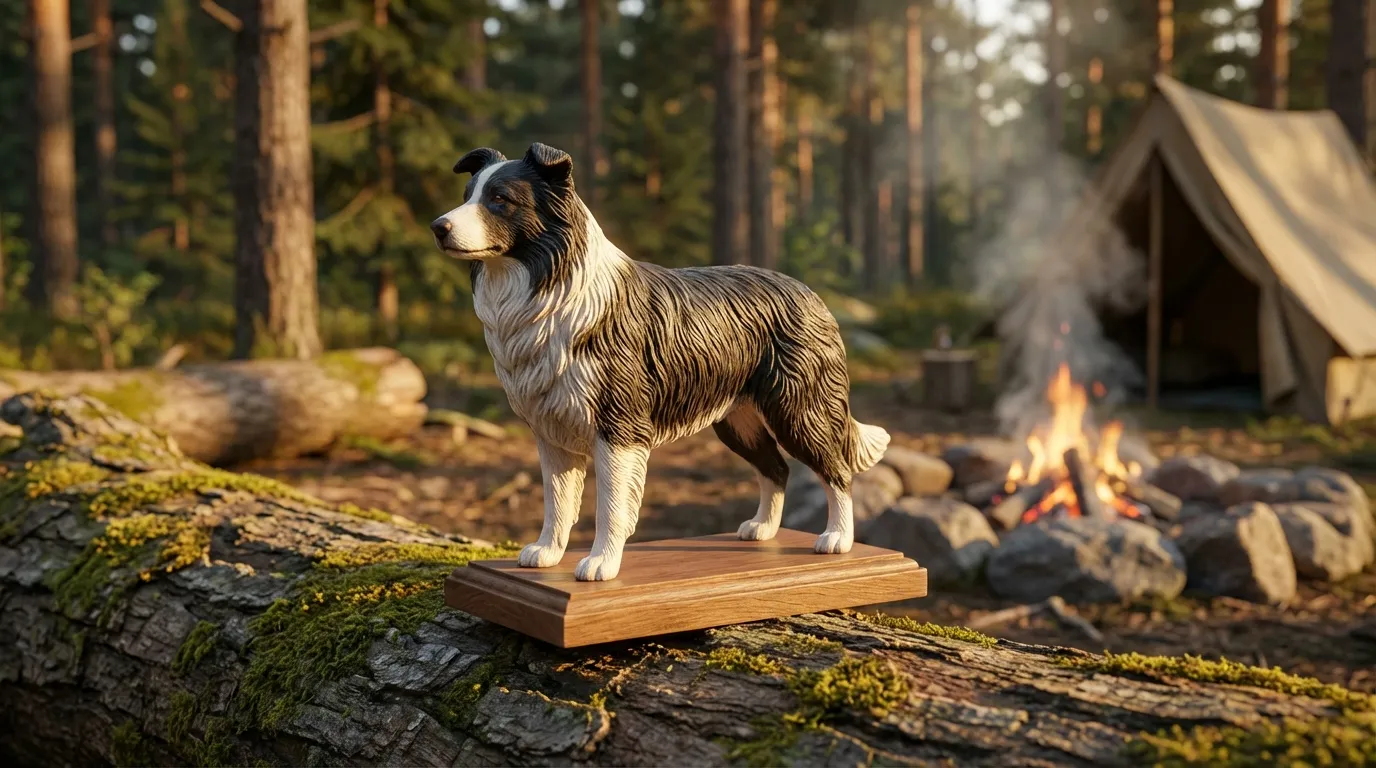
- The Visual Sentinel: We’ve seen a growing number of pet parents bring a physical representation of their dog along for the journey. Whether it's a laminated photo or a custom figurine that captures that classic Border Collie "crouch," placing a likeness of them on a log or rock for a quick photo can feel like they are still witnessing the view with you. It’s a way to say, "You were here. You are still part of this."
Navigating the "Firsts" (Campfire, Tent, and Trail)
The most dangerous traps for your emotions are the transitions. The hiking part is often okay—you're moving, your blood is pumping. It's the stopping that hurts.The Tent Setup
Your Border Collie likely had a specific spot. Maybe they supervised the staking of the tent, or maybe they immediately claimed the sleeping bag. Setting up camp without them can feel mechanical and lonely.- Pro Tip: Change the configuration. If you always slept on the left and the dog on the right, switch sides. Don't create a "missing space" that stares at you all night. Disrubt the spatial memory.
The Campfire
This is where the "deep talks" usually happen, often silently, between dog and human.The Strategy: Use this time to journal. It sounds cliché, but writing down the specific memories of this campsite with that* dog helps move the memory from a painful loop in your brain to a permanent record on paper.
When to Go Back (and When to Wait)
Is it too soon?If you are asking the question, you are probably looking for permission. There is no standard timeline for grief. We have worked with customers who ordered a memorial piece the day after their loss, and others who couldn't look at photos for two years.
However, nature is often the best healer for the loss of an adventure dog. Staying inside, surrounded by their bed and toys, keeps you in the "shrine" of their absence. Going outside puts you back in the element where they felt most alive.
If you get to the trailhead and can't get out of the car? That's okay. Turn around. Try again next week. The mountain isn't going anywhere.
Moving Forward, Not Moving On
There is a distinct difference between "moving on" (which implies leaving something behind) and "moving forward" (which implies carrying it with you).Your Border Collie shaped who you are as an outdoorsman or outdoorswoman. They taught you to pay attention to the wind, to respect the terrain, and to find joy in a muddy creek. When you hike now, you are hiking with the skills and perspective they gave you.
At PawSculpt, we often see the final stage of this grief processing when owners finally feel ready to commission a piece of art. It usually happens when the tears stop feeling like a crisis and start feeling like a tribute. They send us photos of their dog on a peak, ears back in the wind, and say, "I want to remember him exactly like this."
That first camping trip is the hardest. But eventually, the trail won't feel empty anymore. It will just feel different—populated by memories rather than a physical presence, but beautiful all the same.
Pack the gear. Drive to the spot. Take the hike. They'd want you to see the view.
Frequently Asked Questions
How soon should I go camping after my dog passes?
There is no "correct" timeline for grief. Some owners find that returning to nature immediately helps them feel closer to their dog's spirit, while others find the reminders too painful for several months. A good compromise is to try a new location for your first trip. This allows you to be in nature without the direct, painful comparisons of "this is where he used to swim" or "this is where she chased that squirrel."What should I do with my dog's camping gear?
The urge to purge everything can be strong in the first week, but we recommend waiting. Clean the gear (travel bowls, harnesses, sleeping pads) and store it in a designated opaque bin. In six months, you might be glad you kept the harness that still smells like campfire and fur. If you eventually get another adventure buddy, passing down the gear can feel like a beautiful "passing of the torch" rather than a replacement.Is it normal to feel guilty for enjoying the trip without my dog?
Yes, and it is perhaps the most common hidden emotion of pet loss. Caring for an adventure dog—especially a Border Collie—is hard work. It requires constant vigilance. Feeling a sense of physical relaxation because you don't have to manage a dog's behavior is a physiological response, not a measure of your love. Be gentle with yourself.How can I honor my dog while camping?
Rituals help bridge the gap. You might consider scattering a very small amount of ashes at a favorite overlook (check local regulations first). Others find comfort in carrying a small talisman—like a custom figurine or their dog's tag—clipped to a zipper pull on their backpack, so their buddy is still technically "on the hike" with them.Honor Their Memory Forever
Your pet's story deserves to be preserved in a way that captures their unique spirit. A custom PawSculpt figurine transforms your cherished memories into a timeless keepsake—every whisker, every marking, every detail that made them irreplaceable.
Free instant AI preview • 3D artist preview within 7 days • 5 free revisions