
Comforting Your Arthritic German Shepherd: Home Modifications
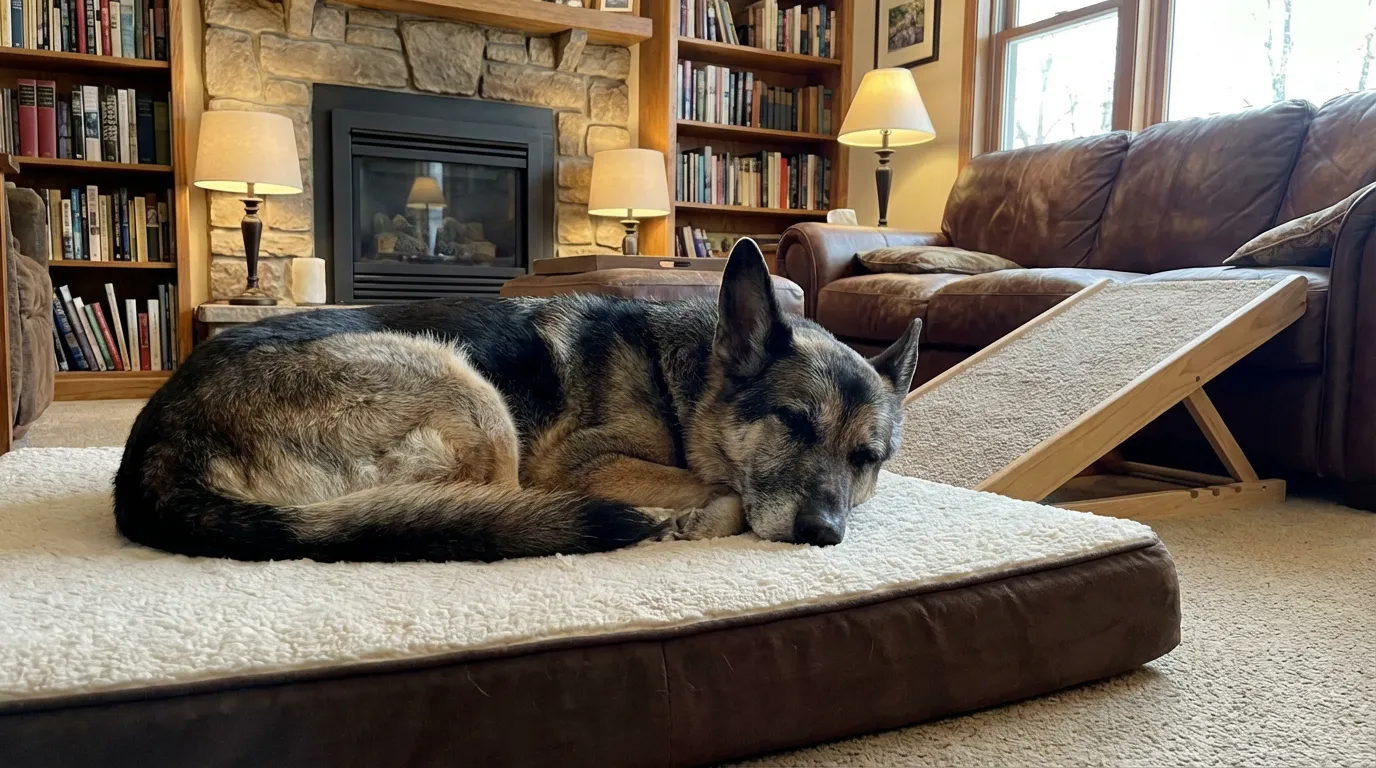
"Old dogs, like old shoes, are comfortable. They might be a bit out of shape and a little worn around the edges, but they fit well." — Bonnie Wilcox
The late afternoon sun was hitting the hydrangeas in the back garden just right—that golden hour glow that usually signaled playtime. You watched your German Shepherd, ears perked, tracking a squirrel darting across the fence line. For a split second, the instinct took over. His muscles bunched, ready to launch into that familiar, powerful gallop. But then, he stopped. You saw the hesitation ripple down his spine. The launch didn't happen. Instead, he let out a soft huff, shifted his weight off his left hip, and settled back onto the grass, watching the squirrel escape with a look that broke your heart just a little.
It wasn't that he didn't want to chase it. It was that he calculated the cost of the landing, and decided it wasn't worth the price.
That hesitation is the silent language of arthritis. For a breed as proud, stoic, and work-oriented as the German Shepherd, the physical pain is often secondary to the emotional toll of feeling incapable. They are guardians, herders, and steadfast companions; when their bodies betray that identity, they need more than just a pill—they need us to reshape their world.
Quick Takeaways: The "Comfort Ecosystem"
- The "Lava" Rule: Treat hardwood and tile like hot lava. If there is no traction, your GSD will stop entering those rooms. Create "highways" using yoga mats or carpet runners immediately.
The 4-Inch Lift: Raising water and food bowls is standard, but raising their bed* by 4-6 inches makes standing up 50% easier on bad hips.
- The Patrol Station: GSDs need a job. Set up an orthopedic "sentry spot" by a low window so they can watch the street without jumping up.
- Temperature Control: Arthritis flares in the cold. A heated bed (or a safe heating pad) can reduce morning stiffness significantly.
The Psychology of the Ailing Shepherd
Here is the angle most generic pet care guides miss: You aren't just managing pain; you are managing pride.
In our years working with pet owners to create custom figurines, we’ve heard countless stories about German Shepherds. The common thread? They are stoic to a fault. A Labrador might whine if they step on a thorn; a German Shepherd will often walk three miles on a fractured toe because you asked them to.
This stoicism makes home modifications tricky. Your dog won't necessarily tell you he needs help until he's in severe distress. You have to anticipate the need.
The decline in a GSD often manifests as anxiety. They are "Velcro dogs" by nature. If you go upstairs and they can't follow because of their hips, they don't just feel left out; they feel they are failing their duty to protect you. This causes pacing, panting, and distress, which inflames the joints further. The goal of home modification is to keep their world accessible so they can remain your shadow without paying a physical penalty.
Friction is Your Friend: The "Highway" System
Let’s talk about your floors. To a senior German Shepherd with hip dysplasia or osteoarthritis, a polished hardwood floor or sleek kitchen tile is a terrifying sheet of ice.
We’ve seen dogs who essentially quarantine themselves in the living room because crossing the kitchen hallway is too risky. When they slip, their legs splay—a movement that causes excruciating pain in the groin and hip capsule.
The Yoga Mat Hack
Forget expensive "dog rugs" for a second. The single best investment you can make is a stack of cheap, non-slip yoga mats.- Why they work: They provide superior grip compared to standard throw rugs, which often slide around themselves. They are thin enough not to be a tripping hazard for you, and they provide a tiny bit of cushioning.
- Implementation: Create a "highway" from their sleeping area to the back door, and from the living room to the water bowl.
- The Visual Cue: Your dog will quickly learn that the colorful mat equals safety. You’ll watch them navigate the house by hopping from mat to mat like a game of hopscotch.
Counterintuitive Insight: Don't cover the whole floor. Leave gaps. Why? Because you want to encourage deliberate movement along specific paths that you can control and keep clear of obstacles.
Vertical Compression: Bringing the World Down
German Shepherds are large dogs. The torque required to lift 80+ pounds of dog off the floor is immense. Standard advice says "get a ramp." We say: Change the elevation of the lifestyle.
The Bed Elevation Strategy
Watch your dog try to get up from a flat dog bed. They have to rock their body weight forward, nose to the ground, to hoist their hindquarters up. It’s the hardest movement of their day.If you place their orthopedic mattress on a slightly raised platform—we're talking 4 to 6 inches, perhaps on a wooden pallet or a low frame—you change the mechanics entirely. They can "slide" off the bed rather than hoisting themselves up. It sounds minor, but for a dog doing this 20 times a day, it saves a massive amount of energy and pain.
The "No-Jump" Zone
If your GSD is used to sleeping on your bed or the sofa, the jumping down is what destroys the shoulders (which take the brunt of the impact).- The Ramp Reality: Many GSDs are suspicious of ramps. They are intelligent and cautious. If you buy a ramp, do not expect them to use it immediately. It takes weeks of high-value treat training.
- The Better Alternative: If the ramp fails, remove the legs from your bed frame or put the mattress on the floor. It might not be the interior design aesthetic you wanted, but for the last few years of your dog's life, it’s a kindness that speaks volumes.
The "Patrol Station": Preserving Purpose
This is specific to the working breeds. Your German Shepherd needs to know what is happening outside. If they can no longer jump onto the window seat or stand on their hind legs to look over the sill, they lose their "TV."
- Find a window with a low sill, or a glass storm door.
- Place their highest-quality orthopedic bed right there.
- Ensure the approach to this spot has high traction.
This allows them to fulfill their biological imperative—guarding the perimeter—while lying down. It reduces the anxiety of "missing out" and keeps them mentally engaged.
We often think about this concept at PawSculpt. When we craft custom figurines for families, especially for working breeds, we rarely sculpt them sleeping. Owners almost always choose a pose that shows the dog alert, ears forward, watching. That’s who they are in their soul. By building a Patrol Station, you are honoring that spirit even when the body is tired. It’s about dignity.
The Staircase Dilemma
Stairs are the enemy of the arthritic hip. Going up requires explosive power; going down shifts all the weight to the elbows and shoulders, often causing the dog to tumble if their front legs buckle.
The "Help 'Em Up" Harness
Stop using a towel slung under the belly. It’s unstable and slippery. Invest in a proper mobility harness with a handle over the hips.
- The Micro-Story: We recall a customer, Sarah, whose GSD, Baron, was 13. Baron refused to sleep downstairs away from Sarah. Every night, Sarah used the harness to take 40% of Baron's weight as they walked up the stairs together. It became a bonding ritual—a synchronized dance of trust.
If carrying isn't an option and the dog cannot manage stairs safely, you must move your bedroom downstairs. It is a harsh reality, but the isolation of sleeping alone downstairs while the "pack" is upstairs can cause depression in GSDs faster than physical pain.
Temperature and Texture: The Invisible Comforts
Arthritis is a barometer. You’ll notice your dog is stiffer on rainy days or during cold snaps.
The Heated Bed
A self-warming bed (which reflects body heat) is good, but an electric heated bed (specifically designed for pets) is better. The gentle heat increases blood flow to the stiff joints while they sleep.- Safety Tip: Ensure the cord is chew-proof and the bed doesn't get too hot. GSDs have thick double coats, so they can overheat if the bed doesn't have a thermostat.
Grooming as Pain Management
This is often overlooked. A German Shepherd with matted fur over the hips is in more pain. The mats pull on the skin every time the muscle moves. However, standing for a 45-minute grooming session is impossible for them.- Modify the routine: Groom them while they are lying down on their side. Do one side, let them rest, then flip. Keep the hair between their paw pads trimmed short. Long "Grinch feet" hair covers the paw pads, destroying their traction on wood floors.
Nutrition and The "Reach"
We all know about Glucosamine and Chondroitin (and you should absolutely be using them, along with Omega-3s, under vet supervision). But let’s talk about the mechanics of eating.
A GSD has a long neck and deep chest. Bending all the way to the floor shifts their center of gravity forward, putting immense strain on the elbows and shoulders.
- Elevated Feeders: This is non-negotiable. The bowl should be at shoulder height so the neck stays neutral.
- Hydration Stations: Put multiple water bowls around the house. If it hurts to walk to the kitchen, a dog might choose to stay thirsty. Dehydration worsens joint lubrication. Put a bowl in the bedroom, the living room, and near their Patrol Station.
When The "Bad Days" Outnumber The Good
There is a heaviness that comes with caring for a senior Shepherd. You become hyper-aware of every stumble. You hold your breath when they try to stand.
It is important to recognize that these modifications aren't just for the dog—they are for you. They are your way of fighting back against time. They are active love.
There’s a beautiful concept we see with our customers who order custom figurines of their senior dogs. They often send us photos from the "glory days"—hiking the trail, catching the frisbee—but they tell us stories about the quiet moments in the garden. They realize that the bond didn't weaken when the running stopped; it deepened. The caretaking phase is an act of profound intimacy.
When you lay down those yoga mats, or build that ramp, or sleep on the floor mattress beside them, you are telling your dog: "I am your legs now. I am your strength." And for a dog that spent a lifetime protecting you, that is the ultimate gift.
Closing Thoughts
Look at your home today through your dog's eyes. Get down on your hands and knees. Feel the floor—is it slippery? Look at the bed—is it a struggle?
Don't wait for the yelp of pain. The German Shepherd is a stoic soldier who will march until he collapses. It is your job to clear the path so he can march a little longer, a little softer, and with his dignity intact.
Start with the yoga mats. Start today.
Frequently Asked Questions
My German Shepherd refuses to use the ramp I bought. What do I do?
This is very common. GSDs are naturally skeptical of unstable surfaces. First, lay the ramp flat on the ground and treat them for simply walking over it. Do this for a few days. Then, elevate it just a few inches. Use high-value treats (like real chicken) to lure them. Never force or drag them onto it, as this creates a negative association they may never overcome. If the ramp is too steep, they will never trust it; try to reduce the angle.Is it better to keep my arthritic dog moving or let them rest?
"Motion is lotion" is the golden rule for arthritis. Total inactivity causes joints to stiffen and muscles to atrophy, which makes the arthritis worse. However, the type of exercise matters. Swap the 30-minute fetch session for three 10-minute slow "sniff walks." Mental stimulation tires them out without pounding the joints. Always follow your vet's specific guidance, but generally, gentle, consistent movement is better than prolonged rest.How do I know if my GSD is in pain if he doesn't whine?
German Shepherds are masters of disguise. Look for "micro-signs": excessive licking of a joint, a reluctance to greet you at the door, a "bunny hopping" gait (using both back legs together) when running, difficulty settling down at night, or a sudden change in temperament (grumpiness). If you see them hesitating before doing something they used to love, assume pain is the cause.Can massage help my senior dog?
Absolutely. Gentle massage increases circulation and releases endorphins. You don't need to be a pro. Use flat palms and slow, long strokes along the spine and large muscle groups (hamstrings, shoulders). Avoid pressing directly on the bony joints or the spine itself. If your dog pulls away or tenses up, you are applying too much pressure or hitting a sore spot. Stop and move to a different area.What is the single most important home change for a GSD?
Traction. Preventing slips is more critical than soft beds or raised bowls. A single bad slip on a tile floor can tear a cruciate ligament (CCL) or cause a soft-tissue injury that takes months to heal. If you can only do one thing, cover your slippery floors with runners or yoga mats immediately.Celebrate Your Pet's Unique Personality
Every pet has quirks and characteristics that make them one-of-a-kind. A custom PawSculpt figurine captures those details—the way they tilt their head, their favorite pose, the spark in their eyes.
Free instant AI preview • 3D artist preview within 7 days • 5 free revisions