
Coping With the Empty Cage: Grieving a Beloved Rescue Parakeet
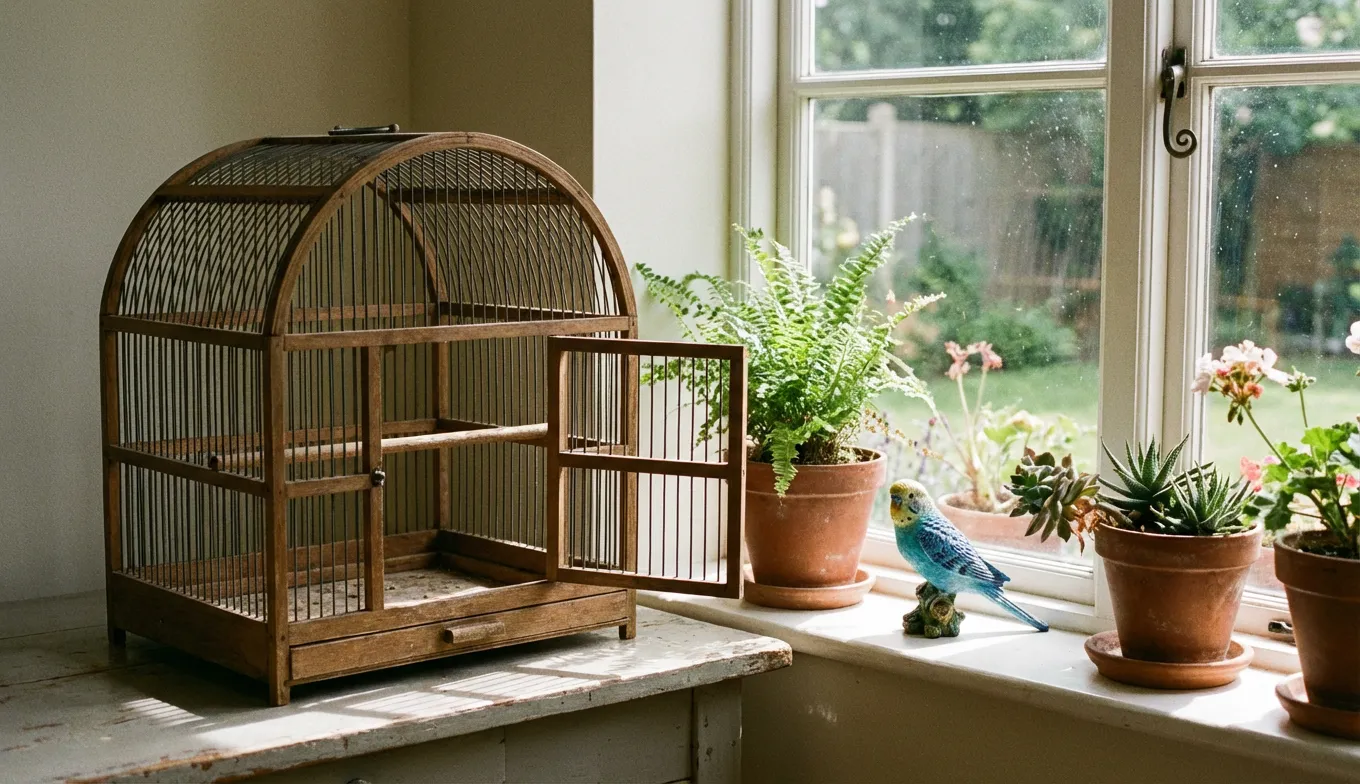
Why does the air in the garage feel so much colder when you’re staring at an empty wire cage on the workbench? You went out there just to grab a screwdriver, but you stopped dead when your eyes hit that familiar plastic tray, now scrubbed clean of millet husks and tiny down feathers. It’s a strange, heavy feeling—standing amidst the smell of gasoline and sawdust, looking at a small object that used to contain so much chaotic, vibrant life. The silence in a room designed for cars and tools is one thing, but the silence emanating from that empty perch is deafening.
Quick Takeaways:
- The "Small Pet" Stigma: Society often minimizes grief for birds, but the bond with a rescue parakeet is complex and deep.
- The "Prey Mask" Guilt: Birds hide illness instinctively; feeling guilty for "missing the signs" is a universal but misplaced burden.
- Sensory Gaps: The loss of background noise (chatter, bells) is often the hardest adjustment for bird owners.
- Tactile Memorials: Because birds are small, physical tributes like custom figurines or feather keepsakes can help ground your grief.
- The Surviving Flock: If you have other birds, their grief process will mirror your own—watch them closely.
The "Just a Bird" Syndrome
Here is the hardest part about losing a parakeet, specifically a rescue: the world expects you to get over it by Tuesday.
If you lose a Golden Retriever, your boss sends flowers. If you lose a rescue budgie, people ask, "Are you going to get another one?" as if you just broke a ceramic plate. This is what psychologists call "disenfranchised grief"—a sorrow that society doesn't fully acknowledge or validate.
We’ve heard from countless customers who feel foolish for crying over a creature that weighed less than a stick of butter. But weight has nothing to do with the size of the spirit. Rescue parakeets often come to us with trauma, broken wings, or fear of hands. You spent months, maybe years, teaching that little bird that hands bring spinach, not harm. When you earn the trust of a prey animal, the bond is arguably more intense than with a predator like a dog or cat. You didn't just feed them; you convinced them they were safe.
The Reality Check: You are grieving a relationship, not a species. Do not let anyone—even well-meaning friends—dictate the "appropriate" amount of sadness for a 30-gram bird.
The Guilt of the "Prey Mask"
This is the specific emotional nuance that keeps bird owners awake at 2:00 AM. It’s not just sadness; it’s a nagging, corrosive guilt.
Birds are prey animals. In the wild, a sick bird is a target. So, they have evolved a "prey mask"—a biological imperative to hide weakness until they physically can't anymore. Your parakeet might have been chirping and eating normally in the morning, only to be puffed up on the bottom of the cage by dinner.
We see this constantly in the stories our clients share. You replay the last week in your head: Was he sleeping more? Did I miss a tail bob? Should I have taken him to the vet when he sneezed that one time?
The Counterintuitive Insight:
Your bird hiding their illness wasn't a failure of your observation skills; it was a success of their biology. They fooled you because nature designed them to fool everyone.
One of the families we worked with had a rescue named Pipsqueak. The owner, Sarah, beat herself up for weeks because she thought she ignored signs of an upper respiratory infection. But the truth is, by the time a parakeet looks sick, they are often already in critical condition. Forgiving yourself for not having x-ray vision is the first, vital step in healing.
Navigating the Deafening Silence
Dog owners miss the physical presence—the weight on the bed. Bird owners miss the soundscape.
Parakeets are the background music of a home. Their contact calls, the grinding of their beaks when they’re content (that sleepy, crunchy sound), the sudden squabbles over the best swing—it creates a texture to your day that you don't notice until it’s stripped away.
When that sound stops, the house feels hollow. You might find yourself:
- Waking up with a start because the "morning alarm" of chirping didn't happen.
- Talking to the corner of the room where the cage used to be.
- Leaving the TV on just to fill the dead air.
Actionable Advice:
Don't rush to fill the silence if it feels wrong, but don't suffer in it either. Some of our clients find comfort in playing soft nature sounds or classical music—not to replace the bird, but to soften the harsh edges of a quiet house. Conversely, if the silence is triggering anxiety, it is okay to dismantle the cage and put it in the garage immediately. You don't get "extra credit" for staring at an empty cage and torturing yourself.
Tangible Tributes for Small Souls
Because parakeets are small, their physical absence can feel total. They don't leave behind a large collar or a heavy leash. You might have a few tiny feathers or a cuttlebone, but that’s it.
This is where creating a deliberate, physical memorial becomes crucial. It validates the life that was lost.
1. The Garden of Flight
If you have a yard, planting a small patch of millet or sunflowers over their burial spot (or where you scattered ashes) creates a living cycle. Seeing wild birds come to feed on the plants grown from your pet’s memory can be incredibly healing.
2. The Feather Shadow Box
Gather the molted feathers you found under the couch or in the vacuum (we all find them for months after). Arrange them in a small shadow box with their leg band and a favorite toy. It turns "clutter" into art.
3. A Permanent Likeness
We’ve noticed that photos of parakeets are often tricky. They move fast, and phone cameras rarely capture the iridescent sheen of their feathers or that specific, cheeky tilt of the head. This is why many bird lovers turn to custom figurines to capture what a photo missed.
Our sculptors often spend hours getting the exact mutation right—because to a stranger, it’s a blue bird, but to you, it’s a Cobalt Violet with a specific white patch on the left wing. having a three-dimensional representation you can actually touch can help ground you when the grief feels abstract.
When You Have a Surviving Flock
If you have a "lonely bird" left behind, your grief is complicated by their confusion. Parakeets are flock animals. They mourn, and they mourn deeply.
You might notice the survivor calling out repeatedly, searching the cage, or becoming unusually quiet. This is heartbreaking to watch, but it also gives you a job to do.
- Increase Interaction: You must become the flock now. If you usually spent 15 minutes a day interacting, double it.
- Rearrange the Cage: It sounds harsh, but moving perches and toys can help break the routine of "looking for the mate." It engages their brain in a new way.
- Watch for Depression: Birds can die of a broken heart (stress lowers their immune system). If the survivor stops eating or puffs up, it’s a medical emergency.
A Note on "Replacement":
The urge to get another bird immediately to soothe the survivor (and yourself) is strong. But be careful. If you bring in a new bird too soon, and the personalities clash, you will be dealing with stress on top of grief. We usually recommend waiting at least a few weeks to ensure the health of the flock and to let your own heart settle.
The Empty Cage is Not Empty
Let’s go back to that moment in the garage.
You’re looking at the empty cage, and it feels like a symbol of loss. But try to shift the perspective. That cage isn't empty because of death; it's empty because the life inside it was lived fully.
That metal box was the stage for a thousand tiny dramas, comedies, and moments of trust. It was where a creature that belongs to the sky decided that staying with you was a pretty good deal.
You gave a rescue bird—a creature that the world often treats as disposable—a life of dignity, safety, and love. The cage is empty now, but your heart is fuller for having known them. And that, ultimately, is a fair trade, even if it hurts like hell right now.
Frequently Asked Questions
How long do parakeets grieve the loss of a cage mate?
Parakeets are intensely social flock animals, and they absolutely mourn the loss of a companion. This grieving period typically lasts anywhere from a few weeks to several months. During this time, you might hear them using a specific "contact call" trying to locate their friend. It is vital to step in and provide extra social interaction during this window to prevent them from sliding into depression.Is it silly to cremate a parakeet?
Absolutely not. The size of the pet does not dictate the dignity of their farewell. Many veterinary clinics and pet memorial centers offer cremation services specifically for small exotics. Having the ashes returned to you can be a powerful way to keep them close, and there are many beautiful, small-scale urns designed specifically for birds.How soon should I get another bird after one dies?
This is a personal decision that depends on two factors: your emotional state and the needs of any surviving birds. If you have a lone survivor who is showing signs of severe distress, you might need to find them a companion sooner (after a proper quarantine period). However, if you are the sole "flock," wait until you can look at a new bird without resenting it for not being the one you lost.Why do I feel guilty about my bird's death?
Guilt is the shadow of grief, particularly with rescue birds. Because they are prey animals, they hide illness until it is often too late to treat. This biological fact leads many owners to feel like they "failed" to protect their pet. Please remember: you were fighting against millions of years of evolutionary instinct. You didn't fail them; you loved them.Honor Their Memory Forever
Your pet's story deserves to be preserved in a way that captures their unique spirit. A custom PawSculpt figurine transforms your cherished memories into a timeless keepsake—every whisker, every marking, every detail that made them irreplaceable.
Free instant AI preview • 3D artist preview within 7 days • 5 free revisions