
Empty House Silence: Coping With the Loss of a Vocal Siamese Cat
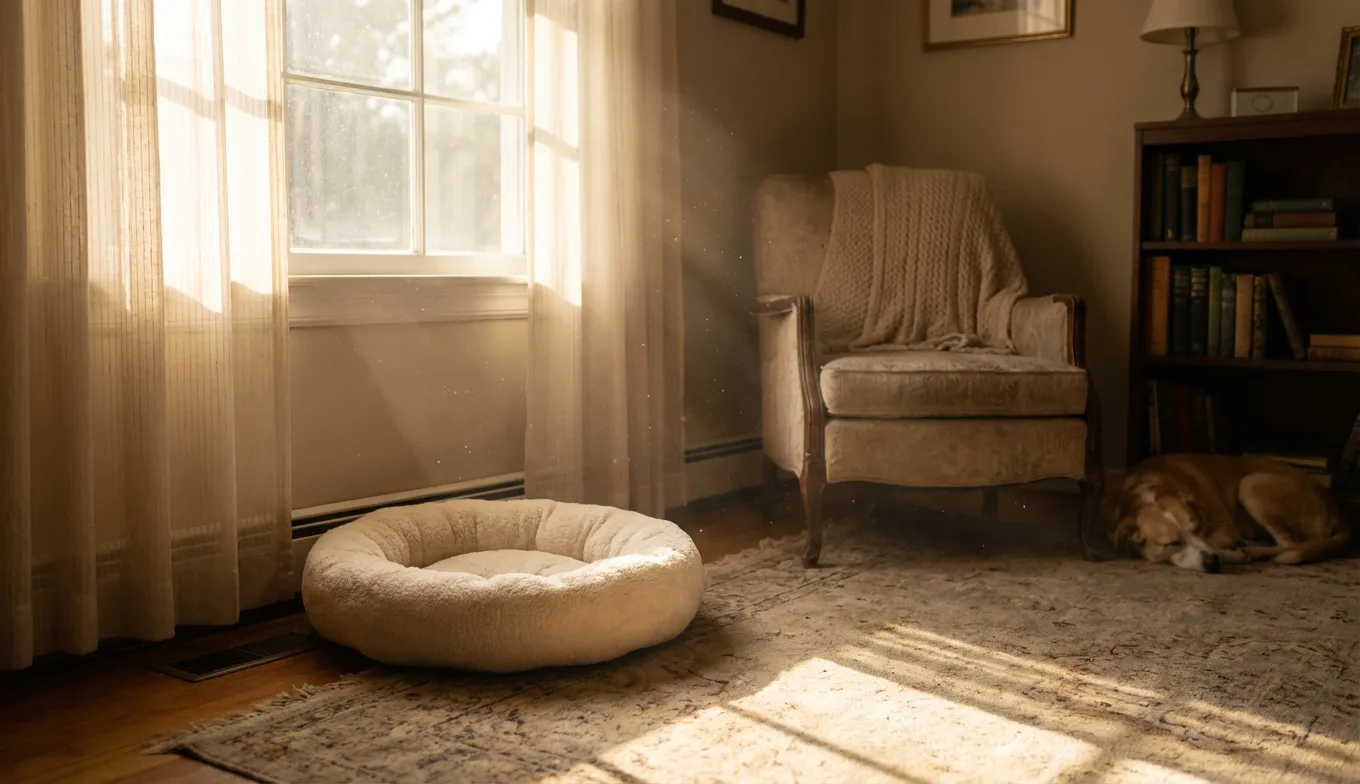
The sun hits the duvet cover at 6:00 AM, illuminating the exact spot where a warm, cream-colored weight used to press against your shins. But it’s the lack of sound that actually wakes you. You’re bracing yourself for that distinctive, raspy demand for breakfast—the "meezer" yowl that sounded more like a human child than a cat—but the air remains heavy and still. For ten, fifteen, maybe twenty years, your mornings began with a conversation. Now, the coffee maker gurgling in the kitchen sounds deafeningly loud because it’s the only noise in the house.
Quick Takeaways:
- The "Siamese Silence" is distinct: Losing a vocal breed creates a sensory void that is physically jarring compared to quieter pets.
- Auditory hallucinations are normal: Hearing phantom meows or scratching is a common brain response to the sudden loss of routine noise.
- It's okay to enjoy the quiet (and hate it): You might feel relief that the demanding crying has stopped, followed immediately by crushing guilt. Both are valid.
- Visual anchors help: Since you can no longer hear them, tangible reminders like custom cat figurines become crucial for grounding your grief.
The Specificity of the "Siamese Silence"
Most pet loss articles talk about the "empty house." But Siamese owners know that isn't quite right. Your house isn't just empty; it’s muted.
Siamese cats (and their Oriental shorthair cousins) are not passive roommates. They are narrators. They announce when they use the litter box, they critique your choice of TV show, and they argue back when you tell them to get off the counter. When we work with grieving families at PawSculpt, we notice a distinct pattern with Siamese owners: they don't just miss the affection; they miss the engagement.
You aren't just grieving a pet; you are grieving a constant, vocal presence that filled every corner of your home. It’s a sensory deprivation tank effect. Your brain is so accustomed to the background frequency of their chatter that the sudden drop in decibels can cause actual anxiety.
The Counterintuitive Insight: You might find yourself missing the annoying sounds the most. The 3 AM screaming that used to drive you crazy? You’d give anything to be woken up by it tonight. That irritation was proof of life.
The Taboo Emotion: Relief Mixed with Guilt
Here is something few people will admit to you, but we hear it often in the quiet confessions of our customers: The silence is peaceful, and that makes you feel like a monster.
Toward the end of a senior Siamese cat's life, the vocalization often ramps up. Cognitive decline or deafness can turn their charming chatters into confused, loud howling, often in the middle of the night. Caretaking becomes a 24-hour cycle of managing their distress.
When they pass, the first night of uninterrupted sleep can bring a wave of physical relief. You aren't on high alert. You aren't wincing at a yowl of pain.
Then, the guilt hits.
Please hear us on this: That relief does not mean you loved them less. It means you are a human being who was exhausted. It means you loved them enough to suffer through the noise to keep them comfortable, and now that their suffering has ended, your body is finally exhaling. The relief is about the situation, not the absence of your friend.
Navigating Auditory Ghosts
"I swear I heard him in the hallway."
If we had a dollar for every time a customer told us this, we wouldn't be selling figurines; we'd be funding research. But here is the science behind the "ghost meow."
Your brain is a prediction machine. For years, it has predicted that the sound of a key in the door equals a greeting chirp. It predicts that the sound of a can opening equals a frenzy of excited screams. When the stimulus (the cat) is removed, the neural pathways are still firing. Your brain effectively "autofills" the sound because it expects it to be there.
Practical Coping Strategy:
Don't fight the ghost sounds. Acknowledge them. When you "hear" a meow, talk back to it. Say, "I hear you, buddy," or "I miss you too." It sounds strange, but vocalizing your grief into the empty air can actually help bridge the gap between the internal noise and the external silence. It validates the relationship you had—one based on conversation.
Anchoring the Memory When the Voice is Gone
Since you cannot keep their voice (unless you were lucky enough to record it), you have to find other ways to fill the space they left. The goal isn't to "move on" but to "move forward with" their memory.
1. The "Chatter" Journal
Siamese cats have distinct vocabularies. There was a specific sound for "bird outside," another for "wet food," and a totally different one for "where are you?" Write these down immediately. Describe the sound phonetically.The "Ek-ek-ek" chirp at the window.*
The low, guttural "Mrrrow?" when entering a room.*
The siren wail during car rides.*
Memory is fickle, and auditory memories fade faster than visual ones. Documenting their "language" preserves their personality.
2. Visual Presence
Because Siamese cats are such big personalities, their physical absence feels massive. They were often "in the way" (in the best way possible)—on your keyboard, on your shoulders, weaving through your legs.This is where visual anchors become vital. We’ve found that for many families, having a tangible representation of their pet helps ground the grief. It gives you a place to direct your affection. Whether it’s a framed pet portrait on the mantle or a 3D likeness, seeing their face can trick the brain out of the panic of "where are they?"
At PawSculpt, we often see Siamese owners request very specific poses for their custom dog figurines and cat sculptures—mouth open mid-meow, or sitting with that regal, judging posture that only a Siamese can master. It’s not just about capturing the markings; it’s about capturing the attitude. When you can look at a figurine and see that familiar sass, it brings a smile that breaks through the sadness.
3. Designated "Talk Time"
If you lived alone with your Siamese, you might realize you’ve stopped speaking out loud entirely. This contributes to the feeling of isolation. Keep talking. Narrate your day to their memory. "I'm making coffee now." "Look at that rain." It keeps the energy in the house moving and prevents the silence from becoming stagnant.When the Silence Feels Permanent
There is a fear that eventually, you will get used to the quiet. And that terrifies you, because getting used to it feels like forgetting them.
But you won't forget. The sharp pain of the silence will eventually soften into a peaceful quiet. You will start to remember the sound of their purr more often than the sound of their final days.
The "Siamese Silence" is the price of admission for loving a creature with that much soul. They take up so much space in our lives that they leave a crater when they go. But that crater is just proof of how substantial the love was.
Frequently Asked Questions
Why does the grief feel worse with my Siamese than my other cats?
It’s often due to the interactive nature of the breed. Siamese cats bond intensely with one or two humans and communicate verbally. The relationship feels less like "pet and owner" and more like "partners." Losing a partner who talked to you all day triggers a different type of loneliness than losing a quieter, more independent pet.Is it healthy to listen to recordings of my cat's meow?
For some, yes; for others, it’s too painful. We recommend waiting a few weeks before diving into video archives. In the acute stage of grief, hearing their voice can trigger panic because your brain thinks they are nearby. Give yourself time to accept the physical absence first.How long does the "phantom meowing" last?
This varies by person, but typically, these auditory hallucinations peak in the first month and gradually fade over 3-6 months as your brain adjusts to the new baseline of your home's soundscape. Stress and fatigue can make them happen more frequently.I feel guilty for getting a new cat so soon. Is that wrong?
Siamese owners often adopt again quickly because the silence is unbearable. This isn't "replacing" your lost friend; it's filling a void in your home. If you need noise and life to function, adopting another pet is a valid coping mechanism. Just ensure you aren't expecting the new cat to be the old cat.What is the best way to memorialize a vocal cat?
Combine the visual with the auditory. Create a photo book that includes written descriptions of their sounds. Or, consider a custom figurine placed next to a small sound box or digital frame that plays a video clip. This engages multiple senses, which honors the multi-sensory experience of living with a Siamese.Honor Their Memory Forever
Your pet's story deserves to be preserved in a way that captures their unique spirit. A custom PawSculpt figurine transforms your cherished memories into a timeless keepsake—every whisker, every marking, every detail that made them irreplaceable.
Free instant AI preview • 3D artist preview within 7 days • 5 free revisions