
Sudden Silence: Coping With the Unexpected Death of a Young Husky
The automatic doors of the pet supply store slid open with a mechanical hum, hitting us with that familiar wall of cool air and the smell of dried kibble. My hand instinctively tightened on a leash that wasn't there. We walked past the squeaky toys—the ones he would have dissected in five minutes flat—and stopped in front of the "indestructible" black rubber tires on the bottom shelf. The heavy rubber felt cold and solid in my hand. He would have loved this. He would have spent three hours gnawing on it until his gums bled. But the aisle was quiet. No pulling, no panting, no chaotic "woo-woo" arguing because I wasn't moving fast enough. Just the low buzz of fluorescent lights and a bag of premium puppy food I no longer needed to buy.
That moment in the aisle is when the reality of sudden loss actually hits. It’s not usually at the vet’s office, where adrenaline is still pumping. It’s in the mundane moments where the sheer volume of their absence screams at you.
TL;DR: Quick Takeaways
- The "Energy Vacuum": Losing a high-energy breed like a Husky creates a physical void in your home that feels louder than noise.
- Validating the "Relief" Guilt: It is normal to feel a confusing mix of relief that the chaos has stopped, followed immediately by crushing guilt for feeling that relief.
- Trauma vs. Grief: Sudden death (accidents, acute illness) processes differently in the brain than anticipated loss; expect "phantom" sensory details like hearing nails on the floor.
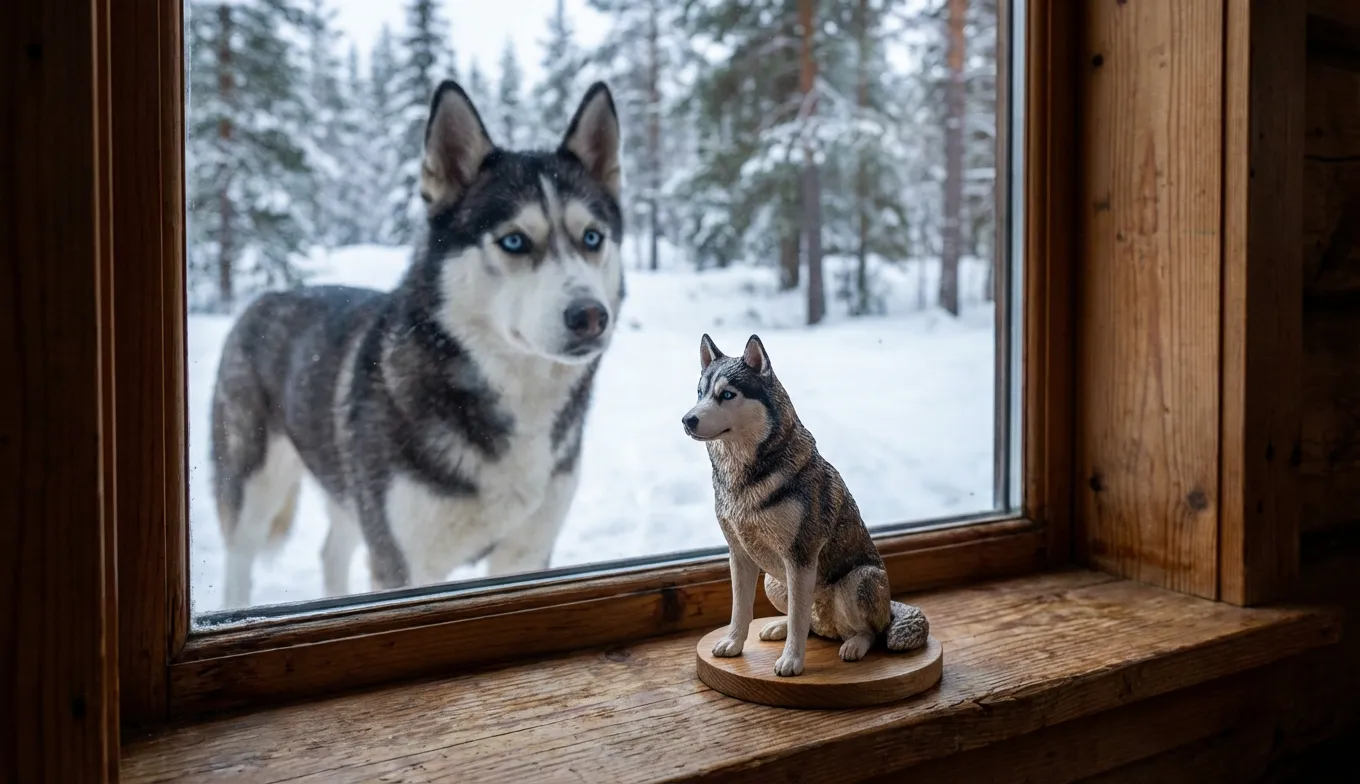
- Tangible Memorials: For tactile people, physical touchstones like custom pet figurines often provide more comfort than photos alone.
The Deafening Silence of a High-Voltage Dog
When you lose an older dog, the silence often creeps in slowly. They sleep more, they play less, and the house quiets down over months. But when you lose a young Husky—or any high-octane working breed—the silence isn't a gradual fade. It’s a power outage.
One day, your house is a whirlwind of fur, arguments, zoomies, and the constant click-clack of pacing nails. The next day, it’s a museum.
We call this the "Energy Vacuum." In our work with grieving families, we’ve noticed that owners of working breeds struggle uniquely with the physical stillness of the home. Your nervous system has been calibrated to a high level of alertness for years. You are used to guarding the door so they don't bolt, listening for the sound of chewing on furniture, and anticipating their needs.
When that stimulus is ripped away without warning, your body doesn't know how to power down. You might find yourself:
- Waking up at 5:30 AM with a spike of cortisol, ready for a walk that isn't happening.
- Flinching when a door opens, expecting a bolt attempt.
- Feeling physically restless or anxious in the evenings when "playtime" usually occurred.
The Counterintuitive Insight: Don't try to force "peace and quiet" right away. The silence is the enemy right now. Many people find it helpful to keep background noise on—podcasts, white noise machines, or music—just to disrupt the void that the dog used to fill.
The Secret Guilt: When the Chaos Stops
Here is the part of grief that almost no one talks about because they are terrified of being judged: The relief.
Huskies are difficult. Let’s be real—they are escape artists, shed-monsters, and vocal debaters. Living with a young, healthy Husky is exhausting. When that chaos suddenly ends, your life instantly becomes easier. Your house stays clean. You can sleep in. You don't have to worry about the fence line.
And then, the guilt crushes you.
You might catch yourself enjoying a quiet cup of coffee and then immediately hate yourself for it. How can I enjoy this peace when he’s dead?
We need you to hear this: Relief is a physiological response, not a measure of your love. Your body is reacting to the removal of a stressor. It does not mean you didn't love your dog with every fiber of your being. It just means you were tired. It is possible to be devastated by the loss and simultaneously relieved that the daily struggle is over. These two emotions can coexist.
Trauma Brain: Why You Still Hear Them
Sudden death—whether from a tragic accident, a heart defect, or a sudden illness like bloat—is traumatic. Unlike a slow decline where you have time to "pre-grieve," sudden loss shocks the brain.
You might experience "phantom" sensations.
- Auditory: You swear you hear their tag jingle in the other room.
- Tactile: You feel the weight of them jump on the bed at night.
- Visual: You see a flash of grey and white fur out of the corner of your eye.
This isn't you "going crazy." This is your brain's predictive coding failing to update. Your brain has created a map of your daily reality where your dog exists. It takes weeks, sometimes months, for the neural pathways to rewrite that map.
Actionable Advice: When these phantom moments happen, acknowledge them out loud. Say, "I miss you, buddy." It helps bridge the gap between your brain's habit and the new reality.
Anchoring the Memory in the Physical World
Because the loss was sudden, you didn't get the chance to do the "last day" rituals. You didn't get the clay paw print at the vet because maybe you didn't even make it to the vet in time. This lack of physical closure can make the grief feel unmoored.
We've found that for sudden loss, having something tangible to hold becomes critical. Digital photos on a phone screen often feel too flat, too distant. You can't touch pixels.
This is why many families turn to physical tributes. Some plant trees (though if you move, that’s heartbreaking). Others keep the collar on the gear shift of their car. And increasingly, we see pet parents looking for high-fidelity replicas.
Creating a custom dog figurine isn't about trying to replace the dog. It’s about having a physical focal point for your grief. When you can run your thumb over the curve of their ears or see the specific way they held their tail, it triggers a different kind of memory recall than a photograph does. It validates that they were here. They took up space. They mattered.
Especially with Huskies, whose markings are so distinct—the mask, the eye color, the tail tip—generic statues just don't cut it. You need to see your dog's specific smirk.
Moving Through the "Firsts" Without Them
The first snow.
If you owned a Husky, you know what this means. The first snowfall after they pass is going to be brutal. You’ll remember them burying their nose in the drifts, refusing to come inside, completely in their element.
Anticipate these triggers. Don't let them blindside you.
- The First Snow: Go outside. Don't hide from it. Walk their favorite route. It will hurt, but avoiding it makes the memory scary.
- The Birthday: If they died young, they missed so many birthdays. Donate to a husky rescue in their name on that day. Turn the "what if" into "what now."
- The Vacuuming: The first time you vacuum and realize the canister isn't full of fur is a weirdly specific, painful moment. It signifies they are truly fading from the house.
A Note on "Getting Another One":
With sudden loss, the urge to fill the void immediately can be overwhelming. The quiet is so loud you just want a dog—any dog—to fill it.
- The Trap: If you get a puppy too soon, you might subconsciously expect it to be your old dog. You’ll be frustrated when the new puppy doesn't know the routine or has a different personality.
The Rule of Thumb: Wait until you can think about a new dog and feel excited about their* potential, rather than just wanting them to stop your pain.
Finding Peace in the Static
There is no timeline for this. Losing a young dog feels like a robbery. You were supposed to have ten more years. You were supposed to see them get a grey muzzle. You were cheated out of that future.
It is okay to be angry about that. Anger is just love with nowhere to go.
Eventually, the silence in the house won't feel like an empty stage waiting for an actor who isn't coming. It will start to feel like a calm space where you can remember them with a smile instead of a sob. You will find stray hairs on your black sweaters months from now, and instead of crying, you’ll roll your eyes and say, "Still shedding, huh?"
They were a hurricane. And just because the wind stopped doesn't mean they didn't change the landscape of your life forever.
Frequently Asked Questions
Is it normal to feel relief after my high-energy dog dies?
Absolutely, and it's one of the most common things pet owners confess to us in private. High-energy breeds like Huskies require immense amounts of physical and mental energy to manage. When that responsibility vanishes, your body naturally feels relief from the pressure. This doesn't negate your grief; it just means you're human. Try to be gentle with yourself regarding this emotion.Why do I still hear my dog's nails on the floor?
This is your brain playing catch-up. For years, your brain has filtered and expected certain background noises—the jingle of tags, the click of nails, the heavy panting. When those sounds stop abruptly, your brain sometimes "fills in the gaps" out of habit. These phantom sounds usually fade within a few weeks as your brain re-maps your daily environment.How soon is "too soon" to get another dog?
We usually advise waiting until you stop looking for your old dog in every other dog you see. If you get a new Husky hoping they will have the same quirks, same temperament, and same bond as your late dog, you are setting yourself (and the new pup) up for failure. You need to be ready to love a completely new stranger for who they are, not for who they replace.I didn't get a paw print or ashes. How can I create a memorial?
Missing out on those standard closure rituals is hard. Many families find comfort in creating a dedicated "shrine" shelf with a custom pet portrait or figurine, their old collar, and their favorite toy. Since you don't have their physical remains, creating a high-quality likeness can serve as that physical anchor for your memories.Honor Their Memory Forever
Your pet's story deserves to be preserved in a way that captures their unique spirit. A custom PawSculpt figurine transforms your cherished memories into a timeless keepsake—every whisker, every marking, every detail that made them irreplaceable.
Free instant AI preview • 3D artist preview within 7 days • 5 free revisions