
The Unused Crate: Dismantling Your Great Dane's Safe Space After Loss
"Grief is like the ocean; it comes on waves ebbing and flowing. Sometimes the water is calm, and sometimes it is overwhelming. All we can do is learn to swim." — Vicki Harrison
You turn the corner from the kitchen into the hallway, and your shoulder automatically dips. You sidestep to the left, hugging the wall—a muscle memory etched into your body over the last eight years. It was the only way to squeeze past the massive wire fortress that housed your best friend.
But today, your shoulder doesn't brush against metal. There is no soft thump-thump of a heavy tail waking up to greet you. There is just air. You stumble a little, not because you tripped, but because the physical world has suddenly realigned itself, and your body hasn't caught up yet. The hallway is wide open, spacious, and completely, heartbreakingly wrong.
Quick Takeaways:
- The "Giant" Void: Losing a Great Dane changes the actual architecture and acoustics of your home, not just the emotional atmosphere.
- Don't Rush the Breakdown: That crate is likely the size of a small car; dismantling it is a significant physical and emotional event. Do not force it before you are ready.
- Acknowledge the Relief: Caring for a senior giant breed is physically exhausting. Feeling relief that the physical labor is over does not negate your love.
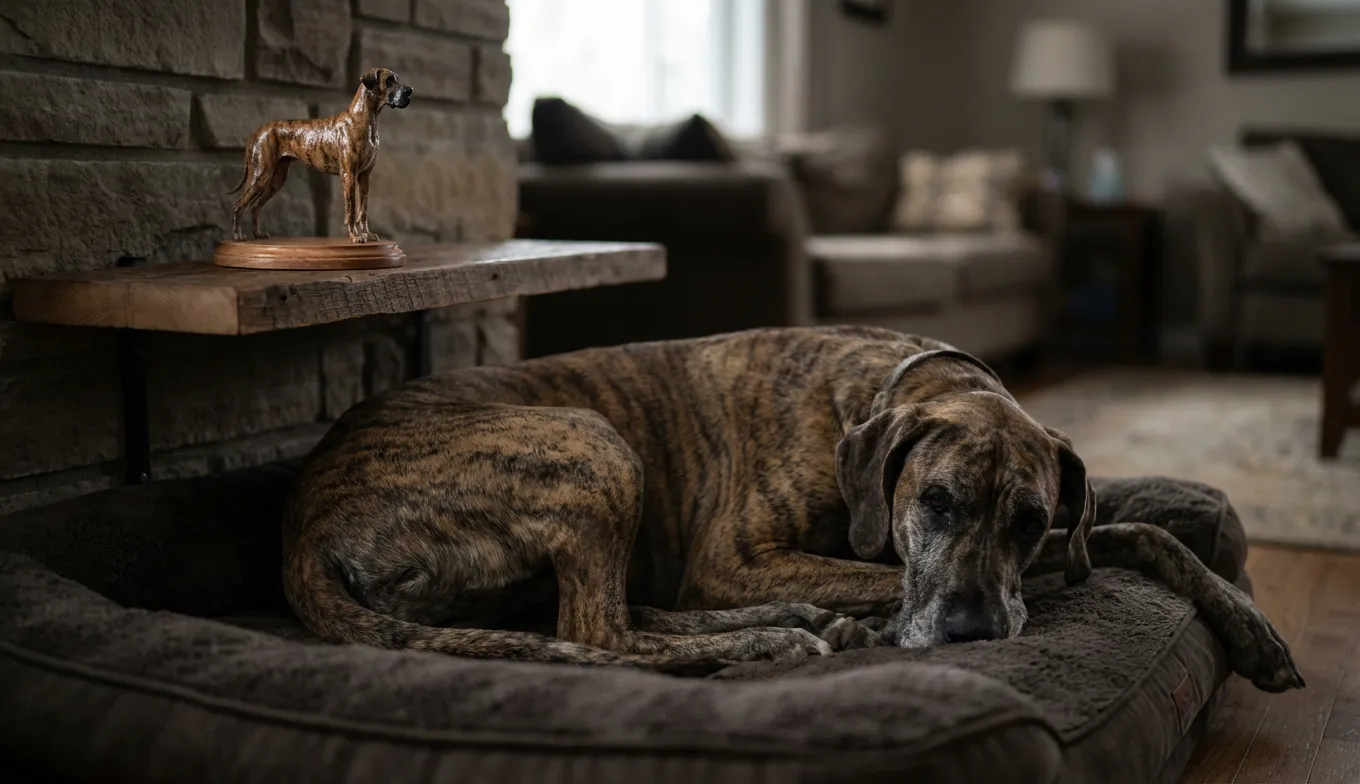
- Memorializing Space: Instead of leaving the "crate spot" empty, consider a dedicated memorial shelf or a custom figurine to hold the space without blocking the hallway.
The Physics of Absence
When people talk about pet loss, they usually speak in metaphors. They talk about "holes in hearts" or "missing pieces." But when you lose a Great Dane, the emptiness isn't a metaphor. It is a literal, cubic-footage problem.
We need to talk about the sheer volume of space your dog occupied. A Great Dane isn't just a pet; they are moving furniture. They are load-bearing walls of affection. When a Chihuahua passes, the house feels quieter. When a Dane passes, the house feels larger. The acoustics change. The echo in the living room is different because that 150-pound sound absorber on the rug is gone.
This is the angle of grief that catches most giant-breed owners off guard: the spatial shock. You are used to navigating your own home around a living obstacle. You are used to the "Dane Lean." You are used to looking down, but not too far down.
The first step in navigating this is simply acknowledging that your home feels alien. It’s not just that they are gone; it’s that the scale of your life has suddenly shrunk. It is jarring, and it is normal to feel dizzy in all that extra space.
The Heavy Lifting: Guilt, Relief, and the Body
Here is the hard truth we need to discuss—the one you might be afraid to whisper even to your spouse.
Caring for a geriatric Great Dane is an athletic event. Toward the end, you were likely lifting hips, carrying harnesses, cleaning up messes that were the size of dinner plates, and managing a creature that weighed as much as a grown man but had the helplessness of an infant.
When that stops, there is a physical reaction. Your back stops hurting. You sleep through the night without listening for the distress pacing. You don't have to brace yourself to help them stand.
And immediately following that physical reprieve comes the crushing weight of guilt.
You might feel a wave of relief that the hard labor is over, followed instantly by a voice in your head accusing you of being selfish. How can I be relieved that my dog is dead?
Please, listen to us: You are not relieved that they are gone. You are relieved that they are no longer suffering, and that you are no longer helpless to fix it. The physical toll of caretaking was an act of love, but it was still a toll. Acknowledging that the burden has been lifted doesn't mean you wouldn't take it back in a heartbeat if it meant having them healthy again. It just means you are human.
Dismantling the Fortress
The crate. It’s sitting there, likely taking up a quarter of your living room or blocking a hallway. It’s not just a crate; it’s a monument.
Unlike a cat carrier you can toss in a closet, a Great Dane crate requires tools to disassemble. It is a construction project. The "clank" of that metal collapsing is one of the loudest sounds you will ever hear.
The "One Month" Rule
We often advise families not to touch the crate for at least a few weeks. Why? Because right now, that crate is a safety net for your grief. It holds the smell of their bedding. It holds the visual weight of their presence.If you rush to break it down because you think "cleaning up" will make you "move on," you might find yourself panicking when the room looks too empty too soon.
The Breakdown Ritual
When you are ready—whether that's three weeks or three months later—don't do it alone. The physical weight of the metal panels can be tricky, but the emotional weight is heavier. 1. Wash the bedding first: Don't throw it away. Wash it and donate it. Giant breed rescues are always desperate for XL beds. 2. Ask for help: Have a friend come over to help with the latches and the lifting. 3. Change the room: Once the crate is gone, rearrange the furniture immediately. Do not leave a "crate-shaped" empty spot on the floor. Fill the void with a plant, a chair, or a table. Change the flow of the room so your brain stops expecting the crate to be there.Reclaiming the Space (Without Forgetting)
So, the crate is gone. The hallway is clear. Now you have a different problem: The erasure feels too complete.
This is where the transition from "equipment" to "memorial" happens. You can't keep a 54-inch crate forever, but you need a focal point for your love. We’ve seen families struggle with this balance—wanting to clear the clutter of illness (medications, pee pads) but terrified of scrubbing away the existence of the dog.
The Shrine Shelf
Choose a small area—perhaps a floating shelf near where the crate stood—to dedicate to them. Place their collar, a jar of their ashes, and perhaps their favorite pristine toy (not the gross, slobbery one—keep that in a memory box).Tangible Memories
Great Danes are tactile dogs. They lean on you. They paw at you. They sit on your feet. Losing that physical touch is often the hardest part of the grief.This is why many families find comfort in something solid they can hold. We have worked with countless Great Dane owners who transition from the massive physical presence of the dog to a custom pet figurine. It sounds like a small thing, but having a sculpted representation of your dog—capturing that specific way they cocked their head or the exact pattern of their harlequin coat—gives you a physical anchor.
A figurine doesn't try to replace the 150-pound presence. It acknowledges that the presence has changed forms. It’s small enough to sit on a desk, but detailed enough to remind you of the giant who used to run the house. It allows you to keep them in the room without the sadness of the empty crate.
When to clean the "Nose Art"
There is one specific aspect of cleaning up that Great Dane owners know intimately: the slobber and the nose prints.
You will find them on windows. On the TV screen. On the walls at exactly 36 inches high. On the rearview mirror of your car.
Here is a counterintuitive piece of advice: Leave one.
Clean the floors. Clean the bowls. But leave that one smudge on the back door glass for a little while. One day, you will look at it and realize you are ready to wipe it away. Or, you’ll realize the sun is hitting it and instead of crying, you’re smiling at the memory of them barking at the mailman.
Grief doesn't have a deadline. There is no health inspector coming to your house to check if you’ve sanitized the memory of your dog.
The Long Hallway
Eventually, you will stop sidestepping in the hallway. You will walk right down the center. You will reclaim the square footage of your home.
It won't happen overnight. For a long time, the house will feel too big, too quiet, and too clean. But slowly, that space will stop feeling like a void and start feeling like room to breathe again.
You aren't dismantling their life; you are dismantling the apparatus of their care. The love doesn't take up floor space. It doesn't need a crate. It stays with you, light as air, filling every room you walk into.
Frequently Asked Questions
How soon should I remove my dog's crate after they pass?
There is no "correct" timeline for grief. Some owners find the sight of the empty crate agonizing and remove it immediately. Others find comfort in the structure remaining for a while. However, we often see that waiting 2-3 weeks allows the initial shock to wear off. When you do remove it, try to rearrange the furniture in that spot immediately so you aren't left staring at a "ghost crate" outline on the carpet.What should I do with giant breed dog supplies?
Donating is a beautiful way to process grief. Giant breed rescues (specific to Danes, Mastiffs, etc.) are often desperate for XL and XXL crates, coats, and orthopedic beds because these items are incredibly expensive. Knowing your dog's bed is comforting another giant rescue dog can be very healing.Is it normal to feel relief after a sick pet dies?
Absolutely, and it is vital that you forgive yourself for this. Managing a mobility-impaired 140lb dog is physically grueling. The relief you feel is the body's reaction to the cessation of stress and physical exertion. It is not a reflection of your love. You can feel relieved that the hard part is over and devastated that they are gone at the same time.How can I memorialize my Great Dane without keeping their things?
You don't need to keep the giant bed to keep the memory. Many families choose to create a small, dignified space on a mantle or shelf. This might include their collar, a paw print, and a high-quality photo or custom figurine that captures their likeness. This allows you to integrate their memory into your home decor in a way that feels permanent and respectful, rather than temporary and cluttered.Honor Their Memory Forever
Your pet's story deserves to be preserved in a way that captures their unique spirit. A custom PawSculpt figurine transforms your cherished memories into a timeless keepsake—every whisker, every marking, every detail that made them irreplaceable.
Free instant AI preview • 3D artist preview within 7 days • 5 free revisions