DIY Pet Keepsakes vs. a Custom Rottweiler Figurine: An Honest Comparison for 2025
"The risk of a wrong decision is preferable to the terror of indecision." — Maimonides
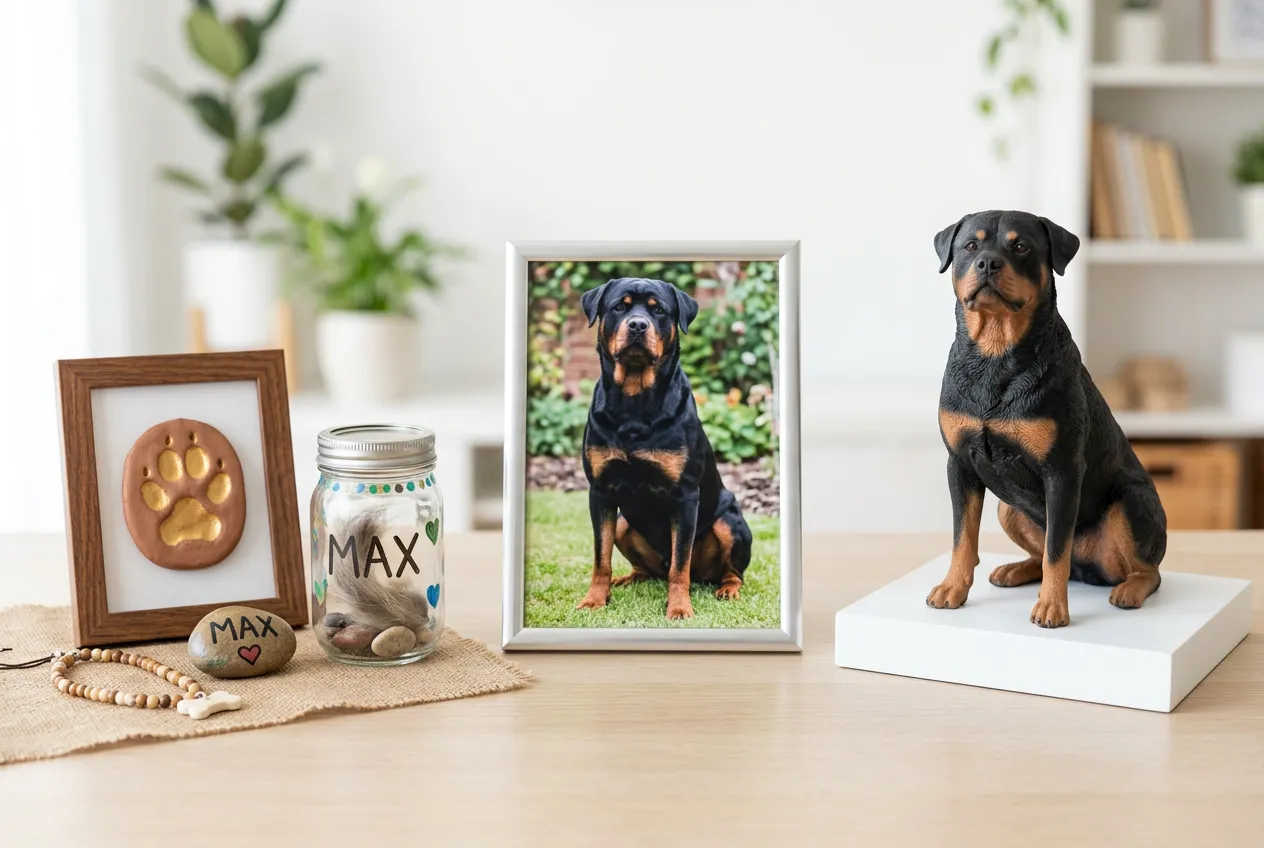
That line hit differently the morning a customer told us she'd been staring at a half-finished clay paw print on her front porch for eleven months, unable to finish it or throw it away. She'd lost her Rottweiler, Duke, and the cracked, lopsided impression next to her coffee mug each morning wasn't a comfort—it was a reminder of something she couldn't get right. When you're weighing a DIY pet memorial vs. a custom figurine, the real comparison isn't about cost or craftiness. It's about what you'll actually finish, what will actually last, and what you'll actually want to look at in five years.
Quick Takeaways
- DIY keepsakes carry hidden emotional costs — a failed project during grief can feel worse than no project at all
- Rottweiler-specific markings are uniquely hard to replicate — mahogany points, brow dots, and chest patches demand precision most DIY methods can't deliver
- The best memorial option depends on your timeline — grieving pet owners need fast completion, not open-ended craft projects
- Full-color 3D-printed figurines from PawSculpt — capture breed-accurate detail without requiring any artistic skill from you
- Durability varies wildly across memorial types — some DIY options degrade within 12 months while resin figurines last decades
The Comparison Nobody's Making Honestly: Emotional Labor vs. Emotional Payoff
Most "DIY vs. custom" articles give you a neat two-column list. DIY is cheaper, custom is prettier. End of article. But that framing misses the variable that matters most: your emotional state when you're making the decision.
Here's what we mean. A pet owner browsing Pinterest for Rottweiler memorial ideas at 2 AM the week after a loss is not the same person who's calmly researching birthday gift options for a healthy four-year-old dog. The context changes everything—your patience, your fine motor control (grief affects this, by the way), your ability to tolerate imperfection, and your bandwidth for multi-step projects.
We've worked with thousands of pet families, and the pattern is remarkably consistent: about 60-70% of DIY memorial projects that begin during acute grief go unfinished. That's not a knock on anyone's ability. It's a recognition that grief and crafting pull from the same emotional reservoir.
"A memorial you never finish carries more weight than one you never start."
So before we compare glue guns to 3D printers, let's establish the framework this article actually uses. We're evaluating every option across five dimensions that matter in the real world:
- Completion probability — Will you realistically finish this?
- Breed accuracy — Can it capture what made your Rottweiler look like your Rottweiler?
- Durability — Where will this be in 2030?
- Emotional cost — How does the process itself feel?
- Financial cost — What's the true total, not just materials?
That's the honest comparison. Let's get into it.
DIY Pet Keepsake Options: A Realistic Breakdown for Rottweiler Owners
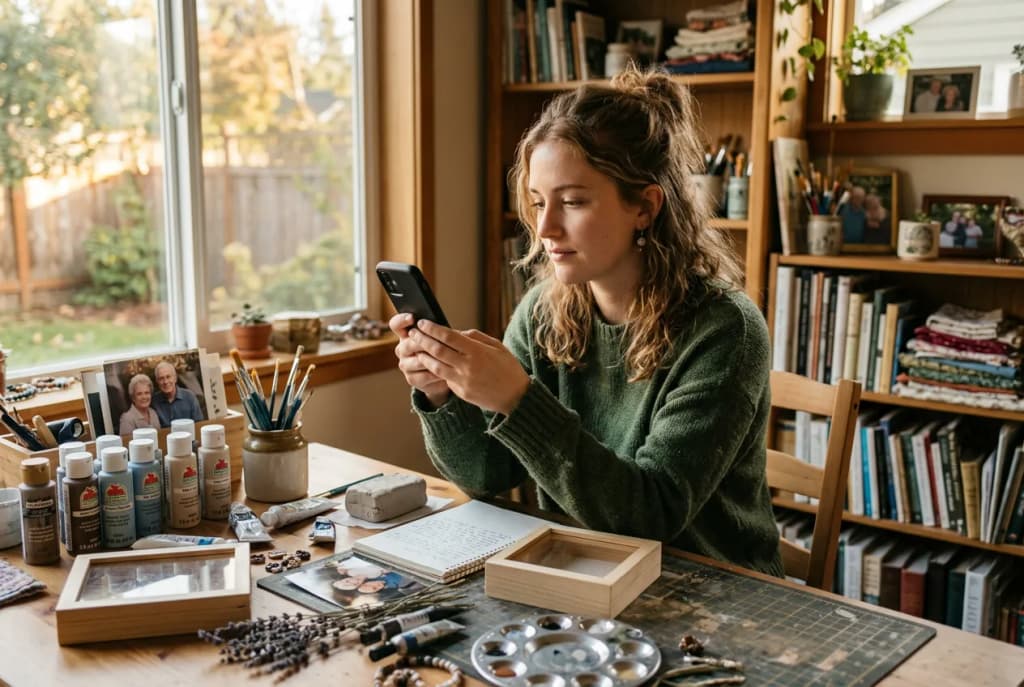
We'll be real—some DIY options are genuinely wonderful. Others are more Instagram fantasy than living-room reality. Here's what actually works, what doesn't, and why Rottweilers specifically make some of these harder than the tutorials suggest.
Paw Print Impressions (Clay, Plaster, or Ink)
Who it's for: Pet owners who want a tactile, physical imprint of their dog.
Budget: $8–$25 for a kit
This is the most common DIY memorial, and for good reason—it's simple in concept. Press your dog's paw into air-dry clay or a plaster mold, let it set, done. Ink prints on paper are even simpler.
But here's the Rottweiler-specific catch: large-breed paw pads spread wider under body weight than the impression kits typically accommodate. Many standard memorial kits are designed for small-to-medium breeds. A 95-to-135-pound Rottweiler's paw can exceed the frame dimensions, giving you a cropped, edge-to-edge print that loses the natural spacing between toe pads.
The bigger problem: getting a clean impression from a living dog requires the dog to hold still with moderate, even pressure for 10-15 seconds. Rottweilers are famously wiggly when you want them to be still. If you're taking a posthumous print, the window is narrow—most vets recommend within 2-4 hours—and the emotional difficulty of handling your dog's paw in that state is something no tutorial prepares you for.
Pro tip: If you go this route, buy two kits. The first attempt rarely turns out usable, and you may not get a redo.
Shadow Box Displays
Who it's for: Pet owners who want to curate a visual collection—collar, tags, photos, fur clippings.
Budget: $15–$60 for materials
Shadow boxes can be beautiful. A well-arranged one tells a story: the faded red collar, the rabies tag from 2019, a tuft of that distinctive black-and-mahogany fur, a favorite photo printed on matte paper. The golden afternoon light catches the glass, and the whole thing glows on your wall like a small museum exhibit dedicated to one good dog.
The hidden cost here is curation time and emotional exposure. You're sorting through your dog's belongings, making decisions about what to include, handling objects saturated with scent and memory. For some people, that's therapeutic. For others, it's excruciating. There's no universal answer—but know what you're signing up for.
Completion rate observation: Shadow boxes have a higher finish rate than most DIY options because there's no "skill barrier." You're arranging, not creating. That matters.
Durability note: Without UV-protective glass, photos and fabric inside shadow boxes fade noticeably within 18-24 months of sun exposure. Spend the extra $10-15 on UV glass. It's worth it.
Resin Keepsakes (Fur or Ash Encapsulation)
Who it's for: Pet owners comfortable with mixed-media craft projects and resin work.
Budget: $30–$80 for quality resin supplies
This is where DIY tutorials and reality diverge most dramatically. The Pinterest version: a crystal-clear dome with a perfect curl of fur suspended inside, maybe some dried flowers, looking like a professional art piece. The reality for a first-time resin worker: bubbles, cloudiness, uneven curing, and a sticky mess that takes 24-72 hours to fully harden (if it hardens evenly at all).
Epoxy resin requires precise 1:1 mixing ratios. Temperature affects curing. Humidity affects clarity. And fur—especially the dense, double-coated fur Rottweilers carry—traps micro-bubbles that create a foggy effect no amount of torch-popping fully resolves.
We've seen beautiful DIY resin pieces. We've also seen pet owners who spent $60 on supplies and three failed attempts before giving up. The skill curve is steeper than any tutorial admits.
Pro tip: If you want to try this, practice with a test batch using a random piece of fabric before using your pet's actual fur. You don't want your only fur clipping trapped in a cloudy, lopsided dome.
Painted Portraits (Canvas or Digital)
Who it's for: Pet owners who are artists or willing to commission one.
Budget: $5–$30 for DIY supplies | $75–$400+ for commissioned work
A portrait captures expression in a way few other memorials can. The tilt of your Rottweiler's head, the way their brow dots lifted when they heard the treat bag crinkle, the light catching the rust-colored patches above their eyes.
If you can paint or draw, this is one of the most emotionally satisfying DIY options. But let's be honest about the skill requirement: reproducing a Rottweiler's specific tan-point pattern demands color-matching ability most casual artists don't have. The difference between "generic Rottweiler" and "my Rottweiler" often comes down to the exact placement and shade of those mahogany markings, which vary significantly from dog to dog.
Commissioning a portrait sidesteps the skill issue but introduces wait times (often 3-8 weeks for quality work) and the risk of revision cycles if the artist doesn't capture the likeness.
Comparison Table: DIY Options at a Glance
Here's how these stack up across our five evaluation dimensions:
| DIY Option | Completion Probability | Rottweiler Accuracy | Durability (Years) | Emotional Cost | Material Cost |
|---|---|---|---|---|---|
| Paw Print Kit | Medium (60%) | N/A (imprint only) | 3-10 years | High (timing pressure) | $8–$25 |
| Shadow Box | High (80%) | Medium (photo-dependent) | 5-15+ years (with UV glass) | Medium-High | $15–$60 |
| Resin Encapsulation | Low (35%) | Low (abstract) | 10-20+ years | Medium | $30–$80 |
| Painted Portrait | Low-Medium (varies) | High (if skilled) | 15-30+ years | Low-Medium | $5–$400+ |
That "Completion Probability" column is the one most comparison articles leave out. And it's the one that matters most.
Why Rottweiler Memorials Are Harder Than Most Breeds—And What That Means for Your Options
This section is the one you won't find in generic pet memorial guides, because most articles treat all breeds as interchangeable. They're not.
Rottweilers present three specific challenges for keepsake accuracy:
1. The Tan-Point Pattern Is a Fingerprint
Every Rottweiler's mahogany markings—the dots above the eyes, the patches on the cheeks, the triangles on the chest, the pencil marks on the toes—are individually unique. Two Rottweilers from the same litter will have noticeably different marking placement, size, and intensity. The American Kennel Club's breed standard describes the ideal pattern, but real-world Rotties deviate constantly.
This means any memorial that aims to look like your dog (rather than a Rottweiler) needs to nail these specifics. A shadow box photo does this automatically. A paw print doesn't attempt it. A painted portrait depends entirely on the artist's reference photo and skill. And a generic figurine from a big-box store? It'll look like a Rottweiler. It won't look like yours.
2. The Coat's Black Is Deceptively Complex
That black coat isn't just black. In sunlight, it carries deep brown undertones. In shade, it can appear almost blue-black. The transition zone between black and mahogany isn't a hard line—it's a gradient that shifts over a few millimeters. Capturing this in any medium—paint, clay, resin—requires an understanding of color depth that goes beyond "use black."
3. Expression Lives in the Brow
Rottweilers are famously expressive dogs, and most of that expression concentrates in the eyebrow area—those tan dots that move independently, creating what owners call "the Rottie eyebrows." A memorial that captures your dog's personality needs to get the brow geometry right. Too high, too low, too wide, too narrow—and it looks like a different dog.
"The difference between 'a Rottweiler' and 'my Rottweiler' is about three millimeters of eyebrow placement."
This is exactly the kind of breed-specific detail that makes the DIY pet memorial vs. custom figurine decision more nuanced than most articles acknowledge. If your goal is a keepsake that broadly represents your relationship with a dog you loved, many DIY options work perfectly. If your goal is an artifact that looks like that specific dog, the precision bar rises significantly.
Custom Rottweiler Figurines: What the Technology Actually Delivers in 2025
Let's talk about the other side of this comparison. Custom pet figurines have existed for years, but the technology behind them has changed dramatically. We're not talking about the same hand-molded clay figurines from a decade ago.
Modern custom figurines—the kind produced by companies like PawSculpt—use a fundamentally different process. Here's how it works in plain terms:
Step 1: Digital Sculpting. A master 3D artist builds a digital model of your specific pet using your photos as reference. This isn't a template with minor adjustments. It's a ground-up digital sculpture that accounts for your Rottweiler's ear set, head shape, body proportions, and—critically—the exact placement and coloring of their markings.
Step 2: Full-Color 3D Printing. The digital model is printed in full-color resin using advanced 3D printing technology. The color is embedded directly into the material, voxel by voxel—imagine each tiny point of the figurine carrying its own color instruction. This isn't a white shape with color applied afterward. The mahogany brow dots, the black coat, the chest patch—they're all part of the resin itself.
Step 3: Clear Coat. The only manual finishing step is applying a protective clear coat that adds UV resistance and a slight sheen. That's it. No painting. No brushes. No color applied by human hands after printing.
The result is a figurine where color accuracy is driven by software and printing precision rather than an artist's hand steadiness. For breed-specific markings like a Rottweiler's tan-point pattern, this means the limiting factor is the quality of your reference photos, not the skill of a painter.
"Every Rottweiler's markings are as unique as a thumbprint. Our 3D artists treat them that way—building each figurine from your photos, not from a breed template."
— The PawSculpt Team
A Day-in-the-Life Scenario: What Ordering Actually Looks Like
Picture this: It's a Tuesday evening, and you're sitting at the kitchen table with your phone, scrolling through photos of your Rottweiler, Max. You pick three good ones—a front-facing shot in natural daylight showing his brow markings, a side profile from last summer at the park, and a close-up of his distinctive chest patch that was slightly larger on the left side. You upload them, add a note about the pinkish spot on his nose that developed at age six, and you're done in under ten minutes. Over the next stretch of time, a digital artist builds Max from those photos. You get a preview before anything prints. If the brow dots are too small or the ear tilt is off, you request changes. Once you approve, the figurine prints in full color, gets its clear coat, and ships to your door. The whole thing required roughly twelve minutes of active effort on your end.
Compare that to the weeks or months of active emotional labor most DIY projects demand.
What You're Actually Paying For (And What You're Not)
Custom figurines cost more than a $12 clay kit. That's obvious. But the honest cost comparison needs to include factors people overlook:
| Cost Factor | DIY Keepsake | Custom Figurine |
|---|---|---|
| Material/product cost | $8–$80 | Visit pawsculpt.com for current pricing |
| Failed attempt costs | $15–$60 (replacement supplies) | $0 (preview approval before printing) |
| Time investment | 2–20+ hours active work | ~10 minutes (photo upload + review) |
| Skill requirement | Low to High (varies by project) | None |
| Emotional labor during process | Medium to Very High | Low (photos are the hardest part) |
| Breed-specific accuracy | Low to Medium | High (digitally modeled from your photos) |
| Lifespan | 1–30 years (varies wildly) | Decades (UV-resistant resin) |
That "Failed attempt costs" row is the sleeper. We hear from families all the time who spent $40-60 on resin supplies, another $25 on a second clay kit after the first cracked, and $15 on a frame for a portrait that didn't turn out—before eventually ordering a custom figurine anyway. The total DIY spend sometimes exceeds what the figurine would have cost in the first place.
This isn't an argument against DIY. It's an argument for going in with realistic expectations about the total investment.
The Counterintuitive Truth About "Making It Yourself"
Here's the insight most articles won't give you, and it's the one that changes how you think about this entire decision:
The emotional value of a memorial has almost nothing to do with whether you physically made it.
There's a cultural assumption—especially in the crafting and pet communities—that DIY inherently carries more love, more meaning, more emotional weight than something you ordered. That handmade equals heartfelt. And if you don't make it yourself, you've somehow taken a shortcut on your grief.
That assumption is wrong. And it causes real harm.
We've worked with pet owners who felt guilty for "not being crafty enough" to make a proper memorial. Who apologized for ordering a figurine as if it were a lesser choice. Who framed their decision as a failure rather than a practical, emotionally intelligent response to their situation.
Look—if you love woodworking and spending a weekend in your garage building a memorial urn brings you peace, that's beautiful and valid. But if you're a busy parent with two kids and a full-time job who lost their Rottweiler three weeks ago, ordering a custom figurine isn't a shortcut. It's a decision that prioritizes your emotional wellbeing over an arbitrary craft standard.
The memorial's value comes from what it represents and how it makes you feel when you see it, not from whether your hands touched every step of its creation.
"The best memorial isn't the one you suffered through making. It's the one that makes you smile when you walk past it."
Research on grief and tangible objects supports this. The ASPCA's resources on pet loss emphasize that meaningful rituals and tangible remembrances aid in processing grief—without specifying that those items must be self-made. What matters is intentionality, not construction method.
A Practical Decision Framework: Which Option Is Actually Right for You?
Enough philosophy. Let's make this actionable. Here's a decision tree based on the patterns we've observed across thousands of customer interactions:
Choose DIY Paw Prints If:
- Your pet is still living (much easier with a cooperative, healthy dog)
- You want a physical imprint rather than a visual likeness
- You have someone to help hold your dog steady during the process
- You're comfortable with imperfection (charm over precision)
Choose a Shadow Box If:
- You already have meaningful physical items (collar, tags, fur)
- You find the sorting and arranging process therapeutic rather than painful
- You want a wall-mounted display rather than a shelf piece
- Your timeline is flexible (these tend to evolve over weeks as you add items)
Choose Resin Encapsulation If:
- You have prior experience with epoxy resin
- You want to preserve a specific physical element (fur, ashes, a tiny tooth)
- You're willing to practice on test batches first
- You can handle 1-3 failed attempts without additional emotional distress
Choose a Commissioned Portrait If:
- Visual accuracy is your top priority and you have a large budget
- You have high-quality reference photos with good lighting
- You're comfortable with extended timelines (3-8 weeks typical)
- You want a large-format display piece (canvas, framed print)
Choose a Custom 3D-Printed Figurine If:
- You want breed-specific accuracy without any craft skill requirement
- Your emotional bandwidth is limited (grief, busy schedule, or both)
- You want a tangible, three-dimensional object rather than a flat image
- You value consistency—what you approve in the preview is what you receive
- You want something durable enough to last decades without maintenance
The "Both" Option Nobody Talks About
Here's something we've noticed that surprises people: the most satisfied families often do both. They order a custom Rottweiler figurine as their primary, high-accuracy memorial, and then do a simple DIY project—a paw print ornament, a small shadow box—as a complementary piece. The figurine handles the "likeness" burden. The DIY piece handles the "I made something with my hands" need. Neither one carries the full emotional weight alone.
This hybrid approach has a much higher overall satisfaction rate than going all-in on either option. Something to consider.
Caring for Your Keepsake: The Five-Year Test Most People Forget
Whatever you choose, think about where this item will be in five years. Not just emotionally—physically. Because the most heartbreaking follow-up messages we get are from people whose DIY memorials degraded and they didn't have materials to redo them.
Quick durability checklist:
- Air-dry clay cracks in low humidity and crumbles if dropped. Seal it with polyurethane if you want it to last more than a couple of years.
- Ink paw prints on paper fade within 12-18 months without archival framing. Standard printer paper accelerates this.
- Epoxy resin yellows with UV exposure over 3-5 years unless UV-stabilized resin was used (most craft-store resins are not).
- Shadow box contents are only as durable as their weakest element. Fabric fades. Paper yellows. Metal tags tarnish.
- Full-color resin figurines (like PawSculpt's) use UV-resistant materials and a protective clear coat specifically designed for long-term display. The color is embedded in the resin rather than applied on the surface, so there's no paint layer to chip, peel, or fade.
If longevity is a priority, factor it into your decision before you invest time and emotion into a project.
| Keepsake Type | Primary Degradation Risk | Mitigation Step | Realistic Lifespan |
|---|---|---|---|
| Clay paw print | Cracking, crumbling | Seal with polyurethane | 3–10 years |
| Ink print on paper | Fading, yellowing | Archival framing + UV glass | 5–15 years |
| DIY resin piece | UV yellowing | Use UV-stabilized resin | 5–15 years |
| Shadow box | Content fading | UV-protective glass | 5–15+ years |
| Custom resin figurine | Minimal (UV-resistant) | Keep from extreme heat | 20+ years |
What Actually Matters When the Light Hits the Shelf
Close your eyes for a second and think about what you want to see when you walk past your Rottweiler's memorial at 7 AM on a random Wednesday, eighteen months from now.
Morning light angling through the window. Coffee in hand. And there on the shelf—or the mantel, or the side table next to the couch where your dog used to rest their enormous head on your knee—sits something.
What is that something? Is it a perfectly imperfect clay paw print your kid helped press? Is it a shadow box with a collar you can almost still smell if you open the glass? Is it a figurine that looks so much like your dog that guests do a double-take and say, "Wait—that looks exactly like him"?
There's no wrong answer. Truly. The wrong answer is the one you never finish, the one that crumbles, or the one you chose because someone else said it was more meaningful.
The right answer is the one that makes you pause for half a second on that random Wednesday morning, feel something warm instead of something sharp, and keep walking into your day a little lighter.
That's the whole point. That's the only comparison that matters.
If you know which option that is for you, go do it. Today. Not next month. The memorial you start is infinitely more valuable than the perfect one you research forever.
And if you're still unsure—if part of you wants the accuracy of a custom piece but part of you feels like you "should" make something yourself—give yourself permission to choose ease. Choose the option that lets you grieve without a glue gun in your hand. Choose the one that shows up at your door looking like your dog, ready to take its place on the shelf where it belongs.
Your Rottweiler wouldn't care how it was made. They'd just want to be remembered. And they will be.
Frequently Asked Questions
Is a DIY pet memorial more meaningful than a custom figurine?
Not inherently—and this is one of the biggest misconceptions in the pet memorial space. The emotional value of a memorial comes from what it represents and how it makes you feel when you encounter it, not from whether your hands touched every stage of production. A figurine you ordered with intention and care carries the same love as a clay piece you shaped yourself. Give yourself permission to choose the option that fits your life.
How do I choose the best memorial option for my Rottweiler?
Start with an honest self-assessment across four factors: your current emotional bandwidth, your craft skill level, how important breed-specific accuracy is to you, and your budget. If you're in acute grief and want something that looks like your specific dog, a custom figurine removes the skill barrier entirely. If you find hands-on crafting therapeutic and have flexible timing, DIY can be deeply rewarding. Many families we work with do both.
What photos work best for a custom Rottweiler figurine?
Three types make the biggest difference: a well-lit front-facing shot showing both brow markings and facial structure, a full side profile showing body proportions, and at least one close-up of any unique features—an unusual chest patch shape, a scar, a graying muzzle. Natural daylight (not flash) produces the most accurate color reference. Avoid heavily filtered or edited photos.
How long do DIY pet keepsakes typically last?
This varies enormously by material. Unsealed air-dry clay can crack within 2-3 years in dry climates. Ink paw prints on standard paper fade within 12-18 months of sun exposure. Epoxy resin yellows over 3-5 years without UV stabilization. Shadow boxes with UV-protective glass can last 15+ years. Full-color resin figurines with UV-resistant materials and clear coating are designed to last decades.
Can a 3D-printed figurine really capture my specific dog's appearance?
Yes—and this is where the technology has made the biggest leap. Full-color 3D printing doesn't apply color to a pre-made shape. It builds the color into the resin itself, point by point, based on a digital model sculpted from your actual photos. For Rottweilers, this means the exact placement of tan-point markings, the gradient between black and mahogany, and individual facial features are reproduced with a precision that most manual methods can't match.
What is the most common mistake people make with DIY pet memorials?
Starting a complex, multi-step project during the peak of grief. The impulse to "do something" immediately is natural and healthy—but channeling it into a high-skill project (like resin work or portrait painting) when your emotional reserves are depleted sets you up for frustration. If you want to act immediately, start with something simple and completable—a shadow box or a written letter to your pet—and save the complex projects for when you have more bandwidth.
Ready to Honor Your Rottweiler?
Every Rottweiler has a look that's unmistakably theirs—the specific tilt of those expressive brows, the exact spread of mahogany across their chest, the way they held their head when they heard your car pull into the driveway. A custom PawSculpt figurine captures those details in full-color resin that lasts, giving you something tangible to hold onto whether you're celebrating a living companion or preserving the memory of one who's moved on. When weighing a DIY pet memorial vs. custom figurine, the best choice is the one that actually gets finished—and actually looks like your dog.
Visit pawsculpt.com to explore the full process, preview options, and current service details