
The Empty Passenger Seat: Driving Without Your Co-Pilot German Shepherd
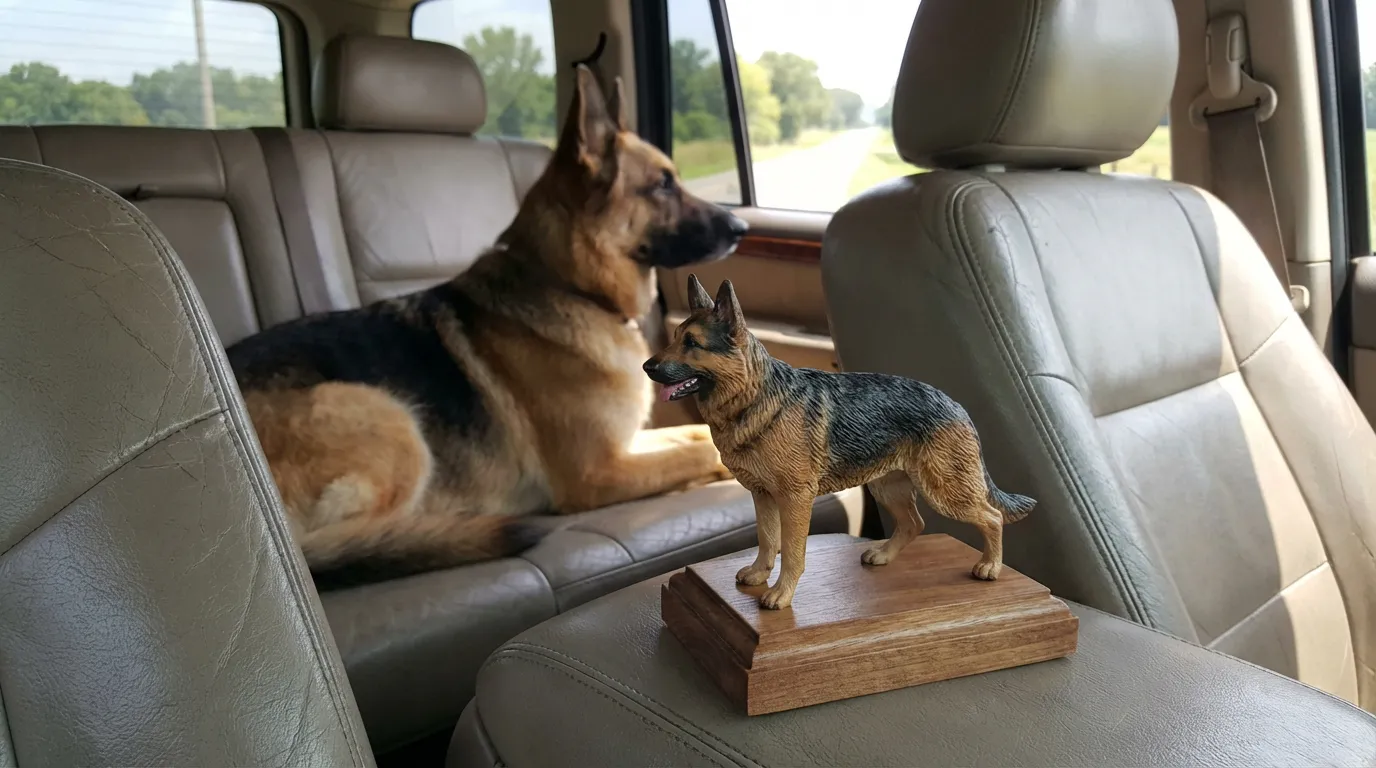
Three months ago, stepping onto your front porch meant navigating a chaotic, joyful obstacle course. You’d jingle your keys, and seventy-five pounds of black-and-tan enthusiasm would nearly knock over the potted ferns in a rush to beat you to the driveway. The air would be filled with the frantic click-clack of nails on pavement and that specific, high-pitched "Shepherd whine" that signaled pure, unadulterated excitement for a ride.
Today, the porch is just concrete and stillness. You walk to the driver’s side alone, and the only sound is the chirp of the automatic unlock echoing against the quiet neighborhood. You open the door, and for a split second, your arm muscles tense up, expecting to hold back a furry body trying to vault into the front seat. But there’s no resistance. Just an empty backseat and a rearview mirror reflecting a space that feels impossibly large.
Quick Takeaways:
- Muscle memory is real: Your brain is wired to expect your dog’s presence in the car, leading to "phantom" sensations of their weight or sound.
- The "clean car" guilt: It is normal to feel a confusing mix of relief and crushing sadness when you realize your car is finally free of dog hair.
- Reclaiming the ritual: You don't have to stop driving to their favorite spots; you just have to learn to inhabit that space differently.
- Visual anchors help: Many owners find comfort in placing a small custom figurine or the dog's collar on the dashboard to keep their "co-pilot" close during commutes.
The unique grief of the "Co-Pilot" bond
We often talk about the empty bed or the unused food bowl, but for German Shepherd owners, the vehicle is a specific, sacred territory. Shepherds aren't just passengers; they are active participants in the journey. They are working dogs at heart, and "patrolling" the neighborhood from the backseat was a job they took seriously.
When you lose your co-pilot, you lose the kinetic experience of driving. You miss the "Shepherd Lean"—that heavy pressure against the back of your driver's seat as they braced for a turn. You miss the rhythmic panting that acted as white noise during traffic jams.
The car is a confined sensory deprivation tank. In your living room, you can turn on the TV or walk into another room. In the car, you are strapped in, staring straight ahead, with the silence of the backseat hovering right over your shoulder. It forces a confrontation with grief that other spaces allow you to dodge.
The guilt of the pristine upholstery
Let's be honest about something that makes most grieving pet owners feel terrible.
A few weeks after the loss, you might take your car to the car wash. You vacuum the mats. You wipe down the windows. And for the first time in years, the car is clean. There is no layer of coarse fur woven into the fabric. There is no nose art smeared across the rear passenger window.
And you might feel a tiny, fleeting sense of satisfaction. It’s nice to have a clean car.
Immediately following that thought, a wave of guilt usually crashes down. You might feel like a traitor for appreciating the cleanliness. You might look at the pristine window and wish desperately for the smudge to be back, blocking your view.
Please hear us on this: This relief-mixed-with-sadness is not a betrayal. It is a natural physiological response to order returning to chaos. Loving your dog and appreciating a clean vehicle are not mutually exclusive concepts. That flash of relief doesn't mean you loved them less; it just means you're a human being who appreciates a tidy environment. Don't let the guilt of the "clean car" consume you.
Phantom sensations and the rearview mirror
We’ve heard this story from countless families we work with. You’re merging onto the highway, you check your blind spot, and your brain "fills in" the empty space. For a micro-second, you see the silhouette of pointed ears.
This is a cognitive hiccup. Your brain has spent years processing the visual data of your car with a dog in it. That pattern is etched deep into your neural pathways. When you check the mirror and see nothing, it creates a dissonance—a "glitch" in your reality.
Handling the "Phantom Weight"
Some owners report feeling the car move differently. Without that extra weight in the back, the suspension feels stiffer, the turns sharper. It’s a physical reminder of absence.If this sensory lack is triggering anxiety or intense sorrow during your commute, try these adjustments:
- Change the audio environment: If you usually drove in silence (listening to them pant), start listening to podcasts or audiobooks. Fill the auditory void.
- Roll the windows up (or down): If they always had the window cracked, the sound of the wind might be a trigger. Change the airflow to break the sensory association.
- Rearrange the space: It sounds trivial, but moving a tissue box or a blanket into the backseat can disrupt the visual pattern of "emptiness" in your rearview mirror.
Deciding what to do with the "Nose Art"
One of the most heartbreaking decisions a Shepherd owner faces is the window glass.
German Shepherds are notorious window-nudgers. They press those wet, black noses against the glass to get a better look at a squirrel or a passing truck, leaving behind a chaotic collage of smudges.
After they pass, that "nose art" transforms from a cleaning nuisance into a holy relic. We know owners who have driven for months, carefully cleaning around the smudges, terrified to wipe away the last physical evidence of their dog's breath.
There is no right answer here.
- The Preservationist: Some owners take a high-resolution photo of the smudges against a sunset, preserving the memory digitally before cleaning the glass.
- The Ritual: Others choose a specific day to clean it, turning it into a goodbye ceremony rather than a chore.
- The Keeper: We’ve even seen owners who refuse to clean that one window until the rain takes it naturally.
Do what your heart needs. If seeing those smudges makes you smile, keep them. If seeing them makes you sob uncontrollably while driving 65mph, it’s safer to document them and then wipe the glass clean.
Memorializing the dashboard
The dashboard is the altar of the road trip. It’s where we keep our bobbleheads, our parking passes, and our memories.
When the backseat feels too empty, many people find comfort in bringing a representation of their dog into the front seat. It’s a way of saying, “You’re still my navigator.”
We’ve seen beautiful tributes that are subtle yet powerful. Some hang the dog’s tag from the rearview mirror, letting the familiar jingle accompany them on curves. Others keep the collar wrapped around the gear shift.
Increasingly, we’re seeing pet parents choose tangible, visual anchors. A photograph on the sun visor is lovely, but it’s flat. Because the grief of losing a Shepherd is so physical—missing their size, their shape, their presence—3D representations often bridge that gap more effectively. Having a custom figurine of your Shepherd sitting on the dashboard can provide a focal point for your grief. It allows you to look over, see that familiar silhouette—the alert ears, the confident posture—and feel like you aren't traveling entirely alone. It’s a small, solid reminder that their spirit is still riding shotgun.
The First Solo Road Trip
Eventually, you will have to take a longer drive. Maybe it’s to a hiking trail you used to conquer together, or maybe it’s just a visit to family in the next state.
The first long haul is difficult. The silence stretches out. You don't have to stop for potty breaks. You can eat a burger in the car without a pair of brown eyes staring intensely at the wrapper.
Our advice? Don't try to replicate the old drives.
If you go to the same hiking trail and park in the same spot, the ghost of your dog will be waiting there. Instead, go to a new trail. Drive a different route. Stop at a coffee shop you never visited before.
Create new rituals for the car. This isn't about erasing the past; it’s about building a future where you can function without breaking down at every mile marker. Your Shepherd was a brave, adventurous soul. They wouldn't want their absence to park you in the garage forever. They would want you to keep exploring, even if the passenger seat looks a little different now.
Closing: The Road Ahead
The next time you walk out to that front porch, the silence might still catch you off guard. You might still reach for the back door handle out of habit.
That’s okay.
The emptiness in the backseat is just proof of how much space they took up in your life—not just physically, but emotionally. That heavy, hairy, wonderful German Shepherd presence changed the way you navigated the world.
So, start the engine. Adjust the mirror. Glance at the dashboard. And drive. They aren't behind you anymore; they're with you, carried in every mile you travel forward.
Frequently Asked Questions
Why is driving without my dog so difficult compared to other things?
Driving is a deeply habitual activity that relies on muscle memory. Your brain has physically mapped the presence of your dog—their breathing sounds, the way the car moves with their weight, and your routine of checking on them. When you remove that element, your brain registers it as a "glitch" or a disruption in reality. Furthermore, a car is a confined space with few distractions, which often allows grief to surface more intensely than it does in a busy house.Should I clean the nose prints off my car windows?
This is a deeply personal choice. We recommend taking a high-resolution photo of the "nose art" (perhaps with the sun shining through it) as soon as possible. This gives you a permanent keepsake. Once you have the photo, you can clean the glass whenever you feel ready, whether that's in two days or six months. If looking at the marks causes you panic or unsafe levels of distress while driving, it is better to clean them sooner.Is it normal to feel relief that my car is clean?
Absolutely, and it is vital that you forgive yourself for this. Feeling a moment of appreciation for a hair-free, clean-smelling car does not negate your love for your German Shepherd. It is a common experience called "relief-grief." You can miss your dog desperately and still appreciate having a clean vehicle. Both feelings can exist at the same time.How can I make the car feel less empty?
Try to disrupt the sensory void. If you used to drive in silence to listen to them, try playing audiobooks to fill the quiet. Visual anchors help significantly—many pet parents place a small memento, like their dog's tag or a custom figurine, on the dashboard. This gives your eyes a place to rest that acknowledges your dog's memory without forcing you to look at the empty backseat.Honor Their Memory Forever
Your pet's story deserves to be preserved in a way that captures their unique spirit. A custom PawSculpt figurine transforms your cherished memories into a timeless keepsake—every whisker, every marking, every detail that made them irreplaceable.
Free instant AI preview • 3D artist preview within 7 days • 5 free revisions