
Enrichment Ideas for Your Indoor British Shorthair Who Seems Bored
Studies indicate that domestic cats spend roughly 70% of their lives asleep, but if you share your home with a British Shorthair, you might suspect that number is a conservative estimate. I was standing at the sliding glass door to the backyard just yesterday, watching a chaotic scene unfold: a squirrel was actively taunting a blue jay, leaves were swirling in a mini-tornado, and the neighbor's dog was barking at a fence post. It was a sensory explosion. I looked down at Arthur, my plush, blue-coated companion, expecting him to be chattering at the glass. Instead, he was flat on his back on the rug, paws in the air, snoring softly.
It’s easy to mistake this breed’s stoic, low-energy demeanor for contentment, or worse, laziness. But beneath that dense, teddy-bear coat lies the brain of a highly intelligent, calculating hunter who simply refuses to waste energy on "pointless" cardio. The challenge with British Shorthairs isn't that they can't play; it's that they have very specific standards for what constitutes entertainment. If you’re reading this, you’ve probably bought the expensive laser pointer and the feather wand, only to be met with a slow blink and a heavy sigh.
Quick Takeaways:
- Rethink "Play": British Shorthairs are ambush predators, not pursuit hunters. They prefer mental strategy over high-speed chases.
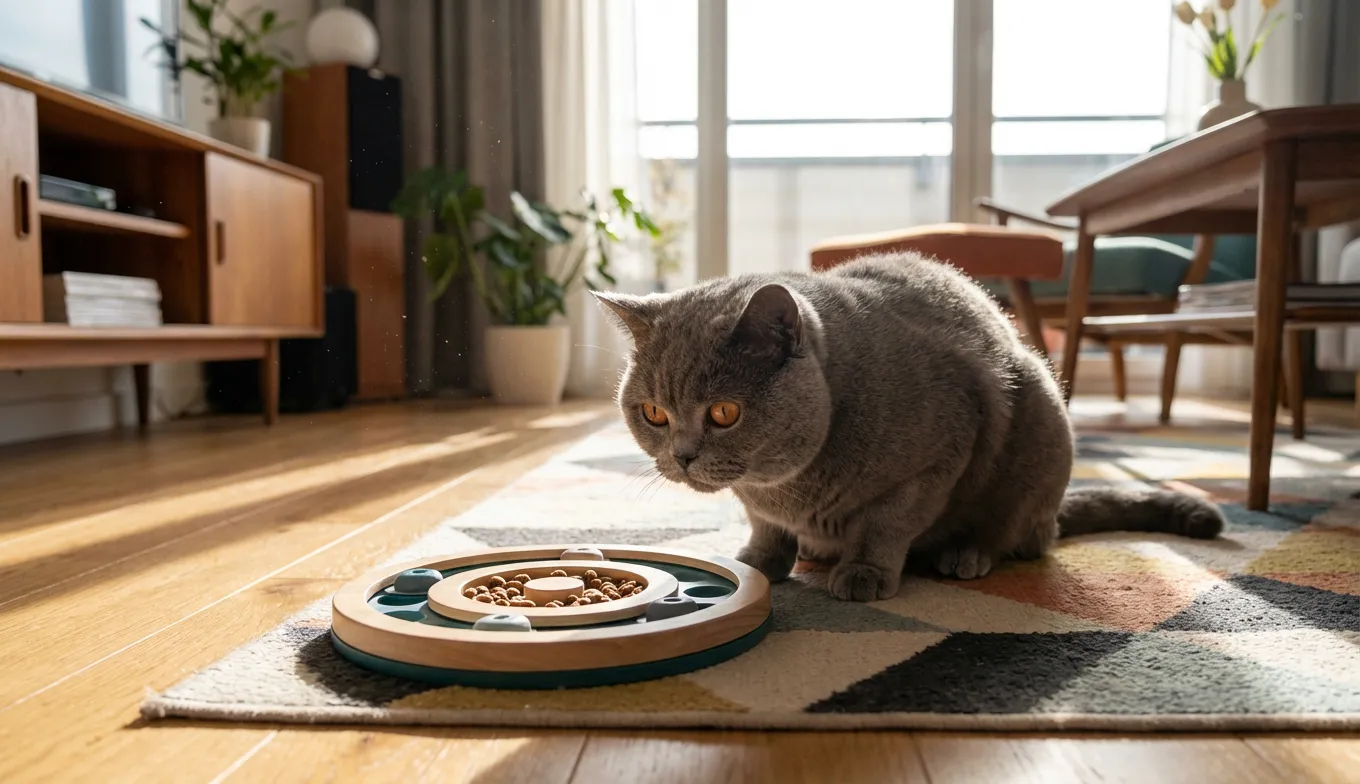
- The Food Factor: This breed is food-motivated but prone to weight gain. Swap the food bowl for puzzle feeders to burn mental energy.
- Vertical Accessibility: They are "floor cats" due to their stocky build. Use ramps or tiered steps rather than floor-to-ceiling poles.
- Scent Enrichment: Bringing the outdoors in (via scents) is often more stimulating for them than visual toys.
- Celebrating the Bond: Understanding their unique personality is key—something we see often when owners commission custom figurines to immortalize that specific, dignified "loaf" pose.
The "Lazy" Myth: Understanding the British Shorthair Operating System
There is a fundamental misunderstanding about this breed that leads to bored cats and frustrated owners. Most generic cat advice is written for the "average" cat—the mixed breed tabby or the high-octane Bengal who needs to run laps to burn off steam. If you try to run a British Shorthair like a Bengal, you will fail.
We’ve seen this dynamic play out countless times. A customer once told us about buying a massive, complex cat wheel for her British Shorthair, Barnaby. She spent weeks trying to train him. Barnaby eventually used it—as a very expensive, curved napping hammock. He wasn't being stubborn; he was being efficient.
The Ambush Predator vs. The Pursuit Predator
British Shorthairs are built like tanks—cobby, muscular, and heavy-boned. They are not aerodynamic. In the wild, a cat with this build doesn't chase down a rabbit across a field; they sit perfectly still for three hours and wait for the mouse to make a mistake.This means their "boredom" doesn't look like destruction (usually). It looks like over-grooming, over-eating, or sleeping 20 hours instead of 16. To enrich them, you have to engage their brain, not just their legs. You need to stimulate the planning phase of the hunt, which is where they thrive.
Strategic Feeding: The "Work for It" Protocol
Let's be real: British Shorthairs love to eat. It is arguably their favorite hobby. Because they are prone to obesity, we often restrict their calories, which can leave them feeling unsatisfied and bored. The counterintuitive insight here is that you shouldn't just feed them less; you should make feeding take longer.
The Rotation of Puzzles
Don't just buy one treat ball and call it a day. A British Shorthair will figure out the algorithm of a single puzzle toy in about two days, and then it becomes a chore, not a game.- Stationary Puzzles: Start with boards that require them to scoop kibble out of cups or slide covers aside. This mimics the action of fishing a mouse out of a hole.
- The "Hunt" Bowl: Stop using a ceramic bowl entirely. Divide their dry food ration into three small portions and hide them in different easy-to-access spots around the living room.
- Lick Mats: For wet food, smash it into a grooved silicone mat. This engages their tongue (which is soothing) and can turn a 2-minute gulp-fest into a 15-minute sensory experience.
Why this matters: You are tapping into the "seeking" circuit in their brain. The dopamine hit comes from finding and working for the food, not just the digestion.
Low-Impact Agility: Respecting the "Cobby" Build
One of the most common mistakes BSH owners make is buying vertical furniture that is too steep or athletic. These cats are heavy. Jumping down from six feet puts a lot of stress on their joints, and they know it. If your cat ignores the high cat tree, it’s not because they don't like heights; it’s because they don't feel safe getting down.
The "Cat Highway" for Heavyweights
Instead of vertical poles, think about horizontal navigation.- Sturdy Steps: If you want them on the window sill, give them a sturdy ottoman to step onto first.
- Wide Platforms: They need room to turn their whole body around comfortably. Narrow shelves are a no-go.
- The Tunnel Trap: Crinkle tunnels are gold for this breed. It allows them to feel hidden and secure (ambush mode) while staying on the ground.
We see this preference for "grounded dignity" all the time in our work at PawSculpt. When owners send us reference photos for their custom figurines, the British Shorthairs are rarely mid-air or climbing curtains. They are almost always posed on a plush rug, a wide chair, or sitting squarely on all four paws, looking majestic. It’s that specific, grounded power that makes them so special to sculpt.
Scent and Sound: The Invisible Enrichment
We humans are visual creatures. We buy toys that look bright and colorful. But your British Shorthair experiences the world primarily through nose and ears. If your indoor environment smells like nothing (or worse, like cleaning chemicals), it’s a sensory desert.
The "Scent of the Day"
This is the easiest, cheapest, and most effective trick for a bored indoor cat. 1. The Outside Box: Once a week, grab a shoebox. Go into your backyard or a local park. Put a handful of leaves, a twig, a pinecone, or a rock inside. Bring it in and put it on the floor. 2. Silvervine Sticks: Many cats who don't react to catnip go crazy for silvervine. It’s a different compound that triggers a euphoric, playful response. 3. The Herb Garden: A small pot of cat grass or cat-safe mint (check toxicity lists first!) placed on the floor allows them to sniff and chew, mimicking grazing behavior.The Result: Watch your cat. They will spend intense minutes sniffing every millimeter of that "Outside Box." Their whiskers will twitch; their pupils will dilate. They are reading the "news" from the neighborhood. It’s mental exhaustion in the best way.
The Art of the "Slow Play"
When you do engage in active play, you have to adjust your style. Waving a wand frantically in a British Shorthair's face is insulting to them. They will look at you like you’ve lost your mind.
The "Under the Rug" Method
Remember, they are ambushers. The prey must act like prey.Disappear: The toy needs to go behind a box or under* a sheet of tissue paper.
- The Freeze: Move the toy, then stop. Wait. Wait longer.
- The Wiggle: Make the slightest movement.
This triggers the BSH focus. You’ll see the "butt wiggle" prep. You’ll see the tail tip twitch. This period of staring and calculating is the play. The actual pounce might only last two seconds, but the three minutes of staring beforehand was the enrichment.
Visual Stimulation: Cat TV (Analog and Digital)
Since they are content observers, giving them something worth watching is vital. But be careful with actual screens (tablet games for cats). While fun, they can be frustrating because the cat can never actually "catch" the fish under the glass.
The Bird Feeder Setup
The gold standard is a bird feeder attached to the outside of a window with a suction cup. However, ensure the viewing station is comfortable. If the window sill is narrow, pull a table or cat tree right up to the glass. A British Shorthair will sit there for hours, chattering at sparrows. This is high-quality mental stimulation with zero physical impact.Aquarium Therapy
If you can manage it, a fish tank (securely covered!) is endless entertainment. The movement of fish is hypnotic and triggers the predator gaze without the frustration of a laser pointer (because the fish are real, just inaccessible).Capturing the Quiet Moments
There is a unique beauty in the way a British Shorthair exists in a home. They aren't needy, but they are present. They will follow you from room to room, supervising your work, sitting just out of reach but always within sight.
It’s this quiet companionship that makes them such beloved pets. They don't demand your attention; they simply share your space. In our studio, we often talk about how difficult it is to capture "dignity" in a sculpture, but it’s the defining trait of the British Shorthair. When we create custom pet figurines for BSH owners, we spend a lot of time getting the curve of the cheek and the solidity of the stance just right. It’s a way to honor that specific, comforting weight they bring to a household.
Recognizing that your cat’s "boredom" might actually be a desire for connection rather than entertainment is a game-changer. Sometimes, enrichment is just you sitting on the floor with them, reading a book while they lean against your leg.
The "New Thing" Rule
Finally, the British Shorthair intelligence means they notice changes. The "New Thing" rule is simple: change one thing in their environment every few days.
- Move the cat tree to a different window.
- Drape a blanket over two chairs to make a tent.
- Leave a paper grocery bag (handles cut off) in the middle of the hallway.
You don't need to buy new toys constantly. You just need to remix the environment. This forces them to investigate and re-map their territory, which keeps their brain plastic and engaged.
Final Thoughts: Quality Over Intensity
If there is one thing to take away, it is this: Your British Shorthair does not need a personal trainer; they need a puzzle master. They need you to make their indoor world interesting enough to be worth opening their eyes for.
Start small. Tomorrow, bring in a pinecone from the yard. Next week, try a food puzzle. Observe how they interact with these quiet, thoughtful forms of enrichment. You’ll likely find that your "lazy" cat is actually quite busy—busy thinking, busy smelling, and busy planning an ambush that may never happen, but is delightful to imagine.
Frequently Asked Questions
How do I know if my British Shorthair is actually bored?
It can be subtle with this breed. While they naturally sleep a lot, boredom often manifests as "destructive behaviors done lazily." This might look like scratching the sofa right in front of you, over-grooming until they have bald spots, or meowing excessively at night. Another key sign is "ankleambushing"—if they start swatting at your legs as you walk by, they are desperate for interaction.What are the best toys for British Shorthairs?
Forget the high-flying feathers that require backflips. British Shorthairs excel with "ground prey."- Kick Sticks: Large, long toys filled with catnip that they can grab with front paws and kick with back paws.
- Puzzle Feeders: Anything that dispenses food when batted around.
- Concealed Wands: Toys that move underneath a fabric cover (like the "Undercover Mouse" electronic toys) are fascinating to them.
Do British Shorthairs need a companion to be happy?
This is a common question. Unlike Siamese or Bengals who often crave a playmate, British Shorthairs are notoriously independent. They are often quite happy being the "only child." If you do get a second pet, aim for another low-energy breed. A hyperactive kitten jumping on a British Shorthair's head is usually a recipe for a very grumpy older cat.Why does my British Shorthair hate being picked up?
It’s physics, mostly. Because they are dense and heavy-boned, being suspended in the air puts uncomfortable pressure on their chest and abdomen if not supported perfectly. They also have a dignified nature and dislike the lack of control. If you must hold them, always support their hind legs fully—never let them dangle. But generally, they prefer to show affection by sitting next to you, not on you.Celebrate Your Pet's Unique Personality
Every pet has quirks and characteristics that make them one-of-a-kind. A custom PawSculpt figurine captures those details—the way they tilt their head, their favorite pose, the spark in their eyes.
Free instant AI preview • 3D artist preview within 7 days • 5 free revisions