Explaining the Loss of a Guinea Pig to Children: A Gentle Parenting Guide
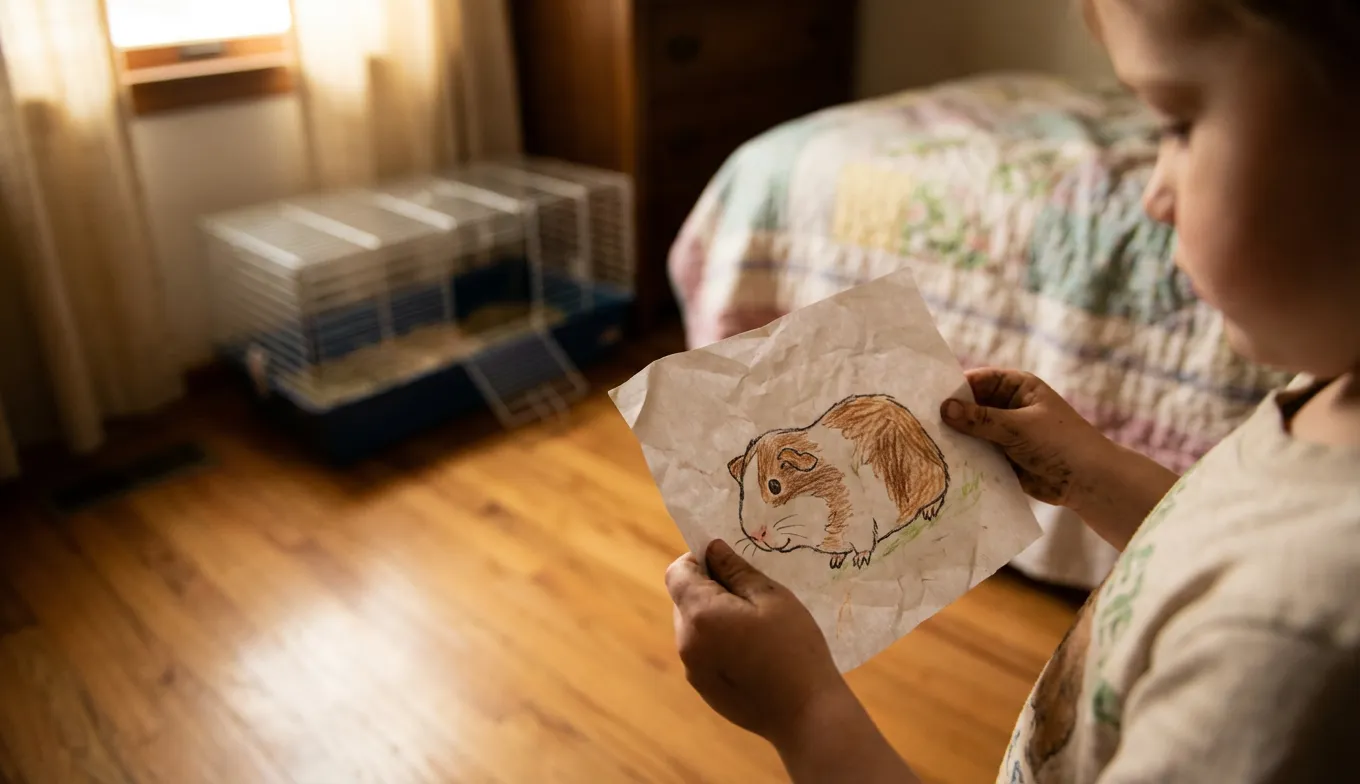
The cardboard shoebox sat on the garage workbench, looking far too small to hold so much sadness. You could hear the muffled sound of your seven-year-old trying to stifle a sob from the other side of the door, a sound that cracked your own heart right down the middle. Inside that box, wrapped in a scrap of fleece from an old pajama bottom, lay Oreo—stiff, cold, and suddenly absent of that chaotic, squeaking life that greeted you every time the refrigerator door opened. You found yourself staring at a rusty shovel in the corner, feeling a strange mix of dread and absurdity. It’s just a guinea pig, a voice in your head whispered. But looking at the Sharpie-scrawled "OREO" on the lid, you knew that was a lie. This wasn't just a rodent; it was a first lesson in mortality.
Quick Takeaways:
- Validate the grief: Treat the loss of a small pet with the same gravity as a dog or cat; size doesn't dictate love.
- Avoid euphemisms: Using terms like "put to sleep" can cause confusion and anxiety in young children.
- Create rituals: Small ceremonies or tangible memorials help children process closure.
- Tangible memories help: Physical keepsakes, like custom figurines or framed photos, give grief a place to go.
- Watch for "disenfranchised grief": Prepare your child for peers who might say, "It was just a hamster."
The "Starter Pet" Myth and Why It Hurts
We need to talk about the elephant in the room—or rather, the guinea pig in the cage. There is a pervasive cultural script that treats small mammals as "starter pets." They are seen as practice runs for the "real" responsibility of a dog.But here is the counterintuitive insight that most parenting guides miss: Because guinea pigs are often a child's first pet, their death is often a child's first encounter with death itself.
The stakes aren't lower because the animal was small; they are actually higher because the emotional landscape is uncharted. When a child loses a guinea pig, they aren't just mourning a pet; they are grappling with the sudden realization that living things stop working.
We’ve heard from countless parents who felt blindsided by the intensity of their child's reaction. You might feel foolish crying over a creature that cost $40 at a pet store, or you might feel a secret, shameful wave of relief that you no longer have to clean the cage. That relief is normal. It doesn't make you cold. It makes you a tired parent who just lost a chore but gained a grieving child.
Breaking the News: The Biology vs. The Metaphor
When you sit your child down, your instinct will be to soften the blow. You'll want to say Oreo "went to sleep" or "went to live on a farm."Don't do it.
Child psychologists and grief experts generally agree that euphemisms are dangerous for children under ten. If you tell a six-year-old that Oreo is "sleeping," they may become terrified of going to bed themselves, fearing they won't wake up.
The Biological Approach
Instead, try the biological explanation. It sounds harsh to adult ears, but it provides concrete answers to a child's literal mind.- The Script: "Oreo’s body stopped working. His heart stopped beating, and he can’t eat or play anymore. He doesn't feel any pain, but he can't come back."
- The Why: This removes the mystery. It separates the physical body from the concept of suffering.
The "Squeak" Factor
Here is a detail specific to guinea pigs that often haunts children: the silence. Guinea pigs are vocal. They wheek, purr, and chatter. The sudden silence of the cage is acoustically heavy.Acknowledge this sensory change. "It’s really quiet in here without Oreo's wheeking, isn't it? I miss that sound too." Naming the void helps the child realize they aren't imagining the emptiness.
Validating "Small" Grief in a Big World
One of the hardest parts of losing a guinea pig is what experts call disenfranchised grief—grief that isn't acknowledged by society.Your child will go to school, and a classmate might say, "Why are you crying? It’s just a rat."
Prepare them for this. Explain that not everyone understands how smart and affectionate guinea pigs are. Tell them, "Some people don't know that guinea pigs have best friends and favorite foods. We know how special Oreo was, and that’s what matters."
Activity: The "Personality" List
To combat the idea that their pet was "just a rodent," sit down and make a list of Oreo's specific quirks.
He liked the red peppers but hated the green ones.*
He chirped when the bag of hay rustled.*
He had a swirl of fur on his left hip.*
This validates the relationship. It confirms that Oreo was an individual, not a generic animal.
The Burial and the Box: Creating Rituals
Let's go back to that shoebox in the garage. Rituals are the bridges we build over the chasm of loss. For children, doing something with their hands helps process the abstract feelings in their heads.Decorating the Vessel
Don't rush the burial. Let your child decorate the box. It sounds morbid to some, but drawing hearts, writing messages, or taping photos onto the coffin is a profound act of caretaking. It allows them to "parent" the pet one last time.The Ceremony
You don't need a sermon. A few words in the backyard are enough.- Planting: Plant a perennial flower over the spot. "Every time these flowers bloom, we’ll remember Oreo."
- The Stone: Let them paint a rock to mark the grave.
- The Letter: Have older children write a letter to the pet to bury with them.
Note: If you can't bury the pet (frozen ground or apartment living), many vets offer cremation services even for small pets. It is not "silly" to ask for this.
Memorializing: When Photos Aren't Enough
Sometimes, a photo isn't enough. Photos are flat; pets are not.We’ve seen a shift in how families memorialize small pets. In the past, you might just throw away the cage and move on. Now, families are recognizing the need for tangible reminders.
Some families keep a lock of fur or a paw print (though guinea pig paws are tricky to print clearly). Others look for something more durable. This is where we often step in. At PawSculpt, we’ve crafted figurines for everything from Great Danes to hamsters.
There is something grounding about holding a physical representation of a pet. For a child, having a small, durable figurine of their guinea pig on their nightstand can be incredibly soothing. It’s not about replacing the pet; it’s about having a focal point for their memory—something they can touch when they forget exactly how the markings on the back looked.
If you aren't ready for a custom figurine, consider:
- A shadow box: Include their collar (if they wore one), a favorite chew toy, and a photo.
- A donation: Donate their unused food and bedding to a local shelter in their name.
The "Replacement" Trap
"We'll get another one this weekend."Please, pause.
The urge to fix your child's pain is overwhelming. But rushing to the pet store teaches a difficult lesson: that living things are replaceable commodities.
The "Two-Week" Rule:
Wait at least two weeks before even discussing a new pet. This gives the child permission to be sad. If you replace the pet immediately, the child may feel guilty for loving the new one, or resent the new one for not being the old one.
When you do get a new guinea pig, change something. Get a different breed (an Abyssinian instead of an American), or a different color. Rearrange the cage. Make it clear this is a new friend, not Oreo 2.0.
Dealing with Guilt (Yours and Theirs)
Here is the shadow side of small pet ownership: they are fragile.Did we feed him the wrong thing? Did the draft kill him? Did I drop him?
Children often harbor secret guilt. "I didn't play with him yesterday, and now he's dead."
Address this head-on. "Guinea pigs have very small bodies, and sometimes things go wrong inside them that we can't see and can't fix. You gave him a happy life."
And for you, the parent:
If the death was accidental—maybe the cage was left open and the dog got in, or the temperature dropped too low—forgive yourself. Small animals are incredibly delicate. We have spoken to parents who carried guilt for decades over a childhood hamster. Model self-forgiveness for your child. "We made a mistake, and we are so sad about it. We will learn from this to keep future animals safe."
Moving Forward
The grief will fade, but the lesson remains. By guiding your child through the loss of their guinea pig with respect and honesty, you are giving them a toolkit for the future. You are teaching them that love is worth the pain of loss, and that goodbye doesn't mean forgotten.Years from now, they might not remember the specific day Oreo died. But they will remember that you stood with them in the garage, holding the shoebox, and that you didn't tell them to "get over it." You told them it mattered.
Frequently Asked Questions
How do I explain euthanasia to a child for a guinea pig?
Be honest but gentle. Avoid the phrase "put to sleep," as this can cause sleep anxiety. Instead, explain: "The vet gave Oreo a very special medicine. It didn't hurt, but it made his heart stop beating so he wouldn't feel sick or be in pain anymore. It was the kindest thing we could do to help him."Is it normal for my child to not cry over their pet's death?
Absolutely. Children grieve differently than adults. They often "puddle jump" in their grief—they might be sobbing one minute and asking to play Minecraft the next. This doesn't mean they didn't love the pet; it just means their brains can only handle intense sadness in short bursts.What should we do with the empty cage?
Don't make the cage vanish while your child is at school. That can feel like a betrayal or an erasure of the pet's existence. Ask your child, "When do you think we should clean the cage?" Doing it together, perhaps while sharing memories, can be a healthy part of the process.Should I let my child see the dead body?
If the child asks to, and the body is not traumatic to look at, usually yes. Seeing the stillness helps children understand the reality of death—that the "life" is gone from the shell. If you choose to do this, prepare them: "He will feel cold and he won't move at all." If they don't want to see the body, never force them.Honor Their Memory Forever
Your pet's story deserves to be preserved in a way that captures their unique spirit. A custom PawSculpt figurine transforms your cherished memories into a timeless keepsake—every whisker, every marking, every detail that made them irreplaceable.
Free instant AI preview • 3D artist preview within 7 days • 5 free revisions