Navigating the 'It Was Just a Rabbit' Comments After Losing Your Holland Lop
Why does the corner of the garden where the clover grows thickest feel so empty, even though the creature who lived there took up less than five pounds of space? You might be standing there right now, looking at the spot where the outdoor hutch used to sit, or staring at a patch of dandelion greens that no longer serves a purpose. It’s a strange, disorienting feeling to realize that something so small could leave a vacancy so enormous. And then, just when the wave of sadness hits you hardest, someone—a coworker, a distant relative, or a well-meaning friend—says the sentence that makes your blood run cold: "I’m sorry, but... it was just a rabbit, right?"
Quick Takeaways:
- Grief is not measured by weight: The size of the animal has absolutely no correlation to the size of the loss.
- The "Prey Bond" is unique: Earning the trust of a prey animal like a Holland Lop requires a level of patience and gentleness that creates a deeply specific, irreplaceable connection.
- Disenfranchised Grief is real: Society often doesn't validate mourning "smaller" pets, which can lead to feelings of isolation and shame.
- Your anger is valid: It is normal to feel defensive or angry when others minimize your loss.
- Tangible memorials help: Because rabbits are such tactile creatures, physical reminders can be essential for healing.
- Create a lasting tribute: Visit PawSculpt to see how a custom figurine can honor your pet's memory.
The unique silence of a "small" loss
There is a specific term for what you are experiencing when people minimize the death of your Holland Lop: disenfranchised grief. It’s grief that isn't acknowledged or socially sanctioned by society. If you lose a Golden Retriever, your office sends flowers. If you lose a rabbit, people ask if you’re going to get another one next weekend because "they're cheap."
But here is the truth that only rabbit owners know: You didn't just lose a pet. You lost a creature that required you to be the best version of yourself.
Unlike dogs, who often give their love freely and immediately, a rabbit’s trust must be earned. They are prey animals. Their instinct is to run, to hide, to view the world with suspicion. When a Holland Lop—a breed known for its gentle but sometimes timid nature—decides to flop onto its side in your presence, exposing its vulnerable belly, it is the highest compliment a human can receive. It means: I know you won't hurt me.
Losing that specific, hard-won trust creates a void that a dog or cat person might not understand. You aren't just missing a pet; you are missing the daily validation that you are a safe harbor.
Why the "Just a Rabbit" comment cuts so deep
When someone dismisses your grief, it triggers a complex mix of emotions. You might expect sadness, but many of the pet parents we work with at PawSculpt are surprised by the sudden flash of anger they feel.
This anger is a protective mechanism. You are defending the memory of a complex, intelligent individual against someone who sees them as livestock or a starter pet.
We remember a customer, let's call her Elena, who told us she stopped talking to her sister for three weeks after her Holland Lop, Barnaby, passed away. Her sister had laughed and said, "Well, at least you don't have to clean up poop pellets anymore." Elena felt like she was going crazy for being so furious.
But she wasn't crazy. She was grieving a companion who had a morning routine, favorite treats, specific spots on the rug he claimed as his own, and a way of grinding his teeth when he was happy. When people reduce that complex personality to "just a rabbit," they are essentially saying your relationship wasn't real.
The guilt of the prey animal parent
There is another layer to this grief that is rarely discussed: the guilt of the caretaker.
Because rabbits are prey animals, they are masters at hiding illness. In the wild, showing weakness makes you a target. In your living room, it means your Holland Lop might have been sick for days before you noticed the subtle change in their appetite or the way they held their ears.
When they pass, often suddenly, the guilt can be suffocating. Did I miss a sign? Should I have gone to the vet yesterday? Was the room too cold?
This guilt is often compounded by relief when the suffering ends—a feeling that brings its own shame. We’ve spoken to owners who watched their rabbits suffer through GI stasis, a painful and terrifying condition. When the end finally comes, there is a moment of relief that the struggle is over. And immediately following that relief comes the thought: Am I a bad person for being glad they are gone?
No. You are a person who loved them enough to prioritize their peace over your desire to keep them here.
Handling the critics: Scripts for awkward conversations
You don't owe anyone an explanation for your grief. However, having a few prepared responses can help you navigate these interactions without falling apart or exploding in anger.
The Dismissive Coworker:
Comment: "Are you really taking a day off? It was just a rabbit."
Response: "He was a family member who lived in my home for eight years. I need a moment to process the change in my household."
The "Get Another One" Friend:
Comment: "You can just get another one, they all look the same."
Response: "Rabbits actually have very distinct personalities, just like dogs. I’m missing him specifically, not just the presence of an animal."
The Direct Approach:
Response: "I know it might seem small to you, but my grief is very real. I'd appreciate it if we didn't minimize it."
Sometimes, the most powerful thing you can do is refuse to engage. You are allowed to walk away. You are allowed to mute the group chat. You are allowed to protect your heart while it’s still an open wound.
The physical void: Why rabbit loss is so tactile
Rabbits are incredibly tactile creatures. The softness of a Holland Lop’s fur is unlike anything else. The feel of their velvet ears, the specific weight of them when they settle in your lap, the nudge of a wet nose against your ankle—these are sensory memories.
When they are gone, your hands feel empty in a way that is difficult to describe.
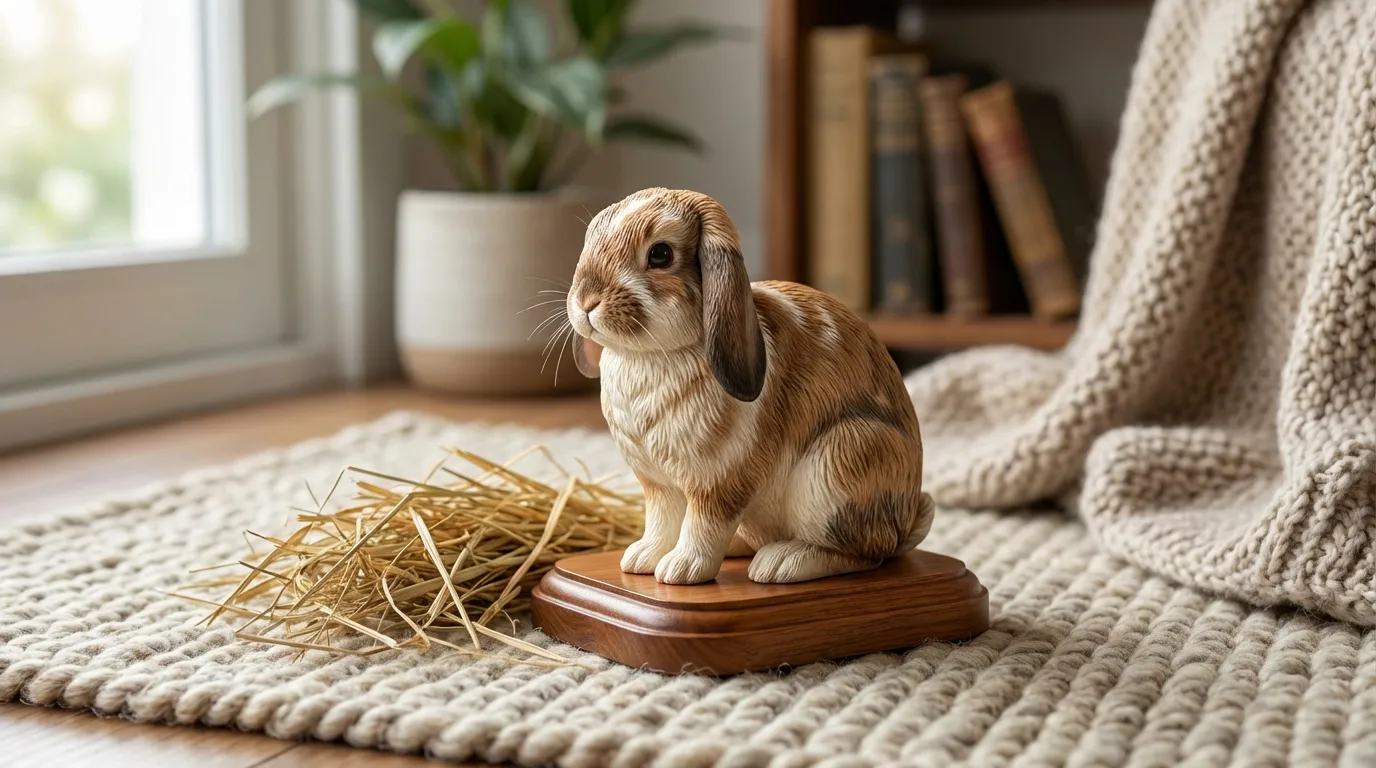
This is often why standard memorials feel insufficient. A flat photo captures the look, but it misses the dimension. We've found that for rabbit owners specifically, three-dimensional tributes are crucial for healing. Because you are used to interacting with your bun on the floor, at their level, having a physical representation of them can help bridge the gap.
Whether it’s preserving a lock of fur in a locket or commissioning a custom figurine that captures the exact way your Lop’s left ear hung slightly lower than the right, these tangible objects give you a focal point for your grief. They validate that this creature occupied real space in your world.
Validating the "Counter-Intuitive" aspects of your grief
Here is something you might not find in other grief guides: It is okay to feel jealousy.
You might find yourself scrolling through Instagram, seeing videos of healthy rabbits binkying (that joyful jump-twist rabbits do), and feeling a surge of resentment. Why is their rabbit fine? Why did mine get sick?
This jealousy doesn't make you bitter; it makes you human. You are mourning a future you didn't get to have. Maybe you thought you had five more years. Maybe you were planning to bond them with a partner. The loss of potential is just as painful as the loss of the past.
It is also common to feel anxiety about your other pets. If you have surviving rabbits, you might become hyper-vigilant, watching their every chew and movement, terrified that they too are hiding an illness. This "caregiver PTSD" is real. Be gentle with yourself. You are reacting to a trauma where your sense of safety and control was shattered.
Moving forward without forgetting
There is a misconception that "moving on" means leaving the memory behind. But with rabbits, who live such quiet, specialized lives with us, moving forward is about integrating their memory into your new reality.
Create a "Quiet Corner"
Since rabbits are quiet creatures, loud or public memorials often don't fit their spirit. Consider a small, private spot in your garden (perhaps near that clover patch) or a shelf in your home dedicated to them.
Write their story
Because many people didn't know your rabbit’s personality, write it down. Journal about the time they stole a cracker, or how they zoomed around the living room at 2 AM. Documenting these "small" moments proves that their life had texture and meaning.
Honor the bond
If you decide to get another rabbit eventually, know that it is not a replacement. It is a new chapter. Your heart expands; it doesn't swap one love for another.
The size of the love
Let’s go back to that backyard. The space feels empty not because a small animal is gone, but because a massive personality is missing.
Your Holland Lop was not "just" anything. They were a confidant, a source of comfort, and a living being who trusted you implicitly in a world that is scary for small things. That trust was a gift. The grief you feel now is the price of that gift, and while the price is high, the gift was worth it.
So the next time someone says, "It was just a rabbit," you can smile to yourself, knowing a secret they will never understand: You were loved by a creature who had every reason to fear you, but chose to love you instead. And there is nothing "small" about that.
Frequently Asked Questions
How long does grief for a rabbit usually last?
There is no standard timeline for grief, and anyone who tells you otherwise hasn't loved a pet deeply. For many, the acute phase—where you cry daily or feel a physical ache—lasts for weeks or months. However, because society often rushes rabbit owners to "get over it," you might find your grief lingers because you haven't been allowed to express it. It is normal to have "grief bursts" even years later when you find a stray piece of hay or see a photo.Is it normal to feel guilty after my rabbit died?
Yes, and it is perhaps the most common emotion specific to rabbit owners. Because Holland Lops and other breeds are prey animals, they are biologically wired to mask pain until it is critical. Owners often torture themselves with "what ifs"—What if I noticed he wasn't eating hay sooner? What if I hadn't gone out that night? Please understand that this guilt is a symptom of your love, not a reflection of your care. You were fighting biology, and you did the best you could with the information you had.How do I handle rude comments about my rabbit's death?
You have two healthy options: education or boundary-setting. If you have the energy, you can calmly explain, "I know he was small, but my bond with him was just as strong as yours is with your dog." If you don't have the energy, it is perfectly acceptable to say, "This is a really painful topic for me, and I'd prefer not to discuss the validity of my grief." Protect your peace first.Why does losing a rabbit feel different than losing a dog?
The bond is different because the dynamic is different. Dogs look to humans as leaders; rabbits look to humans as safe harbors. When a rabbit bonds with you, they are overcoming their deepest survival instincts to be near you. Losing that unique, fragile trust can feel like a personal failure or a rejection, even though it is simply nature. Furthermore, the isolation—feeling like the only person in your circle who understands the depth of the loss—adds a layer of loneliness that dog owners rarely face.Honor Their Memory Forever
Your pet's story deserves to be preserved in a way that captures their unique spirit. A custom PawSculpt figurine transforms your cherished memories into a timeless keepsake—every whisker, every marking, every detail that made them irreplaceable.
Free instant AI preview • 3D artist preview within 7 days • 5 free revisions