
The Pain of Rehoming: Grieving a Dog You Didn't Want to Give Up
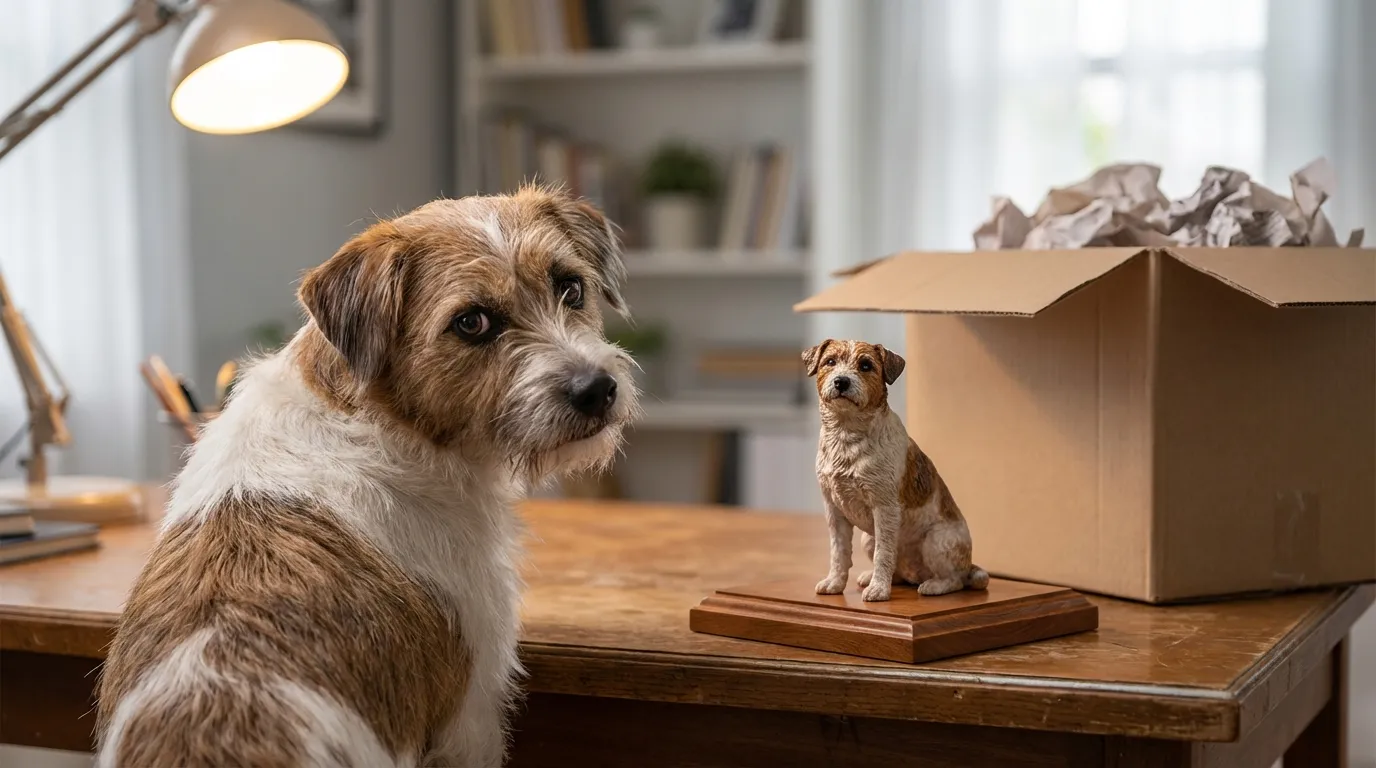
The indentation on the living room rug is still there, a flattened oval where the heavy oak coffee table used to be, but more importantly, where he used to sleep. It catches your eye every time you walk past with a load of laundry, a visual stutter in your day that knocks the wind out of you. You find yourself stepping around that empty space, respecting the ghost of a dog who is still very much alive, just not here. Not yours anymore. The click-clack of nails on the hardwood is gone, replaced by a stillness that feels heavy and judgmental.
Quick Takeaways:
- It’s called "Disenfranchised Grief": Society doesn't validate your pain because the dog is still alive, making you feel isolated.
- Guilt is the primary symptom: Most owners feel they "failed," but rehoming is often the ultimate act of selfless love.
- The "Relief" trap: Feeling relief (about safety, finances, or stress) often triggers a secondary wave of shame. This is normal.
- You need a ritual: Since there is no funeral, you must create your own ceremony to process the loss.
- Physical reminders help: Keeping a collar or commissioning a custom figurine can provide a tangible focal point for your grief.
The Grief No One Sends Flowers For
When a pet dies, the social script is written for us. Friends send cards with rainbows on them; coworkers offer sympathetic nods; family members share memories. But when you rehome a dog, the mailbox stays empty.
Instead of sympathy, you often face silence—or worse, judgment.
In our work with pet owners, we’ve noticed that the grief following rehoming is often sharper and more jagged than the grief of death. Psychologists call this "disenfranchised grief"—a loss that isn't socially sanctioned or openly acknowledged. Because the dog is alive, people assume you should just "get over it." They might even imply that because you made the choice, you forfeited the right to mourn.
Here is the truth that most articles won't tell you: You are grieving a death. You are grieving the death of your role as their protector, the death of the future you imagined together, and the death of your daily companionship. The fact that they are breathing air in another zip code doesn't make the absence in your kitchen any less devastating.
The Taboo Emotion: Relief (and the Shame that Follows)
Let’s talk about the feeling you’re likely trying to hide, even from yourself.
If you rehomed your dog due to behavioral issues—perhaps aggression toward a new baby, or severe separation anxiety that was destroying your home—there was a moment, shortly after they left, where you exhaled. You didn't have to scan the park for other dogs. You didn't have to worry about the toddler crawling too close. You didn't have to dread coming home to a destroyed sofa.
And then, immediately after that exhale, the guilt hit you like a freight train.
This cycle of relief-then-shame is the unique signature of rehoming grief. We see this constantly with our clients. One woman told us she felt like a "traitor" because she slept better the night after rehoming her reactive Shepherd.
Please hear this: Relief does not mean you didn't love them. Relief is a physiological response to the cessation of chronic stress. You can be heartbroken and relieved simultaneously. The human heart is capable of holding two opposing truths at once. You aren't a monster for feeling the weight lift; you're just a human who was carrying too much.
The Torture of "Ambiguous Loss"
There is a specific kind of pain reserved for the "alive but gone." It’s the torture of the unknown.
When a pet passes away, there is a finality. You know where they are. With rehoming, your mind is left to spin endless, agonizing scenarios.
Does he miss me?*
Do they know he likes his ears scratched exactly behind the left lobe?*
Does he think I abandoned him?*
This is "Ambiguous Loss," a term coined by researcher Pauline Boss. It's the same psychological category used for families of missing persons. Without the finality of death, the brain struggles to close the loop.
The Counterintuitive Insight:
Many people believe that staying in touch with the new owners will alleviate this pain. We often see people desperate for updates, photos, and Facetime calls. While this works for some, we’ve found that for many, updates actually prolong the trauma.
Seeing a photo of your dog looking happy with someone else can trigger a confusing mix of jealousy ("Why couldn't he be that good for me?") and deep sadness. Sometimes, the kindest thing you can do for your own heart is to ask the new owners for a "blackout period"—three to six months of no contact—to allow your brain to accept the new reality without ripping the scab off weekly.
Creating a Ritual for the Living
Because there is no funeral, you are denied the closure that rituals provide. You don't get to bury a body or scatter ashes. The dog just... leaves. And you are left with a leash hanging by the door.
You need to manufacture closure. You need to externalize the grief so it doesn't rot inside you.
1. Write the Letter You Can't Send
Sit down and write a letter to your dog. This isn't for the new owners—it’s for you. detail exactly why you made the decision. "I let you go because I couldn't give you the yard you needed to run," or "I let you go because the baby wasn't safe, and I couldn't bear the thought of you being isolated in a crate."Pour out the apologies, the "I love yous," and the justifications. Read it aloud. Then, burn it or bury it. This act mimics a funeral rite, signaling to your subconscious that a chapter has closed.
2. The Physical Memorial
One of the most common misconceptions we encounter is that you can only have a memorial for a pet that has died. We strongly disagree.We’ve worked with countless families who commission custom dog figurines specifically for rehomed pets. There is something profoundly healing about having a tangible representation of the dog that you can touch. Unlike a photo on your phone, which lives behind a glass screen, a 3D likeness occupies space in your room.
It allows you to say, "This dog mattered. This dog was part of our family history." It validates the relationship. We’ve had customers place their figurine on the shelf next to the dog’s old collar—not as a shrine to death, but as a tribute to a love that changed shape.
3. Redefine the Narrative
Stop telling yourself "I gave up." Start telling yourself "I made a parenting decision."If you had a child who needed a specialized medical environment that you couldn't provide, and you found them a facility that could, you wouldn't call that "giving up." You would call that "saving them." Rehoming is often an act of rescue. You rescued them from a situation where they couldn't thrive, and you rescued yourself from a situation that was breaking you.
The "What Ifs" That Keep You Awake
The most dangerous part of rehoming grief is the revisionist history. Late at night, your brain will edit the memories. You’ll forget the biting incidents, the noise complaints, or the financial panic. You’ll only remember the way they rested their chin on your knee.
This creates a fantasy loop: "If I had just tried that one other trainer..." or "If I had just worked harder..."
Here is the reality check: You likely did try. You likely agonized over this for months. Decisions made in crisis feel different when looked at through the rearview mirror of calm. But you cannot judge your past self with your present wisdom. You made the best decision you could with the emotional bandwidth and resources you had at the time.
When to Seek Professional Help
Grief is normal. But if you find yourself:
- Unable to function at work due to crying spells
- Obsessively checking the new owner's social media for hours
- Experiencing extreme guilt that leads to self-harm thoughts
It is time to speak to a therapist. Specifically, look for counselors who specialize in "pet loss" or "bereavement." They understand that the bond with an animal is often as strong, or stronger, than bonds with humans.
Moving Forward Without Forgetting
The goal isn't to forget the dog. The goal is to integrate the experience into your life story without it causing bleeding every time you touch it.
Eventually, the indentation on the rug will fade. The silence in the house will just become the room's natural sound, rather than an oppressive lack of noise. You will be able to look at a picture of them and smile, knowing that somewhere, they are chasing a ball, and that your decision—your painful, gut-wrenching decision—is the reason they are happy enough to chase it.
You loved them enough to let them go. That is the bravest thing a pet owner can do.
Frequently Asked Questions
Is it normal to grieve a rehomed dog as if they died?
Yes, and in some ways, it can be more complex. This is known as "ambiguous loss." You are grieving the death of the relationship, the routine, and your identity as their owner. Because the dog is still alive, your brain struggles to find closure, which can make the grief last longer than traditional bereavement.How do I stop feeling guilty about rehoming my dog?
Guilt is usually the brain's way of trying to find control in a helpless situation. Try to reframe the narrative: You didn't "get rid" of them; you found them a home that matched their needs better than yours could. If the decision was based on safety or quality of life, remind yourself that keeping them would have been the selfish choice. Letting them go was the act of love.Should I visit my dog after rehoming them?
This is a personal choice, but most behavioral experts and therapists suggest a significant "blackout period" (3 to 6 months minimum). Immediate visits can confuse the dog, impede their bonding with the new family, and tear open your emotional wounds just as they start to scab over. If you do visit, ensure you are emotionally stable enough to handle saying goodbye a second time.Is it okay to get a memorial for a dog that is still alive?
Absolutely. Memorials are for the living, not the dead. They are physical touchpoints for your love. Many of our clients create custom pet figurines or frame collars for rehomed pets. It serves as a way to honor the chapter of your life they shared and validates that they were, and always will be, a significant part of your family history.Honor Their Memory Forever
Your pet's story deserves to be preserved in a way that captures their unique spirit. A custom PawSculpt figurine transforms your cherished memories into a timeless keepsake—every whisker, every marking, every detail that made them irreplaceable.
Free instant AI preview • 3D artist preview within 7 days • 5 free revisions