
Helping Your Surviving Husky Cope With the Loss of Their Bonded Pack Mate
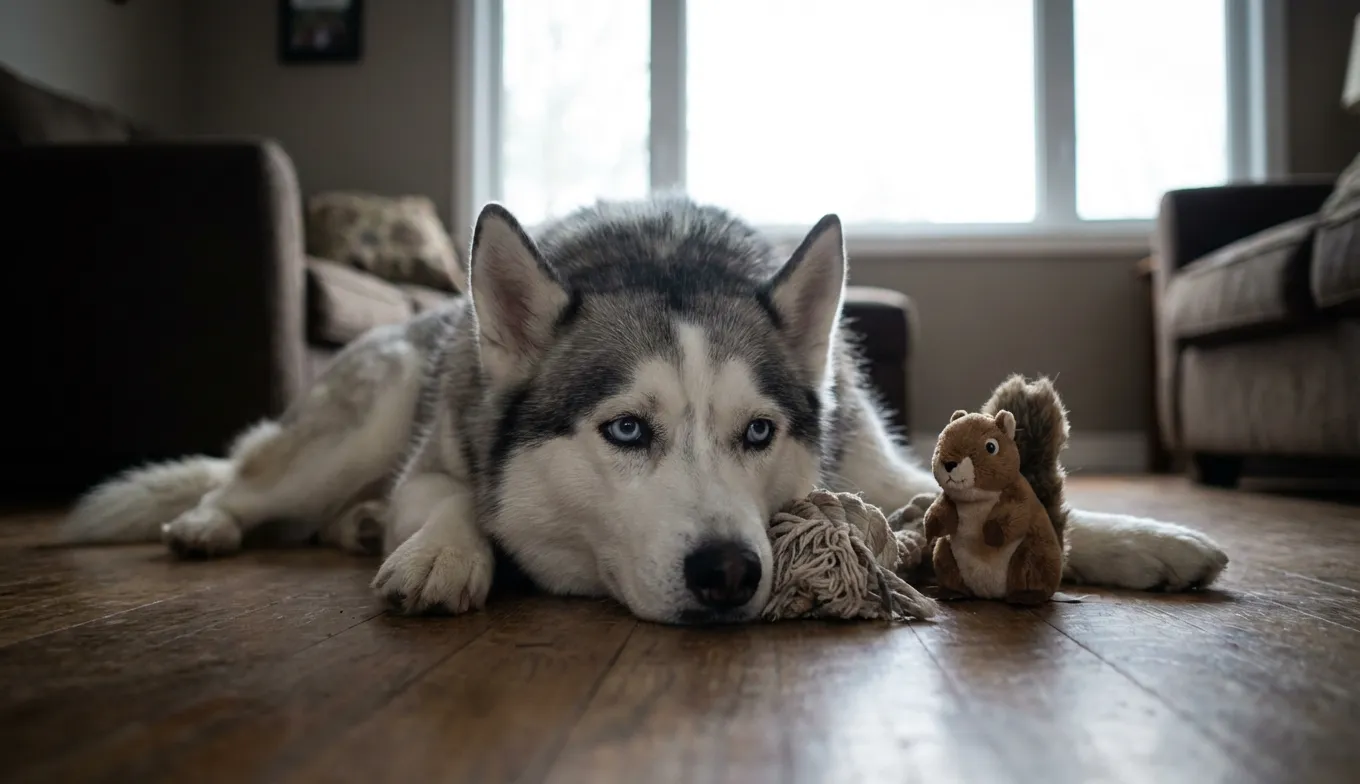
Six months ago, your living room was a chaotic blur of grey and white fur, a constant wrestling match over who got the prime spot on the rug. You couldn't watch a movie without the "woo-woo" commentary of a heated debate between your pair, their playful growls vibrating through the floorboards. The air was always thick with energy, flying hair, and the distinct sound of claws clicking on hardwood as they chased each other in endless loops.
Now, the stillness in that same room feels heavy enough to crush you. The rug is perfectly flat. The remaining silence isn't peaceful; it’s loud, punctuated only by the shallow sighs of the husky left behind. He paces to the front window, checks the backyard door, and then looks at you with those piercing eyes that seem to ask a question you can’t answer. The dynamic hasn't just shifted; the entire world has tilted on its axis, and your surviving pack member is struggling to find his footing on this new, uneven ground.
Quick Takeaways:
- The "Job" Loss: Huskies are working dogs; losing a mate is losing a coworker, which disrupts their sense of purpose.
- Vocal Grief: Unlike other breeds that get quiet, grieving Huskies often become louder, howling to "call back" the missing pack member.
- Exercise is Therapy: Increasing physical activity is more effective than extra treats for managing their anxiety.
- Don't Rush Replacements: Bringing in a new puppy too soon can backfire; give the survivor 3-6 months to adjust to their new hierarchy.
- Memorializing Matters: Creating a dedicated space for the lost pet can help you regulate your emotions, which in turn calms your surviving dog.
The Broken Sled Team: Why Husky Grief Is Different
Most articles about grieving dogs treat all breeds the same. They talk about sadness and lethargy. But if you’ve lived with Huskies, you know they operate differently. They aren't just companions; they are pack-oriented working dogs with a deeply ingrained hierarchy.When a Golden Retriever loses a friend, they lose a playmate. When a Husky loses a bonded pair-mate, they lose their teammate.
Think of it this way: Your dogs were a two-dog sled team, even if they never pulled a sled in their lives. They had roles. One might have been the leader (alpha), the one who investigated noises first. The other was the follower, the one who waited for cues. When one dies, the survivor isn't just sad—they are unemployed and confused about their rank.
We’ve seen this dynamic play out countless times with families we help. The surviving Husky doesn't just mope; they often exhibit signs of panic. They don't know who is supposed to check the perimeter now. They don't know if they are allowed to eat first. This unique "working grief" requires a different approach than standard comfort.
Recognizing the Signs of a Pack in Crisis
Because Huskies are vocal and dramatic by nature, their grief symptoms can be intense and sometimes misinterpreted as "bad behavior." It’s crucial to distinguish between a dog acting out and a dog suffering from separation distress.The "Search and Rescue" Howl
You might notice your surviving Husky howling in a way that sounds different from their usual chatter. It’s often lower, longer, and more mournful. This is a biological imperative. In the wild, if a pack member is missing, the others howl to guide them back. Your dog is trying to act as a beacon.Destructive Anxiety
A grieving Husky is often a bored and anxious Husky. Without their playmate to burn off energy with, that intensity turns inward. You might come home to chewed baseboards or a destroyed sofa—even if they haven't been destructive since puppyhood. It’s easy to get angry, but this is usually a manifestation of panic.The "Velcro" Effect
Independent Huskies may suddenly become shadows. If your dog was previously aloof but now refuses to let you shower alone, they are resource guarding you. In their mind, the pack is shrinking, and they are terrified of losing the last remaining member (you).The Emotion No One Talks About: Resentment
Let’s be honest about something that makes most pet owners cringe with guilt. When you are deep in your own grief, navigating the loss of your beloved dog, dealing with a acting-out survivor can feel impossible.You are heartbroken, crying over a collar, and suddenly the surviving dog—who is also suffering—starts peeing in the hallway or howling at 3 AM.
It is normal to feel a flash of resentment. You might think, “Can’t you just settle down? I’m hurting too.” You might even feel a dark, fleeting wish for peace and quiet.
Please hear us on this: You are not a bad owner for feeling frustrated. Grief makes our fuses short. When your surviving dog adds to the stress with behavioral regression, it’s natural to feel overwhelmed. Acknowledge the frustration, forgive yourself for it, and then take a breath. Your dog isn't trying to make your life harder; they are screaming in the only language they know.
Re-establishing the Hierarchy: Actionable Steps
So, how do you help a working breed cope with unemployment and loss? You give them structure. Compassion for a Husky doesn't look like coddling; it looks like leadership.1. Double Down on Routine
Chaos increases anxiety. Feed them at the exact same time. Walk them at the exact same time. If the deceased dog usually ate first, you need to explicitly show the survivor that they eat now, and it’s safe to do so.2. The "Tired Dog is a Good Dog" Rule
You cannot love a Husky out of grief, but you can walk them out of it. Their cortisol levels are spiking. The best way to lower that stress hormone is through physical exertion.- The Sniffari: Take them on a "sniff walk" where they lead the way. Sniffing engages the brain and is more tiring than brisk walking.
- Weighted Vests: If your dog is healthy, a backpack with water bottles can give them a sense of "work" during walks.
3. Brain Games Over Sympathy Treats
Don't fall into the trap of showering them with treats just because they look sad. This can create a new behavioral issue. Instead, use food puzzles, lick mats, or hide-and-seek games. Engaging their prey drive (the seek and find instinct) releases dopamine, which counteracts the depression.Honoring the Bond Without Haunting the House
One of the hardest parts of this journey is deciding what to do with the physical reminders—the second bowl, the extra leash, the collar.Some families feel the need to scrub the house of the lost pet’s scent immediately to "help the survivor move on." In our experience, this is a mistake. Animals need to process the scent fading naturally. It helps them understand that the mate is gone, rather than just "missing."
However, you do need a way to memorialize that doesn't turn your living room into a shrine of sadness that your dog picks up on. Dogs are barometers for our emotions; if you fall apart every time you look at the mantle, your Husky will sense that instability.
This is where finding the right tribute matters. Many of the families we work with at PawSculpt find that having a specific, tangible focal point for their grief helps contain the emotion. Rather than leaving old toys scattered around (which can confuse the surviving dog), they create a small, dedicated space.
We’ve had customers tell us that commissioning a custom figurine of their passed Husky allowed them to "talk" to the lost pet in a healthy way, without the confusing scent cues of keeping old bedding. It acknowledges the pack is changed, but the member is still honored. It’s about creating a "new normal" where the memory exists, but the household can move forward.
The "New Puppy" Question
"He’s so lonely. Should we get another Husky immediately?"This is the most common question we see. The silence is deafening, and your surviving dog is moping. It seems like the perfect solution.
Wait.
Here is the counterintuitive insight: Bringing a puppy into a grieving household often backfires.
Your surviving Husky is currently stressed and unsure of their rank. Throwing a hyperactive, rude puppy into the mix doesn't give them a friend; it gives them a nuisance they don't have the emotional bandwidth to handle.
- The Rule of Thumb: Wait at least 3-6 months.
- The Exception: If your surviving dog is refusing to eat or fading rapidly despite medical intervention, consult a behaviorist. Sometimes a foster dog (an adult, calm dog) can bridge the gap better than a puppy.
Moving Forward as a Smaller Pack
Eventually, the howling will stop. The pacing will slow down. You will notice a day when your surviving Husky sleeps deeply on the rug again, taking up the center space that they used to yield to their partner.It’s a bittersweet moment. It means they are healing, but it also means the era of "The Duo" has officially ended.
There is a specific kind of beauty in the bond you build with the survivor during this time. You are no longer just the provider for the pair; you are the other half of their team. You have grieved together, adjusted together, and survived the silence together.
The living room will never be as loud or chaotic as it was six months ago. But it won't be empty, either. It will be filled with a different kind of connection—quieter, perhaps, but forged in the fire of getting through the hardest thing a pack can face.
Frequently Asked Questions
How long does a dog grieve for another dog?
There is no set timeline, but most behaviorists agree that acute grief typically lasts between 2 to 6 months. You might see the most intense symptoms (searching, howling, not eating) in the first two weeks. If your dog seems stuck in a depression that impacts their health after a month, it's time to see a vet to rule out physical issues.Should I let my surviving dog see the deceased dog's body?
If the situation allows, yes. It is widely believed that allowing the surviving dog to sniff the deceased companion helps them understand the finality of the situation. It stops them from thinking their friend simply ran away or got lost, which can reduce the "searching" behavior and anxiety significantly.Will my Husky accept a new dog after losing a mate?
Huskies are naturally social and generally do well in pairs, but timing is everything. Because they are hierarchical, the survivor needs time to establish themselves as the "only dog" or "top dog" before a new challenger enters. We recommend waiting until the survivor's behavior has stabilized—usually 3 to 6 months—before introducing a new pack member.Why is my surviving dog acting aggressive or grumpy?
Grief looks a lot like fear. Your dog feels vulnerable because their "backup" is gone. This anxiety can manifest as snapping, growling, or resource guarding. They aren't being "bad"; they are feeling defensive. Give them space, avoid forcing interactions, and keep the household calm.Do custom pet figurines help with grief?
While a custom figurine is a keepsake for the human owner, it plays a role in the household's emotional ecosystem. Dogs pick up on our distress. By having a tangible way to honor the memory—a focal point for your love and grief—you may find yourself becoming calmer and more settled. When you are calm, your surviving Husky feels safer.Honor Their Memory Forever
Your pet's story deserves to be preserved in a way that captures their unique spirit. A custom PawSculpt figurine transforms your cherished memories into a timeless keepsake—every whisker, every marking, every detail that made them irreplaceable.
Free instant AI preview • 3D artist preview within 7 days • 5 free revisions