
Honoring Your Police K9: Retirement and Memorial Ideas for Handlers
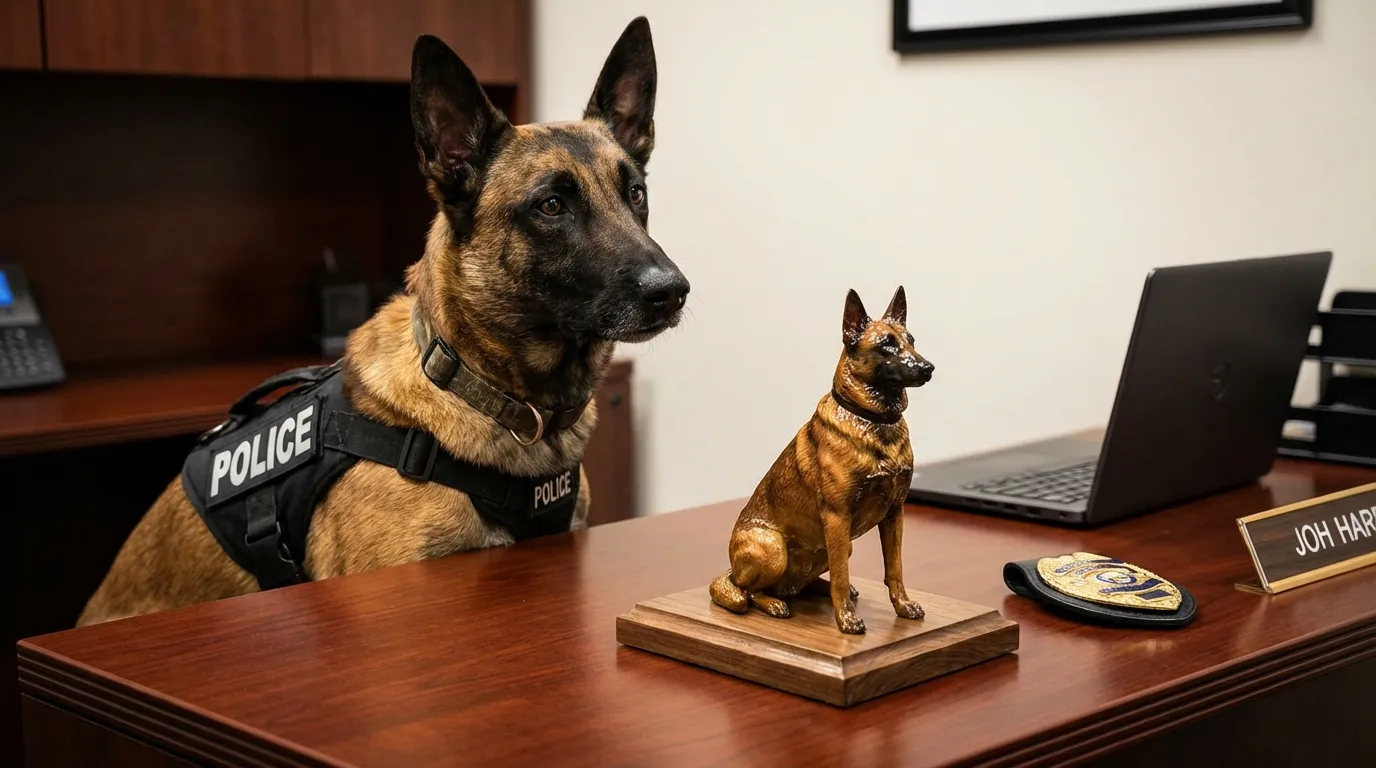
The garage door grinds shut, cutting off the late afternoon sun, but you don't move toward the house just yet. You're standing next to the patrol unit, hand resting on the rear door handle out of sheer muscle memory. The engine is ticking as it cools, a sound that used to be the backdrop to your debriefs with your partner, but now it just amplifies the emptiness of the back seat. You catch the faint, metallic scent of the kennel—mixed with dried mud and that specific, earthy smell of a working dog—and for a split second, your brain expects the rhythmic panting or the eager whine of anticipation. But the cage is empty. The ballistic vest is hanging on the pegboard, stiff and heavy, no longer protecting the heartbeat that synced with yours for six years.
Quick Takeaways:
- The "De-kitting" Process: Retirement isn't just an event; it's a physiological shift for the dog and an identity shift for you.
- Tangible Tributes: Beyond standard shadow boxes, consider 3D replicas that capture your K9's specific "alert" posture or working expression.
- The "Guilt of Relief": It is entirely normal to feel a secret wave of relief that you no longer have to worry about them dying in the line of duty—this does not diminish your grief.
- Legacy Ideas: Donating equipment to underfunded units in your K9's name can help process the loss of the "mission."
The Identity Crisis: When "Partner" Becomes "Memory"
Most people talk about losing a pet. They don't understand that you haven't just lost a dog; you've lost your backup, your navigation system, and the only creature on earth who literally watched your back while you searched a pitch-black warehouse.
The angle most grief guides miss is the identity crisis that hits the handler.
For years, you weren't just Officer Smith; you were "the K9 guy." Your entire daily rhythm—from the 4:00 AM alarm to the way you positioned your squad car at a traffic stop—revolved around the needs and capabilities of the dog in the back seat. When that dog retires or passes, you aren't just grieving a death; you are grieving the loss of a lifestyle.
We’ve spoken to handlers who admit that the first few weeks feel like walking around without a limb. You might find yourself checking the rearview mirror for ears that aren't there or reaching for a reward ball that isn't on your belt. This physiological withdrawal is real. The adrenaline spikes you shared during a track created a chemical bond that few civilians will ever comprehend.
The Counterintuitive Insight: Don't try to fill the "mission void" immediately. Many handlers rush to get back on the street or throw themselves into training a green dog to numb the silence. But the most effective way to honor your previous partner is to acknowledge that the team has retired, even if you haven't.
Transitioning from "Asset" to "Family Member"
If your K9 is retiring rather than passing away, you face a unique challenge: the "off-switch."
High-drive working dogs do not understand retirement. They don't know why the uniform goes on but they stay home. This phase requires immense patience and a shift in how you view the dog.
The "Ceremony of the Collar":
One ritual that has helped families we've worked with is a physical changing of the guard.
- The Scene: Gather your family in the living room.
- The Action: Remove the heavy, agitation collar or the tactical harness for the final time. Place it in a designated spot (like a shadow box or a shelf).
- The Replacement: Put on a soft, comfortable leather or nylon collar—something that signifies "pet."
- The Why: This serves as a psychological marker for both of you. It tells the dog, "The watch is done. You can rest now."
We’ve seen handlers struggle because they keep the working gear accessible. Seeing the vest triggers the dog's drive, leading to frustration. Put the work gear away. Let them be a dog.
Memorializing the "Fur Missile": Ideas for the Handler
When the end of watch (EOW) comes, the department will likely handle the public ceremony. There will be bagpipes, a radio call-out, and a procession. That is for the public. That is for the department.
You need something for the quiet of your living room.
The standard shadow box with the folded flag and badge is beautiful, but often it feels... cold. It represents the officer, not the personality of the dog who stole your sandwich or nudged your hand during a long stakeout.
1. The "Alert" Sculpture
Photos are flat. They capture a split second, but they rarely capture the tension. The way your Malinois’ ears pinned back right before a strike, or the specific head-tilt your Shepherd gave you when he found the narcotic odor.This is where custom craftsmanship bridges the gap. We have seen a significant rise in handlers commissioning custom dog figurines that aren't just sitting pretty. They want the dog in a "down-stay" on a patch of asphalt, or standing alert with that intense, focused gaze.
- Why it works: It’s three-dimensional. You can run your thumb over the ridge of their sculpted nose. It occupies space in the room, just like they did.
- Pro Tip: If you choose this route, look for artists who understand anatomy. A working dog has different muscle definition than a show dog. At PawSculpt, we often ask for photos of the dog in drive to get that shoulder musculature right.
2. The Tactical shadow Box
Instead of just the folded flag, build a box that tells the story of their career.- Include: The specific toy they worked for (the beat-up Kong on a rope).
- Include: A map of their biggest find or most significant track.
- Include: Their agitation muzzle or a piece of the long line.
- The Story: These items have wear and tear. They have tooth marks. They smell like work. That is the true memorial.
3. The "Living" Legacy
If your partner was a apprehension dog, consider sponsoring a bite suit or a protective vest for a department that can't afford one. Embroider your K9's name on the inside collar of the vest. It’s a way of saying, "He’s still out there, protecting the pack."The Emotions No One Talks About (And Why They're Normal)
We need to have a frank conversation about the emotional complexity of losing a police dog. In our work creating memorials, we hear the things handlers are afraid to say out loud.
The Guilt of Relief
This is the big one. It’s the dark secret. When your working dog passes or retires, you might feel a sudden, sharp sense of relief.Relief* that you no longer have to worry about making the call that gets them killed.
Relief* that you don't have to check the backseat temperature every 30 seconds.
Relief* that the liability is gone.
Hear this: This relief does not mean you didn't love them. It means you carried a massive burden of responsibility for a living creature in life-or-death situations for years. Putting that burden down feels lighter. Don't let guilt eat you alive for feeling the weight lift.
The Isolation of the Handler
Civilians will say, "I'm so sorry, I was sad when my Golden Retriever died too." They mean well. But you might feel a flash of anger. You might want to scream, "Your Golden Retriever didn't save your life in a dark alley."You also might feel isolated from other cops. Non-K9 officers respect the dog, but they don't know the bond. They might expect you to be back to normal in a week.
- The Fix: Lean on your K9 unit training group. They are the only ones who speak the language. If you need to cry, do it around the guys who have held the leash.
Preserving the Bond Through Art
While the department might hang a plaque in the hallway, your home needs a different kind of tribute. We've found that many handlers struggle with the silence in the house—the lack of the "presence."
This is why we approach pet portraits and figurines differently for working dogs. It's not about making them look "cute." It's about respect.
One handler sent us photos of his Dutch Shepherd, specifically pointing out a scar on the muzzle from a deployment three years prior. "Don't smooth that out," he told us. "He earned that."
When you look for a memorial, ensure it honors the grit, not just the breed. Whether it’s a painting, a tattoo, or a sculpture, the details—the graying muzzle, the scarred ear, the specific way they held their tail—are what bring the memory back to life.
Moving Forward: The Next Dog
The question of "when" is harder for handlers. often, the department decides for you. There is a slot open. You need a dog to work.
This can lead to "Replacement Syndrome," where you resent the new dog for not being the old dog.
The Green Dog is innocent: The new dog is an idiot. He doesn't know the commands. He bites the wrong part of the sleeve. He isn't him*.
- The Reality Check: Remember that your old partner was an idiot once, too. You built that greatness together.
Honoring your retired K9 means giving the new dog a fair shot. It means taking the patience your old partner taught you and investing it into the new recruit. It’s the highest compliment you can pay to your fallen partner: continuing the mission they loved.
Closing: The Watch Continues
Back in the garage, the engine has finally cooled. The silence is still there, and it’s heavy.
You don't have to "get over it." You don't have to sanitize the grief for the sake of the locker room. You walked through fire with this animal. You shared a language that consisted entirely of subtle hand signals and leash tension.
Take the time to build the memorial. Commission the art. Keep the beat-up Kong toy. Wear the tag on your keychain.
Your partner’s watch has ended. But as long as you remember the weight of that leash in your hand, they are never truly 10-7.
Frequently Asked Questions
How do I handle the guilt of getting a new K9 partner so soon?
In the K9 world, "soon" is often dictated by department needs, not your emotional timeline. The key is to reframe the new dog not as a replacement for your lost friend, but as the next generation of the mission you both shared. Your previous partner lived to work; you honoring the work by training a new dog is the ultimate tribute. Be patient with yourself if you feel resentment toward the "green" dog—it's a natural part of the transition.What should go in a police K9 shadow box?
While departments often provide a formal box with a folded flag, your personal box should be grittier. We recommend including their working collar (don't clean it—keep the scent and wear), their specific ID patch from their vest, and even their favorite reward toy. If they had a specific "find" that defined their career, include a small map or news clipping of that event.Is it normal to grieve a K9 more than a human friend?
Absolutely. Psychologists recognize that the grief for a working dog is often complicated by the "loss of self." You spent more hours with that dog—in a patrol car, training, and at home—than with almost any human. You trusted them with your life in a way you rarely trust humans. The intensity of the grief matches the intensity of the bond.How can I memorialize my K9 if I don't have their ashes?
Ashes aren't the only way to hold onto a memory. Many handlers choose custom replicas or statues that capture the dog's physical presence in the home. Others choose "living memorials," such as sponsoring a ballistic vest for an underfunded agency in their dog's name, ensuring another K9 stays safe because yours lived.Honor Their Memory Forever
Your pet's story deserves to be preserved in a way that captures their unique spirit. A custom PawSculpt figurine transforms your cherished memories into a timeless keepsake—every whisker, every marking, every detail that made them irreplaceable.
Free instant AI preview • 3D artist preview within 7 days • 5 free revisions