Husky Figurine vs Painted Portrait: Why 'Exact' Is the Wrong Goal for Those Blue Eyes
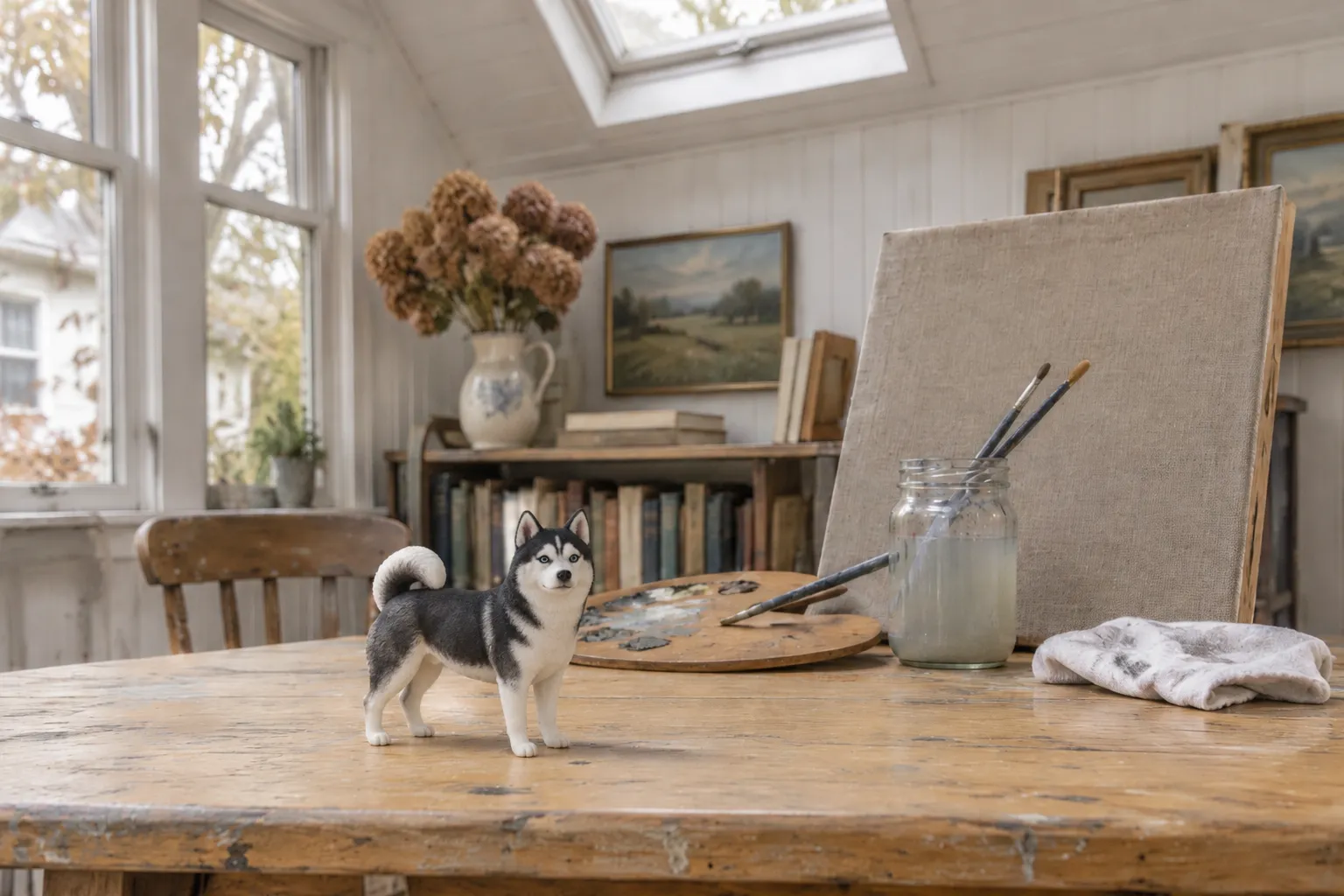
Picture a home office that smells faintly of wet husky: rain-damp fur, a shed-coated blanket on the reading chair, coffee going cold by the keyboard. That smell is a good reminder of what you're really trying to keep when you weigh a husky figurine vs painted portrait.
Neither medium copies your husky, so aim for likeness instead. A painted portrait holds a single moment, angle, and quality of light. A full-color sculpted figurine holds form and posture you can see from every side. Pick the medium that matches what you most want to keep.
Quick Takeaways
- "Exact" is the wrong target. Blue eyes change with light, so even your own photos disagree with each other. Aim for likeness.
- A painting keeps a scene and its light. A figurine keeps shape, posture, and presence on a shelf or desk.
- With a sculpted figurine, the artist preview is your control point. You confirm it before anything is printed, and 5 revisions are included.
- Your reference photos matter more than any spec sheet. Even daylight, eye-level angles, and clear shots of the mask do a lot of the work.
- Compare the total cost, refund rules, and timeline before you buy, not just the list price.
Why "Exact" Is the Wrong Target for a Husky's Face
Open your camera roll. Scroll to the husky photos.
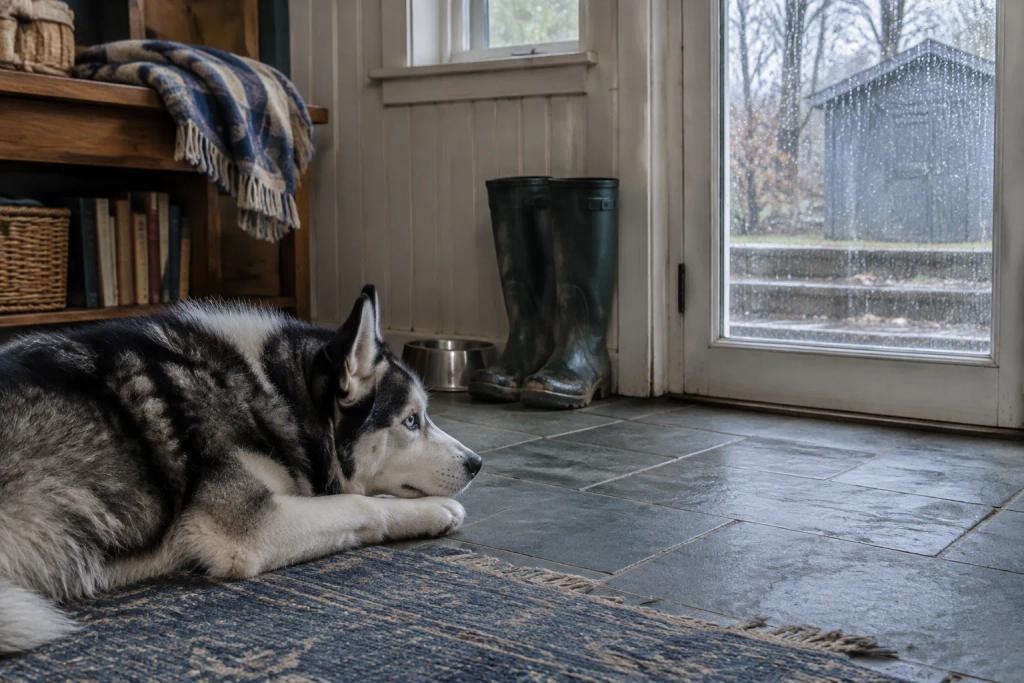
Now line up five shots of those blue eyes. One taken on the porch in morning sun. One under the kitchen light. One in the car. One on a gray, rainy afternoon. One with flash.
You may be looking at five different shades of blue. Pale ice in one. Almost steel in another. A warm, glassy tone in the third.
Which one is "exact"?
That's the trap. When people ask for "exact," they often mean "match the photo I love most." But that photo is already an interpretation. The light, the angle, and the camera all made choices before any artist ever saw it.
So the better question is: what makes your husky look like your husky?
For some owners, it isn't a precise hex code for the iris. It's something harder to measure:
- The way the eyes sit inside the mask, bright against the darker fur around them
- The set of the ears when something interesting happens outside
- A head tilt that shows up every time you say "walk"
- Whether the mask is symmetrical, or a little lopsided on one side
- The curl of the tail when it's resting, not when it's posing
That's likeness. It lives in proportion, expression, and posture as much as color.
This is why a good custom pet portrait, in any medium, is an artistic interpretation. The working phrase on the figurine side of this decision is "a sculpted portrait, not a photocopy." That's the honest framing. No portrait can be a copy of a living, shedding, head-tilting dog, and expecting one sets the wrong goal.
Once you drop "exact," the decision gets easier. You stop asking which medium copies best and start asking which one carries the memory you actually want to hold.
Painted Portrait vs Sculpted Figurine: What Each Medium Holds
These two options don't compete on the same terms. They capture different things.
What a painted portrait holds
A painting is flat. That's not a weakness. It's the whole point.
A painter picks one moment and one viewpoint, then builds everything around it. The background. The weather. The way light hits the fur. If your strongest memory is a scene, a painting can hold the scene.
Picture a porch where you might sit together while rain drums on the roof. A painting can put that porch, that gray light, and that dog in one frame. A figurine on a shelf can't give you the porch.
Paintings also live on walls. If your space is short on shelves and long on wall, that's a practical point in their favor.
Every painter has a style, and you see it in the paint itself. That texture is part of what you're buying. If you love a specific artist's hand, that's a real reason to commission them.
What a sculpted figurine holds
A figurine is an object. It has weight and depth. You can walk around it. You can pick it up.
Instead of one viewpoint, you get the dog's shape from every side: the profile, the back of the ears, the curve of the tail, how the body sits on its haunches. For a husky, where so much character shows in posture and ear set, that matters.
Figurines in this category run 2.5 to 6 inches tall. That's desk-and-shelf scale. Picture one on a reclaimed wood console table: a seated husky with its head slightly tilted and ears up, a rope tug toy at its feet, a small nameplate reading "Koda." The light in the room shifts through the day and falls across real contours, not painted ones.
Color: printed in vs applied after
Here's where the figurine choices split further.
Some figurines are single-color. They show form well, but they leave out color entirely. For a dog whose identity runs through blue eyes and a contrasting mask, that's a big omission.
Others are sculpted and then finished with paint, where color is applied to the surface afterward.
A full-color resin print takes a different route. The color is printed as part of the model itself, following the digital sculpt. Both approaches produce an interpretation, but they ask different things of you as a buyer. With a full-color print, the place you judge color and likeness is the preview stage, before anything is made.
Keep the smell close in other ways
No portrait, painted or sculpted, will hold the scent of your dog. Nothing on a shelf smells like your dog or that particular dusty-warm blanket.
So don't ask it to. Some people keep a collar, a toy, or a folded blanket alongside a portrait. Photographs, a written page about the dog's habits, a painting, a figurine: these keepsakes do different jobs, and they don't cancel each other out.
How a Full-Color Figurine Gets Made, and Where You Get a Say
If you're leaning toward a figurine, the process tells you where your input actually lands.
PawSculpt's workflow runs like this:
- Your reference photographs are reviewed.
- An artist digitally sculpts the portrait.
- You confirm the artist preview before printing.
- The approved model is printed in full color.
- Supports are removed.
- The surface is inspected.
- A transparent protective coat is applied.
Two of those steps deserve a closer look.
The printer and its color capability
The figurines are printed on a Mimaki 3DUJ-553, a full-color 3D printer. Mimaki states that the equipment supports more than 10 million colors.
Read that as what it is: a capability of the machine. It tells you the equipment has range. It doesn't mean every figurine uses or reproduces that theoretical maximum, and it doesn't mean the print will reproduce a single photo. Color range is a tool. Likeness still comes from the sculpt and your feedback on it.
The preview is your real decision point
This is the step that matters most for blue eyes.
The first artist preview is typically delivered within 7 days after complete references are available and the order enters IN_DESIGN status. You confirm the preview before printing. Five revisions are included.
Five is a useful number, but only if you use them well. A few practical habits:
- Batch your notes. Send everything you see in one round instead of one comment per day.
- Lead with structure. Eye shape and placement, mask edges, ear set, and head angle come before fine shading.
- Name your reference. Say which photo shows the "true" eye color in your view, and why.
- Check from the side. If the preview offers multiple angles, look at the profile. Husky character can live there.
- Stop when it reads as your dog. Chasing tiny differences round after round brings you back to the "exact" trap.
After printing, the transparent protective coat finishes the piece for indoor shelf display. That's the honest scope: a coated figurine meant to sit indoors on a shelf, desk, or table. It isn't positioned as an outdoor piece.
For a wider look at poses, sizes, and multi-pet options, the custom pet sculptures overview lays out what's possible.
Reference Photos That Help With Blue Eyes and a Husky Mask
Whatever medium you choose, the artist works from what you send. Good references beat long explanations.
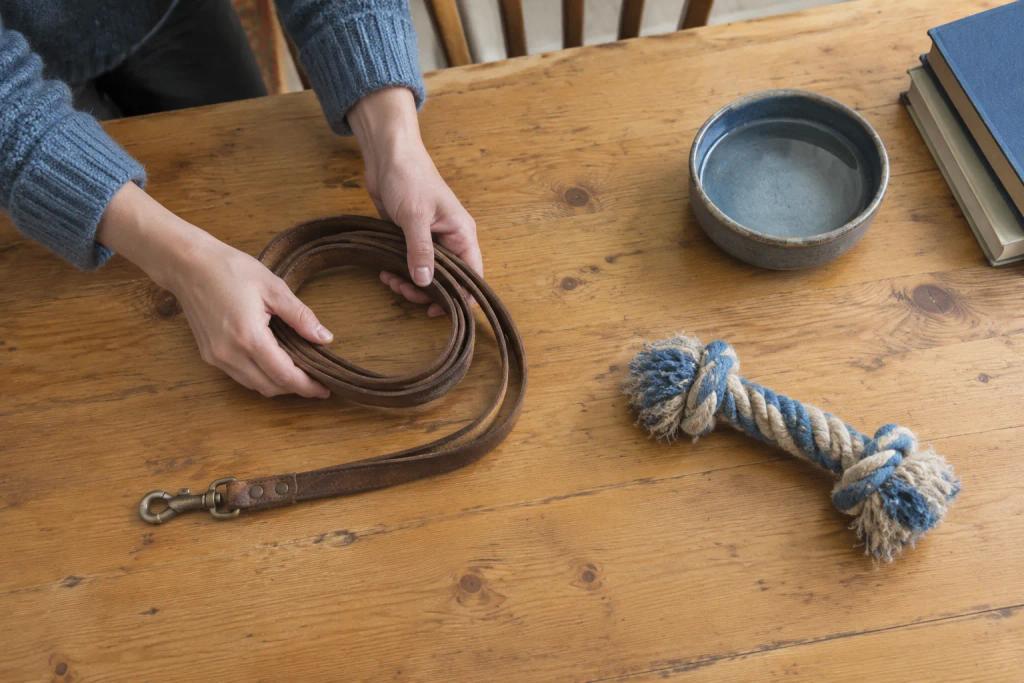
Here's a husky-specific shot list.
Eyes in even daylight. Stand near a window on an overcast day or in open shade outside. Avoid direct midday sun and flash. Get close enough that the iris fills a fair part of the frame.
Eye level, straight on. Crouch down. Photos taken from standing height looking down can distort the face and shrink the muzzle.
Both sides of the mask. Some husky masks aren't perfectly symmetrical. If yours has a darker patch on one cheek or an uneven line above one eye, shoot each side separately.
Three-quarter view. This angle shows how the muzzle, eyes, and ears relate to each other. It can be the most useful single reference.
Full body, natural posture. A relaxed sit or a typical stance. This guides proportions and the tail.
The pose you want. If you have a favorite moment, like that ears-up head tilt, include it, even if the lighting is bad. Mark it as "pose reference," not "color reference."
Props you want included. A rope toy, a ball, a favorite bandana. Clear photos help.
A few cautions:
- Skip filters and beauty modes. They shift color, which is exactly what you're trying to judge.
- If your husky has two different eye colors, or one eye with mixed color, send a close-up of each eye in the same light.
- If your dog has passed and the photo library is all you have, send the best you've got and say which images feel most like them. Imperfect references are still references.
One practical note: the preview clock starts once complete references are in and the order enters IN_DESIGN. Sending a full set up front keeps things moving.
Counter-Point: When a Painting, or Nothing Yet, Is the Better Call
Everything above leans toward thinking hard about form and likeness. Here's the other side, stated plainly.
If your memory is a scene, a painting may serve you better. A figurine isolates the dog. A painting can keep the porch, the snow, the hiking trail, the evening light. If the place matters as much as the dog, flat art has the edge.
If you love one specific photograph, consider a painting of that photograph. A painter can work directly from that frame and its light. A sculpted portrait has to imagine the sides and back of your dog from your references, so it will always be an interpretation of more than one image.
If wall space is what you have, use it. A figurine needs a shelf, desk, or table, and it's meant for indoor display.
Small sizes have physical limits. At 2.5 inches tall, the eyes on a figurine are small features. You'll see their color and placement, but expecting fine iris texture at that scale sets you up for the same disappointment the "exact" mindset creates. Larger sizes give the face more surface to work with.
The preview process needs you. Approving a sculpt means looking closely at your dog's face and giving direct feedback. If you're grieving and that sounds like too much right now, it's fine to wait. Before the order enters IN_DESIGN, a full refund is available. Once the artist starts modeling, the deposit becomes non-refundable. Know that boundary before you start.
And sometimes the right keepsake costs nothing. Print your favorite photos. Write down what your husky smelled like after a walk, the sound of the nails on the floor, the dramatic sighs. You can commission art later. Some people find those details are easy to lose, and a page of writing can hold them in a way an object doesn't.
What It Costs, How Payment Works, and When It Arrives
Price matters, and this is a discretionary purchase. The American Pet Products Association reports about $158 billion in annual U.S. pet industry spending, and notes that owners are prioritizing essentials like food and veterinary care while being more selective on discretionary purchases. That's a sensible instinct here too.
List prices by size
PawSculpt list prices, in USD:
| Size | Single figurine | Set of 12 |
|---|---|---|
| 2.5-inch | $429 | $4499 |
| 3-inch | $489 | $4999 |
| 4-inch | $589 | $5999 |
| 5-inch | $789 | $7999 |
| 6-inch | $999 | $9999 |
Add-ons
- Second pet: $179
- Extra pet (4-inch and larger only): $199
- Extra toy: $30
- Nameplate: $9
- Rush: $29
- Diamond glass base: $29
- Black crystal base: $39
A black acrylic base is included. If your plan is the husky plus a companion pet, a rope toy, and a "Koda" nameplate, add those lines to the size price to get your real number.
Deposit and refund boundary
Orders start with a 40% deposit. A full refund is available before the order enters the server-recorded IN_DESIGN status. Once the artist starts modeling, the deposit becomes non-refundable.
That's the line to understand before paying. Gather your photos and settle your decision first.
Delivery windows and shipping
- US: 27 to 40 days after final payment
- International: 33 to 47 days after final payment
The clock runs from final payment, so the speed of your preview feedback and balance payment shapes the arrival date.
No separate shipping fee is added at checkout for worldwide delivery. International customers remain responsible for local customs duties, taxes, or import fees.
Comparing options fairly
The FTC's online shopping guidance is a useful checklist whether you're comparing a figurine, a painter, or both:
- Compare the total cost, including shipping, handling, taxes, and fees, not just the list price.
- Check the refund and return policy before buying, including who pays return shipping.
- Read reviews from several sources and don't rely on star ratings alone.
- Keep receipts and order emails so you can hold a seller to its promises.
Apply the same questions to any painter you're considering. What's the total? What happens if you change your mind? When do you see a sketch or draft?
Christmas 2026 timing
If this is a holiday gift, the last order-by dates are:
- International: November 3, 2026
- US: November 10, 2026
These are last order-by dates, not comfortable ones. You'll still need to confirm the preview and pay the balance promptly.
Miss the cutoff? Orders placed after it are delivered in January. The artist preview arrives within about 7 days of IN_DESIGN and can be shared as the gift on the day itself.
Frequently Asked Questions
Can a husky figurine capture my dog's blue eyes?
It can capture a recognizable likeness, not a copy. Blue eyes look different in every light, so every portrait, painted or sculpted, is an artistic interpretation. Use the artist preview and included revisions to guide eye color and shape.
Is a painted portrait or a sculpted figurine better for a husky?
It depends on what you want to keep. A painting holds one moment, a background, and its light. A full-color figurine holds form, posture, and ear set you can see from every side.
Can I get a refund if I change my mind?
A full refund is available before the order enters IN_DESIGN status. The 40% deposit becomes non-refundable once the artist starts modeling.
How soon will I see the artist preview?
The first artist preview is typically delivered within 7 days after complete references are available and the order enters IN_DESIGN. Five revisions are included, and you confirm the preview before printing.
What are the Christmas 2026 order-by dates?
November 10, 2026 for the US and November 3, 2026 for international orders. Confirm the preview and pay the balance promptly. After the cutoff, delivery is in January and the preview can be shared as the gift.
Is shipping included, and are there customs fees?
No separate shipping fee is added at checkout for worldwide delivery. International customers remain responsible for local customs duties, taxes, or import fees.
Start With the Photos, Then Decide
If a scene is what you want to keep, a painter may be your best call, and that's a good decision.
If you keep coming back to the ears-up tilt, the lopsided mask, and the way those blue eyes sit against darker fur, a sculpted figurine may hold more of what you love. Start by pulling five or six reference photos in even daylight and noting which one feels most like your husky.
When you're ready, PawSculpt's custom husky pet portrait page walks you through sizes, add-ons, and uploading references. You'll see the artist preview and confirm it before anything is printed. For details on deposits, revisions, and shipping, the PawSculpt FAQ covers the specifics.