
Losing a Therapy Animal: When Your Corgi Was Also Your Healer
Neurological imaging reveals that the human brain processes the loss of a close attachment figure in the exact same region that processes physical pain. Standing in the backyard, staring at that one worn patch of grass near the fence line, you don't need a scientist to tell you this. Your chest physically aches. The air feels thinner. And specifically, the ground feels too quiet.
For Corgi owners, the silence is specific—you are missing the rhythmic, heavy thud-click-thud of a low-riding dog patrolling his territory. But for those whose Corgi was also a therapy animal or an emotional support companion, the silence is terrifying. You haven't just lost a pet; you have lost your coping mechanism, your anchor, and your healer. You are standing in that backyard not just grieving a death, but fearing your own regression.
Quick Takeaways:
- The "Double Loss" Phenomenon: You are grieving two entities simultaneously: your beloved pet and your working partner. This complicates the healing timeline significantly.
- The "Selfish" Guilt: It is entirely normal to feel panic about your own mental health decline after the loss. This is not selfishness; it is a reaction to losing a medical necessity.
- Sensory Gaps: Corgis provide unique tactile grounding (due to their density and coat). Replace this sensory input with weighted blankets or tangible memorials rather than immediately seeking a new animal.
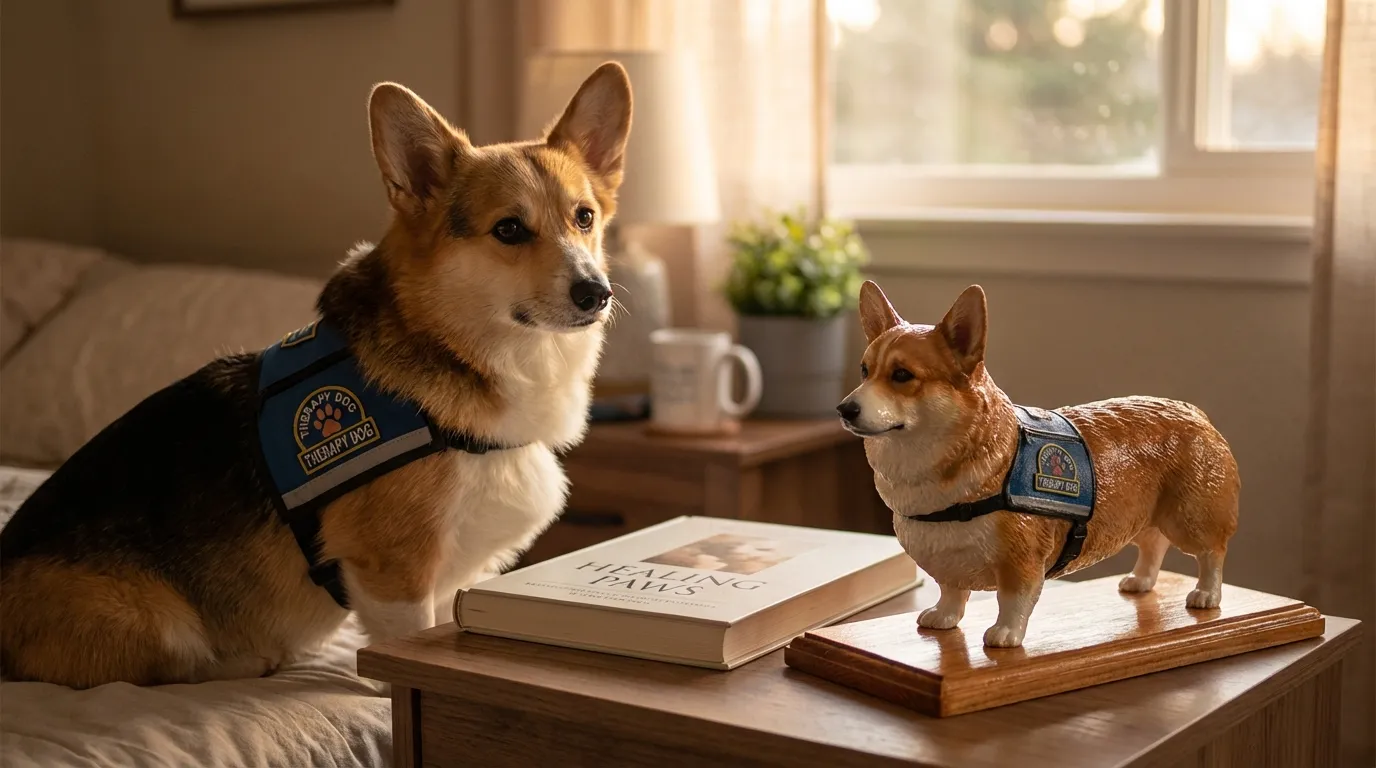
- Memorializing the Job: When honoring them, consider custom keepsakes that capture their "working stance" or vest, acknowledging their service, not just their cuteness.
The unique anatomy of therapy dog grief
When we talk about pet loss, we usually discuss the loss of unconditional love. But when we work with families at PawSculpt who have lost therapy animals, we see a different, sharper edge to the grief. It’s the loss of utility, and admitting that feels taboo.
A therapy Corgi isn't just a dog that sits on the couch. They are often trained for Deep Pressure Therapy (DPT)—using their surprisingly dense, heavy bodies to lay across your lap or chest during a panic attack. They are trained to interrupt repetitive behaviors. They are hyper-vigilant so you don't have to be.
When that dog dies, your brain goes into a hyper-arousal state. You are suddenly responsible for regulating your own nervous system again, a job you outsourced to a four-legged professional for years.
The counterintuitive insight here is that you should not try to "be strong" right now. Most grief advice tells you to try to return to a routine. We suggest the opposite for therapy dog owners. Your brain is effectively going through withdrawal from a biological feedback loop. If you try to force "normalcy" without your regulator, you risk a crash. Acknowledge that you are currently operating without your safety net. It’s okay to feel unsafe.
The specific silence of a Corgi
We need to talk about the physical space a Corgi occupies. They are distinct. They aren't wispy, light creatures. They are solid, shedding, vocal, presence-heavy animals.
One of the hardest adjustments our clients mention is the loss of the "shadow." Corgis are herding dogs; they want to be where the action is. If you went to the bathroom, the Corgi was there. If you cooked, the Corgi was wedged between your feet and the cabinet.
When that physical obstruction is gone, the house feels cavernous.
The phantom sensation
You might experience "phantom sensory inputs." You’ll swear you hear the click of nails on hardwood. You might wake up expecting the weight of a 30-pound loaf of bread against your legs. This is your brain trying to predict a pattern it has known for years.Do not fight these sensations. When you feel the phantom weight, acknowledge it. "I am feeling this because he was here, and he mattered." It’s a testament to the density of their presence in your life.
The guilt of "Selfish Grief"
Here is the emotional nuance that few people talk about, but we hear it in the emails we receive from grieving owners every week. It’s the guilt of thinking: “I’m scared I won’t be okay without him.”
There is a terrible, gnawing voice in your head that says: “Am I mourning him? Or am I mourning what he did for me? Am I selfish for worrying about my anxiety attacks when my best friend just died?”
Let’s be real for a second. This guilt is a liar.
You formed a symbiotic relationship. That is rare and beautiful. You took care of him, and he took care of you. Mourning the loss of his support does not mean you loved him any less. It means he was successful at his job. He made you feel safe. Losing that safety is a trauma in itself, separate from the grief of death.
We remember a customer, Sarah, who lost her Corgi, Barnaby. Barnaby was trained to nudge her hands when she started picking at her skin during high-stress moments. After he passed, she found herself relapsing into old anxious habits. She felt immense shame, telling us, "I feel like I'm failing him by falling apart."
If you are feeling this, please stop. You aren't failing him. You are adjusting to life without your crutch. If a person with a broken leg loses their crutch, we don't call them selfish for stumbling. We hand them a chair. Give yourself the chair.
Navigating the "Replacement" question
Because your Corgi served a medical or therapeutic function, well-meaning friends (or even your own panic) might suggest getting another dog immediately. "You need the support," they’ll say.
This is usually a mistake.
Here is what we’ve learned from years of watching families navigate this: A new puppy is not a therapy dog. A new puppy is a chaos agent with sharp teeth.
If you bring a puppy home expecting it to soothe your anxiety like your senior Corgi did, you are setting yourself up for resentment. You will look at this new, peeing, biting creature and think, "You aren't him." And you’ll be right.
The counterintuitive advice? Wait longer than you think you need to.
Fill the gap with other modalities first. Weighted blankets can mimic the DPT of a Corgi. specific grounding techniques can mimic the interruption behaviors. Learn to self-regulate, even poorly, before you introduce a successor. The next dog deserves to be loved for who they are, not hired immediately to fill a vacancy they aren't qualified for yet.
Tangible connection: Why photos aren't always enough
When a pet is purely a visual companion, photos are often enough. But for therapy animals, the bond was tactile. You touched them to calm down. You buried your hands in that thick double coat to ground yourself.
This is why many owners find flat images frustrating during the grieving process. A photo doesn't have mass. It doesn't cast a shadow.
We’ve seen a significant shift toward three-dimensional memorials for this reason. There is something psychologically grounding about an object that occupies physical space. This is where custom pet figurines can bridge a gap that photography cannot.
When we sculpt a Corgi, we aren't just looking at the color of the fur. We are looking for the "sploot." We are looking for the specific way your dog carried his ears—was the left one always slightly lower? Did he sit with his hip kicked out to the side?
For a therapy dog, we often suggest capturing them in their "working mode." Maybe wearing their vest, or in a specific sit-stay posture they used when you were distressed. Having a tangible representation of them on your desk allows you to direct your gaze toward them during moments of stress, maintaining a visual link to the source of your calm. It’s not about replacing them; it’s about giving your brain a physical anchor point when the world feels like it’s spinning.
The relief you are afraid to admit
This is the hardest part to read, but it might be the most important.
If your therapy Corgi was sick for a long time—if you spent the last six months managing incontinence, carrying them up stairs because their long back gave out, or managing a complex medication schedule—you might feel a wave of relief now that they are gone.
And then, immediately after the relief, comes the crushing shame.
How can I be relieved my soulmate is dead?
You aren't relieved they are dead. You are relieved that the suffering is over—both theirs and yours. Caregiver burnout is real, even with dogs. When a dog is a therapy animal, the dynamic is even more complex because you are used to them helping you. When the roles reversed and you had to be the strong one 24/7, it was exhausting.
That relief is not a lack of love. It is the body’s natural reaction to the cessation of stress. Forgive yourself for exhaling.
Practical steps for the first 30 days
Generic advice says "give it time." We say: give it structure. When you lose a working dog, your routine collapses. You need to build a scaffolding to hold you up while you rebuild the walls.
1. The "Morning Patrol" Substitute
Your Corgi likely woke you up and demanded a morning routine. Without it, you might stay in bed. Create a new sensory trigger for the morning. Coffee on the porch. A walk without a leash (which will feel weird, but try it). Do not just remove the dog activity; replace it with a human activity.2. The "Vest" Ritual
If your dog wore a vest or bandana while working, do not wash it immediately. Scent is the strongest link to memory. Seal it in a Ziploc bag if you want to preserve the scent for later, or keep it near your bed. However, if looking at the empty vest triggers panic, put it away. You do not need to "exposure therapy" yourself through grief.3. Memorializing the "Team"
You were a team. A unit. Consider a memorial that honors that partnership. We have seen beautiful tributes where owners frame their dog’s therapy certification alongside a custom figurine and their collar. It validates that this was a partnership of service, not just ownership.When the grief feels complicated
Sometimes, the relationship with a therapy animal isn't perfect. Maybe they were getting grumpy in their old age. Maybe they weren't as effective at their job near the end.
Complicated grief arises when we idolize the memory of the pet and then feel guilty when we remember the bad days. It is okay to remember that he barked at the mailman incessantly. It is okay to remember that Corgi shedding was a nightmare that ruined your black clothes.
Loving them requires loving the whole reality of them, not just the sanitized version. They were healers, yes. But they were also dogs. They stole food. They had accidents. They were imperfect, biological creatures who loved you perfectly.
Moving forward without moving on
There is a distinct difference between "moving on" and "moving forward."
Moving on implies leaving something behind. You do not leave a therapy dog behind. The rewiring they did to your brain? The times they stopped a panic attack before it started? That is permanent. They literally changed your neural pathways. You are a different person because you knew them.
You carry their work with you. Every time you successfully self-soothe, that is their legacy. Every time you get through a hard day, that is the resilience they taught you.
The backyard will eventually stop feeling so empty. The silence will eventually stop sounding like a siren. You will find a new rhythm. It will be a different rhythm—perhaps less frantic, perhaps quieter—but it will be yours. And you’ll know, deep down, that the short-legged shadow is still there, just a step behind you, making sure you’re okay.
Frequently Asked Questions
Why does losing a therapy dog feel harder than a normal pet?
You are experiencing a "dual loss." You haven't just lost a family member; you have lost a functional part of your daily mental health management. The brain treats this similarly to the loss of a safety device. You are grieving the emotional bond while simultaneously dealing with the anxiety of navigating the world without your established support system.How long should I wait before getting another Corgi?
There is no set timeline, but a good rule of thumb is to wait until the desire for a dog outweighs the desire for relief. If you are looking for a puppy solely to stop the pain of the loss, it is too soon. Puppies require immense energy and patience—resources you likely don't have right now. Wait until you are ready to build a relationship with a new individual who may have a completely different personality than your previous partner.Is it normal to feel relief after my sick dog passes?
Absolutely. This is one of the most common, yet least discussed, aspects of grief. If you spent months or years managing a chronic illness, mobility issues, or cognitive decline, your body has been in a state of high alert. The relief you feel is your parasympathetic nervous system finally disengaging. It is not a betrayal of your love; it is a physiological response to the end of a crisis.How can I memorialize a working dog specifically?
Honoring their "job" can be very healing. Consider creating a shadow box that includes their therapy vest, ID tags, and certification. Many of our clients at PawSculpt choose to commission figurines that depict their dog in a specific "working" pose—like a focused "down-stay" or the specific way they used to sit during therapy sessions—to validate the important work they did.My anxiety has returned since my dog died. What should I do?
First, validate that this is a logical outcome. You aren't regressing; you are un-supported. In the immediate aftermath, look for sensory substitutes. Corgis are heavy, grounding dogs—weighted blankets or weighted lap pads can mimic that Deep Pressure Therapy. Do not hesitate to reach out to human mental health professionals to help bridge the gap while you adjust to this new baseline.Honor Their Memory Forever
Your pet's story deserves to be preserved in a way that captures their unique spirit. A custom PawSculpt figurine transforms your cherished memories into a timeless keepsake—every whisker, every marking, every detail that made them irreplaceable.
Free instant AI preview • 3D artist preview within 7 days • 5 free revisions