
The Empty Window Perch: Memorializing Your Bird-Watching Maine Coon
I dragged the heavy sisal-wrapped post across the concrete floor, the grinding sound echoing off the unfinished basement walls. Dust motes danced in the single beam of sunlight cutting through the high window, illuminating the worn spots where twenty pounds of muscle and fluff used to sharpen massive claws. My hands trembled as I pushed the "battleship"—his favorite heavy-duty cat tree—into the corner next to the holiday decorations. I stood up, brushing the dust from my jeans, and looked at the empty space in the center of the room. Moving his furniture out of the living room felt like a betrayal, but keeping it there, an empty throne for a king who would never return, felt like a daily puncture wound to the chest.
Quick Takeaways:
- The "Volume" of Loss: Maine Coons are physically large animals; their absence creates a noticeable spatial void in a room that smaller pets don't leave.
- The Silent Trill: You aren't just missing a pet; you're missing a specific soundscape—the chirps and trills unique to this breed.
- Active Memorials: Transforming their favorite window spot into a tribute is often more healing than dismantling it entirely.
- Validating Relief: Caring for a large, sick animal is physically demanding; feeling relief that the struggle is over doesn't negate your love.
- Create a lasting tribute: Visit PawSculpt to see how a custom figurine can honor your pet's memory.
The Specific Gravity of a Maine Coon
When you lose a Maine Coon, you aren't just losing a cat. You are losing a presence that, quite literally, took up space. We often talk about the emotional hole a pet leaves behind, but with this breed, the physical emptiness is jarring. You turn a corner and expect to step over a furry ottoman, but the floor is clear. You wake up and your legs aren't pinned down by a weighted blanket of fur.The house feels cavernous. This is the unique angle of grief that Maine Coon owners face: the loss of "displacement." Your home’s ecosystem was built around a creature the size of a toddler. When that mass is gone, the air in the house feels thinner, less pressurized.
A customer once told us that for weeks after losing her gentle giant, Barnaby, she would instinctively brace herself when opening the front door, expecting the "thud" of him jumping from the couch to greet her. When that thud never came, the silence rang louder than a shout. Acknowledging that your home feels physically different is the first step in processing this specific type of grief.
The Silence of the "Chirp"
Most cat owners miss the meows. But you? You miss the trills. The chirps. That "ek-ek-ek" sound they made when they spotted a cardinal on the feeder. Maine Coons are conversationalists, but they speak a language that is distinctly avian.This silence is particularly piercing because it was usually tied to a specific activity: bird watching. Your Maine Coon likely spent hours patrolling the window sill, chattering at squirrels and tracking blue jays. That window was their television, their job, and their kingdom.
Now, the window is just glass.
Reclaiming the Window Ledge
Instead of stripping the window bare, consider transforming it. The instinct is to remove the bed or the perch because seeing it empty hurts. But an empty stage is sad; a shrine is beautiful.- The Feather Jar: Collect feathers you find on walks (or buy ethically sourced ones) and place them in a glass jar on the sill. It honors their hunting instinct and their fascination with flight.
- The Suncatcher: Hang a prism or a stained-glass piece in their favorite window. When the light hits it, the rainbows dancing on the floor—the same floor they used to sprawl across—become a living memory of their spirit.
- The Bird Feeder Legacy: If you haven't already, upgrade the bird feeder outside that specific window. Keep it full. It might seem counterintuitive to attract birds when the watcher is gone, but sustaining the life outside the window honors the passion they had inside it.
The Emotion We Don't Talk About: The Relief of the "Heavy Lift"
We need to have an honest conversation about the end stages. Because of their size, geriatric or sick Maine Coons are difficult to care for physically. Lifting a 20-pound cat who can no longer jump, carrying them to the litter box, or managing their hygiene when they can't groom their massive coats is labor-intensive. It is back-breaking work.There is a moment, shortly after they pass, where you might feel a wave of relief. And immediately following that relief comes a crushing wave of guilt.
Please hear this: That relief is not a betrayal.
It does not mean you wanted them gone. It means you were exhausted. It means you loved them enough to carry their physical weight until your own body was breaking. The relief you feel is simply your body acknowledging that the marathon is over. You can put the weight down now. Do not let guilt rob you of the right to rest.
Capturing the Texture of Memory
Photographs are wonderful, but they are flat. They fail to capture the two things that define a Maine Coon: their volume and their texture. A photo can't show the depth of the ruff around their neck or the specific way their ear tufts curled at the tips.This is where tactile memorials become essential. We've seen families struggle to find urns or keepsakes that feel "substantial" enough for a cat that was larger than life.
We have found that three-dimensional tributes often provide the grounding that grieving owners need. Whether it's preserving a lock of that dense undercoat in a locket or commissioning a custom piece, having something to touch matters.
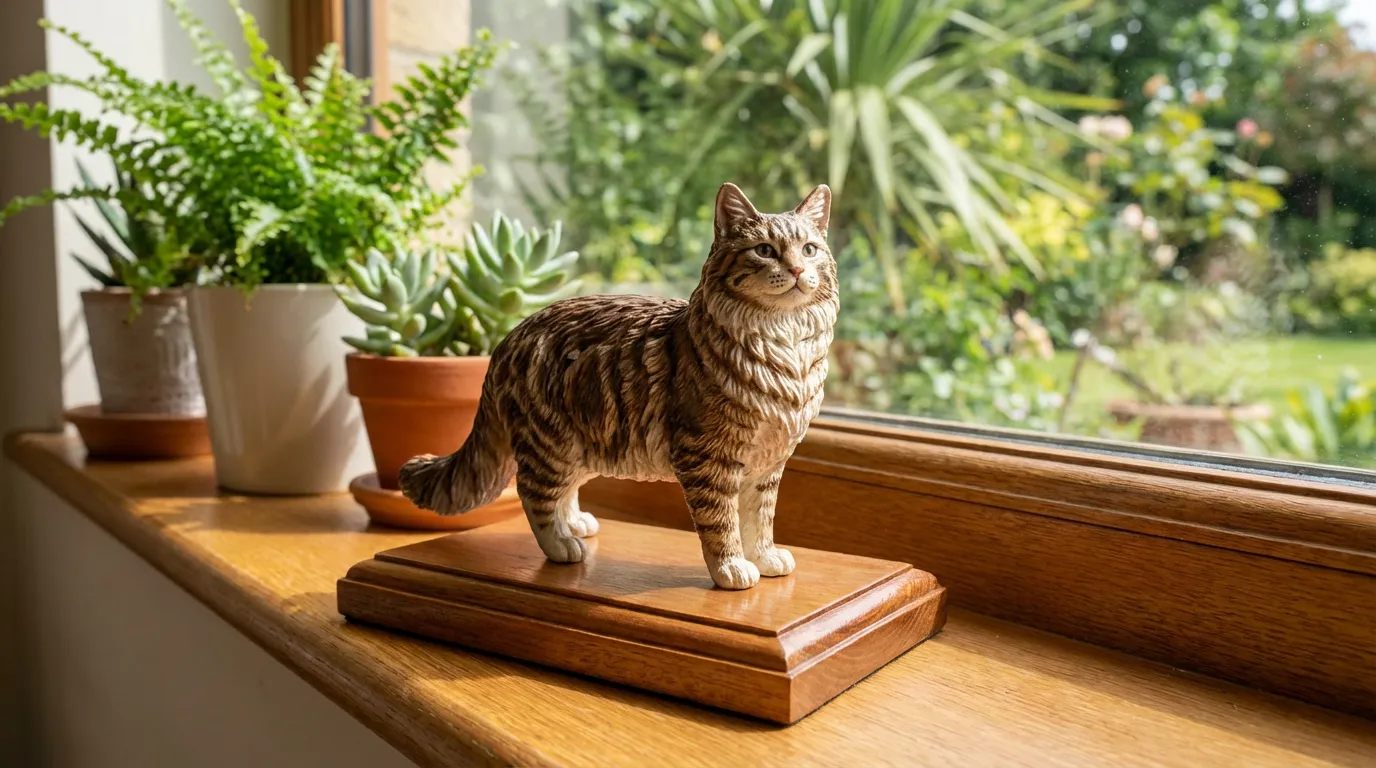
This is why many Maine Coon families turn to custom figurines. At PawSculpt, we understand that a generic "cat statue" doesn't look like your friend. It doesn't have the heavy brow, the tufted paws, or the majestic tail that looked like a plume of smoke. Our sculptors work from your photos to capture the specific architecture of your cat's face. Being able to run your finger over a physical representation of their ear tufts or the slope of their back can be incredibly grounding when you're missing their physical presence.
The "Supervisor" is Gone
Another unique aspect of this breed is their dog-like need to supervise. They didn't just live with you; they managed you. They sat on the counter while you cooked. They sat on the tub edge while you showered. They were involved.The "Empty Shadow" Syndrome:
You might find yourself narrating your day to an empty room. Keep doing it.
- "I'm making coffee now, buddy."
- "Time to check the mail."
Talk to the air. It helps bridge the gap between constant companionship and solitude. Over time, the need to narrate will fade, but don't force it to stop before you're ready. You are retraining your brain to operate without your supervisor.
Moving Forward Without Forgetting
The basement is quiet now. The heavy cat tree is tucked away, a monument to a life well-lived. Upstairs, the sun is hitting the window perch.You don't have to fill the space immediately. You don't have to get another cat to occupy the volume that your Maine Coon left behind. It is okay to let the house feel big for a while. It is okay to let the silence sit in the corners where they used to sleep.
Eventually, the silence won't feel so empty. It will just feel peaceful. The birds will keep coming to the window. The sun will keep warming the floorboards. And you will remember not just the pain of their absence, but the immense, heavy, wonderful weight of their love.
Frequently Asked Questions
Why does my house feel so empty after my Maine Coon died?
It’s not just in your head. Maine Coons are large, "dog-like" cats that physically displace a lot of space and air in a home. Their size, combined with their tendency to follow owners from room to room (the "supervisor" trait), means their absence creates a noticeable physical void that is often more intense than with smaller breeds. You are adjusting to a significant change in your home's physical environment.Is it normal to feel relief after my large cat passes away?
Yes, absolutely. This is a form of "caregiver burden" relief. Caring for a large, immobile, or sick animal—often involving lifting 15-20+ lbs to litter boxes or feeding stations—is physically exhausting. Feeling relief that the physical labor has ended is a normal biological response. It does not mean you loved them any less; it means you are human.How can I memorialize my cat's chirping sounds?
Since Maine Coons trill and chirp rather than meow, standard cat memorials might not feel right. Consider saving videos specifically for the audio, or creating a "sound wave" art print from a recording of their unique vocalizations. Keeping their favorite window perch active with bird feeders is also a great tribute to their "chattering" nature.How long does it take to get a custom PawSculpt figurine?
Because each piece is hand-sculpted digitally by artists and then printed and painted with high precision, the process typically takes a few weeks. We prioritize getting the details of the ruff, ear tufts, and facial structure exactly right. We offer unlimited revisions during the digital preview stage to ensure the figurine captures your Maine Coon's specific look before we ship.Honor Their Memory Forever
Your pet's story deserves to be preserved in a way that captures their unique spirit. A custom PawSculpt figurine transforms your cherished memories into a timeless keepsake—every whisker, every marking, every detail that made them irreplaceable.
Free instant AI preview • 3D artist preview within 7 days • 5 free revisions