
New Puppy Parent Gift Guide 2025: Welcoming a Labrador Into the Family With Intention
The cardboard box sat in the corner for three days before anyone could bring themselves to unpack it. Inside: one puppy collar (size small), two squeaky toys still in plastic, and a book titled Your First Year With a Labrador that suddenly felt like a promise instead of a guide.
Quick Takeaways
- The first 48 hours shape your puppy's entire first year — prioritize bonding tools over Instagram-worthy accessories
- Labradors need mental stimulation gifts, not just physical ones — puzzle feeders prevent the destructive chewing phase that starts around week three
- New dog parents need support items as much as the puppy does — cleaning supplies and sleep aids aren't boring, they're survival gear
- Capture their puppy phase with custom 3D printed figurines — because that 8-week-old face changes faster than you think
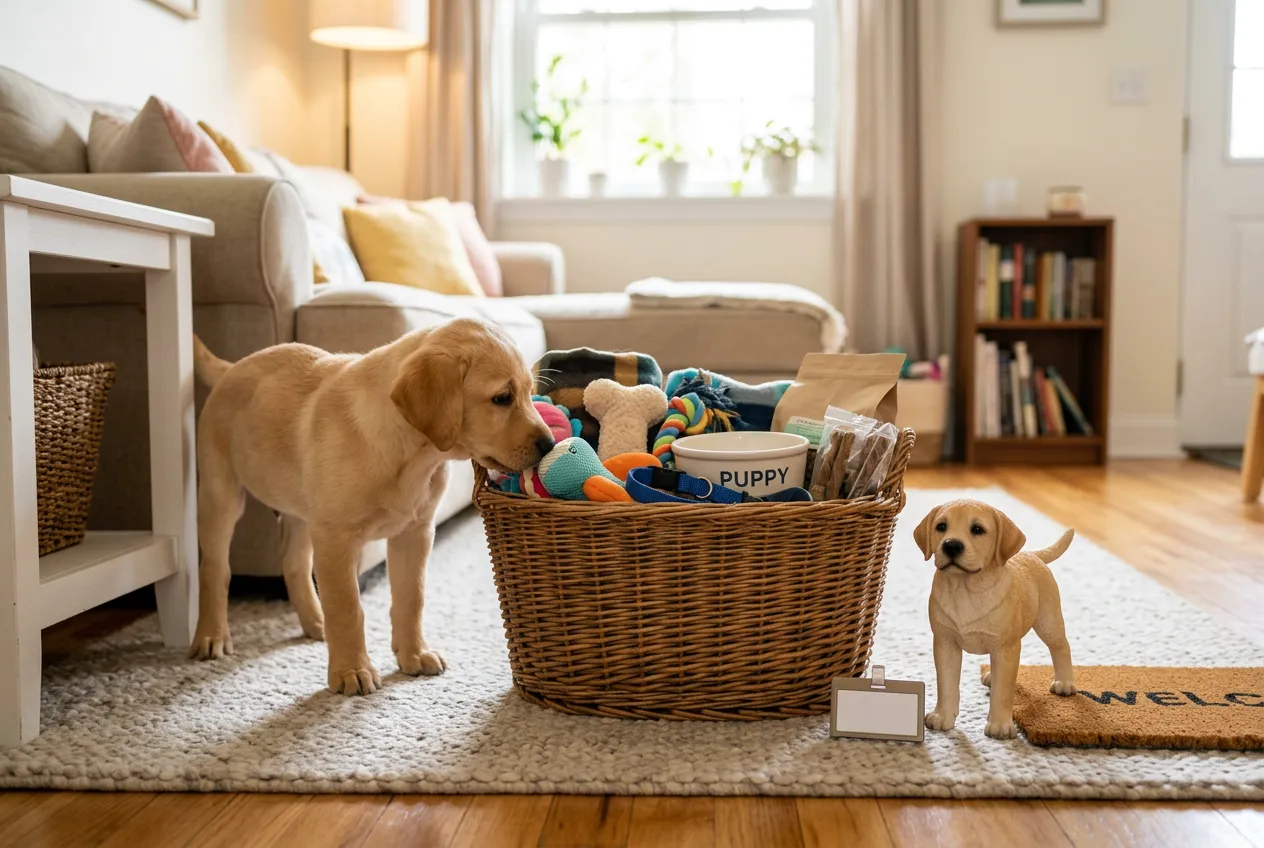
- Skip the generic "new puppy" basket — Labrador-specific gifts show you understand what they're actually walking into
The Psychology Behind Puppy Gifts That Actually Matter
Here's what most new puppy gift guides miss: the cognitive load of new dog parenthood rivals bringing home a human infant, except the infant has teeth like needles and no concept of property boundaries. Neuroscience research on decision fatigue shows that when we're overwhelmed, we default to the easiest choice, not the best one. That's why new Labrador parents end up with seventeen plush toys and zero enzymatic cleaner.
The attachment bond between human and puppy forms in the first two weeks. During this window, cortisol levels in new pet parents actually spike—similar to new human parents—as they navigate the uncertainty of "am I doing this right?" The gifts that matter most aren't the ones that look good in photos. They're the ones that reduce that cortisol spike by making the hard parts easier.
A family we worked with last spring put it perfectly: they didn't need another cute bandana. They needed someone to acknowledge that they were terrified of screwing up this tiny creature who trusted them completely.
"The best puppy gifts don't celebrate the idea of a dog. They support the reality of raising one."
Understanding the Labrador Puppy Timeline (And What They Need When)
Weeks 1-2: The Survival Phase
This is when new parents are running on four hours of sleep and questioning every life choice. The puppy is adorable and also a tiny chaos agent who pees every forty-five minutes.
What actually helps:
Nature's Miracle Enzymatic Cleaner (Budget: $15-25)
Who it's for: Anyone who values their security deposit or their sanity.
Labradors are enthusiastic learners, which means enthusiastic mistakes. Regular cleaners mask the smell to human noses but leave pheromone markers that tell the puppy "this is the bathroom." Enzymatic cleaners break down the proteins in urine at a molecular level. Pro tip: buy the gallon size, not the spray bottle. You'll need it.
Snuggle Puppy Behavioral Aid (Budget: $40-50)
Who it's for: The puppy who cries all night and the humans who can't function without sleep.
This plush toy has a battery-powered "heartbeat" and a heat pack. It mimics the puppy's littermates, which they just lost. The science: puppies regulate their nervous systems through proximity to other heartbeats for the first twelve weeks. One customer told us it was the difference between two hours of sleep and six. Pro tip: warm the heat pack before the first night—cold comfort isn't comforting.
Weeks 3-8: The Teething Apocalypse
Around week three, those puppy teeth sharpen. Labradors are mouthy breeds by nature (they were bred to carry birds gently, which requires constant mouth awareness). Without proper outlets, they'll redesign your furniture.
KONG Puppy Toy Set (Budget: $25-35)
Who it's for: Anyone who likes their baseboards intact.
The pink puppy formula is softer than adult KONGs but still durable. Fill with frozen peanut butter or plain yogurt. The act of working food out of the toy provides the oral stimulation they're craving while building positive associations with alone time. Pro tip: prep three at a time and rotate them from the freezer. A frozen KONG buys you thirty minutes of peace.
Benebone Wishbone Chew (Budget: $10-15)
Who it's for: Power chewers (which is every Labrador).
Made from nylon infused with real bacon flavor. The wishbone shape lets puppies grip it with their paws, which engages their problem-solving brain while they chew. We've seen these last four months with aggressive chewers. Pro tip: size up—the small size is too easy to destroy for a growing Lab.
Weeks 9-16: The Socialization Window
This is the critical period for brain development. Puppies who experience varied stimuli during this window grow into confident adults. Those who don't often develop anxiety disorders.
Puppy Socialization Checklist & Experience Fund (Budget: $50-100)
Who it's for: Parents who want a well-adjusted adult dog, not just a cute puppy.
Instead of a physical gift, contribute to puppy kindergarten classes or create a "socialization fund" for experiences: the pet store, outdoor cafes, car rides, meeting children. Behavioral research shows that puppies need exposure to 100+ different stimuli before sixteen weeks. One family we worked with created a bingo card of experiences—each square was an adventure. Pro tip: pair this with a nice card explaining why you're gifting experiences instead of stuff. It shows you understand dog development.
The Gifts That Support the Humans (Not Just the Puppy)
For the Sleep-Deprived
White Noise Machine (Budget: $25-40)
Who it's for: Light sleepers who need to mask puppy sounds without ignoring distress signals.
Place it in the human's bedroom, not the puppy's crate. It helps parents sleep through the small whimpers and shuffling while still waking for genuine distress. The Dohm Classic is the gold standard—it uses an actual fan, not a recording, so the sound doesn't loop. Pro tip: start using it a week before the puppy arrives so your brain associates it with sleep, not stress.
Meal Delivery Service Gift Card (Budget: $75-150)
Who it's for: Anyone who's about to forget that humans also need to eat.
The first month with a puppy is like the first month with a newborn—cooking falls off the priority list. A week of prepared meals isn't boring, it's strategic. Pro tip: choose services that don't require cooking skills or much cleanup. The goal is fuel, not a culinary experience.
For the Overwhelmed
"Puppy Brain" Journal (Budget: $15-25)
Who it's for: Type-A personalities who need to track everything or they spiral.
A structured journal for logging feeding times, potty breaks, training progress, and vet appointments. It externalizes the mental load. When you're tracking six different schedules on three hours of sleep, writing it down prevents the 2 AM panic of "did I feed him dinner?" Pro tip: pair this with nice pens. Small pleasures matter when you're in survival mode.
Portable Carpet Cleaner (Budget: $120-180)
Who it's for: Anyone with carpets, rugs, or upholstered furniture.
The Bissell SpotClean Pro is the most-recommended by professional dog trainers. It's not glamorous, but neither is discovering an accident under the dining table three hours after it happened. Pro tip: this is the gift that makes people cry with relief, not excitement. That's how you know it's good.
The Labrador-Specific Considerations
Labradors aren't generic dogs. They're a specific kind of chaos that requires specific solutions.
The Retriever Instinct
Labs were bred to retrieve waterfowl, which means they need to carry things in their mouths. If you don't give them appropriate items, they'll choose inappropriate ones (your shoes, the TV remote, that book you were reading).
Tug Toys with Handles (Budget: $15-25)
Who it's for: Labradors who need interactive play, not just solo chewing.
The Goughnuts TuG is nearly indestructible and has a safety indicator—if the red core shows through, it's time to replace it. Tug games build the human-dog bond while teaching impulse control (the "drop it" command). Pro tip: keep one in every room. When the puppy picks up something forbidden, you can immediately redirect to an approved item.
The Food Motivation
Labradors are notoriously food-motivated, which makes training easier but also means they'll eat anything that fits in their mouths (and some things that don't).
Slow Feeder Bowl (Budget: $15-25)
Who it's for: Puppies who inhale their food in thirty seconds and then vomit.
The Outward Hound Fun Feeder has maze-like ridges that force the puppy to work for each kibble. It turns a thirty-second meal into a five-minute mental exercise. This prevents bloat (a life-threatening condition in deep-chested breeds like Labs) and reduces the post-meal energy spike. Pro tip: introduce it gradually—some puppies get frustrated at first.
Treat Pouch for Training (Budget: $12-20)
Who it's for: Anyone attempting to train a Labrador without treats falling out of their pockets.
The PetSafe Treat Pouch clips to your belt and has a magnetic closure for one-handed access. When you're trying to capture a behavior in the moment, fumbling with a ziplock bag means you miss the window. Pro tip: fill it with tiny treats (pea-sized). Labs will work for volume, not size.
The Gifts That Become Heirlooms
Some gifts transcend their practical function and become emotional anchors.
Capturing the Puppy Phase
Puppies change faster than you can process. That 8-week-old face with the oversized paws and the head-tilt? It's gone by twelve weeks. The gangly adolescent phase? Over by six months. Most families take hundreds of photos but struggle to find a way to honor that specific moment in time.
Custom 3D Printed Pet Figurine (Budget: Visit pawsculpt.com for current details)
Who it's for: Families who want something tangible that captures their puppy's unique personality.
PawSculpt's team digitally sculpts each figurine from your photos, then uses full-color 3D printing technology to reproduce every detail—the white chest patch, the one floppy ear, the exact shade of their chocolate coat. The color is printed directly into the resin, voxel by voxel, then protected with a clear coat. It's not hand-painted; it's precision technology meeting master craftsmanship. Pro tip: take photos in natural light from multiple angles. The more detail the sculptors can see, the more personality they can capture. Visit their website to explore the process and see examples.
Paw Print Keepsake Kit (Budget: $20-35)
Who it's for: Sentimental types who want to remember how small those paws once were.
The Pearhead Clean-Touch Ink Pad creates prints without the mess of traditional ink. You get two attempts, which is good because puppies don't hold still. Frame it alongside a photo from the same day. Pro tip: do this in the first week. By week four, those paws are noticeably bigger.
The Practical-Turned-Sentimental
Engraved Collar Tag (Budget: $15-30)
Who it's for: Safety-conscious parents who also appreciate meaningful details.
Skip the generic bone-shaped tags. Get one engraved with the puppy's name on one side and "Our greatest adventure started [date]" on the other. It's functional (required for licensing in most areas) and emotional. Pro tip: order two. One will inevitably fall off during a romp through the woods.
The Counter-Point: When Gifts Miss the Mark
Let's be honest about what doesn't help.
The Instagram-Worthy Puppy Basket filled with bandanas, bow ties, and photo props looks adorable but addresses exactly zero actual needs. New puppy parents don't need their dog to be photogenic. They need their dog to stop eating the couch.
Expensive Bedding before the puppy is house-trained is just expensive garbage. Labs are chewers and accidents happen. Wait until month three for the fancy orthopedic bed.
Toys Without Purpose create clutter. Every toy should serve a function: mental stimulation, teething relief, or bonding activity. If it's just cute, it's just clutter.
Generic "Dog Owner" Gifts that could apply to any breed show you didn't do your homework. Labradors have specific needs. A gift that acknowledges those needs shows you care about their actual experience, not just the aesthetic of dog ownership.
The families who feel most supported aren't the ones who receive the most gifts. They're the ones who receive the right gifts—the ones that say "I see what you're going through, and I want to make it easier."
"Puppy gifts should solve problems you didn't know you'd have, not create new ones to store."
The Gift-Giving Strategy Guide
For Close Family (Budget: $150-300)
Combine practical survival items with one meaningful keepsake. The survival items get used immediately and create relief. The keepsake becomes more valuable over time as the puppy grows.
Suggested Bundle:
- Enzymatic cleaner (the gallon size)
- KONG set with stuffing recipes printed on nice cardstock
- Snuggle Puppy
- Custom figurine gift certificate (so they can choose the perfect photo once the puppy settles in)
For Friends & Coworkers (Budget: $50-100)
Focus on items that make daily tasks easier. These are the gifts that get used so often they become invisible—which means they're working.
Suggested Bundle:
- Treat pouch
- Benebone set (multiple sizes for growth stages)
- Nice coffee (because they're not sleeping)
- Card explaining why you chose practical over cute
For Distant Relatives (Budget: $25-50)
One high-quality item beats three mediocre ones. Choose something they'll use daily.
Suggested Options:
- Slow feeder bowl
- White noise machine
- Meal delivery gift card
- Contribution to puppy kindergarten fund
The Presentation Matters
Don't just hand over a bottle of enzymatic cleaner. Include a note: "For the accidents that will happen—because they will, and that's normal. You're doing great." Acknowledge the reality they're facing. That's what makes a gift meaningful.
The Smell of New Beginnings
There's a specific scent to a new puppy—that warm, slightly sweet smell that clings to their fur and your clothes and somehow gets into your car upholstery. It's milk breath and puppy shampoo and something indefinable that only exists for about twelve weeks.
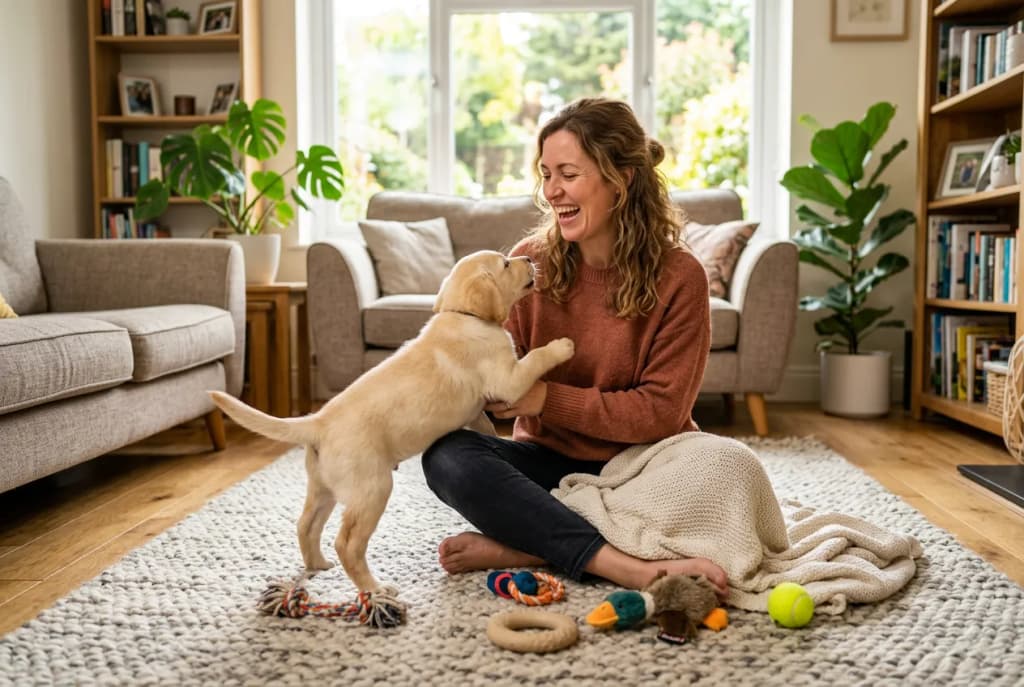
Most new Labrador parents are so focused on surviving the chaos that they forget to notice it. The gifts that matter most are the ones that buy them enough breathing room to actually be present for those moments. To sit on the floor and let the puppy fall asleep on their lap. To notice the way their ears are still too big for their head. To take the photo that will become the reference for a figurine they'll treasure for decades.
The best new puppy gifts don't just welcome the dog. They support the humans through the transformation of becoming dog parents. They acknowledge that this is hard and beautiful and worth doing well.
The Timeline No One Mentions
| Puppy Age | What's Actually Happening | What They Need Most | What to Avoid |
|---|---|---|---|
| Weeks 1-2 | Adjustment period, frequent accidents, sleep deprivation | Cleaning supplies, sleep aids, patience | Judgment, unsolicited advice |
| Weeks 3-8 | Teething begins, mouthing everything, energy spikes | Appropriate chew toys, mental stimulation | Leaving valuables within reach |
| Weeks 9-16 | Critical socialization window, fear periods | Varied experiences, positive reinforcement | Overwhelming situations, punishment |
| Months 4-6 | Adolescence starts, testing boundaries | Consistent training, exercise outlets | Giving up on rules established earlier |
The Budget Breakdown Reality
| Category | Essential (Must-Have) | Elevated (Nice-to-Have) | Luxury (Special Occasion) |
|---|---|---|---|
| Cleaning | Enzymatic cleaner ($20) | Portable carpet cleaner ($150) | Professional cleaning service ($200+) |
| Comfort | Snuggle Puppy ($45) | White noise machine ($35) | Smart crate with monitoring ($300+) |
| Enrichment | KONG toys ($30) | Puzzle feeders ($40) | Subscription box ($50/month) |
| Training | Treat pouch ($15) | Puppy kindergarten ($150) | Private trainer ($500+) |
| Keepsakes | Paw print kit ($25) | Custom figurine (see website) | Professional photo session ($300+) |
What the First Year Actually Looks Like
The puppy phase is shorter than you think and longer than you can imagine while you're in it. At eight weeks, they're all paws and ears and that intoxicating puppy smell. By six months, they're gangly teenagers who've forgotten every command they ever knew. By a year, they're starting to look like the dog they'll become—though Labradors don't fully mature until age three.
The gifts that matter are the ones that support families through each phase. The enzymatic cleaner for the early accidents. The puzzle toys for the destructive phase. The training fund for the teenage rebellion. And the figurine that captures the eight-week-old face before it changes into something else entirely.
One family told us they commissioned a figurine at eight weeks and another at one year. Same dog, completely different creature. The puppy version sits on the mantle next to the adolescent version, and together they tell the story of that first year—the hardest, most transformative year of dog ownership.
The Gift That Keeps Giving
The best puppy gifts aren't consumed or outgrown. They're the ones that become part of the family story. The KONG that survived two years of aggressive chewing. The collar tag that went on every adventure. The figurine that captured a moment that only existed for a few weeks but somehow defined everything that came after.
When you're choosing a gift for new Labrador parents, you're not just buying an item. You're acknowledging that they're at the beginning of something profound. That this puppy will become their hiking partner, their couch companion, their reason for coming home early. That the chaos of the first few months will eventually settle into a rhythm that feels like it was always meant to be this way.
Choose gifts that honor both the difficulty and the beauty of that transformation.
Frequently Asked Questions
What do new Labrador puppy owners need most in the first week?
The first week is pure survival mode. New parents need enzymatic cleaner (not regular cleaner—it has to break down the proteins in urine), something to help the puppy sleep through the night like a Snuggle Puppy with a heartbeat, and appropriate chew toys to redirect that mouthy Labrador instinct. Skip the cute bandanas and photo props. They need tools that solve immediate problems: accidents, crying, and destructive chewing. One customer told us the enzymatic cleaner was more valuable than any toy because it meant they could actually relax on their couch without smelling phantom pee.
How much should I spend on a new puppy gift?
It depends on your relationship. Close family should budget $150-300 for a combination of survival essentials and one meaningful keepsake. Friends and coworkers can make a real impact with $50-100 spent on high-quality daily-use items like a treat pouch, slow feeder bowl, and nice coffee (because they're not sleeping). Distant relatives can contribute $25-50 for one excellent item rather than three mediocre ones. The amount matters less than choosing items that address actual needs. A $20 bottle of enzymatic cleaner shows more thought than a $50 basket of toys they'll never use.
What gifts should I avoid for new puppy parents?
Avoid expensive bedding before the puppy is house-trained—it'll just get destroyed. Skip generic toys that don't serve a specific purpose (teething relief, mental stimulation, or bonding). Don't give Instagram-focused items like bandanas and bow ties when they're drowning in laundry and accidents. Avoid anything that creates storage problems without solving real problems. And please, don't give unsolicited training advice disguised as a gift. The families who feel most supported receive fewer, better-chosen items that acknowledge what they're actually experiencing, not what looks cute in photos.
When is the best time to get a custom puppy figurine?
Take reference photos at eight weeks when their puppy features are most distinct—the oversized paws, the head-tilt, the specific markings that might fade or change. By twelve weeks, that face has already transformed. Many families order figurines as gifts but let the new parents choose the perfect photo once the puppy settles in, usually around week two or three when they've captured the personality. Some families commission two figurines: one at eight weeks and another at one year, creating a visual story of that transformative first year. Visit pawsculpt.com to see examples and learn about the digital sculpting and 3D printing process.
Are Labradors harder to raise than other breeds?
Labradors have specific challenges that require specific solutions. They're mouthy (bred to carry birds, so they need to hold things constantly), food-motivated to an extreme (they'll eat anything), and high-energy (bred to work all day in cold water). This means they need more mental stimulation than many breeds, appropriate chew outlets from day one, and careful food management to prevent bloat and obesity. They're not harder—they're different. The families who struggle most are the ones who treat them like generic dogs. The families who thrive are the ones who understand and work with their Labrador-specific traits.
What makes a puppy gift meaningful versus just practical?
Meaningful gifts acknowledge the reality of what new dog parents are experiencing—the exhaustion, the overwhelm, the fear of doing it wrong—while providing tools that make it easier. It's not about the price tag. It's about showing you understand that they need enzymatic cleaner more than a cute toy, that they need sleep more than another photo prop. Include a note explaining your choices: "This isn't glamorous, but neither is the first month. You're doing great." That acknowledgment transforms a practical item into an emotional support. The gifts people remember aren't always the ones they display—they're the ones that got them through the hard nights.
Ready to Preserve Your Puppy's Fleeting First Weeks?
That eight-week-old face with the oversized paws and the one ear that won't stay up? It changes faster than you can process. Most families take hundreds of photos but struggle to find a way to honor that specific moment in time—the moment before they grew into their ears, before their markings shifted, before they became the dog they'll be for the next decade.
A custom PawSculpt figurine captures those details that make your Labrador puppy uniquely yours, using advanced 3D printing technology to reproduce every whisker, every marking, every bit of personality that only exists for a few precious weeks.
Visit pawsculpt.com to explore the process, see examples, and learn about creating your new Labrador puppy gift in 2025