
Why Generic Gifts Fail: The Power of Custom Pet Keepsakes
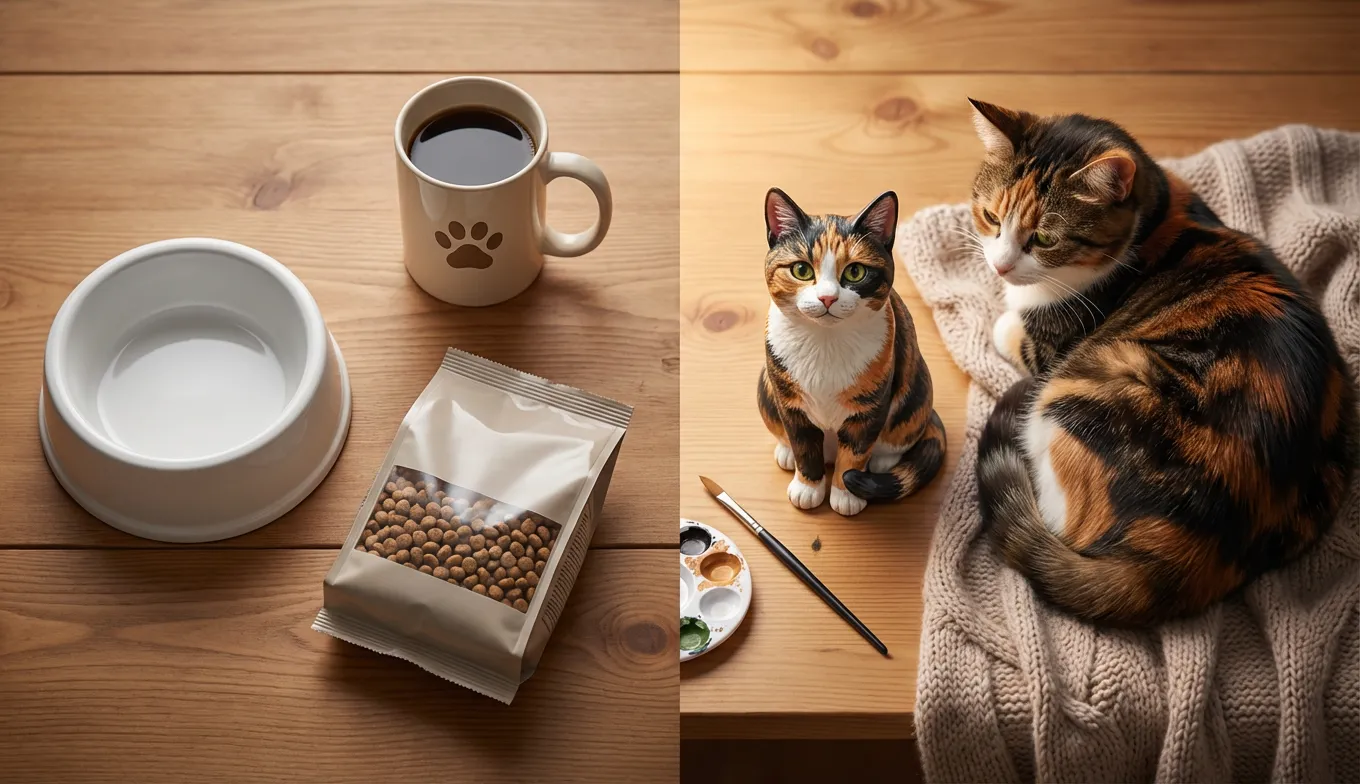
She held the wrapping paper in her hands—shiny, generic paw-print patterns—and forced the corners of her mouth upward. Inside the box sat a coffee mug featuring a cartoonish Golden Retriever with the words "World's Best Dog Mom" slapped across the ceramic in a font that looked suspiciously like Comic Sans. It was a nice gesture. Truly. Her aunt meant well. But the dog on the mug had perky, alert ears and a goofy, tongue-lolling grin. Her dog, Barnaby, who had passed just three weeks prior, had one ear that perpetually flopped backward due to a hematoma in 2019, and a dignified, almost stoic expression that made him look like a disappointed judge.
The mug felt heavy, not with quality, but with the weight of a missed mark. It was a generic placeholder for a specific, earth-shattering grief. She placed it on the counter, thanked her aunt, and later pushed it to the back of the cupboard behind the blender, where she wouldn't have to look at that stranger of a dog.
We see this happen constantly. The intention is love, but the execution lands in the "Goodwill donation pile." When we try to honor a bond as complex and primal as the one between a human and their animal, mass-produced merchandise doesn't just fall short—it can actually feel like an erasure of the pet’s unique identity.
Quick Takeaways:
- Specifics Beat Generics: A gift that captures a specific quirk (a floppy ear, a snaggletooth) is worth 100x more than a "breed standard" item.
- The "Late" Rule: A custom gift that arrives three weeks after the birthday or memorial is infinitely better than a generic gift that arrives on time.
- Tangibility Matters: In a digital age of phone screens, holding a physical object (like a figurine or jewelry) grounds the pet owner in reality.
- Grief Validation: Custom art says, "I see exactly who you lost," whereas generic items say, "I see you lost a dog."
- Investment vs. Cost: Custom keepsakes are heirlooms; generic gifts are consumables.
The Psychology of the "Good Enough" Gift (And Why It Hurts)
Here is the uncomfortable truth most gift guides won’t tell you: Generic gifts are often a defense mechanism for the giver, not a benefit to the receiver.
When your friend loses their soul-dog, or when your partner is obsessed with their chaotic Calico, you feel pressure. You want to acknowledge their passion or their pain, but you’re terrified of getting it wrong. So, you retreat to safety. You buy the "Cat Lady" tea towel. You buy the generic plushie that looks roughly like a Labrador.
But here’s the thing—pet owners are obsessive observers.
They know the exact topography of their pet's nose leather. They know the precise decibel level of the "I'm hungry" meow versus the "I see a bird" chirp. When you hand them a generic representation, you are essentially handing them a caricature.
A customer recently told us about receiving a "memorial stone" for her deceased Boxer. The silhouette on the stone had a long tail. Her Boxer was a rescue with a docked tail. Every time she looked at the garden stone, she didn't think of her dog; she thought about the tail he didn't have. Instead of a comfort, the gift became a source of low-grade cognitive dissonance.
The "good enough" gift fails because it treats the pet as a category ("Dog," "Cat," "Hamster") rather than an individual. It’s the equivalent of giving your husband a mug that says "World's Okayest Male Human." It’s technically true, but it lacks the intimacy that proves you actually know him.
The Power of Flaws: Why Perfection is Boring
In the world of custom pet keepsakes, we have learned that people don't want perfection. They want the truth.
If you look at the camera roll of any dedicated pet parent, you won't just see perfect show-dog poses. You’ll see blurry close-ups of whiskers. You’ll see the dog sleeping in a contorted pretzel shape that defies spinal anatomy. You’ll see the cat looking grumpy because it’s raining.
The "Aha" Moment: The emotional hook of a gift lies in the imperfections.
We once worked with a family commissioning a piece for their elderly Pug. They sent us twenty photos. In nineteen of them, the dog looked normal. In one, his tongue was sticking out sideways because he had lost most of his teeth. Our artists asked, "Which version do you want?"
Without hesitation, they chose the tongue-out version.
Why? Because that was the reality of their Tuesday nights on the sofa. That was the face that greeted them at the door. When you capture the "flaw"—the grey muzzle, the scar on the nose, the cloudy eye of a senior pet—you are validating the history of that animal. You are saying, "I love the worn-out, lived-in version of this creature."
This is why personalized pet art hits different. It bypasses the logical brain and goes straight to the sensory memory. A painting that captures the specific way a cat tucks its paws, or a figurine that replicates the "sploot" of a Corgi, triggers a dopamine hit of recognition. It’s not just "art"; it’s a mirror reflecting the love back at the owner.
Navigating the Minefield of Pet Loss Gifts
Let’s talk about the heavy stuff. The silence in a house after a pet dies is deafening. It’s not just quiet; it’s a vacuum. The click-clack of nails on hardwood is gone. The jingle of tags is gone.
Most people rush to fill this silence with platitudes. They send flowers (which die—a terrible metaphor for someone already grieving) or cards with poems about Rainbow Bridges. While well-intentioned, these often feel like homework. The grieving person has to read them, feel sad, and then write a thank-you note.
The mistake most people make is trying to "fix" the grief. You can't fix it. You can only witness it.
The Strategy: The "Anchor" Gift.
Instead of a consumable gift, provide an anchor. An anchor is a physical object that gives the grieving person permission to remember.
One of the most profound reactions we see to our custom figurines isn't necessarily joy—it's relief. There is a terrifying fear that comes about two weeks after a pet dies: the fear of forgetting. Am I forgetting the exact shade of his ears? Am I forgetting how he sat?
When you give a custom keepsake that is anatomically and visually accurate, you are giving the gift of permanent memory. You are telling them, "You don't have to carry the burden of remembering every detail in your head. It is preserved here. You can rest."
We’re not psychologists, but we’ve seen grown men weep over a three-inch piece of clay because it captured the specific way their Bulldog sat on one hip. That physical representation allows for a release of emotion that a generic "Sorry for your loss" card simply cannot unlock.
The Ultimate Guide to Unique Pet Gifts (That Actually Work)
If you are ready to ditch the generic aisle and give something that matters, here is a curated breakdown of high-impact options. We’ve categorized these by "Gift Archetype" to help you match the item to the recipient.
1. The "Tactile Griever"
Gift: Custom 3D Pet Figurine Best For: The person who misses the physical presence—the touch, the space the pet occupied. Price Range: $80 - $200+ Why It Works: Photos are flat. Screens are cold. A figurine has weight and dimension. It occupies space on a desk or a shelf, mimicking the way the pet occupied space in the room. It’s something they can hold. Pro Tip: Don’t just send a "glamour shot." Send the artist photos of the pet’s weird habits. Does the cat sleep in a loaf? Does the dog sit like a human? Request that specific pose. It changes the gift from a statue to a story.2. The "Subtle Sentimentalist"
Gift: Nose Print or Paw Print Jewelry (Cast from the actual animal) Best For: The professional who wants to keep their pet close without having a shrine on their office desk. Price Range: $50 - $150 Why It Works: It’s intimate and portable. Touching a necklace pendant during a stressful meeting grounds the person. It’s a secret source of comfort that looks like a chic accessory to everyone else. Pro Tip: If the pet has already passed, many artists can work from a high-resolution photo of a paw pad or a vet’s ink print to create a 3D mold. You don't always need the physical impression kit.3. The "Aesthetic Minimalist"
Gift: Line Art or Abstract Commission Best For: The design-conscious friend whose apartment looks like a West Elm catalog. Price Range: $40 - $300 Why It Works: It honors the pet without disrupting the interior design. A hyper-realistic oil painting might clash with modern decor, but a single-line drawing of a Greyhound’s silhouette is timeless. Pro Tip: Look for "negative space" artists. Sometimes what isn't drawn is just as powerful as what is.4. The "Tech-Savvy Memorist"
Gift: Soundwave Art Best For: The person who misses the noise. Price Range: $30 - $80 Why It Works: You take a recording—a bark, a purr, or the specific "rooooo" of a husky—and turn the audio wave into a visual print. Some come with QR codes that play the sound when scanned. Pro Tip: Do not use a generic bark sound effect. Dig through your phone videos. Find the background noise of that one video where the dog was begging for cheese. Extract that audio. That specific frequency is unique to that animal.The "Unboxing" Dopamine: Why Presentation is Half the Battle
Let’s talk about the moment of handover.
If you hand someone a gift bag with tissue paper sticking out, it’s fine. But if you want to create a core memory, the presentation needs to match the emotional weight of the gift.
We’ve noticed a trend with our customers: they often film the unboxing. Why? Because the anticipation is part of the gift.
The "Slow Reveal" Technique:
- The Note First: Don't let them open the box until they read the card. The card should set the stage. "I know how much you miss [Pet Name]. I wanted to find something that captured his spirit."
- The Layering: Good custom gifts come in sturdy boxes. There should be layers to get through. This slows down the process, forcing the recipient to be present in the moment.
- The Reveal: When the item is revealed, shut up. Seriously. Don't say, "Do you like it? Is it okay? I can return it." Let them have the reaction. Let them cry. Let them laugh.
The physical weight of a box signals to the brain: This is substantial. This matters. A digital gift card, printed on a piece of paper, has zero physical weight. It floats away. A custom keepsake anchors the moment.
Addressing the Elephant: "But Custom Takes Too Long!"
This is the number one objection we hear. "The birthday is on Saturday, and custom art takes 4-6 weeks. I guess I'll just get the mug."
Stop.
This is a failure of perspective. You are prioritizing the date over the impact.
Here is a secret from the gifting world: A "late" gift that is deeply personal is always received better than an "on-time" gift that is generic. In fact, giving the gift after the event extends the feeling of celebration or support.
How to handle the "Coming Soon" gap:
Don't just say, "Your gift is coming." That feels like you forgot. Instead, create a "teaser" card.
Print out a picture of the artist's sketch, or a photo of the "work in progress." Wrap that up beautifully. Write a note that says: "Great art takes time, just like great friendships. Your real gift is being hand-crafted right now to match [Pet Name]'s specific personality. It will be here in 3 weeks."
This actually builds anticipation. Now they have something to look forward to. It turns the gift into an event rather than just a transaction.
The Emotional ROI of Personalized Art
We need to talk about the "Guilt/Relief" cycle.
Many pet owners feel a strange sense of guilt when they start to "move on" after a loss. They feel guilty that they aren't crying every day. They feel guilty that they adopted a new pet.
A custom keepsake acts as a permission slip. It stands as a permanent tribute, which frees the owner from the duty of constant active mourning. They can look at the custom figurine on the mantel, acknowledge the love, and then go about their day without feeling like they are abandoning the memory.
For living pets, the ROI (Return on Investment) is about validation. We live in a world that sometimes minimizes the human-animal bond. "It's just a dog," people say. When you commission art of that dog, you are validating your friend's lifestyle. You are saying, "I know this isn't just a dog. I know this is your family."
That validation is priceless. You can’t get that from a $15 mug at a big-box store.
Frequently Asked Questions
What if I don't have "perfect" photos of the pet?
You rarely need studio-quality photos. In fact, candid shots are often better for custom artists. What matters is variety. Try to provide photos from different angles (front, side, back) and in different lighting. If the pet has passed and you only have grainy photos, be descriptive! Tell the artist, "His tail was actually fluffier than this picture shows," or "He always had a bit of a tear stain on the left eye." Skilled artists can extrapolate from your descriptions.Is it weird to give a memorial gift months (or years) later?
Absolutely not. Grief doesn't have an expiration date. In fact, receiving a memorial gift six months or a year after the loss can be even more meaningful. It shows the person that you haven't forgotten their loss just because the initial "sympathy card" period is over. It validates that their grief is still real.Can I get a custom figurine of a pet that is still alive?
Yes! About 40% of our orders at PawSculpt are for living pets. These make fantastic gifts for milestones—adoption anniversaries ("Gotcha Days"), birthdays, or even weddings (including the pet in the ceremony via a cake topper). It’s a celebration of the current bond, not just a memorial.How do I choose between a painting, a figurine, or a plushie?
Think about the recipient's home and lifestyle.- The Figurine: Best for people who like tangible mementos and have shelf space. It captures 3D posture best.
- The Painting: Best for people with specific interior design tastes who have wall space.
- The Plushie: Best for people who want something to hug (often great for children losing a pet or college students missing a family dog).
What if the artist gets it wrong?
This is the fear, right? Look for companies that offer a "review" process. Most reputable custom artists (ourselves included) will send you a digital proof or photos of the clay model before it is finalized/fired/painted. This is your moment to speak up! Don't be polite. If the ears are too big, say so. We want to get it right.Closing: The Gift of Witness
In the end, we aren't really talking about "stuff." We aren't talking about resin, or clay, or canvas, or ceramic.
We are talking about witness.
When you give someone a generic gift, you are witnessing them as a consumer. You are checking a box on a social contract. But when you give someone a custom keepsake—something that required time, thought, and a study of the creature they love—you are witnessing their heart.
You are acknowledging the thousands of early morning walks in the rain. You are acknowledging the vet bills, the ruined carpets, and the unconditional welcome at the door. You are acknowledging that this specific animal, with its crooked tail and bad breath, changed a human life.
That is what you are wrapping up in that box.
So, put down the generic mug. Scroll past the mass-produced t-shirts. Find the photo where the dog looks a little bit ridiculous, the one that makes your friend laugh through their tears, and start there.
Because the best gifts don't just say "I care." They say, "I remember."
Give a Gift They'll Treasure Forever
Looking for something truly meaningful? A custom PawSculpt figurine captures the personality and spirit of their beloved pet in stunning detail—a gift that says "I understand how much they mean to you."
Free instant AI preview • 3D artist preview within 7 days • 5 free revisions