
Returning to Work While Grieving the Loss of Your Loyal German Shepherd
Have you ever walked into a pet store for something mundane—cat food for a neighbor, or maybe fish flakes—and found yourself frozen in the dog aisle, staring at that specific brand of heavy-duty rubber chew toy your German Shepherd used to destroy in minutes? It hits you right there between the squeaky hedgehogs and the bulk treats: the physical weight of their absence. But then your phone buzzes. It’s a Slack notification. A calendar reminder for a 2:00 PM strategy meeting. And suddenly, you have to wipe your face, step out of that aisle, and pretend that your entire world hasn't just been hollowed out.
Returning to the rhythm of professional life while carrying the heavy, silent grief of losing a loyal protector is a disjointed, surreal experience. You are physically present in the office or on the Zoom call, but emotionally, you are still saying goodbye.
Quick Takeaways:
- The "GSD Factor": Grieving a German Shepherd is unique because you've lost not just a pet, but a shadow, a bodyguard, and a constant physical presence.
- Workplace Strategy: It is okay to set boundaries. You don't need to share the depth of your grief with colleagues who might not understand.
- The "Grief Fog": Expect a drop in cognitive function (memory, focus) for the first 3-6 weeks; this is biological, not a lack of professionalism.
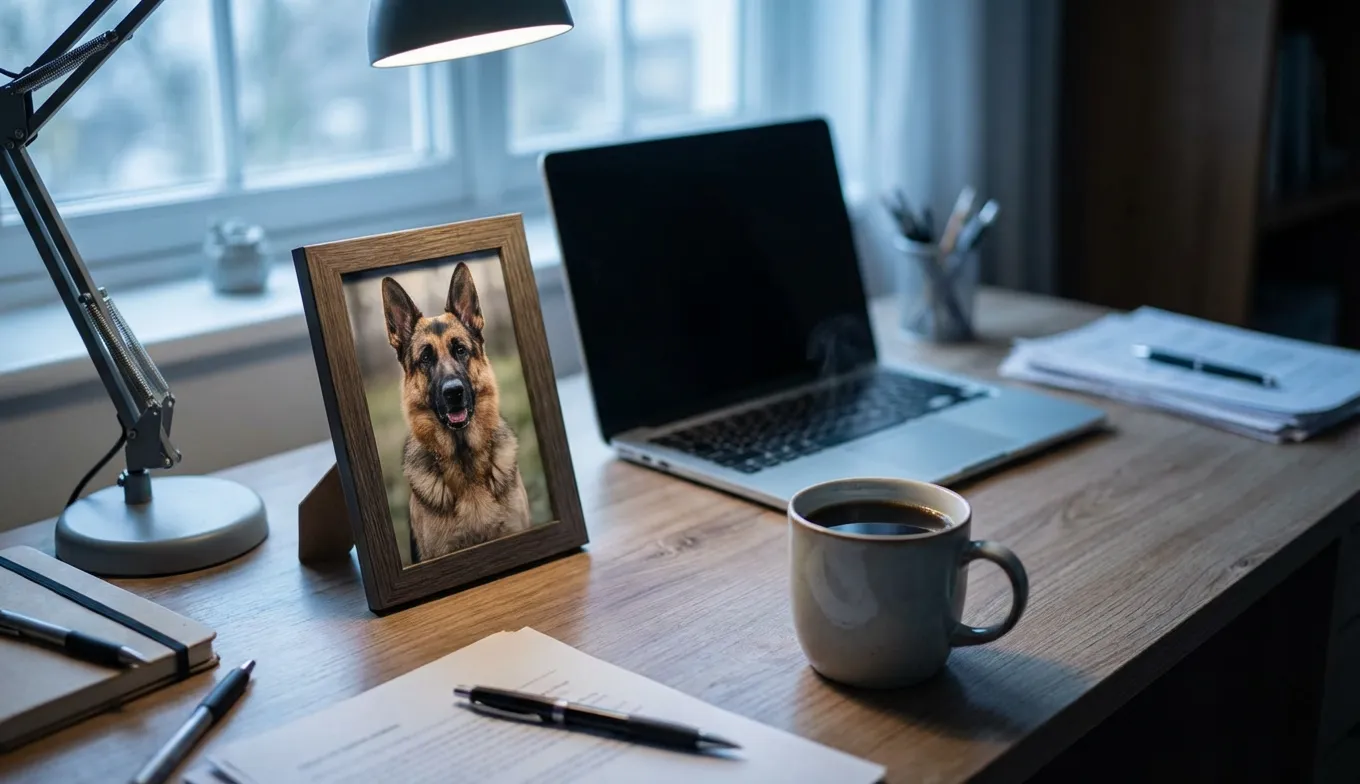
- Memorializing: Tangible reminders, like custom figurines or desk photos, can ground you when work stress spikes.
The Unique Silence of a German Shepherd's Absence
Most articles about pet loss talk about "missing a friend." But GSD owners know it's different. You aren't just missing a friend; you are missing a presence.
German Shepherds are "Velcro dogs" in the truest sense. If you work from home, you know the feeling of a cold nose nudging your elbow during a conference call, or the heavy sigh from under the desk that signaled it was time for a break. If you work in an office, you know the routine of coming home to a dog who treated your return like a soldier welcoming a general.
When that presence is gone, the silence isn't just quiet—it’s loud. It feels unsafe.
The counterintuitive part of grieving a working breed is that you might feel physically vulnerable without them. We've heard from many owners who say they feel "exposed" walking to their car or sitting in their home office alone. That anxiety is a valid part of the grieving process. Your nervous system was wired to the rhythm of their protection, and it takes time to recalibrate.
Navigating the "It's Just a Dog" Workplace Culture
- The Empath: The coworker who tears up immediately because they know.
- The awkward Sympathizer: The "I'm sorry for your loss, now about the Q3 report..." person.
- The Minimizer: The person who genuinely cannot understand why you are taking a personal day for "just a dog."
The mistake many grieving owners make is trying to force the Minimizers to understand. You don't have to explain the bond you had with your Shepherd to someone who views pets as property. It is an exercise in futility that will only drain your limited emotional battery.
The "Grief Glitch" is Real
You might find yourself staring at a spreadsheet you've updated a thousand times, unable to remember the formula. Or you might zone out in a meeting and miss a direct question.This isn't you being "unprofessional." It's biology. Grief floods the brain with cortisol, which actively inhibits the prefrontal cortex—the part of your brain responsible for focus and complex decision-making.
Actionable Advice:
- The 48-Hour Rule: If possible, take at least two days completely off. Do not check email. Your brain needs to process the initial shock without the interference of work demands.
- Script Your Response: When asked how you are, have a canned response ready so you don't crumble. "It's been a tough week, but I'm distracting myself with work. Thanks for asking." This shuts down prying questions while remaining polite.
The Guilt of Distraction (And Why It's Okay)
This is one of those emotional nuances that people rarely admit: sometimes, work feels like a relief. And then, immediately after feeling that relief, you feel guilty.
You might have a moment where you laugh at a colleague's joke, or you get so absorbed in a project that you go a full hour without thinking about your dog. Then, the realization hits: I forgot them.
Please hear us on this: You did not forget them. Your brain took a break.
Grieving a German Shepherd is exhausting work. They are high-intensity dogs who leave a high-intensity void. If work provides a few hours of numbness or distraction, that is a coping mechanism, not a betrayal of their memory.
We often see this dynamic with our clients at PawSculpt. They tell us that focusing on the details of a memorial project—selecting the perfect photos, discussing the specific way their Shepherd’s ear flopped—gives them a "job" to do for their dog. It channels that nervous energy into something productive and loving, rather than letting it spiral into guilt.
Creating a Sanctuary in Your Workspace
Whether you are in a cubicle or a home office, your environment matters. You need a way to acknowledge your loss without it overwhelming your workday.
The "Touchstone" Method
Grief can feel like drowning. You need something solid to hold onto. We recommend creating a subtle "touchstone" on your desk. This isn't a shrine that makes you cry every time you look at it; it's an anchor.- A Subtle Photo: Not the heartbreaking one from their final days. Choose a photo of them in their prime—maybe that "head tilt" look they gave you when you said the word "walk."
- A Tactile Object: Keep their collar or a small favorite toy in a desk drawer. When a wave of sadness hits during a stressful Tuesday, you can reach in, touch the worn leather or the chewed rubber, and ground yourself.
- A Physical Likeness: This is where custom pet figurines can be incredibly powerful. Having a tangible, 3D representation of your Shepherd on your desk allows you to see them "guarding" your workspace again. It’s less flat than a photo; it occupies space, just like they did.
Managing the "Empty Spot"
If you work from home, the empty spot under the desk where they used to sleep can be torture.Counterintuitive Insight: Don't leave it empty, but don't fill it with another dog yet.
Some experts say "clean it out immediately," while others say "leave it as is." We suggest changing the function of the space. Put a plant there. Place a stack of books there. Change the energy of that specific square footage so your brain stops automatically expecting to see fur and paws every time you glance down.
Handling the "When Are You Getting Another One?" Question
It is the question every GSD owner dreads, often asked way too soon by well-meaning colleagues.
- "You should get a puppy! It helps."
- "My cousin is breeding Shepherds, want her number?"
German Shepherd owners know that you don't just "replace" these dogs. They aren't goldfish. They are individuals with distinct personalities, quirks, and working styles.
It is okay to feel angry when people ask this. It feels like they are minimizing the magnitude of the loss.
What to say:
"We're just taking time to honor [Dog's Name] right now. I'm not ready to think about a new relationship yet."
Using the word "relationship" instead of "dog" subtly cues people that this was deep, complex, and significant.
The Long Tail of Grief
The first week back at work is hard. But the fourth week can be harder. This is when the sympathy cards stop coming, the "how are you?" texts dry up, and everyone expects you to be "back to normal."
But you know that grief isn't a straight line. It's a spiral.
You might be fine for three months, and then you find a stray black and tan hair on a blazer you haven't worn in a while, and it breaks you. This is normal.
In our work creating memorials, we often see orders come in six months, a year, or even five years after the loss. There is no expiration date on love, and there is no expiration date on the need to remember them.
If you find yourself struggling months down the line, consider channeling that grief into a tribute. Whether it's donating to a GSD rescue in their name, commissioning a pet portrait, or simply taking a day off to hike their favorite trail, give yourself permission to still be sad.
Returning to work doesn't mean leaving them behind. It means learning to carry them with you in a different way—not on the end of a leash, but in the quiet strength they taught you every single day.
Frequently Asked Questions
How long should I take off work after my dog dies?
Most companies do not have formal bereavement policies for pets, though this is slowly changing. If you have personal time or vacation days, use them. We recommend taking at least 1-3 days if possible. The goal isn't to "get over it" in that time, but to navigate the initial shock and physical symptoms of grief (crying spells, insomnia) in private. If you cannot take time off, try to schedule lighter tasks for your first few days back.How do I stop crying at work about my pet?
The fear of breaking down in the office is real. Instead of trying to suppress it completely (which usually backfires), try scheduling "grief breaks." Step out to your car or a private restroom for five minutes to breathe or cry. Also, use grounding techniques: hold a cold water bottle, press your feet firmly into the floor, or focus intensely on a physical object in the room to bring your brain back to the present moment.Is it unprofessional to have pet memorials at my desk?
In most modern workplaces, absolutely not. A small frame, a custom figurine, or a clay paw print is viewed as a normal personal touch. However, if you are in a highly conservative corporate environment, you might prefer keeping a small memento in a drawer that you can look at privately, or simply using a photo of your Shepherd as your computer background.Why is grieving a German Shepherd so difficult?
German Shepherds are high-engagement dogs. They don't just exist in your house; they interact with you constantly. They follow you room to room, they watch the door for you, and they are attuned to your emotions. Losing a GSD often means losing your sense of safety and your daily shadow. The silence they leave behind is physically palpable because they took up so much energetic space in your life.Honor Their Memory Forever
Your pet's story deserves to be preserved in a way that captures their unique spirit. A custom PawSculpt figurine transforms your cherished memories into a timeless keepsake—every whisker, every marking, every detail that made them irreplaceable.
Free instant AI preview • 3D artist preview within 7 days • 5 free revisions