
Keeping Your Senior Dachshund Comfortable During Cold Winter Months
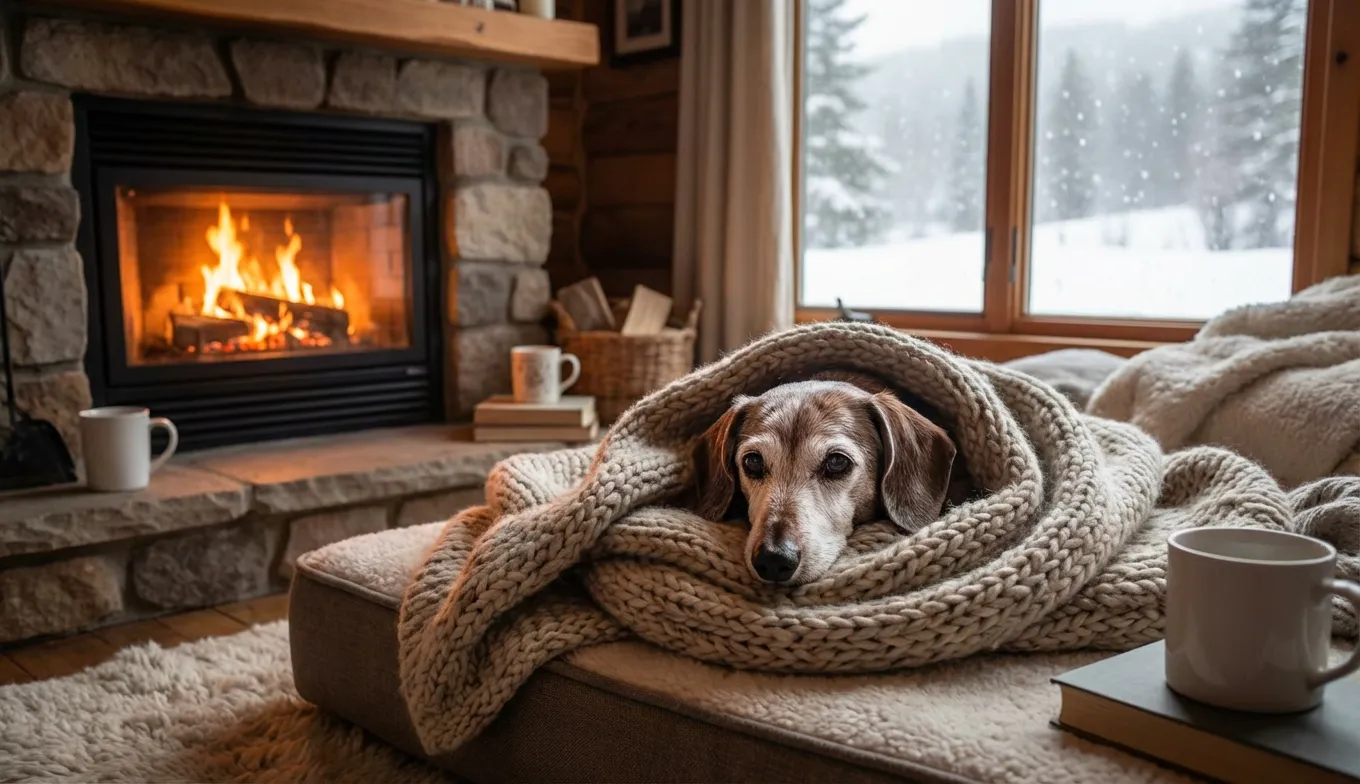
You’re standing at the open back door, leash in hand, watching your twelve-year-old Dachshund hit the brakes hard enough to skid on the linoleum. A gust of February wind cuts through the room, but your dog isn’t just being stubborn. You see the subtle tremor in his hind legs and the way he hunches his long back, creating that distinct "roach" shape that every Doxie owner dreads. He looks up at you with eyes that are clouding slightly with age, communicating a very clear message: absolutely not.
It’s a standoff familiar to anyone who shares their home with a senior wiener dog. But in that moment, you realize this isn't just about comfort—it's about mechanics. His chest is only four inches off the frozen concrete. The cold isn't just around him; it's radiating directly into his sternum and stiffening the very spine you’ve spent a decade trying to protect.
Quick Takeaways:
- The "Ground Effect": Dachshunds lose body heat faster than other breeds because their vital organs are inches from the frozen ground.
- Spinal Health: Shivering causes muscle tension along the spine, which can aggravate old IVDD flare-ups or arthritis.
- Layering Strategy: Look for "long and low" specific coats that cover the lower lumbar region without restricting shoulder movement.
- Indoor Drafts: The temperature at floor level can be 5-10 degrees colder than at standing height—check your dog's sleeping spots.
- Paw Protection: Salt and ice melt are toxic and painful; use balms or booties specifically designed for narrow paws.
The Physics of Being "Low to the Ground"
Most generic winter care guides talk about ambient air temperature. They’ll tell you that 35 degrees is chilly. But for a senior Dachshund, air temperature is almost irrelevant compared to ground temperature.
Here is the angle most people miss: The air at your head level might be 40°F, but the layer of air immediately above the frozen ground is significantly colder. Because of their unique anatomy—specifically, the dwarfism (chondrodysplasia) that gives them those short legs—your Dachshund is walking exclusively in this super-cooled micro-climate.
We’ve seen the difference this understanding makes. One of the families we worked with at PawSculpt told us they couldn't figure out why their senior Doxie, Cooper, was refusing walks despite wearing a heavy parka. The issue wasn't the coat; it was the radiant cooling from the pavement sucking heat directly out of his exposed belly.
The "Belly Clearance" Factor
When a standard dog walks, there is significant airflow between their torso and the ground. When a senior Dachshund walks, especially if their topline has dipped with age, that clearance is minimal. In snow, their chest acts like a snowplow.The Counterintuitive Fix: Don't just look for a coat that covers the back. You need a chest panel. If the jacket you’re looking at uses a simple strap across the belly, put it back. For a senior Doxie, a chest warmer is actually more critical than a back warmer because the heart and lungs are right there, inches from the ice.
Why Cold Weather is Dangerous for IVDD Survivors
If you own a Dachshund, you know about Intervertebral Disc Disease (IVDD). You probably have ramps all over your house and carry them like a fragile package. But winter adds a hidden risk factor that doesn't get discussed enough: micro-shivering.
When a dog gets cold, they shiver to generate heat. For a Labrador, this is fine. For a senior Dachshund with a history of back issues, shivering creates rapid, involuntary contractions of the paraspinal muscles—the long muscles running alongside the spine.
These muscles are meant to support the vertebrae. When they spasm from the cold, they compress the discs. If your senior dog has calcified discs (which most Doxies over age 7 do), this compression can trigger pain or even a rupture.
The Pre-Walk Warm-Up
We recommend treating your winter walks like an athletic event. You wouldn't sprint without stretching; don't take your arthritic dog from a 70-degree nap directly into 30-degree wind.- The Massage: briskly rub their large muscle groups (hips and shoulders) for 60 seconds to stimulate blood flow.
- Indoor Laps: Have them follow a treat around the living room for two minutes to lubricate the joints with synovial fluid before the cold air hits them.
- Heat the Gear: This sounds extra, but toss their sweater in the dryer for 5 minutes before putting it on. That residual heat helps keep the muscles loose during the first shock of going outside.
The Gear Guide: Function Over Fashion
We love a cute cable knit as much as anyone, but for a senior Dachshund, clothing is medical equipment. The wrong fit can actually cause falls.
The "Armpit" Problem
Dachshunds have a prominent sternum (the keel) and deep chests, but their front legs are set back. Standard dog sweaters often cut into the armpits of a Doxie, causing chafing. For a senior dog who already moves slower, this irritation can make them stop walking entirely.Look for:
- Wide armholes: Or better yet, sleeveless designs that wrap around the neck and chest.
- Lumbar coverage: Most dog coats stop at the base of the tail. For a Dachshund, that leaves the most vulnerable part of their spine exposed. You need "long" sizing.
- Snaps over Velcro: The sound of ripping Velcro can startle anxious seniors, and Velcro tends to get clogged with the long hair of standard or long-haired Doxies.
Traction is Everything
Winter means slippery surfaces. A slip that a young dog recovers from instantly can mean a pulled groin or a twisted back for a senior.If your dog tolerates booties, great. But let’s be real—many Dachshunds act like their feet have been amputated the moment you put shoes on them. A practical alternative is paw wax (like Musher's Secret) combined with keeping the fur between their pads trimmed very short. Long toe fur collects ice balls (which hurt) and acts like a slippery sock on hardwood floors.
The Indoor Micro-Climate: Living at Floor Level
It’s easy to forget that our homes have different climate zones. Heat rises. While you are comfortable at five feet, the floor can be drafty and cold.
The Candle Test
On a windy day, light a candle and set it on the floor near your dog’s favorite sleeping spot. If the flame flickers, there’s a draft.Senior dogs spend up to 18 hours a day sleeping. If they are sleeping in a draft, their joints are stiffening up while they rest. We recommend raising their bed off the floor by just a few inches, or using a self-warming crate pad that reflects their body heat back to them.
Ramp Safety in Winter
If you use ramps for the sofa or bed (and you should), check the traction. In winter, dry paws slip more easily on carpeted ramps. We’ve heard horror stories of seniors sliding backward down a ramp.Pro Tip: Add strips of yoga mat material or heavy-duty grip tape to your indoor ramps during the winter months. It provides that extra "stick" their dry pads need.
The Mental Game: Beating the Winter Blues
Dachshunds are scent hounds. They experience the world through their noses. In the summer, they get mental stimulation from sniffing every blade of grass. In the winter, when walks are rushed "business only" trips, they lose that enrichment. This leads to boredom, and a bored Dachshund is usually a destructive (or vocal) Dachshund.
Scent Work Indoors
Since you can't spend 20 minutes sniffing a frozen bush, bring the sniffing inside.- The Muffin Tin Game: Put treats in a muffin tin and cover them with tennis balls. They have to knock the balls off to get the treat.
- The Snuffle Mat: Feed them their entire dinner in a high-pile rug or snuffle mat.
- Hide and Seek: Hide strong-smelling treats (like dried liver) around the living room while they wait in another room.
This mental work is exhausting. 15 minutes of intense sniffing burns as much energy as a 45-minute walk, without the risk of hypothermia or slipping on ice.
Capturing the Character
There is something profoundly touching about the "grey muzzle" years. The stubbornness doesn't fade, but it softens into a very specific kind of dignity. We see this constantly at our studio. When families commission a custom figurine of their senior Dachshund, they rarely ask for the "perfect show pose."
They want us to capture the quirks. The way they burrow so deep under the blankets that you can only see the tip of a wet nose. The "meerkat" sit they do when begging, even when their balance isn't what it used to be. The specific way they look at you when they decide it's too cold to go out.
We often tell people that while puppyhood is about potential, the senior years are about personality. These winter months, where you're huddled up together indoors, are often when that bond feels strongest. You become their protector in a new way, shielding them from the elements they can no longer handle.
Nutrition and Hydration: The Winter Diet
Here is a common mistake: feeding more in winter to "keep them warm."
Unless your senior Dachshund is a working dog spending hours outside, they are likely burning fewer calories in the winter because they are sleeping more. Dachshunds are prone to obesity, and every extra ounce of weight puts exponential pressure on their spine and knees.
Monitor the Ribs: You should be able to feel their ribs easily without pressing hard. If the winter coat makes it hard to see, use your hands. If you lose the ribs, reduce the kibble.
However, do increase hydration. Winter air is dry, and forced-air heating sucks moisture out of the environment. Dehydration worsens joint stiffness. If your senior dog isn't drinking enough water (because it's cold), try adding warm bone broth to their food. The warmth releases aromas that entice them to eat and drink.
When to Call the Vet
We aren't veterinarians, but in our years working with pet owners, we’ve learned that seniors hide pain well. In winter, watch for these subtle signs that the cold is affecting their quality of life:
- Hesitancy on stairs: If they used to do the porch steps fine but now hesitate, it’s likely pain, not just cold.
- Licking joints: If they are obsessively licking a wrist or hock, that’s a localized pain response.
- Behavioral aggression: If your normally sweet Doxie snaps when you put their sweater on, they aren't being grumpy. It likely hurts to lift their arms or manipulate their spine.
If you see these, don't just add another blanket. Talk to your vet about joint supplements or pain management. There are incredible options available now, from monthly injections to laser therapy, that can make winter bearable again.
The Warmth of Stewardship
Back at the back door, you make a decision. You don't force the issue. You scoop up your little "low-rider," zip him into his fleece-lined vest, and carry him to the one patch of yard where the sun has melted the snow.
He does his business, shivering slightly, and looks at you to be carried back. And you do it. Not because you have to, but because he carried your heart for twelve years, and carrying his ten-pound body across the ice is the least you can do in return.
Winter with a senior Dachshund isn't easy. It requires gear, patience, and a lot of floor-level draft checking. But these quiet, cozy months are a privilege. They are a time to slow down to their pace, to appreciate the grey on their face, and to keep them warm—body and soul.
Frequently Asked Questions
What temperature is too cold for a senior Dachshund?
There isn't a single magic number, but the "danger zone" typically starts below 32°F (0°C). However, because Dachshunds are so close to the ground, wet cold (35°F and raining) is often more dangerous than dry cold (25°F and sunny). If you see them lifting their paws off the ground or shivering, bring them in immediately, regardless of the thermometer.How can I exercise my Dachshund inside during winter?
When the sidewalks are icy, shift your focus from physical cardio to mental gymnastics. Scent work is fantastic for this breed. "Find it" games, puzzle feeders, and learning new low-impact tricks (like "touch" or "chin rest") burn energy effectively. Remember, a mentally tired dog is a calm dog.Do senior Dachshunds need boots for snow?
Ideally, yes. Chemical ice melts and rock salt can cause chemical burns on their pads, and ice balls can form between their toes. However, many Doxies stubbornly refuse to walk in boots. If this is your dog, use a generous amount of paw wax (like Musher's Secret) before going out to create a barrier, and use a warm, wet cloth to wipe their feet the second they come inside.Why does my Dachshund's back hurt more in winter?
It comes down to muscle tension and barometric pressure. The cold causes the muscles along the spine to contract and tighten (shivering), which increases compression on the intervertebral discs. Additionally, drops in barometric pressure before a storm can cause tissues in arthritic joints to expand slightly, leading to increased pain and stiffness. Keeping them physically warm helps keep those muscles loose.Celebrate Your Pet's Unique Personality
Every pet has quirks and characteristics that make them one-of-a-kind. A custom PawSculpt figurine captures those details—the way they tilt their head, their favorite pose, the spark in their eyes.
Free instant AI preview • 3D artist preview within 7 days • 5 free revisions