
The Silent Wheel: Grieving the Loss of an Active Hamster
"It is not the size of the candle that determines the brightness of the light." — Matshona Dhliwayo
You are sitting on your living room sofa, staring at a specific corner of the room that suddenly feels vast. It’s 10:30 PM. For the last two years, this was the time the rustling would start. You would hear the distinct scritch-scratch of tiny claws on plastic bedding, the gentle clinking of a water bottle ball bearing, and then, the low, rhythmic whir of the wheel picking up speed. It was the background noise of your evenings, a comforting signal that while the rest of the world was winding down, a tiny, vibrant life under your care was just waking up.
Now, the air is heavy with stillness. You might find yourself holding your breath, subconsciously waiting for that familiar squeak of the axle that will never come. The cage is there, but the energy is gone. It feels foolish to be this wrecked over a creature that weighed less than a stick of butter, doesn't it? But here you are, feeling the weight of that absence pressing down on your chest.
Quick Takeaways:
- The "Starter Pet" Myth: Grief is not measured by the animal's size or lifespan; feeling devastated is valid, regardless of what society says about "rodents."
- The Nocturnal Void: Hamster loss hits hardest at night because their activity cycle was the soundtrack to your relaxation time.
- Managing the Cage: Don't rush to clean or dismantle the habitat; the scent is a powerful memory trigger you might not be ready to lose yet.
- Memorial Options: From planting sunflower seeds to commissioning custom figurines (we do small pets too!), tangible tributes help validate the loss.
- Dealing with Guilt: It is normal to feel a mix of sadness and relief regarding the high-maintenance care hamsters require.
The unique Sting of "Pocket Pet" Grief
There is a specific kind of isolation that comes with losing a hamster. When a dog dies, your boss sends flowers. When a cat passes, friends come over with wine. But when a hamster dies, you often get a confused look and a well-meaning but devastating comment: "Oh, I'm sorry. Are you going to get another one? They're only $15, right?"
This transactional view of small pets completely invalidates the bond you built.
We need to talk about the "disposable pet" stigma. Because hamsters are small, short-lived, and inexpensive to purchase, the world treats them as interchangeable widgets. But you know the truth. You know that your hamster had a preference for broccoli over carrots. You know the specific way they stood on their hind legs when they heard the treat bag crinkle. You know the trust it took for a prey animal—hardwired by evolution to fear everything—to fall asleep in the palm of your hand.
That trust is not disposable.
The grief you are feeling is compounded by the fact that you feel you have to justify it. You might find yourself downplaying your sadness to coworkers or friends to avoid rolling eyes. Please, stop doing that. The depth of your grief is a testament to the safety and love you provided to a creature that had no voice to ask for it. You were their entire world.
The Deafening Silence of the Wheel
Here is the angle most grief guides miss: Hamsters are sensory-heavy pets. They aren't just visual companions; they are auditory and tactile fixtures in our homes.
Because they are crepuscular or nocturnal, their lives run parallel to your downtime. When you were reading, watching TV, or winding down from work, they were your companion in the dark. You didn't always have to be holding them to feel their presence. The sound of their industry—burrowing, chewing, running—was a constant reminder that life was happening nearby.
When that stops, the silence is aggressive.
This is why the first few nights are physically difficult. Your brain has habituated to the background noise of the wheel. Its absence triggers a "something is wrong" alarm in your nervous system.
A counterintuitive coping mechanism:
If the silence in the living room is keeping you awake or making you anxious, do not force yourself to sit in it. Turn on a white noise machine or a fan. Some of the families we've worked with at PawSculpt have even told us they played a recording of rain sounds to fill the auditory void left by the wheel. You aren't "replacing" them; you are soothing your brain's expectation of sound so you can rest.
The Complex Taboo: Relief and Guilt
We need to have an honest conversation about a feeling that might be making you sick with shame right now.
Somewhere in the midst of your tears, did you feel a tiny, fleeting moment of relief? Maybe it was the thought, I don't have to clean that cage this Sunday. Or, I can finally sleep without the water bottle clicking at 3 AM.
And immediately after that thought, did you feel like a monster?
Let's normalize this. Hamsters are incredibly high-maintenance. Keeping a cage strictly clean to prevent ammonia buildup, managing their delicate respiratory systems, and dealing with the disruption of nocturnal noise requires significant labor.
Feeling relief that the labor has ended does not mean you didn't love your pet. It simply means your body is recognizing the removal of a stressor. Humans are capable of holding two opposing truths simultaneously: You can be heartbroken that your friend is gone, and also relieved that the work of caretaking is finished.
One customer shared a story with our team that stuck with us. She loved her Syrian hamster, Barnaby, fiercely. But Barnaby was an escape artist who chewed through three different expensive habitats. When he passed, she cried for days. But she also admitted, in a whisper, that she was relieved she didn't have to check the cage locks five times every night before bed. That anxiety was real. Its absence is palpable. Be gentle with yourself if you feel lighter in some ways; grief is not a performance of constant suffering.
The Blur of Motion: Why Memories Fade Fast
One of the cruelest aspects of losing a small pet is the "blurry photo syndrome."
Hamsters never stop moving. If you look through your camera roll right now, you probably have hundreds of photos, but 90% of them are blurry streaks of fur. You have a picture of a nose, a picture of a tail leaving the frame, and a video where the camera is shaking because you were laughing.
Unlike a dog that will sit for a portrait, a hamster is a kinetic event. When they are gone, it can be hard to summon a clear mental image of them still and peaceful. You remember the motion, but you might struggle to recall the exact pattern of their fur or the way their ears folded when they were sleepy.
This is where intentional memorialization becomes vital. You need an anchor for your memory that isn't moving at 5 mph.
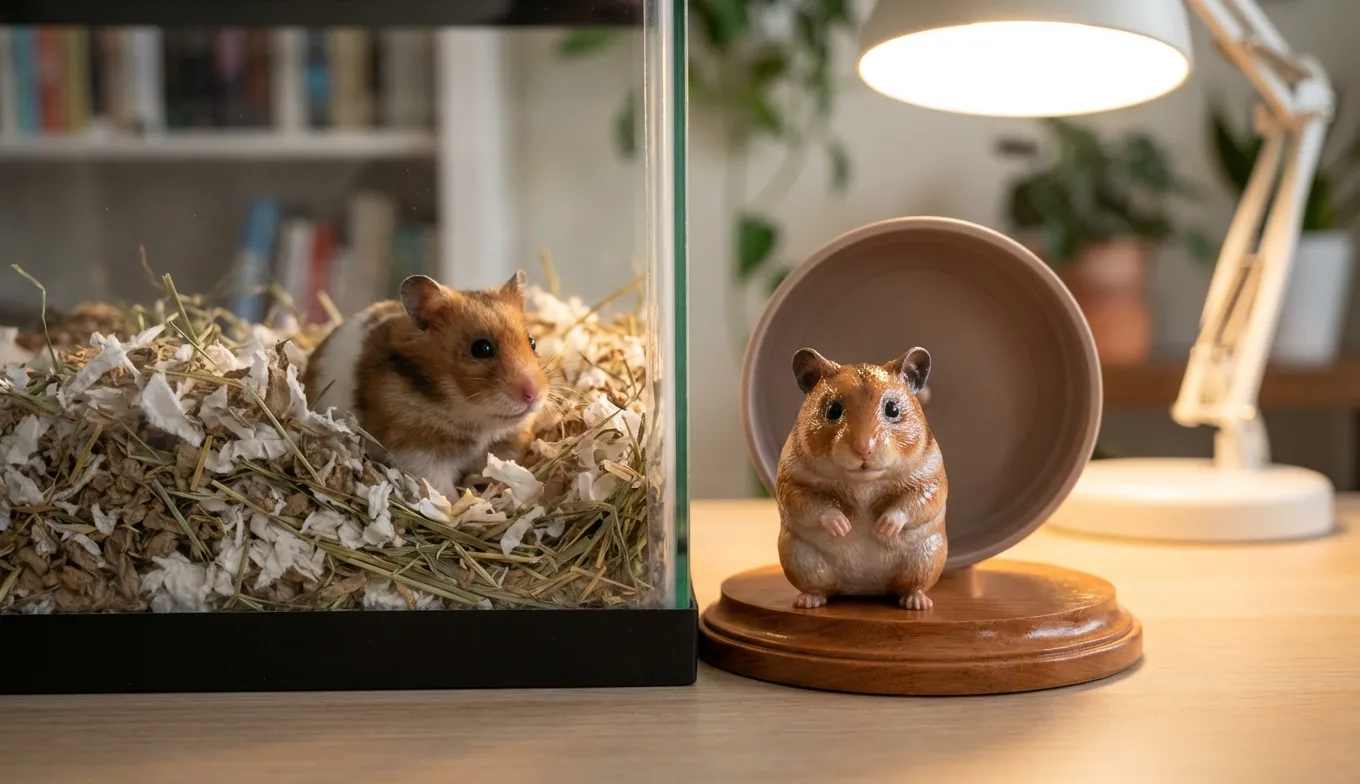
We've seen a shift in how people honor these small lives. It used to be a shoebox in the backyard. Now, pet parents are seeking permanence. We have seen an increase in requests for custom figurines of hamsters, rats, and guinea pigs. There is something profoundly healing about holding a physical representation of your pet that captures their personality—perhaps holding their favorite sunflower seed or sitting in their iconic "begging" pose—in a way a blurry photo never could. It solidifies the memory. It says, This life mattered enough to be carved in stone.
The Cage: To Clean or Not to Clean?
The physical presence of the habitat is the elephant in the room. It takes up space. It smells like them. It is full of their hoard.
Conventional wisdom says to clean it up immediately to "move on." We disagree.
The scent of your hamster is the strongest link you have to them right now. Rodents communicate and exist through scent. Erasing that immediately can feel like a secondary trauma.
- Don't clean it yet. If the cage isn't unhygienic, cover it with a light blanket. This signals that it is no longer an active habitat but preserves the space for a moment.
- Retrieve the hoard. This sounds strange to non-owners, but your hamster worked hard for that stash of food buried in the bedding. When you eventually clean the cage, consider taking those seeds and burying them in a garden or a potted plant. Let their labor bloom into something new.
- Save a keepsake. Before you donate the cage or throw away the bedding, keep a small wooden chew toy or the ceramic food dish. These items hold the patina of their use.
If you decide to get another hamster eventually, please buy a new wooden hide and new chews. Scent is territorial. A new hamster deserves a fresh start, and your previous hamster deserves to have their scent retired with them, not overwritten.
When the Grief Feels Disproportionate
Sometimes, the grief for a hamster feels heavier than the grief for a human relative. This causes immense confusion and guilt. Why am I crying more over Mr. Peanuts than I did for Great Aunt Edna?
The answer lies in dependency and innocence.
Your relationship with a hamster is uncomplicated. It is pure caretaking. They never argued with you about politics. They never borrowed money and didn't pay it back. They simply existed, needed you, and accepted your care.
When a relationship is that pure, the loss is pure too. It cuts deep because there is no "baggage" to buffer the sadness. You aren't grieving a complex history; you are grieving pure, distilled innocence.
Furthermore, you were their god. You controlled their sun (the lights), their rain (the water bottle), and their harvest (the food bowl). That level of responsibility creates a fierce, protective bond. When they die—especially if it was sudden or due to a common hamster illness like wet tail—you might feel you failed in your duty as their protector.
You didn't. Hamsters are fragile biological machines running at high speed. Their candles burn bright and fast. You didn't fail them; you stewarded them through the entirety of their natural timeline.
Moving Forward Without Forgetting
So, what do you do with the love that has nowhere to go?
You plant it.
Hamsters are creatures of the earth. They dig, they bury, they harvest. The most fitting tribute to a hamster is often botanical.
- The Sunflower Tribute: Take the leftover sunflower seeds from their food mix. Plant them in a pot or your garden. When they grow tall and bright, you'll see the energy of your pet transformed into life.
- The Donation: Shelters are often desperate for small animal supplies. Most donations go to dogs and cats. Donating your cage, unused bedding, and food to a rescue can save the life of another pocket pet.
- The Art of Remembrance: Whether it’s a custom figurine that sits on your desk or a small locket with a whisker inside, keeping them visible combats the "out of sight, out of mind" nature of small pet loss.
The wheel is silent now. The living room is quiet. But the impact that little life had on your heart is loud, real, and permanent. Do not let anyone tell you "it was just a hamster." It was a life, and it was yours to love.
Frequently Asked Questions
Why does losing a hamster hurt so much?
It often surprises people how intense the grief is. This happens because the love you share with a hamster is uncomplicated and pure—they rely on you entirely, and they never judge you. Furthermore, because they are often kept in bedrooms or living areas, their daily sounds and rhythms are woven into your intimate personal space. When that stops, the void is immediate and physical.How do I explain hamster death to my child?
For many children, a hamster is their first encounter with death. It is crucial to be honest and avoid euphemisms like "put to sleep" or "went away," as these can cause anxiety about sleeping or travel. Explain that hamsters have much shorter lives than humans and that their body stopped working. Focus on the happy life the child helped provide.What should I do with my hamster's body?
You have several dignified options. If you own your home, backyard burial in a small, biodegradable box is common (ensure it is deep enough to not be disturbed). If you rent or move often, burying them in a large, potted indoor plant allows you to keep them with you. alternatively, most veterinarians offer cremation services for small pets, often returning the ashes in a tiny urn or keepsake box.How soon is too soon to get another hamster?
This is entirely personal. Some people need the noise and life in the cage immediately to cope; others need months to grieve. The only "wrong" time is if you are expecting the new hamster to be the old hamster. If you get a new pet, consider choosing a different species (like switching from a Syrian to a Dwarf) or a different color to help your brain recognize this is a new relationship to build, not a continuation of the old one.Is it weird to get a memorial for a hamster?
Absolutely not. In fact, because hamsters are so small and often misunderstood by the general public, having a tangible memorial can be even more important for validation. Whether it's a garden stone, a framed paw print (if possible), or a custom sculpture, these items serve as physical proof that your little friend existed and mattered.Honor Their Memory Forever
Your pet's story deserves to be preserved in a way that captures their unique spirit. A custom PawSculpt figurine transforms your cherished memories into a timeless keepsake—every whisker, every marking, every detail that made them irreplaceable.
Free instant AI preview • 3D artist preview within 7 days • 5 free revisions