
Supporting Your Daughter Through the Sudden Loss of Her First Hamster
You’re standing in the garage, staring at the old shoebox on the workbench. It’s funny how a cardboard container that once held size 4 sneakers suddenly feels like the heaviest thing in the world. Inside, wrapped in a scrap of flannel, is a creature smaller than your fist, yet the weight of your daughter’s first heartbreak is pressing down on your chest so hard it’s difficult to breathe. You can hear her upstairs, a muffled, hiccuping sound through the floorboards, and you realize you have absolutely no idea what to do next. You want to fix it—that primal parental instinct to sprint to the pet store and buy a lookalike is screaming at you—but you know, deep down, that a $15 replacement can’t patch a million-dollar hole in her heart.
Quick Takeaways:
- Don't Rush the "Replacement": Buying a new hamster immediately often backfires, causing resentment or guilt in the child.
- Validate "Small" Grief: Acknowledge that the size of the pet does not dictate the size of the loss.
- Create Tangible Tributes: Since hamsters are hard to photograph well, 3D custom pet figurines or shadow boxes can provide a physical anchor for memories.
- The 48-Hour Rule: Don't dismantle the cage immediately, but don't leave it indefinitely. Wait two days before cleaning it out together.
The "Just a Hamster" Trap: Validating the Invalidated
Here is the brutal truth that most parenting guides won't tell you: your daughter isn't just fighting grief right now; she is fighting embarrassment.
Society has a hierarchy of grief. Dogs and cats are at the top. Hamsters, gerbils, and fish are at the bottom. Your daughter likely feels silly for crying this hard over a rodent. She might worry her friends will laugh at her, or that even you don't quite "get it."
We need to shatter the myth of the "Starter Pet." A hamster is often the first living thing a child has total autonomy over. Unlike the family dog, who really belongs to you, the hamster was hers. She was the god of its tiny universe. She filled the water bottle. She cleaned the shavings. Losing it feels like a failure of responsibility, not just a loss of companionship.
The Counterintuitive Insight:
Do not tell her "he had a good life." Not yet. To a child, that sounds like a dismissal. Instead, validate the intensity of the pain. Say something like, "It makes sense that you're crying this much. You loved him fiercely, and he was yours." When you validate the pain, you remove the shame, allowing the actual healing to begin.
Navigating the "Suddenness" of Small Pet Loss
One minute they are running on the wheel; the next, they are gone. Hamsters are prey animals, biologically wired to hide illness until the very end. This means you rarely get the "long goodbye" that dog owners get.
This suddenness creates a specific type of emotional whiplash. Your daughter might feel a bizarre mix of shock and guilt. Did I feed him yesterday? Was the room too cold? Did I squeeze him too hard?
Address the Guilt Directly:
Sit her down and explain the biology. Tell her, "Hamsters are experts at keeping secrets about their health to stay safe in the wild. He didn't let you know he was sick because he was being brave, not because you weren't paying attention."
We’ve heard from parents who skipped this step, and their children carried a secret burden of negligence for years. Absolve her of the guilt explicitly. It’s the most important conversation you’ll have today.
The Ritual of Goodbye: Why the Toilet is Off-Limits
Please, whatever you do, do not flush the body.
It might seem practical to an adult mind, but to a grieving child, the toilet is for waste. Flushing a friend equates them with garbage. It can be traumatizing in a way that sticks.
You need a ceremony. It doesn't have to be religious, but it needs to be respectful.
- The Vessel: Use that shoebox in the garage. Let her decorate it. Writing messages on the lid gives her a physical outlet for the words she didn't get to say.
- The Burial: If you have a yard, dig a hole deep enough (at least two feet) to ensure it isn't disturbed by other animals. If you can't bury it (frozen ground or apartment living), consider a potted plant burial. Place the box at the bottom of a large planter and plant a perennial flower on top.
- The Words: Let her speak. If she can't speak, let her read a letter she wrote.
Pro-Tip: If the ground is frozen or you are renting, many veterinary clinics offer communal cremation services for pocket pets for a very nominal fee. It’s a dignified option that validates the pet’s worth.
The Empty Cage: A Visual Trigger
The cage is the elephant in the room. Or rather, the silent, plastic box in the bedroom.
There is a delicate balance here. If you clean it out while she’s at school tomorrow, she might feel like you’re erasing his existence. If you leave it dirty and smelling of cedar shavings for a month, it becomes a shrine to decay.
The 48-Hour Strategy:
Leave the cage exactly as it is for two days. Cover it with a light blanket if looking at the empty wheel is too painful for her. After 48 hours, ask her to help you clean it. Frame it not as "getting rid of his stuff," but as "cleaning his house one last time so we can pack it away for safekeeping."
Scrubbing the cage together is a therapeutic act. It’s a physical way to process the transition from "pet who lives here" to "pet who lives in our memory."
Memorializing When You Don't Have Good Photos
Here is a logistical problem specific to hamsters: they are terrible models. They are nocturnal, fast, and often blurry in photos. Unlike dog owners who have thousands of portrait-mode shots, your daughter might only have a few grainy pictures of a fur-ball inside a plastic tube.
This can lead to a panic: I’m going to forget what he looked like.
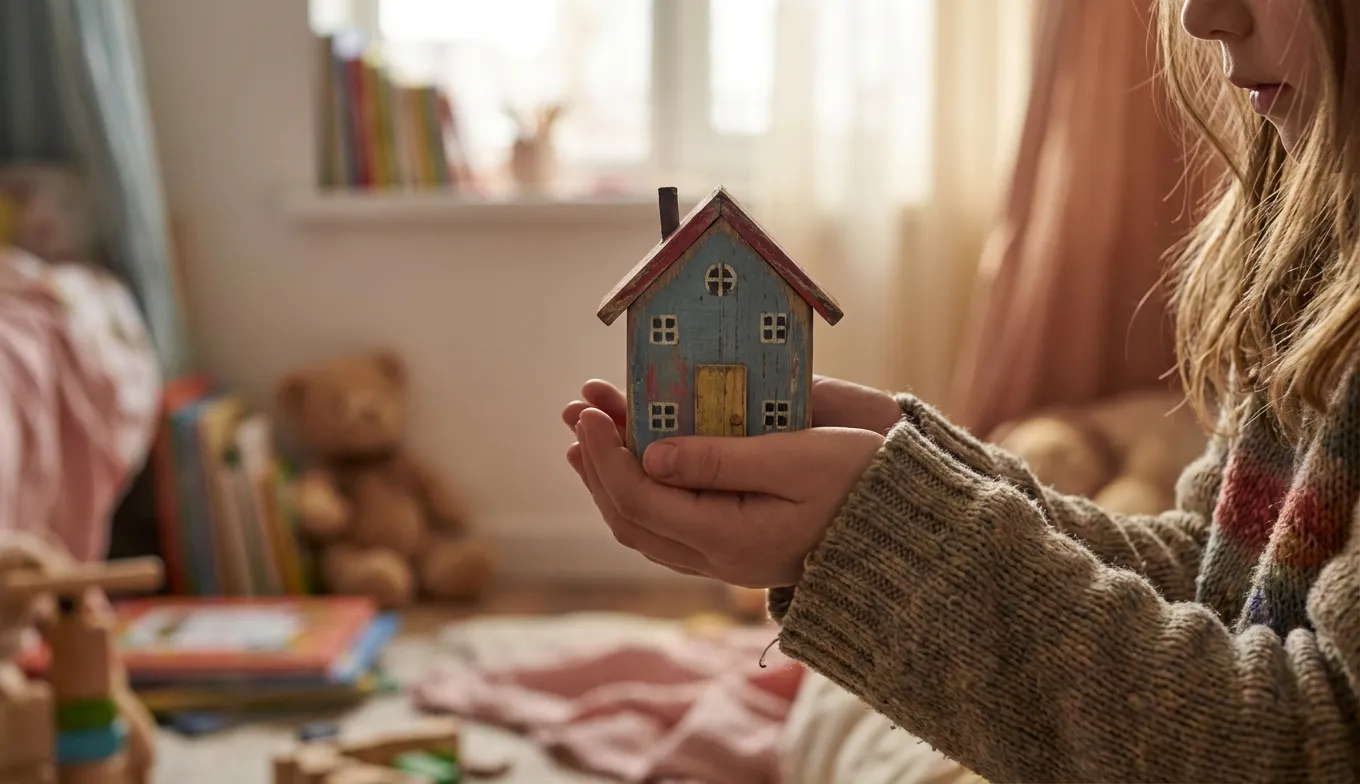
This is where physical, three-dimensional tributes can be more powerful than a photo frame. We’ve worked with many families who found that a custom pet figurine offered something a photograph couldn't—a sense of presence. Because hamsters are tactile pets—creatures held in cupped hands—having a tangible object to hold can be incredibly soothing for a child.
Even if you don't go the custom art route, consider creating a "memory jar." Have her write down funny things he did—"stuffed 12 sunflower seeds in his cheek," "escaped on Tuesday"—on slips of paper. When she’s missing him, she can pull one out. It shifts the focus from the death back to the life.
The "New Hamster" Conversation
You will be tempted. You will walk past the pet store and see a hamster that looks just like him.
Don't do it.
Bringing a new pet home too soon sends a damaging message: Love is replaceable. Grief is a problem to be fixed with a purchase.
Wait until she asks. And when she does ask, ensure she wants a new hamster, not her old hamster back. Ask her, "Are you missing [Pet's Name], or are you ready to make a friend with a totally new hamster who might not like the same treats?"
If she says she misses her old pet, she isn't ready. If she says she wants to make a new friend, she might be.
Closing Thoughts
You’re still in the garage. The cold is seeping into your socks. But you aren't helpless anymore.
You are about to go upstairs and do something incredibly difficult. You are going to teach your daughter that heartbreak is the price of admission for love, and that it’s a price worth paying. You aren't just burying a rodent today; you are building the emotional infrastructure she will use for the rest of her life.
Take a breath. Pick up the box. Go upstairs.
Frequently Asked Questions
How long should a child grieve a hamster?
Grief doesn't own a calendar. However, for a first pet loss, the acute phase usually lasts one to three weeks. You might notice your daughter is quieter than usual or quick to tears during this time. If she shows signs of depression—like refusing to eat, nightmares, or losing interest in friends—that last longer than a month, it may be time to speak with a professional.Should I get a new hamster immediately?
We strongly advise against this. The "replacement puppy" (or hamster) strategy often backfires. It denies the child the chance to process the finality of death. Wait until the home feels a little too quiet and she brings up the idea of a new pet herself. Whether it's a custom dog figurine or a new hamster, the tribute or new pet should come from a place of love, not a desperate need to fill a void.How do I explain why the hamster died suddenly?
Avoid euphemisms like "he went to sleep" or "he went to the farm." These can cause anxiety around bedtime or travel. Use simple, biological terms appropriate for her age. "His body stopped working because he was very old/sick, and the doctors couldn't fix it." It sounds harsh to adult ears, but children crave concrete facts to make sense of the world.Is it normal for my child to feel guilty about the death?
Extremely normal. Because hamsters are small and dependent, children often assume they did something wrong. "Did I squeeze him? Did I forget water?" preemptively reassure her: "You were a great owner. Small animals sometimes get sick very fast, and there was nothing you could have done to stop it."Honor Their Memory Forever
Your pet's story deserves to be preserved in a way that captures their unique spirit. A custom PawSculpt figurine transforms your cherished memories into a timeless keepsake—every whisker, every marking, every detail that made them irreplaceable.
Free instant AI preview • 3D artist preview within 7 days • 5 free revisions