
Supporting a Grieving Friend Who Lost Their Bonded Pair of Persian Cats
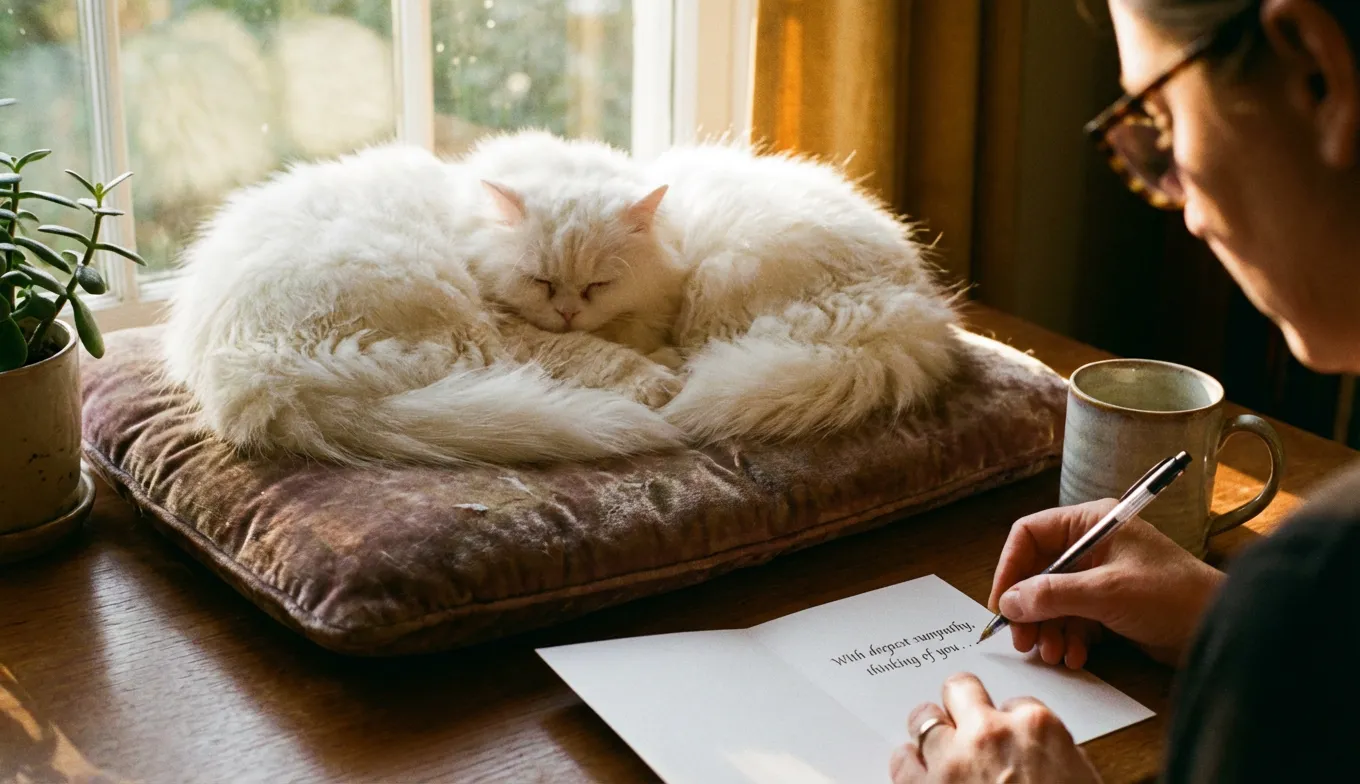
The two ceramic bowls sit side-by-side on the mat near the patio door, catching the afternoon dust instead of kibble. You watch your friend walk past them, and her body creates a subconscious, wide arc to avoid stepping on tails that aren't there anymore. She stops at the window, her hand twitching slightly—a muscle memory reaching for a grooming brush that has already been put away in a drawer. For years, her evening rhythm was dictated by the high-maintenance needs of two Persians: the eye wiping, the fur detangling, the synchronized feeding. Now, the living room feels cavernous, stripped not just of two lives, but of an entire ecosystem of interaction.
Quick Takeaways:
The "Bonded Void": Losing a pair isn't just double the grief; it's the loss of the relationship between* the pets, which leaves the home feeling exponentially emptier.
- The "Relief" Guilt: Persians require intense daily care. Your friend may feel a wave of relief that the labor is over, followed immediately by crushing guilt. This is normal.
- Tangible Tributes: Bonded pairs are best memorialized together. Custom figurines or framed dual-portraits help preserve their specific physical dynamic.
- Actionable Support: Don't ask "how can I help?" Instead, offer to help pack away the grooming supplies or donate the specialized food.
The Unique Agony of a "Double Silence"
When a bonded pair leaves, they don't just leave a hole in the house; they take the bridge between them with them.
Most people understand pet loss. But what we’ve learned at PawSculpt, after working with thousands of grieving families, is that losing a bonded pair—whether simultaneously or in quick succession—is a fundamentally different psychological event.
Your friend didn't just lose Cat A and Cat B. She lost the third entity: the relationship. She’s grieving the way they slept in a yin-yang shape on the sofa. She’s missing the sound of them chasing each other down the hall at 3 AM.
The "Empty Ecosystem" Effect
With a single pet, the owner loses a companion. With a bonded pair, the owner loses an audience and a soap opera. The house goes from being a hive of social interaction to a static box instantly.Counterintuitive Insight: You might think keeping photos up is the best way to help. However, for a bonded pair loss, the visual reminders of them together can be more painful than reminders of them individually. The interaction is what hurts to remember. Watch your friend’s cues. If she takes the photos down, don't chide her. She’s trying to survive the lack of movement in her home.
Addressing the Secret Guilt (The Persian Paradox)
Here is the uncomfortable truth that few pet owners will admit, but we hear it in the quiet confessions of our clients: There is often relief mixed with the agony.
Persian cats are not low-maintenance roommates. They require daily eye cleaning to prevent staining, rigorous brushing to prevent painful mats, and often, specific dietary management. Your friend has likely spent years, maybe over a decade, structuring her schedule around their physical needs.
When that responsibility vanishes overnight, the sudden freedom is jarring. She might sleep in on Saturday for the first time in years, and then wake up hating herself for enjoying the rest.
How to handle this:
If she hints at this—perhaps saying, "I don't know what to do with all this free time"—do not let that comment hang in the air. Validate it immediately.
- Say this: "You gave them such incredible care. It was a lot of work, and it’s okay to feel the difference now that you aren't doing it. It doesn't mean you love them any less."
- Don't say: "At least you can travel now." (This frames their death as a convenience, which feels like a betrayal.)
Practical Support: Scripts and Actions
We often default to "Let me know if you need anything." That puts the burden of management on the griever. Here is how to actually show up for a friend mourning a bonded pair.
1. The "Grooming Kit" Intervention
Persian owners usually have an arsenal of expensive tools: metal combs, slicker brushes, eye wipes, and de-matting rakes. Seeing these tools can be a visceral trigger.The Action: "I’m coming over Tuesday with coffee and some boxes. We can pack up the grooming gear together, or I can do it while you take a walk. We don't have to throw it away, but let’s get it off the counter."
2. Acknowledging the "Orphaned" Identity
If the cats were the center of her domestic life, she might feel like she’s lost her identity as a "cat mom."The Script: "I know they were a huge part of who you were. I miss seeing their updates. I’m thinking of them today."
Why this works: It validates that her grief is witnessed. Isolation is the enemy here.
3. Handling the "Replacement" Question
Well-meaning people will inevitably ask, "Are you going to get another one?" or "Maybe a kitten would help."The Reality: When you lose a bonded pair, the idea of starting over with a single kitten can feel wrong, or conversely, the idea of getting another pair feels like trying to "recast" a play that has ended.
Your Role: Be the buffer. If you're out with friends and someone asks her this, step in. "She’s just taking time to honor [Cat Name] and [Cat Name] right now. They were one of a kind."
Memorializing the Bond: Ideas That Heal
Because the magic of a bonded pair was in their connection, the memorial should reflect that togetherness. A single urn or a generic frame often feels insufficient.
The "Together Forever" Tribute
We’ve seen a shift in how people memorialize pairs. Instead of separate shrines, they want to capture the interaction.- Commissioned Art: A painting of the two of them grooming each other.
- The Garden Stone: A large river rock engraved with both names, placed in a sunny spot they used to watch from the window.
- Custom Sculptures: This is where we see the most emotional impact. At PawSculpt, we often create custom pet figurines that depict the cats physically touching—perhaps sleeping in that familiar pile or sitting shoulder-to-shoulder. Why it helps: Photos are flat. When you miss a Persian, you miss the texture*—the fluff, the volume. A 3D representation can sit on a desk and occupy space in a way a photo cannot. It gives the brain a physical object to direct that affection toward.
The Donation Legacy
Persian rescue groups are always in desperate need of supplies because the breed is so expensive to maintain.The Idea: Ask your friend if she’d like to donate her high-end grooming tools or leftover specialized food to a Persian-specific rescue in the cats' names. This transforms the "stuff" cluttering her house into a legacy of care for other cats.
The Phantom Routine: 3-6 Weeks Out
Grief isn't linear, but the neurological rewiring takes time. For the first few weeks, your friend’s brain will still expect to see two shapes on the bed.
The "Ghost" Sensation:
She may hear a thud and think, "Oh, they’re playing," before reality crashes back in. This is the "phantom limb" of pet loss.
Check-in Strategy:
Set a reminder in your phone for three weeks from now. Most sympathy cards stop arriving after week one.
- Text her: "I know the house probably feels really quiet right now. Just wanted to tell you I remember how [Cat Name] used to look when he wanted treats. thinking of you."
Sharing a specific memory proves that her cats live on in your mind, not just hers. That is the greatest gift you can give: proof that her bonded pair mattered to the world, not just to her.
Frequently Asked Questions
How long does grief last for a bonded pair of cats?
There is no set timeline, but the "acute" phase often lasts longer than with a single pet because the home environment is so radically altered. Expect the first 3-6 months to be difficult, with "grief bursts" occurring up to a year later, especially on anniversaries.Is it better to get a new cat immediately to fill the silence?
Generally, no. We recommend waiting until the owner can look at a new cat and appreciate it for itself, rather than comparing it to the ones lost. With bonded pairs, the silence is loud, but filling it too quickly can lead to resentment toward the new pet.My friend seems angry rather than sad. Is this normal?
Absolutely. Anger is a common manifestation of grief. She might be angry at the vet, angry at the disease, or even angry at the cats for leaving her. This is often a defense mechanism against the crushing weight of sadness. Just listen; don't try to "fix" her anger.What is a good gift for someone who lost two cats at once?
Avoid generic "pet loss" trinkets. Look for things that honor the pair. A double-frame, a donation to a breed-specific rescue, or a custom figurine that captures their unique dynamic are thoughtful options.Why does she feel guilty about being relieved they are gone?
This is "caregiver burnout" resolving itself. If the cats were ill or high-maintenance (common with Persians), the cessation of caregiving duties brings physical relief. This biological response does not negate her love. Remind her that she traded her peace for their comfort for a long time, and she has earned her rest.Honor Their Memory Forever
Your pet's story deserves to be preserved in a way that captures their unique spirit. A custom PawSculpt figurine transforms your cherished memories into a timeless keepsake—every whisker, every marking, every detail that made them irreplaceable.
Free instant AI preview • 3D artist preview within 7 days • 5 free revisions