
Supporting Your Spouse Through the Loss of Their Childhood Dachshund
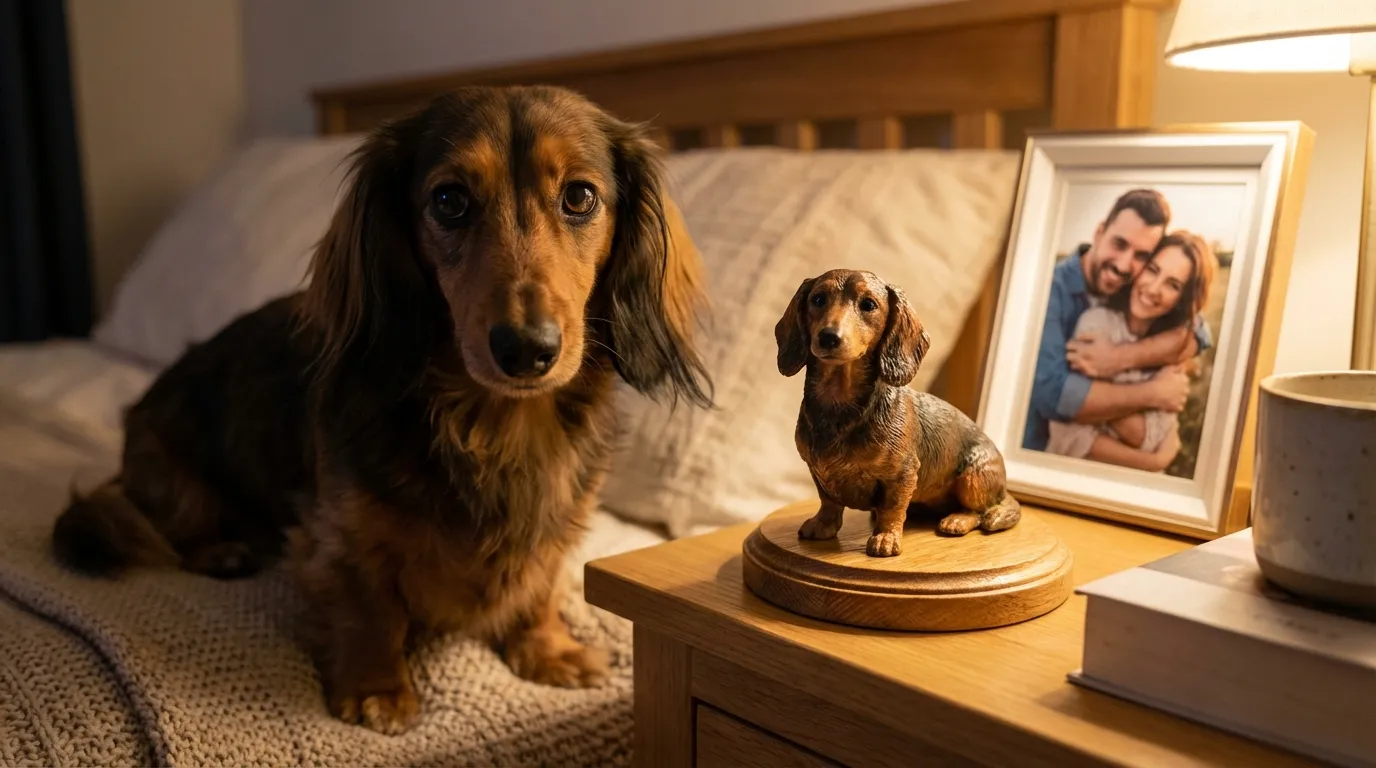
You're standing in the basement, holding a cardboard box taped shut with packing tape that's yellowed with age. Inside are the squeaky toys that haven't squeaked in years, the worn-out collar with the "Doxie" charm, and the blanket that still faintly smells like corn chips and old wool. Your spouse is upstairs, trying to compose themselves before a work call, but you heard the muffled sob when they walked past the empty spot where the dog bed used to be. You hesitate, box in hand, paralyzed by a simple, terrifying question: Do I put this away now, or is that erasing him?
Quick Takeaways:
- The "Childhood" Factor: Losing a childhood dog isn't just about the pet; it's about losing the last living link to their youth.
- The "Relief" Trap: It is normal to feel relief that caretaking is over, followed immediately by crushing guilt. Validate this for your partner.
- The Dachshund Specifics: These dogs are "velcro dogs." The physical absence of a Doxie is often felt more acutely because they were constantly touching their owners.
- Actionable Support: Instead of asking "How can I help?", take over invisible labor (canceling Chewy subscriptions, hiding the food bowl).
Memorializing: Custom tributes, like hand-sculpted figurines, work best when given 3-6 months after* the loss, not immediately.
The Unique Weight of a Childhood Dog
We need to talk about why this feels different than other losses. When your spouse cries over their childhood Dachshund, they aren't just crying for the dog they had yesterday. They are grieving the witness to their growing up.
That dog was there before you were. That dog saw them through awkward teenage years, college breakups, first apartments, and maybe even the day they met you. The "counterintuitive insight" here is that your spouse might feel like they are losing a piece of their parents or their childhood home, even if those people and places are still around. The dog was the living anchor to that timeline.
Dachshunds, in particular, have exceptionally long lifespans—often 15 to 18 years. That is an entire era of human life. When that era ends, the silence isn't just quiet; it’s a structural shift in their universe. Recognizing this "witness" aspect is the first step in truly understanding the depth of their pain.
Navigating the "Velcro" Void
If you’ve lived with a Dachshund, you know they don't just live in your house; they live on you. They burrow under blankets, press their long spines against your leg, and trip you in the kitchen.
The physical withdrawal symptoms for a Dachshund owner are intense.
- The Phantom Weight: Your spouse might wake up expecting the heavy warmth behind their knees, only to find cold sheets.
- The Shadow Step: They will likely keep doing the "Dachshund shuffle"—walking without lifting their feet to avoid stepping on a low-riding dog that isn't there anymore.
What to do:
Don't rush to fill the physical space. Don't immediately wash the blankets that have "the scent." We've learned from working with thousands of families that the sense of smell is the strongest trigger for memory. Let them keep that unwashed blanket in a sealed bag or a specific drawer. It sounds odd to non-pet people, but having access to that scent can be a panic button during a grief wave.
The Darker Emotions: Guilt and Relief
Here is the part most blog posts skip because it’s uncomfortable. Your spouse might be feeling a secret sense of relief, especially if the end was a struggle with IVDD (Intervertebral Disc Disease) or incontinence.
Caring for a geriatric Dachshund is a full-time nursing job. It involves lifting them down stairs, managing pain meds, and cleaning up accidents. When that stops, the sudden freedom is jarring.
Your spouse may feel relief that they can sleep through the night or leave the house without a panic attack. Immediately following that relief comes a wave of sickening guilt. How can I be happy he's gone?
Your role: Be the voice of reason. Say this explicitly: "It is okay to be relieved that he isn't hurting anymore, and it's okay to be relieved that you aren't exhausted. That doesn't mean you love him less." Normalizing this duality is one of the greatest gifts you can give a grieving partner.
Practical Actions (Beyond "Let Me Know If You Need Anything")
Generic offers of help usually add to the mental load of the grieving person. They don't know what they need. Instead, perform "Ninja Actions"—things you do quietly without asking for permission or praise.
1. The Digital Cleanup
Algorithms are cruel. If your spouse’s phone listens to them talking about the dog, or if they’ve been googling "dog urns," their social media feeds will be flooded with pet content.- Action: If you have access, go into their Chewy or Amazon account and cancel the auto-ship for the special kidney-diet food. Receiving a box of dog food three days after the dog dies is a specific kind of heartbreak you can prevent.
2. The "Pause" Box
Remember that box in the basement from the opening? Do that. Don't throw things away, but don't leave the food bowl out as a shrine immediately. It’s often too painful to see the empty water bowl.- Action: Pack the functional items (bowls, leashes, meds) away. Leave one or two sentimental items (a favorite toy) out. Tell your spouse: "I put the bowls in the garage so we don't have to look at them right now, but nothing is gone."
3. Gatekeep the insensitive comments
Well-meaning friends will say things like, "At least he lived a long life!" or "Are you getting a puppy?"- Action: Intercept these conversations. If you're at a dinner party and someone brings it up, be the one to steer the conversation away if you see your spouse tensing up. Be the buffer.
The Timeline of "Moving On" (It’s Slower Than You Think)
There is a myth that grief shrinks over time. In reality, grief stays the same size; life just grows around it.
For a childhood dog, the acute phase often lasts 3-6 months. This is longer than the "standard" pet loss because of that identity connection we discussed earlier.
The "Replacement" Danger Zone:
Around the 4-week mark, the silence in the house becomes deafening. This is when many couples make the mistake of getting a puppy too soon to "fill the hole."
We strongly advise against this. A new puppy is not a continuation of the old dog; it is a stranger that requires immense energy. If your spouse is still grieving, they may resent the puppy for not being the old dog. They might get frustrated that the puppy isn't house-trained or doesn't know the routine. Wait until the memories bring smiles more often than tears.
Memorializing: When and How
Creating a tribute is a crucial part of closure, but timing is everything.
Immediate (Days 1-7):
Focus on ephemera. Save the fur clippings. Make a paw print (most vets do this, but check to be sure). Back up the photos from their phone to a hard drive so they don't accidentally delete them in a moment of panic.
Intermediate (Weeks 2-8):
This is a good time for a photo book or a framed portrait. It helps to look through photos and curate the "best of" moments.
Long-term (Months 3-12):
This is when the permanent tributes matter most. In the beginning, the grief is loud and everyone is sending flowers. Six months later, everyone has forgotten—except your spouse.
This is where tangible, three-dimensional tributes can be incredibly healing. We’ve seen this repeatedly at PawSculpt: a partner commissions a custom figurine for a birthday or holiday months after the loss.
Because Dachshunds have such unique anatomy—the specific curve of their long nose, the way their paws turn out (the "fiddle front"), the specific pattern of dapple on their ears—flat photos sometimes don't capture their presence. A 3D representation that you can physically touch allows for a different kind of connection. It’s not about replacing the dog, but about honoring the space they took up in the physical world.
If you choose this route, look for artists who understand anatomy, not just generic molds. The goal is to capture the attitude, not just the breed.
When to Worry
While grief is normal, "complicated grief" is a medical reality. If six months have passed and your spouse is still unable to function—missing work, neglecting hygiene, or unable to laugh at anything—it may be time to suggest professional help.
Losing a "heart dog" (the one dog that connects with your soul differently than all others) can trigger depression. Watch for:
- Refusal to leave the house.
- Extreme guilt that doesn't fade ("I killed him" vs. "I miss him").
- Hoarding the pet's items to an extreme degree.
Gentle encouragement to see a therapist who specializes in pet loss isn't an insult; it’s an act of love.
Closing Thoughts
Tonight, you might find your spouse sitting on the floor where the crate used to be. They might be crying, or they might just be staring at the baseboards.
Don't try to fix it. You can't fix death.
Just sit on the floor next to them. Put your arm around their shoulder. Let the silence exist without filling it with platitudes. By simply being there, willing to sit in the discomfort of their loss, you are honoring the dog and the person they became because of that dog. And eventually, the stories about the time the dog stole the Thanksgiving turkey will be told with laughter instead of tears.
Frequently Asked Questions
How long does grief for a childhood dog usually last?
While everyone is different, the acute phase of grieving a childhood pet often lasts 3-6 months. This is typically longer than other pet losses because the animal represents a link to the owner's youth and family history. Don't be surprised if "grief waves" hit unexpectedly even a year later.Is it normal to feel relief after a pet dies?
Yes, and it is crucial to normalize this. Relief is a natural physiological reaction to the end of stress—whether that was the stress of caretaking, the financial burden of vet bills, or the emotional toll of watching an animal suffer. It usually coexists with guilt, but feeling relief does not invalidate the love.When is the right time to get a new dog?
Most experts suggest waiting until you can look at the deceased pet's photos with happiness rather than crushing pain. If you get a dog while still in deep grief, you risk resenting the new animal for having different habits or "not being" the previous dog.What is a good gift for someone who lost a Dachshund?
Timing matters more than the item. Immediate gifts like flowers are nice, but lasting tributes given 3-6 months later often mean more. Custom items that capture the dog's specific markings—like a custom pet figurine or a painting—show that you haven't forgotten their loss even when the rest of the world has moved on.How can I help my partner without asking them what they need?
Focus on removing triggers and administrative tasks. Cancel auto-ship food orders so they don't arrive unexpectedly. quietly pack away the water bowl and leash (store them, don't trash them). Field questions from friends so your partner doesn't have to retell the story of the passing repeatedly.Honor Their Memory Forever
Your pet's story deserves to be preserved in a way that captures their unique spirit. A custom PawSculpt figurine transforms your cherished memories into a timeless keepsake—every whisker, every marking, every detail that made them irreplaceable.
Free instant AI preview • 3D artist preview within 7 days • 5 free revisions