
Talking to Kids About the Loss of Their First Rescue Guinea Pig
How do you explain to a seven-year-old that the empty carrier on the passenger seat means their best friend isn't coming home? The hum of the engine usually lulls my kids to sleep, but today, the lack of scratching sounds from the plastic crate in the back makes the drive feel suffocatingly long. You grip the steering wheel a little tighter, rehearsing the speech in your head, wondering how to break a heart you’ve spent your whole life trying to protect.
Quick Takeaways:
- Validate the "Small" Grief: Never use the size of the pet to measure the size of the loss. To a child, a guinea pig takes up as much heart-space as a Great Dane.
- The Rescue Narrative: Focus on the quality of the "second life" you gave them, rather than the quantity of time you had.
- Avoid Euphemisms: Phrases like "went to sleep" can cause sleep anxiety. Use gentle, biological truths.
- Tangible Memories: Kids process grief physically. Custom figurines or shadow boxes give them something to hold when the cage is empty.
The Myth of the "Starter Pet"
Let’s rip the band-aid off immediately: there is no such thing as a "starter pet" when it comes to grief.
Society has a bad habit of ranking grief based on the animal's weight or price tag. You might hear well-meaning relatives say things like, "At least it wasn't a dog," or "We can pick up another one for $40 this weekend." These comments are devastating to a child. They invalidate the genuine bond your child formed with a creature that wheeked for fresh veggies every time the fridge opened.
We’ve seen this dynamic play out countless times. A child is sobbing over a guinea pig named Oreo, and an adult is awkwardly standing by, checking their watch.
Here is the counterintuitive truth: The loss of a small pet can actually be more intense for a child than the loss of a family dog. Why? Because small pets like guinea pigs are often the first animal the child had sole "ownership" over. They were the ones filling the water bottle. They were the ones cleaning the cage. This wasn't just a family pet; it was their responsibility and their confident.
What to do:
Validate the magnitude of their feelings. Say something like, "I know Oreo was small, but the love you had for him was huge. It makes sense that you have huge tears right now."
Navigating the "Rescue" Angle
If your guinea pig was a rescue, you’re dealing with a specific flavor of grief that most general pet loss guides miss completely.
Rescue pigs often come to us with unknown histories, hidden health issues, or advanced age. You might have only had them for six months or a year. This brevity can trigger a deep sense of injustice in a child. They might ask, "Why did we save him just for him to die?"
This is where you have to reframe the narrative from "loss" to "landing."
We remember a family who adopted a senior pig with dental issues. When he passed four months later, the daughter was inconsolable, feeling like she failed. Her mother changed everything by saying: "We didn't get him to keep him forever. We got him to give him a soft landing."
The "Soft Landing" Conversation:
Sit your child down and explain that for a rescue animal, the goal isn't always a long life—it's a good life. Help them list the things they gave the pig that he didn't have before:
- Fresh hay every day
- A name
- Gentle hands
- Safety
Remind them that while the pig was only a small part of their life, they were the entirety of the pig's happy ending.
The Guilt No One Talks About (Not Even Adults)
Here is the emotional nuance that is hardest to admit, but essential to address: Relief.
Guinea pigs are high-maintenance. The cage cleaning is constant. The smell of ammonia if you miss a day, the hay that gets tracked into the carpet, the midnight water-bottle ticking. When a high-needs pet passes, there is often a distinct wave of relief that the chores are over.
And then comes the crushing guilt for feeling that relief.
Your child might not articulate this, but they might feel it. They might enjoy having their Saturday morning back instead of scrubbing a plastic tray, and then feel like a "bad owner" because of it.
Address this proactively. You can model this vulnerability. You might say, "I miss Barnaby so much, but I admit I don't miss scrubbing the cage. It's okay to feel both things at the same time. It doesn't mean we didn't love him."
Concrete Rituals for Abstract Feelings
Children are tactile creatures. Grief is an abstract, invisible fog. To help them move through it, you need to turn that fog into something they can touch.
When the cage is packed away, the physical void in the room can be startling. The corner looks wrong. The silence is loud. You need to fill that space with intention, not just emptiness.
1. The "Favorite Things" Burial
If you have a backyard and local laws permit burial, allow your child to bury the pig with a "travel kit." Let them pick out a favorite wooden chew toy, a handful of premium Timothy hay, or a drawing they made. It gives them a sense of caring for the pet one last time.2. Tangible Tributes
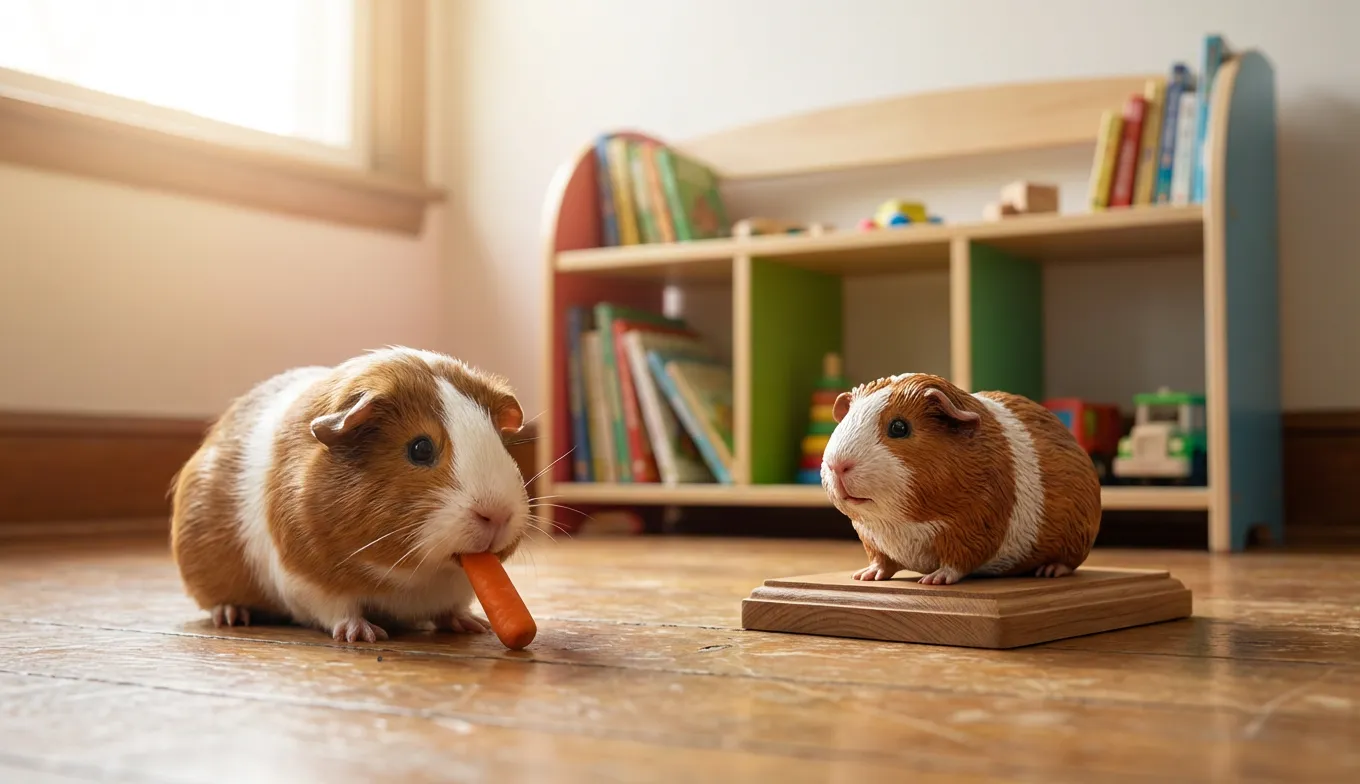
Photos are great, but they are flat. For a child who is used to holding their pet, a 2D image sometimes isn't enough comfort.This is where we’ve seen families find immense comfort in 3D representations. While many people think of custom pet figurines primarily for dogs or cats, having a tangible, physical replica of a smaller pet can be incredibly grounding for a child. Being able to run their thumb over the familiar rosette pattern of their guinea pig’s fur, captured in a permanent keepsake, validates that this animal was real, important, and worthy of a statue.
It’s not about replacing the pet; it’s about giving the love a place to go. Whether it’s a painted rock in the garden or a custom sculpture on the bookshelf, the physical object serves as a focal point for memory.
3. The "Thank You" Letter
Ask your child to write a letter to the rescue organization that you got the pig from, telling them about the pig's life. This shifts the focus from the death back to the life lived. It helps the child feel like part of a larger community of animal lovers.The Biology of Honesty
We cannot stress this enough: Do not tell your child the guinea pig "went to sleep."
It sounds gentle to adult ears. To a child, it sounds terrifying. We have heard horror stories of children developing severe insomnia because they are terrified that if they go to sleep, they might not wake up, just like Patches.
Be brave enough to use the real words.
- "His body stopped working."
- "His heart was too tired to keep beating."
- "The vet gave him medicine to help him die without pain."
It feels harsh in the moment, but clear is kind. Ambiguity breeds anxiety. If you say "we lost him," a young child might think he is simply lost in the house and will spend weeks looking under the sofa.
When the Cage Stays Empty
The final hurdle is the question of "what's next?"
There is often an impulse to rush out and get another rescue immediately to plug the hole in your child's heart. We strongly advise against this.
If you replace the pet too quickly, you teach the child that living things are interchangeable commodities. "The toaster broke, get a new toaster. The pig died, get a new pig."
Allow the cage to sit empty for a bit. Or, pack it away entirely. Let the sadness exist.
If you eventually decide to get another pet, consider changing the dynamic. If you had a lone male, maybe look for a pair of females. Change the cage setup. Make it clear that this is a new chapter, not a continuation of the old one.
Closing Thoughts
Driving home with that empty carrier is just the first step in a long, messy, beautiful lesson about love. You aren't just teaching your child how to mourn a guinea pig; you are teaching them how to handle loss for the rest of their lives.
You are teaching them that it's okay to cry over small things. You are teaching them that love is worth the eventual pain of saying goodbye.
And when the tears finally dry, and you're looking at a photo (or a pet portrait) of that funny, squeaking potato of a creature, you'll both realize something important: The grief is the price of the ticket, and the ride was absolutely worth it.
Frequently Asked Questions
How long should my child grieve a guinea pig?
There is no set timeline for grief, and it often comes in waves. For some children, the intense sadness lasts a few days; for others, it lingers for weeks. You might find they seem fine one minute and are sobbing the next. This is normal. However, if the grief is interfering with their basic functioning (eating, sleeping, going to school) for more than two weeks, or if they seem fixated on death, it may be time to consult a child counselor.Should I get a new guinea pig immediately?
We usually recommend waiting. Rushing to replace a pet can inadvertently teach children that living creatures are replaceable commodities, like a broken toy. It’s important to let the child process the loss of this specific individual. A good rule of thumb is to wait until the child expresses interest in a "new friend" rather than just saying they want their old pet back.Is it normal for my child to feel guilty?
Extremely normal. Children, especially under age 8, often engage in "magical thinking." They might believe that because they forgot to fill the hay rack one time last week, or because they got angry at the pig for nipping them, they caused the death. You need to explicitly reassure them: "This happened because his body got old/sick. It did not happen because of anything you did or didn't do."How do I explain euthanasia to a child?
Avoid euphemisms like "put to sleep," which can cause sleep anxiety. Instead, explain the compassionate nature of the decision. You might say, "The vet gave him special medicine. First, it took away all his pain. Then, it made his heart stop beating so he wouldn't hurt anymore. It was the kindest thing we could do for him."Honor Their Memory Forever
Your pet's story deserves to be preserved in a way that captures their unique spirit. A custom PawSculpt figurine transforms your cherished memories into a timeless keepsake—every whisker, every marking, every detail that made them irreplaceable.
Free instant AI preview • 3D artist preview within 7 days • 5 free revisions