
A Valentine's Gift for a Grieving Stranger: Rekindling Memories of a Lost Sphynx
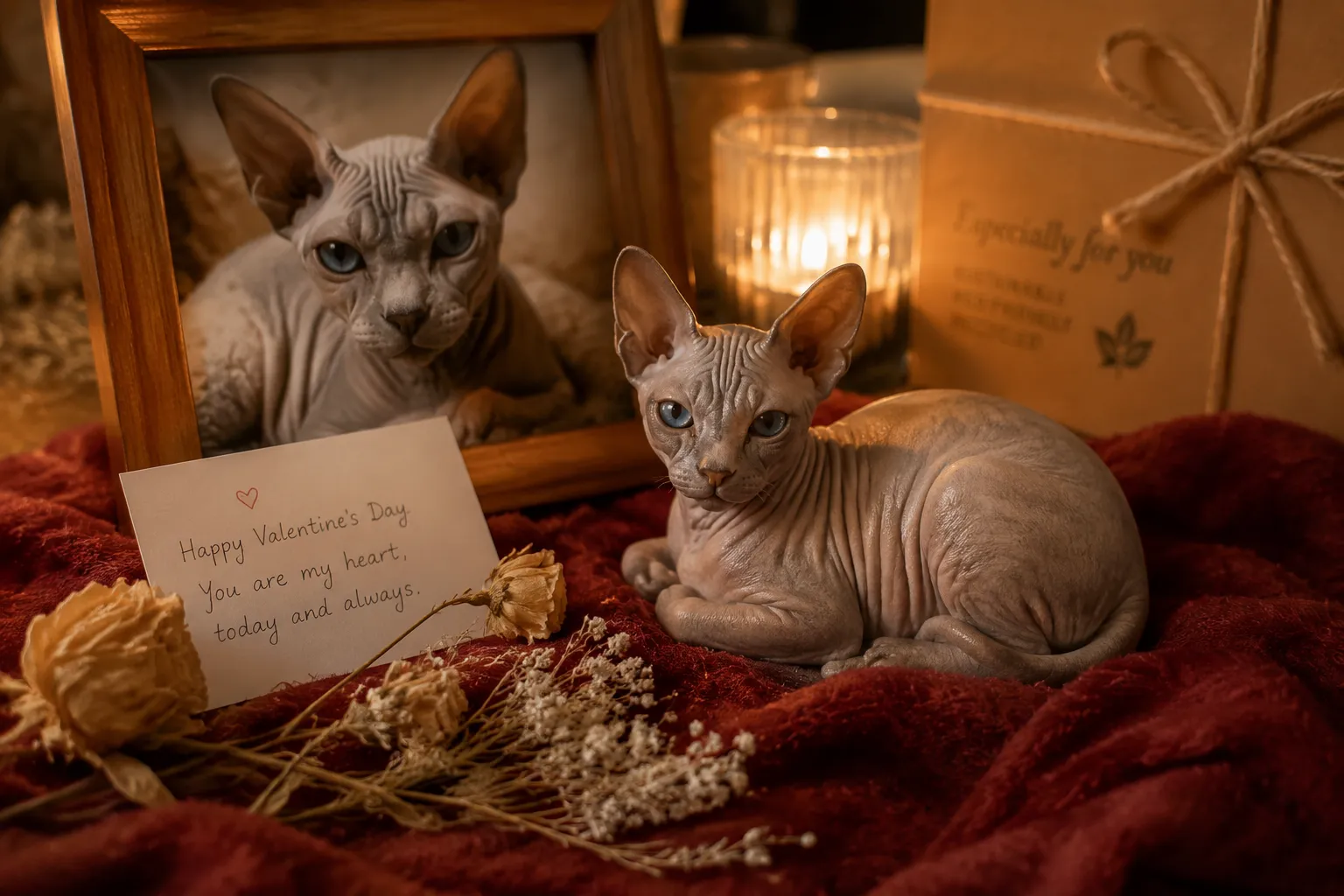
Frost still clung to a tiny knit sweater, cat-sized, folded on the cold park bench near the dog run—the kind of valentines pet memorial gift no one knows how to give. Its owner had walked off minutes earlier, hands empty, eyes fixed on the spot where a Sphynx used to ride against her chest.
Quick Takeaways
- Grief from a stranger or acquaintance needs a lighter touch — aim for "I noticed" not "I fixed it."
- Sphynx owners can't keep fur lockets — their keepsakes must capture skin, wrinkles, and ears instead.
- The 2-to-8 week window after loss is the sweet spot — too early overwhelms, too late feels forgotten.
- A tangible object outperforms flowers and cards because grief needs something to hold, like a custom pet figurine that brings their cat back into the room.
- What you say when you hand it over matters more than the gift itself — script it in advance.
Why a Gift for a Grieving Stranger Breaks All the Usual Rules
Here's the situation almost no gift guide addresses: you barely know this person. Maybe she's the coworker two desks over. The neighbor you wave to. The woman from the dog park whose cat you'd see tucked into her jacket every morning—until one day, the jacket was empty.
You feel the pull to do something. But every instinct tells you it's not your place.
Let's be real about the math here. Gifting someone deep in your inner circle is straightforward—you know their pet's name, their humor, their breaking points. A gift for a grieving person you hardly know is a different problem entirely. You're operating with almost no data and high emotional stakes.
Most advice treats all pet-loss gifting the same. It isn't. The relationship distance changes everything about timing, scale, and message.
"The closer you are, the bolder you can be. The further out, the gentler you go. Distance sets the volume."
When you don't know someone well, the temptation is to overcorrect in one of two directions. You either do nothing—telling yourself it would be weird—or you go enormous, hoping the gesture's size makes up for the relationship's smallness. Both miss.
The first leaves a person feeling invisible in the exact moment they need to be seen. The second can feel like pressure, an obligation handed to someone already running on empty.
The Counterintuitive Truth About "It's Not My Place"
We've worked with thousands of pet families, and one pattern surfaces over and over in the stories customers tell us: the gifts that meant the most often came from the periphery. The dog-walker. The vet tech. The barista who knew the order and the cat's name both.
Why? Because grief from close family is expected. It's almost obligatory. But when someone on the edge of your life reaches in to acknowledge your loss, it carries a strange, disproportionate weight. It says: your pet mattered enough that even people who barely knew you noticed.
So the "it's not my place" instinct is usually wrong. Acknowledgment from an unexpected source is a documented comfort, not an intrusion. The trick is calibrating the gesture to the distance.
A small, specific gift from an acquaintance lands beautifully. A small, specific gift from a spouse might feel like an undersell. Same object, completely different meaning, depending on who hands it over.
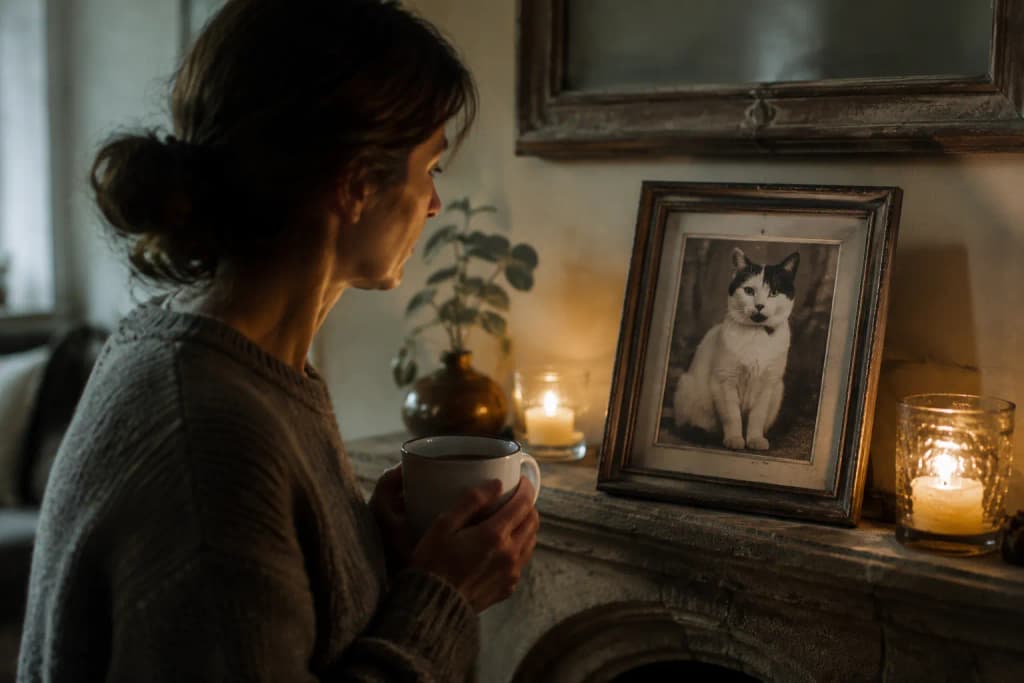
The Sphynx Factor: Why a Hairless Cat Leaves a Different Kind of Empty
Now layer in the specific animal. A Sphynx is not just any cat, and the grief it leaves behind has its own texture.
Think about the physical reality of living with a hairless cat. They're warm—almost startlingly so, running a degree or two above the typical feline body temperature because they have no coat to insulate them. They seek skin. They burrow under blankets, into armpits, against necks. They ride inside sweaters and jacket fronts because they genuinely get cold.
So when a Sphynx is gone, the absence is tactile in a way most pet loss isn't.
The Empty Spaces a Sphynx Leaves
Walk through the apartment of someone who's lost a Sphynx and you'll find the grief mapped out in space:
- The heated bed in the corner, now switched off, that used to glow at the same spot every night.
- The stack of tiny sweaters in the drawer—because a hairless cat needs a wardrobe most cats never require.
- The warm dent in the comforter where a body that ran hot used to press in.
- The empty curve of a jacket front, the carry-pouch shape that a Sphynx owner's coat slowly trained itself into.
This is the part outsiders miss. People assume a hairless cat is somehow less present—less fur, less mess, less everywhere. The opposite is true. A Sphynx is high-touch, high-contact, high-warmth. The grief is correspondingly physical.
"A Sphynx doesn't leave fur on your clothes. It leaves the memory of warmth where your skin used to meet its skin."
The Keepsake Problem Nobody Talks About
And here's the genuinely overlooked piece, the thing you won't find in the first five Google results on sphynx cat keepsake ideas.
The entire pet-memorial gift industry is built on fur.
Lockets with a clipping inside. Resin paperweights with strands suspended in them. Felted ornaments spun from a brushing. Glass beads infused with a tuft. Walk any pet-loss marketplace and you'll see it: fur, fur, fur.
A Sphynx owner has none of that.
There's no coat to clip. No brushing to save. No soft handful to tuck into a velvet box. The most common category of pet keepsake is, for them, simply off the table. This is the single biggest blind spot in Sphynx memorial gifting, and almost nobody accounts for it.
So what actually works for a hairless cat? You have to capture what a Sphynx did have, and had in abundance: a face. The big bat ears. The wrinkled brow. The lemon-shaped eyes. The specific folds and creases that made this cat look ancient and alien and utterly individual.
Sphynx cats are arguably the most visually distinctive cats on the planet. Their identity lives in form, not fur. Which means a keepsake that reproduces their three-dimensional shape—the ears, the wrinkles, the posture—does for a Sphynx owner what a fur locket does for everyone else. It gives them something to hold that is unmistakably their cat.
A Practical Framework: When to Give a Gift to a Grieving Person
Timing is where good intentions go to die. Give a memorial gift too early and you can overwhelm someone who's still in shock. Too late and it can reopen a wound that had started to scar, or worse, feel like an afterthought.
Since we're being practical here, let's break the grief timeline into actionable windows. This isn't clinical—we're not vets or therapists—but it reflects patterns the pet-loss community widely recognizes. For deeper support, the Association for Pet Loss and Bereavement maintains excellent resources for both the grieving and the people trying to help them.
Here's how the windows generally break down, and what fits each one:
| Window | What's Happening Emotionally | What to Give |
|---|---|---|
| Days 0–3 | Shock, logistics, numbness | Nothing physical yet. A short text. Food. Presence. |
| Week 1–2 | Reality setting in, raw | A card, flowers, a handwritten note. Low-commitment. |
| Week 2–8 | The quiet hits—visitors stop, house feels empty | A lasting keepsake. This is the sweet spot. |
| Month 3+ | Settling into a new normal | An anniversary or "remembering" gift, dated milestones. |
| Valentine's / holidays | Loneliness spikes on "togetherness" days | A keepsake timed to the date carries extra meaning. |
The window most people get wrong is weeks 2 through 8. Everyone shows up in the first 72 hours—the casseroles, the cards, the flood of texts. Then it goes silent. The visitors stop. The grieving person is suddenly alone in a too-quiet house, and that's when the loss actually lands.
So if you're an acquaintance who missed the first wave? Good. You're now perfectly positioned for the moment that matters more.
Why Valentine's Day Specifically Amplifies This
Valentine's Day is engineered around the idea that you have someone to love and someone who loves you. For a recently bereaved pet owner—especially someone who lived alone with a cat that slept on their chest every night—that messaging is a gut-punch.
The "togetherness" holidays land hardest on people whose primary relationship was with an animal. A Sphynx owner whose cat was their constant warm companion isn't just missing a pet on February 14th. They're missing their Valentine.
This is the genuine emotional logic behind a valentines pet memorial gift: you're not being morbid by acknowledging loss on a love holiday. You're recognizing that the love was real, and that the date hurts precisely because it was.
"On Valentine's Day, the grieving don't need to be cheered up. They need their love to be acknowledged as love."
The Gift Guide: Valentine's Memorial Gifts, Ranked by Emotional Weight
Now the practical part. Below, each option is broken down by who it's for, rough budget, why it works, and the catch to watch for. They're ordered roughly from lowest emotional intensity to highest, so you can match the gift to your distance from the person.
Match the intensity to the relationship. An acquaintance gives from the lower end. Closer friends and family can move up the scale.
The Handwritten Letter With a Specific Memory
Who it's for: Anyone, at any distance. The universal baseline.
Budget: $0–$5
This one costs nothing and outperforms expensive gifts more often than you'd think. The key is specificity. Don't write "sorry for your loss." Write the actual thing you remember: "I always loved watching Mochi peek out of your coat at the bus stop. He had this look like he owned the whole street."
A generic card says I felt obligated. A specific memory says I saw your cat as an individual. That distinction is the whole game.
Pro tip: Name the pet. Saying or writing the animal's name is one of the most comforting things you can do—grieving owners crave hearing it, because everyone else avoids it.
Memorial Donation in the Pet's Name
Who it's for: The practical, cause-driven person; great when you don't know their taste.
Budget: $20–$100+
A donation to a Sphynx rescue, a local shelter, or a feline health fund turns grief outward into something useful. You'll typically get an acknowledgment card you can pass along. It's emotionally safe—almost no one is upset by a donation in their pet's name.
Consideration: This one is meaningful but abstract. It gives the person nothing to hold, which for tactile grief (hello, Sphynx owners) is a real limitation.
A Custom Star Map or Night-Sky Print
Who it's for: The sentimental, design-conscious type who likes wall art.
Budget: $25–$60
A print showing the sky as it looked on a meaningful date—the day they adopted the cat, or the day it passed. It's elegant, understated, and personal without being heavy.
The catch: It's pretty, but it's not the cat. It memorializes a moment, not the animal's actual presence. Lovely as a supporting gift, thin as a primary one.
A Memorial Garden Stone or Plant
Who it's for: Someone with a yard, balcony, or strong green thumb.
Budget: $20–$70
A small engraved stone, or a plant chosen to mark the spot, gives grief a place to live outdoors. There's real comfort in a ritual you can tend—watering something, watching it grow.
Consideration: Skip this for apartment-dwellers with no outdoor space, which describes a lot of indoor-only Sphynx owners. Know the living situation first.
Memorial Jewelry (The Sphynx Caveat)
Who it's for: Someone who wants their pet physically close, every day.
Budget: $50–$200
Here's where the Sphynx problem bites hard. Most pet jewelry is fur-based or ash-based. A Sphynx owner has no fur to enclose, so the fur lockets are out. Ash-based jewelry still works if cremation was the choice, but cremation ashes are a heavy, personal subject—tread carefully, and only go here if you're close enough to know their wishes.
Pro tip: If you want jewelry without ashes or fur, look for pieces that can be engraved with the cat's paw print or silhouette instead. Some owners have a paw print from the vet.
A Custom Pet Figurine
Who it's for: Anyone grieving a visually distinctive pet—and there is no more visually distinctive cat than a Sphynx.
Budget: Varies by size and detail; see pawsculpt.com for current options.
This is the one purpose-built for the Sphynx problem we laid out earlier. Because a Sphynx's identity lives in its form—the ears, the wrinkles, the posture—a three-dimensional keepsake captures exactly what fur-based keepsakes can't.
At PawSculpt, the cat is digitally modeled by 3D artists from photos, then precision 3D printed in full-color resin. The color is part of the material itself, so a Sphynx's specific skin tone—the dusky grays, the pink bellies, the mottled patterns hairless cats often have—is reproduced directly in the print, not layered on top. A protective clear coat gives it a gentle sheen and keeps it durable for years.
What that means for a grieving owner: they get their cat back in the room. Not a symbol of the cat. The cat itself, in miniature, sitting on the shelf where the heated bed used to be.
Pro tip: This is a where-to-splurge gift for closer relationships, or a thoughtful group gift when several acquaintances chip in together—a beautiful way for the dog-park crowd to do something collectively.
The "Comfort Object" Repurpose
Who it's for: The deeply tactile griever; requires you to have access to an item.
Budget: $0–$40
If you're close enough to have access, one of those tiny Sphynx sweaters can be framed in a shadow box, or the heated bed can be cleaned and saved. You're not buying something new—you're preserving the object that already holds the memory.
Consideration: This requires real intimacy and permission. Never take or repurpose a grieving person's belongings without asking. For an acquaintance, this one's off-limits.
"We've learned that grief needs an anchor. For a Sphynx family, that anchor can't be fur—so it has to be form."
— The PawSculpt Team
Myth vs. Reality: What People Get Wrong About Memorial Gifts
Before you choose, let's clear out three stubborn misconceptions we hear constantly.
Myth #1: "A memorial gift will just remind them of the loss and make them sad."
Reality: They are already thinking about it—every hour, in every empty corner of the house. A thoughtful gift doesn't introduce the grief; it gives the grief a place to rest. What hurts is feeling forgotten, not feeling remembered. The research on grief consistently points the same direction: acknowledgment helps, avoidance harms.
Myth #2: "I should wait until they seem 'over it' to bring it up."
Reality: There is no "over it," and waiting for it means waiting forever. Grief doesn't end; it changes shape. The most welcome gifts often arrive after the initial rush has faded, in that lonely weeks-2-through-8 window when everyone else has moved on.
Myth #3: "If I didn't know the pet well, my gift won't mean anything."
Reality: We covered this, but it bears repeating because it stops so many people. A gesture from the periphery often lands harder than one from the center, precisely because it's unexpected. You don't need to have known the cat. You only need to have noticed that it mattered.
What to Actually Say When You Hand It Over
This is the section every other gift guide skips, and it might be the most important one. The gift is only half of it. The words that accompany it can either deepen the comfort or accidentally undercut it.
Picture this: you've got the perfect keepsake. You walk up to the grieving coworker, freeze, and blurt out "at least he's not suffering anymore." The gift was great. The line just made it worse.
So let's script this in advance, the way you'd rehearse anything that matters.
Phrases That Help
- "I keep thinking about [pet's name]." — Uses the name. Signals the cat is remembered.
- "You don't have to respond to this. I just wanted you to have it." — Removes the burden of a reaction.
- "I loved how [specific detail]." — Specificity proves you saw the animal as real.
- "No rush, no pressure. Whenever you're ready." — For a figurine that requires their photos, this respects their pace.
Phrases to Bury Forever
- "At least..." — Anything starting with "at least" minimizes. Delete it.
- "He's in a better place now." — Imposes your belief and implies the better place isn't with them.
- "You can always get another one." — Treats a unique being as replaceable. Devastating, even when well-meant.
- "I know exactly how you feel." — You don't. Even if you've lost a pet, you haven't lost this one.
Here's a quick reference you can screenshot before you go:
| Instead of saying... | Try saying... | Why it lands better |
|---|---|---|
| "At least he's not suffering" | "I keep thinking about Mochi" | Names the pet, avoids minimizing |
| "He's in a better place" | "He was so loved, and it showed" | Affirms the bond, no imposed belief |
| "Let me know if you need anything" | "I'm dropping off dinner Thursday" | Specific action beats open offer |
| "You can get another cat" | "There will never be another him" | Honors the individual, not the category |
The "let me know if you need anything" line deserves special mention. It feels generous, but it quietly shifts the labor onto the grieving person—now they have to figure out what they need and ask for it. People in grief rarely have that energy. Specific beats open, every time. Don't offer help; deliver it.
"Don't ask a grieving person what they need. They're too tired to know. Just show up with something specific."
How a Custom Figurine Comes Together (For the Sphynx Especially)
If you land on a figurine—and for a hairless cat, we'll be honest, it's the option we think fits best—here's what the process actually involves, so you can set the right expectations.
What Photos to Gather
The figurine is only as good as the reference photos. For a Sphynx, you want shots that capture the features that define them:
- A clear front-facing photo showing the face, the ear set, and the wrinkle pattern around the eyes and brow.
- A side profile so the artists can model the head shape and ear angle correctly.
- A full-body shot in a natural pose—sitting, loafing, or that classic Sphynx perch.
- A close-up of any distinctive markings—Sphynx skin often has patches, freckles, or color variation that makes each cat unique.
Good lighting matters more than camera quality. Natural daylight, no harsh flash, and avoid heavy filters that shift the skin tone. If you're collecting these from a grieving person, ask gently and give them all the time they need—scrolling through photos of a lost pet is its own kind of hard.
What to Expect From the Process
Since service specifics like turnaround and revisions change over time, the honest answer is to check pawsculpt.com for current details. But the general arc looks like this:
- You share photos. The 3D artists study the cat's proportions and features.
- A digital preview is created. The cat is hand-modeled digitally with care, so you can review the likeness before anything is printed.
- Revisions happen. If the ear angle's off or the wrinkles aren't quite right, that's the time to adjust.
- The figurine is 3D printed in full-color resin. Color is printed into the material voxel by voxel, then sealed with a protective clear coat.
The finished piece has a natural texture to it—fine layer detail under the clear coat—rather than a glossy, mass-produced plastic look. For a Sphynx, that slightly organic surface actually suits the cat, whose own skin had texture and depth.
The point of walking through this isn't to sell you on logistics. It's so that if you give this gift, you understand it's a small collaboration, not an instant purchase—and that collaboration, the act of choosing photos and refining the likeness, can itself be quietly healing for the person doing it.
Many families tell us the preview stage is where the tears come, and where they start to come back, too. Seeing your cat take shape again does something a flat photo can't.
Reading the Room: Matching the Gift to the Person
Not every grieving person wants the same thing, and your read on their personality should steer your choice. Here's a quick matching guide based on the kinds of recipients we hear about most.
| If they're... | They'll likely value... | Why |
|---|---|---|
| Private and reserved | A figurine or framed keepsake | A personal object they control, not a public display |
| Social and expressive | A donation card or memorial event | Grief processed outward, with community |
| Practical and grounded | A specific delivered action (meals, errands) | Tangible help over symbolic gestures |
| Sentimental and nostalgic | A custom figurine or photo book | Something that holds the memory in physical form |
| Spiritual or ritual-minded | A garden stone, planted memorial | A place and a practice to return to |
Notice that the figurine shows up for both the private and the sentimental types. That's not an accident. A keepsake you can hold works across a wide range of grieving styles, which is part of why it's such a reliable choice when you're uncertain—and when you're an acquaintance, you're almost always uncertain.
If you're truly stuck on what kind of griever you're dealing with, default to the safest high-comfort option: a specific note plus one tangible thing. The combination covers your bases.
When a Figurine Isn't the Right Call
In the spirit of being honest about tradeoffs: a figurine isn't always the answer.
If the person has explicitly said they want to "move forward" without physical reminders, respect that. Some grievers genuinely cope by reducing the objects around them, not adding to them. A donation in the pet's name serves them better.
And if cost is a barrier for you personally, don't stretch into discomfort. A specific, heartfelt letter genuinely outperforms an expensive gift given grudgingly. The emotional weight comes from the attention, not the price tag.
We'd rather tell you that than pretend the most premium option is always right. It isn't. The right option is the one calibrated to this person, this relationship, this moment.
The Science of Why Holding Something Helps
There's a reason tangible keepsakes keep coming up, and it's not just sentiment. The human-animal bond is a genuine, studied attachment relationship. Research compiled by institutions like the National Institutes of Health on human-animal interaction points to pets occupying real attachment roles in our lives—which is precisely why their loss triggers genuine grief, not just passing sadness.
When an attachment figure is gone, having a physical object associated with them—what psychologists call a "linking object"—can provide a point of contact for the grief. It gives the mind somewhere to go.
For most pet owners, fur serves this role. The brushing kept in a bag. The blanket that still smells like them. These are linking objects, anchors for love that no longer has a body to land on.
The Sphynx owner is, once again, deprived of the obvious version. No fur means no scented blanket of the usual kind, no clipping. Which is exactly why a form-based keepsake matters more, not less, for a hairless cat. It steps in to fill a role that, for these owners, would otherwise sit empty.
This is the through-line of everything we've covered: a Sphynx leaves a tactile, spatial absence, and the standard tools for soothing that absence don't apply. The gift that works is the one that gives the grief a shape to hold.
Bringing It Back to the Bench
Remember the sweater on the park bench. Tiny, frost-edged, still curved to the shape of a body it would never warm again.
That image is the whole reason this gift category exists. Grief lives in shapes—the dent in the comforter, the curve of a coat, the off switch on a heated bed in an empty corner. A Sphynx owner's loss is written across all the warm spaces that have gone cold.
You can't fill those spaces. Nobody can. But you can hand someone something to put in one of them. A note that names the cat. A figurine that captures the ears and the wrinkles and the specific tilt of a head that no photo ever quite did justice. A small, solid thing that says: this love was real, and I saw it.
So here's your next step, concretely: this week, before Valentine's, decide your distance from the person and pick one item from the guide above to match it. Write down the specific memory you'll mention. Then deliver it—don't offer, deliver.
The grieving stranger on the bench doesn't need you to fix anything. She just needs to know her warm, wrinkled, impossible cat mattered to someone besides her. A valentines pet memorial gift, chosen with care, says exactly that—and on the loneliest love holiday of the year, that acknowledgment can be the warmest thing she holds all day.
Frequently Asked Questions
Is it appropriate to give a pet memorial gift to someone I barely know?
Yes, and it often means more than you'd expect. Acknowledgment from the periphery of someone's life carries surprising weight because it's unexpected—it tells the grieving person their pet mattered enough that even casual acquaintances noticed. Keep the gesture calibrated to your distance: small, specific, and free of pressure for them to respond.
What's the best keepsake for a Sphynx cat specifically?
Because Sphynx cats have no fur, the entire fur-based keepsake category—lockets, resin with strands, felted ornaments—simply doesn't apply. Their identity lives in their form: the bat ears, the wrinkled brow, the lemon-shaped eyes. A form-based keepsake like a custom figurine captures exactly what a fur clipping can't, which is why it fits a hairless cat so well.
When is the right time to give a gift to a grieving person?
Skip the first 72 hours—that window is for presence and practical help, not objects. The genuine sweet spot is weeks two through eight, after the initial flood of support has faded and the house has gone quiet. That's when loneliness peaks and a thoughtful keepsake lands hardest. Holidays like Valentine's Day also carry extra emotional weight.
How much should I spend on a valentines pet memorial gift?
Match your budget to your relationship, not to guilt. An acquaintance gives beautifully with a heartfelt, specific note that costs nothing. Closer friends and family might invest more in a lasting keepsake. The emotional power comes from the attention and specificity, not the price—an expensive gift given carelessly always loses to a small one given with thought.
What should I never say to someone who's lost their pet?
Avoid anything that starts with "at least," anything that implies the pet is replaceable ("you can get another"), and anything that imposes your beliefs ("he's in a better place"). Also retire "let me know if you need anything"—it shifts the labor onto someone with no energy to spare. Instead, say the pet's name and share one specific memory.
Can a custom figurine really capture a hairless cat accurately?
Yes. With full-color resin 3D printing, the artists model the cat from photos and print the color directly into the material—so a Sphynx's specific skin tone, freckles, and wrinkle patterns are reproduced in the print itself. Clear front, side, and full-body reference photos in natural light give the best results.
Ready to Celebrate Your Pet?
Every pet has a story worth preserving. Whether you're honoring a beloved companion who's crossed the rainbow bridge or helping a grieving friend find comfort this Valentine's, a custom PawSculpt figurine captures the details that make a pet unmistakably one-of-a-kind—the ears, the wrinkles, the posture no photo quite caught. For a Sphynx especially, where no fur keepsake is possible, a form-based valentines pet memorial gift brings their warm, wonderful cat back into the room.
Visit pawsculpt.com to learn more about our process, preview turnaround, revisions, and quality guarantee.