
Winter Blues: Helping Your Bonded Persian Cat Cope With Sibling Loss
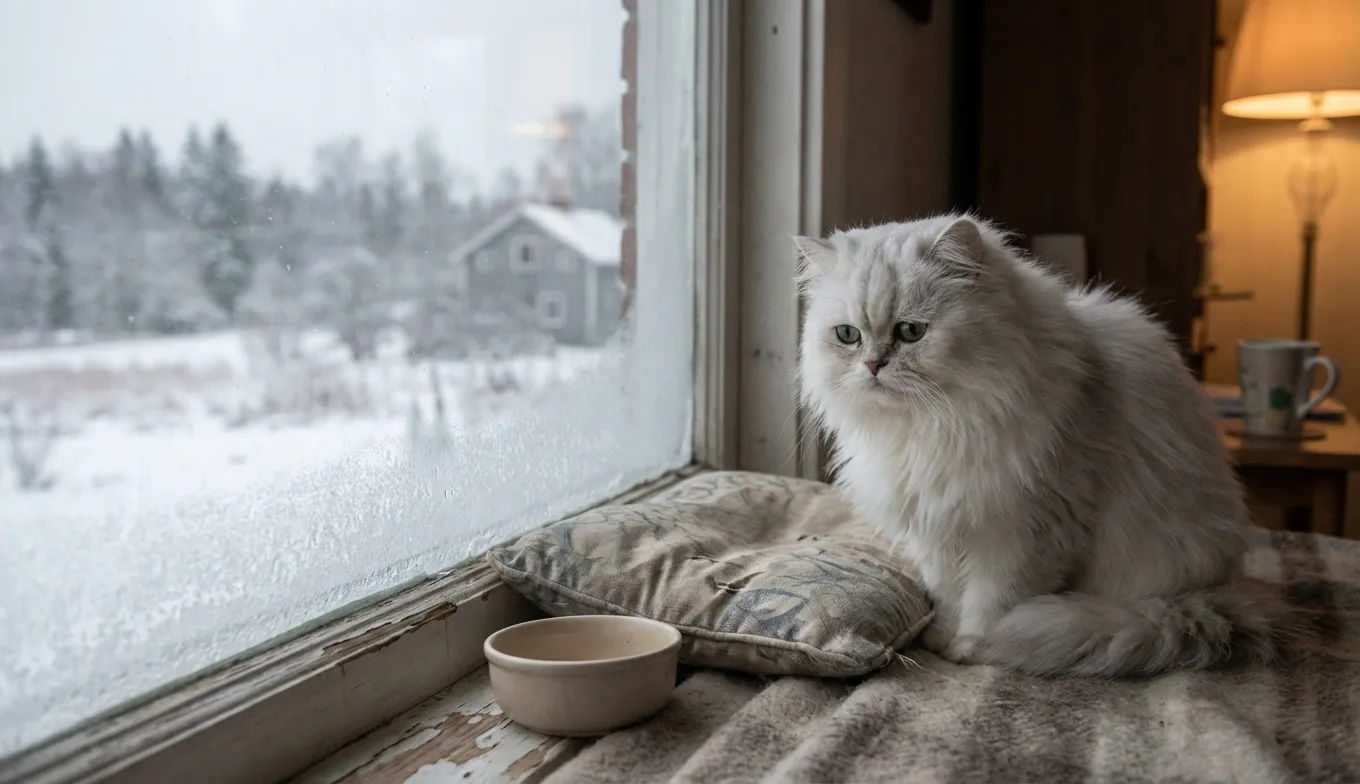
Shoving the cardboard box of holiday ornaments across the attic floorboards, the sound echoes too loudly in the cramped space. My breath creates small, white clouds in the frigid air as I reach for the next bin, but my hand stops on a crushed velvet mouse tucked between a wreath and a strand of lights. Downstairs, the house is heavy—not just with the gray winter gloom pressing against the windows, but with the absolute stillness of the living room. There used to be two distinct thuds when I opened the attic ladder—a synchronized curiosity. Today, there wasn't even one.
Quick Takeaways:
- The "Thermal Gap": For Persians, losing a sibling isn't just emotional; it's the physical loss of a heat source. Heated beds are essential right now.
- Grief Grooming: Watch for matting. Persians often groom each other; when one passes, the survivor's coat condition can deteriorate rapidly.
- Tangible Memories: Because Persians are highly visual, 3D tributes often provide more comfort than flat photos. Custom figurines can serve as a physical anchor.
- The 3-Month Rule: Don't rush to adopt a new companion. Persians are routine-obsessed and need significant time to reset their territory.
The Silent Grief of the Persian
We often project our human style of grieving onto our pets, expecting loud cries or obvious searching behavior. But if you’ve shared your life with Persians, you know they are the stoics of the cat world. Their grief is often a quiet implosion rather than an outward explosion.In our years working with pet families at PawSculpt, we've noticed that Persian owners report a very specific, subtle decline. It’s not that the surviving cat is howling; it’s that they become "furniture." They stop following you to the bathroom. They sleep an extra four hours a day. They stare at the wall where the litter box used to be.
The Counterintuitive Insight: Most advice says to "distract" a grieving cat with play. For a Persian, this can actually be overstimulating and stressful. Instead of high-energy distraction, focus on tactile continuity. Persians are texture-oriented creatures. Their bond was cemented through grooming and sleeping in a pile. The loss they feel is largely dermatological—they miss the sensation of fur against fur.
The Winter Factor: Why This Season Makes It Harder
Losing a pet is devastating at any time, but losing one half of a bonded pair in January or February presents unique physiological challenges that most people overlook.The "Thermal Gap"
This is the angle most vets don't mention. Bonded Persians don't just love each other; they thermoregulate together. They are biological heat sinks. When they sleep in a "cuddle puddle," they are conserving energy.When one passes, the survivor is literally, physically colder.
One of our customers, Sarah, couldn't figure out why her surviving Persian, Mochi, was pacing restlessly at night. It wasn't just anxiety; Mochi was freezing. She was used to a 10-pound heater pressed against her back.
Action Step: Create "heat islands." Don't just rely on ambient room temperature. Place a heated pad (on a low setting) or a self-warming bed in the spots where they used to sleep together. You are trying to replicate the thermal presence of the sibling.
The Light Deprivation Multiplier
Cats are sensitive to circadian rhythms. The short days of winter already induce a low-level lethargy in many indoor cats. Combine that with grief, and you have a recipe for severe depression.If your Persian is spending all day in a dark closet, they are looping in a cycle of sadness. Without forcing them, try to migrate their sleeping spots to south-facing windows. The sun is a natural antidepressant.
The Emotion No One Talks About: Relief
Here is the hard truth that we need to normalize. Persians are high-maintenance cats. They are prone to kidney issues, eye drainage, and coat problems. If the cat you lost had a prolonged illness, your life likely revolved around medication schedules, cleaning accidents, and grooming sessions.When that stops, the silence is deafening. But underneath the sadness, you might feel a wave of relief. You can sleep through the night. You don't have to rush home to administer insulin.
And then comes the guilt. How can I feel relieved when my baby is gone?
Please hear us on this: That relief doesn't mean you didn't love them. It means you were a caregiver operating under high stress, and your body is finally exhaling. It is possible to be heartbroken and exhausted at the same time. Your surviving cat feels a version of this too—if the sick sibling was stressed or in pain, the household tension has dropped. It’s okay to acknowledge that the peace in the house is both welcome and terrible.
Creating a Physical Anchor
Persians are incredibly visual animals. They watch. They observe.When a sibling disappears, the survivor often struggles with "object permanence." They don't understand where the other went. This is where we’ve seen families find unexpected comfort in physical memorials.
While a photo frame is nice for humans, it’s flat. It lacks presence. We’ve had numerous Persian owners tell us that placing a custom figurine of the passed sibling on a favorite shelf became a crucial part of the healing process.
It’s not about tricking the surviving cat—they know it’s not their brother. It’s about holding space. It’s about acknowledging that someone used to be here. For the human owners, having a three-dimensional representation that captures the specific tilt of their head or the way their tail fluffed out can be grounding when memories start to feel slippery.
Practical Care for the Survivor
1. The Grooming Void
Bonded Persians spend hours grooming each other's faces and ears—places a cat can't reach themselves. Watch your survivor's face. If you see mats forming behind the ears or tear stains accumulating, it’s because their "groomer" is gone.- What to do: Take a warm, damp washcloth and gently wipe their face daily. Mimic the rough tongue of a cat. This isn't just hygiene; it’s social bonding.
2. The Scent Fade
Don't wash everything immediately. The scent of the passed cat is a comfort. However, don't leave it forever, or it becomes a ghost that prevents moving on.- The Strategy: Keep one blanket unwashed for 2-3 weeks. Let the scent fade naturally. Wash the rest of the bedding sooner. This allows for a gradual "goodbye" rather than a sudden antiseptic erasure of their existence.
3. Stick to the Schedule
Persians are the autistics of the cat world—they crave structure. If breakfast was at 7:00 AM, it must remain at 7:00 AM. Grief throws your schedule off, but try not to let it disrupt theirs. Predictability is safety.Moving Forward Through the Frost
Winter feels endless when you’re grieving. The nights are too long, and the house is too quiet.But there will come a day—maybe in March, when the light shifts—that you’ll walk into the room and see your surviving Persian sitting in a sunbeam, washing a paw, looking calm. They aren't forgetting their sibling. They are just learning to live in the singular.
Until then, keep the house warm. Keep the routine steady. And forgive yourself for the days when it feels like too much. You are the anchor now.
Frequently Asked Questions
How long does a bonded cat grieve?
There is no set calendar for grief, but in our experience with sensitive breeds like Persians, acute symptoms often last 2 to 6 months. You might see a "depression phase" (lethargy, hiding) followed by a "reorganization phase" where they claim new spots in the house. If your cat stops eating for more than 24 hours, however, that is a medical emergency, not just sadness.Should I get another cat for my grieving Persian?
We strongly advise against rushing this. Humans often want to fill the void to stop the pain, but Persians are notoriously resistant to change. Bringing a high-energy kitten into a grieving senior Persian's territory can be disastrous. Wait at least 3 months. Let the survivor establish a new baseline. They need to know they are safe and secure as a "single child" before they can accept a new sibling.Do cats know when their sibling has died?
They understand absence and they understand scent changes. If your pet passed away at home, the surviving cat likely knows. If they passed at the vet, the survivor may search for them for weeks. This is heartbreaking to watch, but normal. Maintain your routine to reassure them that you aren't going anywhere.Why is my surviving cat meowing so much?
If your typically quiet Persian has become vocal, they are likely calling for their mate. This is a distress signal. While you should comfort them, try to engage them in low-energy play or grooming rather than just giving treats, which can reinforce the meowing. A custom figurine or a toy that smells like the sibling can sometimes help calm this anxiety by providing a familiar focal point.Honor Their Memory Forever
Your pet's story deserves to be preserved in a way that captures their unique spirit. A custom PawSculpt figurine transforms your cherished memories into a timeless keepsake—every whisker, every marking, every detail that made them irreplaceable.
Free instant AI preview • 3D artist preview within 7 days • 5 free revisions