
Writing a Eulogy for Your Loyal German Shepherd: A Guide for Owners
The smell of gasoline and old rubber mats hits you first. Then, your eyes adjust to the dim light of the garage and land on it—that heavy-duty leather leash hanging on the pegboard, stiff with age and caked with dried mud from the last hike. It’s right next to the half-empty bag of kibble you haven’t had the heart to throw away, and the squeaky toy that—miraculously—never got destroyed. Seeing these objects in their stillness creates a physical ache in your chest, a tightness that feels like you've forgotten how to exhale. For years, this space was the staging ground for adventures, the place where a tail thumped rhythmically against the car door in anticipation. Now, the stillness here is heavy, pressing against your ears.
Quick Takeaways:
- Focus on the "Job": German Shepherds are working dogs; frame your tribute around the "work" they did for your family (protecting, herding, comforting).
- The "Shepherd Lean": Mention specific physical traits, like the way they leaned their entire body weight against your leg.
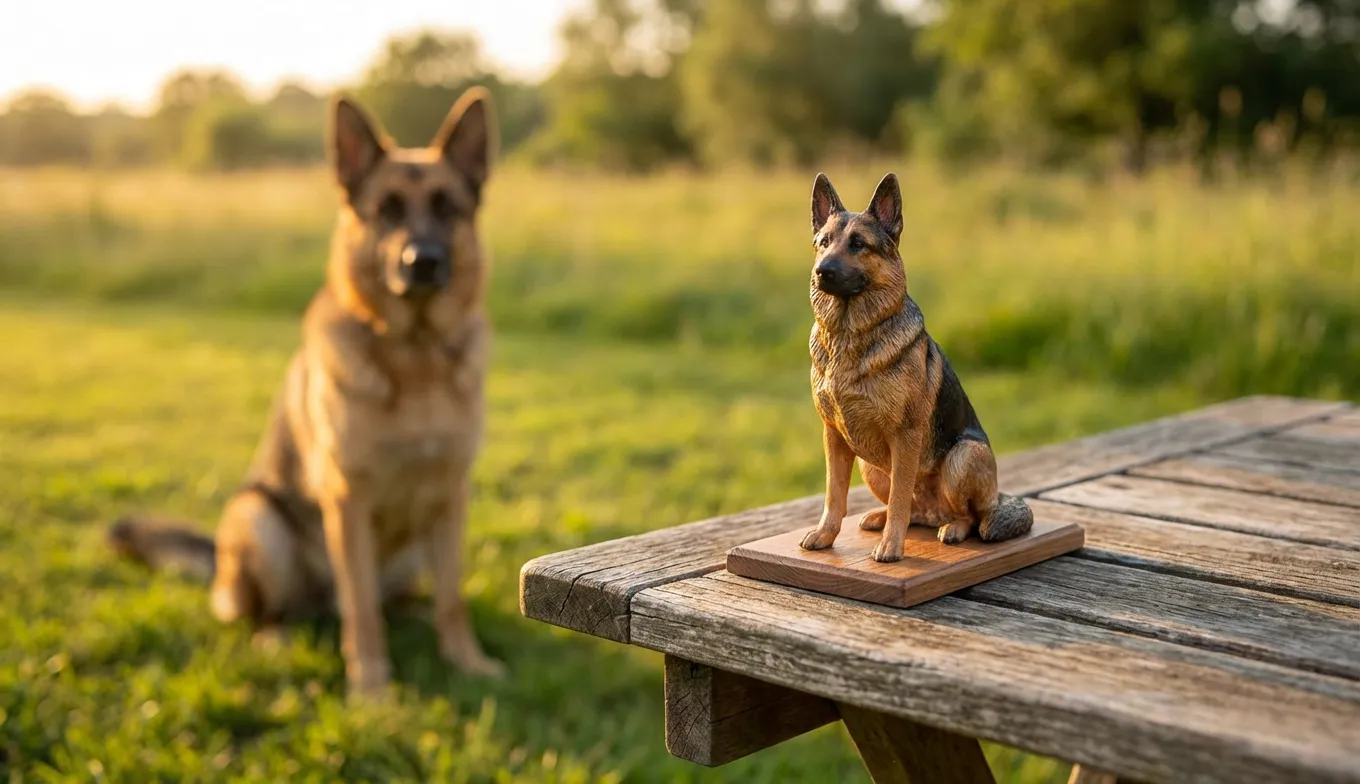
- Tangible Tributes: Consider 3D-printed custom dog figurines to capture their unique stance or alert ear position.
- Actionable Step: Don't try to write a biography; write three specific "snapshots" or memories instead.
The Silence of a Shepherd: Why This Loss Feels Different
We need to be honest about something that most general pet loss guides miss completely. Losing a German Shepherd isn't just losing a pet; it's losing a security system, a shadow, and a second-in-command.
If you owned a GSD, you know that they don't just occupy a home; they manage it. They patrol the perimeter. They check the windows. They know the difference between the UPS driver (acceptable intruder) and a stranger walking too slowly past the driveway (potential threat).
When that presence is gone, the house doesn't just feel empty. It feels unguarded.
We’ve heard from countless owners who say the hardest part isn't just the sadness—it's the sudden spike in anxiety. You might find yourself checking the locks three times because your "backup" isn't there to huff at the door. Acknowledging this specific type of loss—the loss of safety—is the first step in writing a eulogy that feels true to who your dog was. They weren't just a companion; they were a guardian. Your tribute should reflect that dignity.
The "Relief" You Feel (And the Guilt That Follows)
Let’s talk about the elephant in the room. It’s the feeling you might have experienced the moment the vet said, "He's gone," or the morning after, when you didn't have to carry a sixty-pound dog down the back steps.
Relief.
German Shepherds are proud, athletic dogs. But they are also prone to cruel physical declines—degenerative myelopathy (DM) and hip dysplasia often rob these majestic animals of their rear legs long before their minds fade. Watching a dog who used to clear six-foot fences struggle to stand up on a slick floor is a specific kind of torture for an owner. You become their legs. You lift them, clean them, and watch their confusion.
When that struggle ends, there is relief. Not because you wanted them gone, but because the suffering—theirs and yours—is over.
But then comes the guilt. It hits you like a physical blow. How can I feel relieved? Do I not love him enough?
Please hear us on this: That relief is actually a form of love. It means you were empathetic enough to feel their struggle as your own. You aren't relieved that your friend is dead; you are relieved that the proud, strong creature you loved is no longer trapped in a failing body. Include this in your eulogy if you’re brave enough. Saying, "I am glad you are running on strong legs again," is a powerful way to acknowledge the difficult end without letting it overshadow the vibrant life.
Structuring the Eulogy: The "Three snapshots" Method
Staring at a blank page is paralyzing. You have twelve years of memories, thousands of walks, and a million tail wags. How do you condense that into a 3-minute speech or a written post?
Don't try to tell the whole story. Instead, use the "Three Snapshots" method. Pick three specific moments that capture the essence of your dog's soul.
Snapshot 1: The Protector
Describe a time their instinct kicked in. Was it the way they placed themselves between you and a sketchy stranger on a night walk? Or maybe the way they gently herded the kids away from the stairs? Example: "Baron didn't just sleep at the foot of the bed; he slept facing the door. He was always on duty, even in his dreams."Snapshot 2: The Goofball
GSDs are serious dogs, which makes their silly moments even funnier. Did they mournfully sing the song of their people when a fire truck went by? Did they chase the garden hose water with ferocious intensity? Example: "For a dog who looked like a wolf, he was terrified of the vacuum cleaner. Seeing 85 pounds of muscle hide behind the sofa was the funniest thing I've ever seen."Snapshot 3: The "Velcro" Bond
This is the heart of the eulogy. Describe the "Shepherd Lean"—that specific way they press their weight against your thigh. Example: "I will miss the Lean. That heavy, warm pressure against my leg while I did dishes. It was his way of saying, 'I've got you. I'm right here.'"Capturing the "Ears Up" Spirit
One of the most distinctive features of your Shepherd was likely their silhouette. Those alert ears, the slope of the back, the intelligent tilt of the head when you spoke to them. Words sometimes fail to capture that physical presence.
We've seen many families struggle with the fact that photos, while beautiful, are flat. They don't capture the volume of the dog in the room. This is where we’ve seen people find comfort in tangible art. Creating a custom figurine isn't about replacing the dog—nothing can do that. It’s about preserving the attitude.
If you choose to commission a piece, look for an artist who understands the breed's specific anatomy. You want someone who captures the intelligence in the eyes, not just the color of the fur. It serves as a physical anchor for your memories—something you can touch when the house feels too quiet.
Writing Prompts for the Stuck Writer
If you're still staring at the blinking cursor, try answering these questions. The answers can be copied and pasted directly into your eulogy draft.
- What was their "job" in the family? (e.g., The Sock Thief, The Hall Monitor, The Therapist).
- What command did they know perfectly but choose to ignore? GSDs are smart enough to be selectively deaf.
- What is one thing they taught you about loyalty?
- What was the very last gift they gave you? (Often, this is the trust they placed in you to help them pass peacefully).
Ceremony Ideas Specifically for Working Breeds
A standard garden burial is beautiful, but for a German Shepherd, you might want something that honors their working spirit.
- The "Last Patrol" Walk: Before the end, or symbolically afterwards, walk their favorite perimeter one last time. Tell them the house is safe. Tell them they can stand down.
- Donating the Gear: If your dog had high-quality gear (harnesses, tactical leashes), consider donating it to a local K9 unit or a working dog rescue in their name. It feels good to know their gear is still "working."
- The "Watch Begins" Tribute: Borrowing from military tradition, some owners end their eulogy with: "We have the watch from here. You stand relieved." It’s a tear-jerker, but it offers incredible closure for a dog who spent their life guarding you.
A Note on the "One-Person Dog" Phenomenon
German Shepherds are famous for being "one-person dogs." They might love the whole family, but they usually choose one human as their center of gravity.
If that person was you, the grief is going to feel isolating. Your spouse or kids might be sad, but you feel like you've lost a limb. This is normal. You shared a language of subtle hand signals and eye contact that no one else spoke.
Acknowledge this bond in your writing. It’s okay to say, "He was our family dog, but he was my soulmate." It validates the depth of the connection you severed.
Moving Forward (But Not Moving On)
There is a terrible finality to packing away the big crate or washing the nose art off the back window of your car. It feels like erasing them.
But writing this eulogy is a way of making them permanent. You are taking the love that has nowhere to go and turning it into a legacy. Whether you read this tribute out loud to a room full of people, or whisper it into the wind while standing in their favorite spot in the yard, the words matter.
They matter because they are the final command you are giving your loyal friend: You were a good dog. You did your job. You are loved.
And in the quiet moments that follow, when you instinctively reach down to scratch a head that isn't there, try to remember that the pain is just the receipt for a love that was big, and fierce, and real.
Frequently Asked Questions
How long should a pet eulogy be?
If you are speaking at a small memorial, aim for 2 to 5 minutes. This is roughly 300 to 600 words. If you are writing a post for social media or a blog, you have more flexibility, but we’ve found that focusing on three distinct memories (the "snapshots") creates a more powerful impact than a rambling biography.Is it okay to mention my dog's difficult behavior in a eulogy?
Absolutely. In fact, we encourage it. A eulogy that paints a dog as a perfect angel often feels flat. Mentioning that your German Shepherd ate the drywall, herded the guests into the corner, or refused to go out in the rain makes the tribute real. It celebrates the whole dog, quirks and all.What if I can't finish reading the eulogy without crying?
This is one of the most common fears, but please know: no one is judging your composure. Your tears are a testament to the bond. If you are worried about breaking down, print a copy of the eulogy for a friend or family member and ask them to be your "designated reader" if you can't continue.Should I include photos with a written eulogy?
Yes. We recommend choosing photos that show action and personality rather than just "pretty" portraits. For a German Shepherd, a photo of them with their favorite ball, or "on patrol" in the backyard, or doing the famous head-tilt, will resonate deeply with people reading your words.Honor Their Memory Forever
Your pet's story deserves to be preserved in a way that captures their unique spirit. A custom PawSculpt figurine transforms your cherished memories into a timeless keepsake—every whisker, every marking, every detail that made them irreplaceable.
Free instant AI preview • 3D artist preview within 7 days • 5 free revisions