
An Affordable Memorial That Feels Priceless: Honoring Your Guinea Pig Without Breaking the Budget
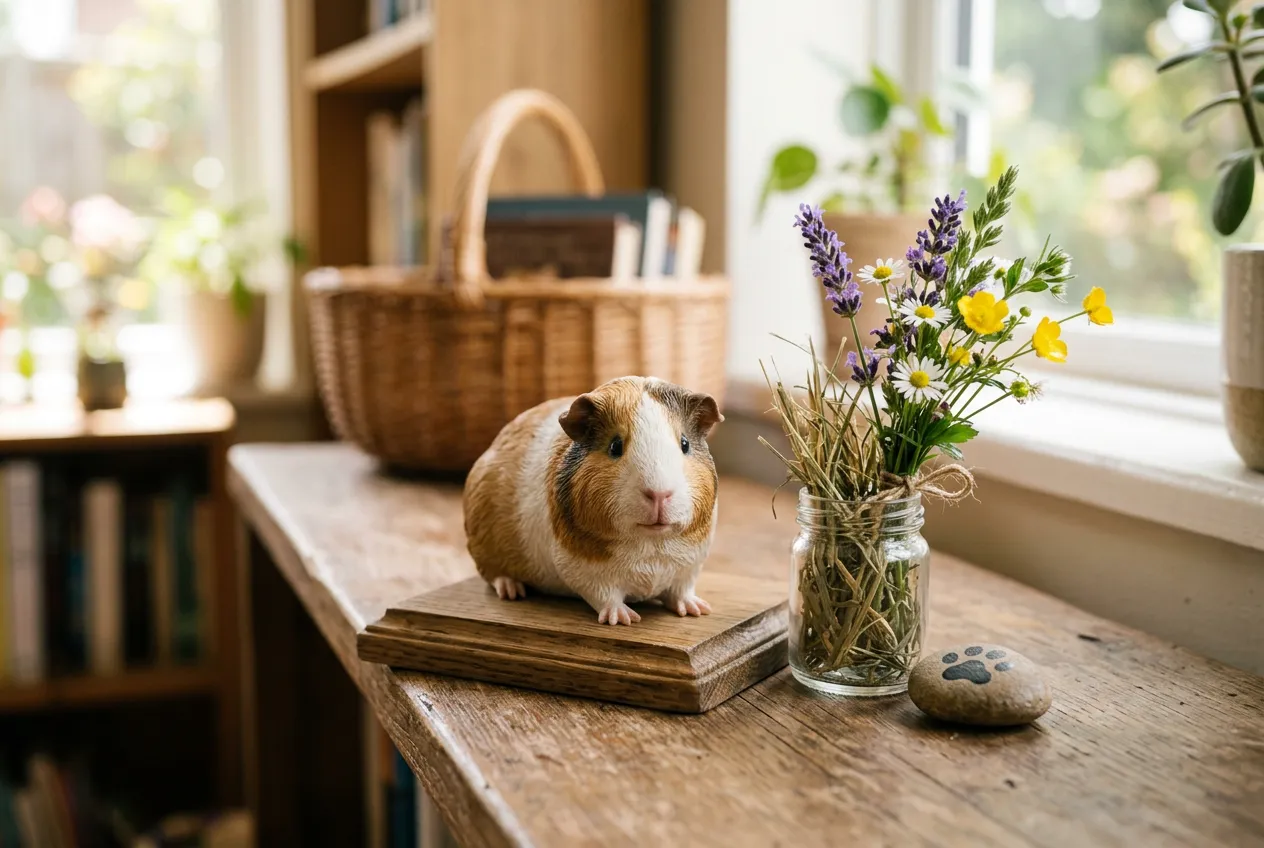
When your guinea pig's favorite corner sits empty, do you find yourself still listening for the soft wheek-wheek that used to greet you at dinner time?
Quick Takeaways
- Meaningful memorials don't require expensive materials — the emotional weight comes from intentionality, not price tags
- DIY options like paw print clay kits ($15-25) offer hands-on healing — the act of creating becomes part of processing grief
- Digital keepsakes preserve memories without physical storage concerns — photo books and custom art live forever without collecting dust
- Custom 3D-printed figurines capture unique markings in lasting resin — a tangible way to hold onto what made your guinea pig unmistakably theirs
- The "right" memorial is whatever helps you remember without reopening the wound — there's no timeline or rulebook for honoring small pets
Meet Sarah. Three weeks after losing Peanut, her Abyssinian guinea pig, she stood in a craft store aisle holding a $200 shadow box kit. Her hand shook. Not from grief—though that was there—but from the pressure. The unspoken belief that love equals spending. That if she didn't buy the "premium memorial package," she somehow loved Peanut less.
She put the box back.
Here's what the pet memorial industry won't tell you: the price tag has zero correlation with healing. We've worked with thousands of families navigating pet loss, and the memorials that matter most—the ones people actually interact with years later—rarely cost more than a nice dinner out.
The guilt around "cheap" memorials is manufactured. Your guinea pig didn't care about your budget when they popcorned across the cage at feeding time. They won't care now.
The Psychology Behind Memorial Value (And Why Cost Doesn't Equal Comfort)
Attachment theory explains why we struggle with pet loss differently than we expect. Guinea pigs become what psychologists call "secure base" figures—sources of consistent comfort and routine. When they're gone, our brains don't just process sadness. They process spatial disorientation. The corner where the cage sat becomes a void your eyes keep returning to, searching for movement that won't come.
Dr. Alan Wolfelt's grief research identifies this as "searching and yearning" behavior. Your brain hasn't accepted the permanence yet. It's still looking.
This is why expensive memorials often fail. A $300 engraved urn sitting on a high shelf doesn't interrupt that searching pattern. Your eyes slide past it. But a small figurine on your desk—something you can pick up during a video call, something that occupies the same visual plane as your daily life—that creates what grief counselors call "continuing bonds." A healthy way to maintain connection without denying reality.
The memorial that works is the one you'll actually encounter. Not the one that cost the most.
"Grief isn't about forgetting. It's about finding a new place for love to live."

Budget Memorial Options That Actually Help (Organized by Healing Style)
For Tactile Processors: Touch-Based Memorials
Some people heal through their hands. If you're someone who fidgets, who needs to hold something to think clearly, these options create physical anchors for memory.
Paw Print Clay Kits ($15-25)
These kits include air-dry clay and simple molds. You press your guinea pig's paw into the clay within 24-48 hours after passing (or use an existing print if you planned ahead). The act of creating—the focus required, the gentle pressure of forming the clay—activates what neuroscientists call "flow state." Your cortisol levels drop. Your breathing regulates.
One family we worked with made three prints: one for each child. Years later, the teenage daughter told us she still runs her thumb over the ridges when she's anxious before tests. The memorial became a self-soothing tool.
Pro tip: If you missed the window for prints, craft stores sell "memory clay" that you can shape into a small nest or hideaway—the kind your guinea pig loved. The creating matters more than the accuracy.
Fur Keepsake Lockets ($20-40)
Small glass lockets that hold a pinch of fur. Sounds morbid until you understand the science: scent memory is processed through the olfactory bulb, which connects directly to the amygdala and hippocampus—your emotion and memory centers. A tiny amount of fur (sealed in glass to prevent degradation) can trigger positive memory recall without the sharp edge of fresh grief.
These work best for people who find comfort in jewelry or pocket stones—something to touch during stressful moments.
For Visual Processors: Sight-Based Memorials
If you're someone who thinks in images, who remembers faces more than voices, visual memorials create what psychologists call "memory cues"—triggers that bring back full experiences, not just facts.
Digital Photo Books ($25-50)
Services like Shutterfly or Mixbook let you design custom photo books. But here's the mistake most people make: they try to include every photo. Don't. Curate 20-30 images that capture personality, not just appearance.
Include the blurry ones. The photo where Peanut's mid-wheek with her mouth wide open. The shot of her butt as she dives into her hideaway. These imperfect moments trigger richer memories than posed portraits.
Budget breakdown: Basic 20-page softcover books run $25-35. Upgrade to hardcover only if you'll actually display it (most people don't—they flip through it occasionally, and softcover handles that better).
Custom Digital Art ($30-80)
Etsy artists will transform your favorite photo into watercolor-style digital prints. The key word: digital. You're paying for the art file, which you can then print at Costco or Walgreens for $5-15 depending on size.
Why this works: the artistic interpretation creates emotional distance while preserving recognition. It's clearly your guinea pig, but the watercolor softness makes it easier to look at during early grief. As time passes and the sharpness fades, you can print the original photo.
Frame it in thrift store finds: A $3 frame from Goodwill holds the same image as a $40 frame from HomeGoods. Your guinea pig's face makes it valuable, not the wood.
For Spatial Processors: Place-Based Memorials
Some people need to create a "place" for their grief—a physical location where memory lives. These memorials work best for people who think in terms of spaces and environments.
Memorial Garden Corners ($20-60)
You don't need a yard. A large terracotta pot ($15-20) on a balcony or patio works. Plant guinea pig-safe herbs—basil, cilantro, parsley—that you can harvest and remember the times you hand-fed fresh greens.
The act of watering becomes ritual. Ritual creates structure. Structure helps brains process loss.
Add a small painted rock ($5 for paint pens) with your guinea pig's name. One customer told us she talks to her garden corner while watering. "It sounds crazy," she said, "but it helps." It's not crazy. It's called "narrative therapy"—speaking memories aloud to integrate them into your life story.
Shelf Shrines ($15-40)
A small floating shelf ($10-15 at Target) becomes a dedicated memory space. Include:
- A framed photo (print at home: $0.50)
- A small plant (succulents: $3-5)
- Their favorite toy or a piece of fleece from their cage
- A battery-operated tea light ($8 for a pack of 6)
The shrine isn't about worship. It's about designated space. When grief hits randomly—during a TV commercial, while cooking dinner—you have a place to go. To sit. To remember intentionally instead of being ambushed by memory.
For Narrative Processors: Story-Based Memorials
If you process emotions by talking, writing, or storytelling, these memorials create frameworks for sharing memory.
Handwritten Memory Journal ($8-15)
Buy a simple notebook. Not a fancy leather journal—those create pressure to write "well." A spiral-bound notebook from CVS removes performance anxiety.
Write one memory per page. Not chronologically. Just whenever one surfaces. The memory of how Peanut always flipped her food bowl at exactly 6 PM. The time she learned to recognize the refrigerator sound and started wheeking before you even opened the veggie drawer.
These journals become what grief counselors call "evidence of life." Proof that your guinea pig existed, mattered, changed your daily patterns. When grief tries to convince you the pain isn't "valid" because "it was just a guinea pig," you have pages of evidence that say otherwise.
Social Media Memorial Posts (Free)
This one surprises people, but digital memorials serve a function: they make loss real to your community. When you post about Peanut's passing, you're not seeking attention. You're claiming space for your grief in a world that often dismisses small pet loss.
The comments—"I'm so sorry," "What a sweet face," "I remember when you first got her"—validate your experience. They create what sociologists call "social proof" that your grief is legitimate.
Save the post. Screenshot the comments. Print them if you want. They're evidence that Peanut mattered to more than just you.
The Case for Tangible Keepsakes (When Digital Isn't Enough)
Here's where we get honest about what we do. We create custom 3D-printed figurines of pets. Full-color resin sculptures that capture the specific markings, the ear tilt, the personality details that made your guinea pig unmistakably yours.
We're mentioning this not because it's the "best" option—there is no best option—but because it represents a middle ground that many families find helpful. More permanent than photos. More affordable than traditional sculpture. More tangible than digital memories.
The psychology of "holding" grief: Research on continuing bonds theory shows that physical objects help people maintain healthy connections to loss. Not denial—connection. The difference matters. A figurine you can pick up, turn over in your hands, show to visitors who ask "Is that Peanut?"—it creates opportunities for memory-sharing that photos on phones don't quite achieve.
Our team has seen families use these figurines in ways we never anticipated. One customer brings hers to the vet when adopting new guinea pigs—"So Peanut can meet them." Another keeps his on the car dashboard during road trips—"Because Butterscotch always wanted to see the mountains." These aren't delusions. They're integration strategies—ways of weaving loss into ongoing life without pretending it didn't happen.
The technology matters here. Full-color 3D printing captures the specific caramel-and-white pattern of an Abyssinian's rosettes. The black eye patches on a Himalayan. The cowlick that made your guinea pig's crest stick up funny. These details—the ones that made you able to pick your guinea pig out of a lineup—are what trigger recognition memory. The "that's MY guinea pig" response.
For specifics on how the process works, what photos work best, and what to expect, visit pawsculpt.com. We're not going to pretend this is the only option or even the right option for everyone. But for people who need something to hold, something that occupies physical space the way their guinea pig once did, it fills a specific need.
"The best memorials don't just preserve the past. They give grief a place to rest."
Common Memorial Mistakes (And How to Avoid Them)
Mistake #1: Memorializing Too Fast
The first week after loss, your brain is in crisis mode. Elevated cortisol. Disrupted sleep. Impaired decision-making. This is not the time to drop $500 on a memorial you might regret.
What to do instead: Create a temporary memorial. A photo on your phone's lock screen. A note in your journal. A small candle you light each evening. Give yourself 2-4 weeks before committing to permanent memorials.
One family we worked with ordered a figurine three days after their guinea pig passed. When the preview came back, they broke down—not from joy, but from overwhelm. They weren't ready to see their pet "alive" again in 3D form. We paused the order. They came back six weeks later, ready. The same figurine that felt like a gut-punch in week one became a comfort in week six.
Grief has a timeline. Respect it.
Mistake #2: Comparing Your Grief to Others'
Your coworker spent $1,200 on a custom oil painting when her dog died. Your sister had her cat's ashes made into jewelry. And you're considering a $30 photo book for your guinea pig.
The comparison trap is real. But here's the thing: grief intensity isn't measured in dollars. The depth of your bond with Peanut has nothing to do with her size, her species, or how much you spend memorializing her.
Small pets often create disproportionately large grief because they're woven into daily routines. You saw Peanut multiple times per day. Fed her. Cleaned her cage. Listened for her wheeks. That's more daily interaction than many people have with their dogs.
Your grief is valid. Your budget memorial is valid. Anyone who suggests otherwise doesn't understand attachment theory.
Mistake #3: Choosing Memorials That Don't Match Your Grief Style
Your best friend found comfort in a memorial garden. So you planted one too. But you hate gardening. The wilting plants become a source of guilt instead of comfort.
The fix: Audit your actual habits. Do you:
- Wear jewelry daily? Consider a locket or charm.
- Journal regularly? A memory book makes sense.
- Rearrange furniture often? Avoid permanent installations.
- Scroll through photos when sad? Digital albums work better than printed ones.
- Talk about your pets constantly? Story-based memorials (social media, written tributes) fit your style.
The memorial should fit your life, not force you to change your life to accommodate it.
Mistake #4: Hiding the Memorial (Because You're Embarrassed)
This one's insidious. You buy a beautiful memorial, then hide it in a drawer because you're worried about judgment. "It's just a guinea pig" echoes in your head.
The counter-move: Display it anyway. Not defiantly—just matter-of-factly. When someone asks, "Is that your guinea pig?" you say, "Yeah, that's Peanut. Had her for four years. Miss her a lot."
Most people respond with empathy, not judgment. And the ones who don't? Their opinion doesn't matter. You're not memorializing for them.
One customer told us she keeps her figurine on her work desk. A colleague made a snide comment about "getting that worked up over a rodent." She replied, "Peanut got me through my divorce. She was there every night when I came home crying. So yeah, I'm worked up." The colleague apologized.
Your memorial is a boundary. It says, "This mattered to me." Let it.
Budget Comparison Table: Memorial Options by Price Point
| Memorial Type | Price Range | Longevity | Best For | Emotional Impact |
|---|---|---|---|---|
| DIY paw print kit | $15-25 | Permanent | Tactile processors | High (hands-on creation) |
| Digital photo book | $25-50 | 10+ years | Visual processors | Medium-High |
| Custom digital art | $30-80 | Permanent (digital file) | Visual processors | Medium |
| Memorial garden pot | $20-60 | Seasonal (replant yearly) | Spatial processors | Medium (ritual-based) |
| Fur keepsake locket | $20-40 | Permanent | Tactile processors | High (scent memory) |
| 3D-printed figurine | Visit site for details | Permanent | Multi-sensory | High (physical presence) |
| Memory journal | $8-15 | Permanent | Narrative processors | High (active processing) |
| Social media tribute | Free | Permanent (digital) | Narrative processors | Medium (community validation) |
When "Affordable" Becomes "Meaningful" (The Real Measure)
Sarah—remember her from the craft store?—eventually created her memorial for Peanut. She spent $47 total:
- A small shadow box from Michael's ($12 with coupon)
- Printed photos at Walgreens ($6 for three 5x7s)
- A piece of Peanut's favorite fleece blanket (already owned)
- A handwritten note describing Peanut's personality ($0)
- A small succulent plant ($8)
- A custom digital portrait from Etsy ($21)
She hung it in her home office. During Zoom calls, people ask about it. She tells Peanut's story. The memorial became a conversation starter, a way to keep Peanut present in her life without dwelling in grief.
Three months later, she added a figurine from our studio—not because the shadow box wasn't enough, but because she wanted something she could hold during hard days. The combination works for her. Shadow box for display. Figurine for comfort.
There's no formula. No "correct" amount to spend. The meaningful memorial is the one that helps you remember without reopening the wound every time you look at it.
The Hidden Cost of Expensive Memorials (That No One Talks About)
Here's an uncomfortable truth: expensive memorials can create pressure to "perform" grief correctly. When you spend $800 on a custom urn, you feel obligated to display it prominently. To talk about it. To justify the expense by proving how much you're grieving.
This is called "complicated grief"—when the memorial itself becomes a source of stress rather than comfort.
We've had customers return figurines (yes, we allow that) because they realized they ordered out of guilt, not genuine desire. One woman said, "I thought I needed something expensive to prove I loved him. But what I actually needed was to write about him. The figurine felt like pressure to grieve a certain way."
She was right. We refunded her order and suggested she try journaling instead. Six months later, she came back and ordered a smaller figurine—this time because she wanted it, not because she felt obligated.
The lesson: Expensive doesn't mean better. It just means expensive. Start small. You can always add more later. You can't un-spend money on a memorial that doesn't serve you.
DIY Memorial Ideas That Cost Almost Nothing
The "Favorite Spot" Photo Series (Free)
Take photos of all the places your guinea pig loved. The corner of the cage where she slept. The spot on the couch where she sat during floor time. The kitchen tile she always popcorned on when she heard the veggie drawer open.
Print them as a collage (free at many libraries with a card) or keep them as a phone album. These spatial memories trigger what psychologists call "episodic memory"—full sensory recall of specific moments.
The Voice Memo Memorial (Free)
Record yourself talking about your guinea pig. Not a formal eulogy—just stream-of-consciousness memories. "Remember how Peanut always wheeled when I opened the fridge, even if I wasn't getting vegetables? And that time she learned to recognize the sound of the carrot peeler..."
These recordings become invaluable. Grief fades memory. Six months from now, you might struggle to remember the exact pitch of her wheek or the specific way she tilted her head when curious. The voice memo preserves those details.
The Recipe Card Memorial ($2-5)
Buy a pack of blank recipe cards. Write one memory per card. File them in a small box. When you're having a hard day, pull a random card and read it.
This creates what therapists call "controlled exposure"—you're choosing when to engage with grief rather than being ambushed by it. The randomness helps too. You never know which memory you'll get, which keeps the memorial from becoming stale.
The "Things You Taught Me" List (Free)
Guinea pigs teach us more than we realize. Patience (waiting for them to trust us). Routine (they demand feeding schedules). Presence (they live entirely in the moment).
Write a list of lessons your guinea pig taught you. Frame it or keep it in your journal. This reframes loss as legacy—what they left behind that continues to shape you.
How to Talk About Your Memorial (Without Apologizing)
The language you use matters. Notice the difference:
Apologetic: "I know it's silly, but I got this little figurine of my guinea pig..."
Matter-of-fact: "This is Peanut. I had her for four years. This figurine helps me remember her."
The second version doesn't invite judgment. It states fact. Your guinea pig existed. You loved her. You memorialized her. End of story.
Practice this language before displaying your memorial. The confidence in your voice will shut down most potential criticism before it starts.
And if someone does make a dismissive comment? You have options:
- The boundary: "She mattered to me. That's all that matters."
- The education: "Small pets create big grief because they're part of daily routines. I saw her multiple times a day for years."
- The redirect: "Everyone grieves differently. This works for me."
You don't owe anyone an explanation. But having language ready helps you feel less defensive.
Memorial Timeline: When to Create What
| Timeframe | Recommended Memorials | Why This Timing |
|---|---|---|
| Days 1-7 | Temporary (phone photo, candle, journal entry) | Brain in crisis mode; avoid permanent decisions |
| Weeks 2-4 | DIY projects (paw prints, photo collages) | Hands-on creation aids processing |
| Weeks 4-8 | Permanent memorials (figurines, art, gardens) | Emotional stability returns; ready for lasting tributes |
| Months 3-6 | Additional memorials if desired | Grief has integrated; can assess what's still needed |
| Year+ | Anniversary memorials (plant a tree, donate to rescue) | Honoring ongoing legacy |
This isn't a rigid schedule. Some people need permanent memorials immediately. Others wait years. Use this as a general guide, not a rule.
The Role of Community in Affordable Memorials
One overlooked aspect of budget memorials: they're easier to share. A $2,000 bronze sculpture sits in your home, seen by few. A $30 photo book gets passed around at family gatherings. A digital portrait gets shared on social media, seen by hundreds.
Community validation matters. When people comment on your memorial—"What a sweet face," "I remember when you got her," "She was lucky to have you"—they're not just being nice. They're confirming that your grief is real, your love was valid, your loss matters.
This is especially crucial for guinea pig owners. Small pet loss is often dismissed. "Just get another one" is a common (and cruel) response. Community acknowledgment counters that dismissal.
Share your memorial. Post the photo. Show the figurine. Tell the stories. Let people witness your grief. It's not attention-seeking. It's grief-work.
When to Add to Your Memorial (And When to Stop)
Some people create one memorial and feel complete. Others keep adding—a photo here, a figurine there, a garden stone, a tattoo. Neither approach is wrong, but there's a tipping point.
Signs you're memorializing healthily:
- The memorial brings comfort more often than pain
- You can talk about your pet without crying every time
- You've integrated the loss into your life story
- You can imagine getting another pet someday (even if you're not ready)
Signs memorializing has become avoidance:
- You're spending money you don't have on memorials
- You can't enter the room where the memorial is without breaking down
- You're creating memorials instead of processing grief
- You're avoiding social situations to tend to memorials
- You feel guilty when you're not actively grieving
If you recognize the second list, consider talking to a grief counselor. Memorials should support healing, not replace it.
The Figurine Question: When Tangible Matters Most
We've danced around this, so let's be direct. Custom figurines occupy a specific niche in the memorial landscape. They're not for everyone. But for certain people—tactile processors, visual thinkers, people who need something to hold—they fill a gap that photos and gardens can't.
The technology behind full-color 3D printing allows for detail that traditional sculpture can't match at accessible price points. Every whisker. Every color variation in the fur. The specific way your guinea pig's ears flopped or stood up. These details matter because they trigger recognition—the "that's MY guinea pig" response that generic memorials can't achieve.
Our team digitally sculpts each figurine from your photos. Master 3D artists with years of experience in capturing personality, not just appearance. Then the full-color resin printing process reproduces those details voxel by voxel—color embedded in the material itself, not painted on top. A clear protective coat adds durability and sheen.
The result: a tangible representation that you can pick up, turn over, show to visitors. Something that occupies physical space the way your guinea pig once did.
For details on the process, what photos work best, and what to expect, visit pawsculpt.com. We're not claiming this is the "best" memorial—there is no best. But for people who need tangibility, who need something to hold during hard moments, it serves a specific purpose.
"We've learned that the most meaningful memorials aren't the most expensive ones. They're the ones people actually interact with—the ones that become part of daily life rather than sitting untouched on a shelf."
— The PawSculpt Team
Combining Memorials: The Multi-Layered Approach
Here's something we've noticed: the most satisfied customers rarely rely on a single memorial. They create layers.
Example combination #1: The Visual + Tactile
- Digital photo album on phone (free-$10)
- Small figurine on desk ($varies—check site)
- Total: Affordable, covers multiple grief styles
Example combination #2: The Spatial + Narrative
- Memorial garden pot ($20-40)
- Handwritten journal ($8-15)
- Social media tribute (free)
- Total: Under $60, creates both place and story
Example combination #3: The Minimal + Meaningful
- Single framed photo ($10-15)
- Fur keepsake locket ($20-40)
- Voice memo recording (free)
- Total: Under $60, highly portable
The layers serve different needs. The photo for daily visual comfort. The journal for processing hard days. The figurine for tactile grounding. The garden for ritual.
You don't need all of them. But having 2-3 memorial types that address different aspects of grief creates a more robust support system than any single expensive memorial could provide.
The Rescue Donation Memorial (For the Altruistic Griever)
Some people find comfort in turning grief into action. If that's you, consider the donation memorial:
How it works: Instead of (or in addition to) a physical memorial, donate to a guinea pig rescue in your pet's name. Many rescues will send a certificate or acknowledgment that you can frame.
Why it helps: This memorial style appeals to people who process grief through meaning-making. "Peanut's death helped other guinea pigs find homes" creates a narrative of legacy and purpose.
Budget options:
- $25 donation = sponsor a rescue guinea pig's food for a month
- $50 donation = cover a basic vet check for an incoming rescue
- $100 donation = sponsor a guinea pig's adoption fee, helping them find a home
The rescue will often share updates about the guinea pigs your donation helped, creating an ongoing connection that extends beyond your own loss.
This works especially well for people who feel guilty about "replacing" their pet. The donation becomes a bridge—honoring the one who passed while helping others in need.
Addressing the "Just Get Another One" Comment
You'll hear this. Someone will say it. "Why are you spending money on memorials? Just get another guinea pig."
Here's why that's nonsense, explained through attachment theory:
Guinea pigs aren't interchangeable. Peanut wasn't "a guinea pig." She was Peanut—with specific personality quirks, preferences, behaviors that you learned over years. The wheek pitch that meant "I'm hungry" versus "I'm excited." The way she tilted her head when curious. The specific corner she always pooped in.
You didn't lose "a guinea pig." You lost a specific relationship. A new guinea pig won't wheek the same way. Won't have the same favorite vegetables. Won't recognize the sound of your footsteps.
Memorials honor that specificity. They say, "This particular being mattered. This particular relationship shaped my life."
Getting another guinea pig eventually? Healthy. Replacing Peanut? Impossible.
The memorial creates space for both truths: Peanut is gone. And someday, you might be ready to love another guinea pig. Not as a replacement. As a new relationship.
The Anniversary Memorial: Honoring Ongoing Grief
First-year anniversaries hit hard. The first birthday without them. The first Christmas. The one-year mark of their passing.
Budget-friendly anniversary memorial ideas:
The Annual Photo Ritual: Each year on their birthday, print a new copy of your favorite photo. Frame it or add it to a growing collection. This creates a visual timeline of your grief journey—how the same image feels different each year.
The Donation Tradition: Every year on the anniversary of their passing, donate $20-50 to a guinea pig rescue. Make it a ritual. Some families involve kids in choosing which rescue to support, turning grief into education about animal welfare.
The Story-Sharing Day: Designate the anniversary as a day to share one new story about your guinea pig on social media or with family. Not a sad post—a funny memory, a quirky habit, something that makes people smile.
These ongoing memorials acknowledge that grief doesn't end. It evolves. The sharp pain dulls, but the love remains. Anniversary rituals give that ongoing love a place to live.
What to Do With Their Belongings (The Overlooked Memorial)
The cage. The water bottle. The fleece bedding. These objects carry memory weight. Some people want them gone immediately. Others can't bear to touch them.
Budget memorial options using their belongings:
The Memory Quilt: Cut squares from their fleece bedding. Sew (or have someone sew) them into a small lap quilt. This transforms a functional item into a comfort object. Cost: $0-30 depending on whether you DIY or pay someone.
The Shadow Box: Include small items—a favorite toy, a piece of bedding, a photo—in a shadow box. This contains the objects, making them displayable rather than stored in a sad box in the closet. Cost: $15-30.
The Donation: Clean and donate their supplies to a guinea pig rescue. This is the hardest option emotionally but the most practical. Many rescues desperately need supplies. Your guinea pig's cage could house a rescue guinea pig waiting for adoption. Cost: $0, but emotionally expensive.
The Gradual Approach: You don't have to decide immediately. Box up their belongings. Put the box in a closet. Revisit in 3-6 months. You might feel differently then.
There's no timeline for this. Some people donate everything within days. Others keep items for years. Both are valid.
The Digital Memorial: When Physical Space Is Limited
Not everyone has space for physical memorials. Apartment living. Frequent moves. Minimalist lifestyles. These realities don't make your grief less valid.
Digital memorial options:
The Cloud Photo Album: Create a dedicated album in Google Photos or iCloud. Add photos, videos, even screenshots of text conversations where you mentioned your guinea pig. This becomes a portable memorial you can access anywhere.
The Private Instagram Account: Create a memorial account (set to private if you prefer). Post photos and memories as they surface. This creates a timeline of grief—you can scroll back and see how your feelings have evolved.
The Digital Scrapbook: Apps like Canva or Adobe Spark let you create digital scrapbooks with photos, text, and design elements. Save as a PDF. Print if you want, or keep it digital.
The Playlist Memorial: Create a playlist of songs that remind you of your guinea pig. Songs you played while cleaning their cage. Songs that were playing during memorable moments. Music triggers emotional memory powerfully.
These digital memorials work especially well for people who move frequently or live in small spaces. They're also easily shareable—you can send the album link to family members who also loved your guinea pig.
The "Too Soon" Myth (And Why It's Harmful)
Some people will tell you it's "too soon" to memorialize. That you should "wait until you're thinking clearly."
This is bad advice rooted in discomfort with grief. Here's the truth: there is no "too soon."
Creating memorials is part of processing. The act of choosing photos, writing memories, making decisions about how to honor your pet—this is grief-work. It's not avoidance. It's engagement.
The only caveat: avoid expensive permanent decisions in the first week when your brain is in crisis mode. But a $20 photo book? A DIY paw print? A journal entry? These aren't decisions you'll regret.
If creating a memorial feels right, do it. Your grief timeline is yours alone.
When Professional Help Makes Sense
Most pet grief resolves naturally over weeks to months. But sometimes it doesn't. Signs you might benefit from talking to a grief counselor:
- You can't function at work or home after several weeks
- You're having intrusive thoughts about your pet's death
- You're avoiding all reminders of your pet (not just some—all)
- You're experiencing physical symptoms (insomnia, appetite loss, chest pain)
- You're having thoughts of self-harm
Pet loss grief counselors exist. They specialize in this specific type of loss. Many offer sliding-scale fees or online sessions.
The Association for Pet Loss and Bereavement maintains a directory of counselors and support groups. Many are free or low-cost.
Seeking help isn't weakness. It's recognizing when grief has become complicated and needs professional support to untangle.
The Permission You Didn't Know You Needed
You have permission to:
- Grieve a guinea pig as deeply as you'd grieve any pet
- Spend $20 or $200 on a memorial—whatever feels right
- Change your mind about what memorial you want
- Create multiple memorials or none at all
- Take years to decide or decide immediately
- Keep their belongings or donate them
- Get another guinea