
The Anniversary Gift That Heals: A $250 Figurine for Your Friend Anticipating Loss
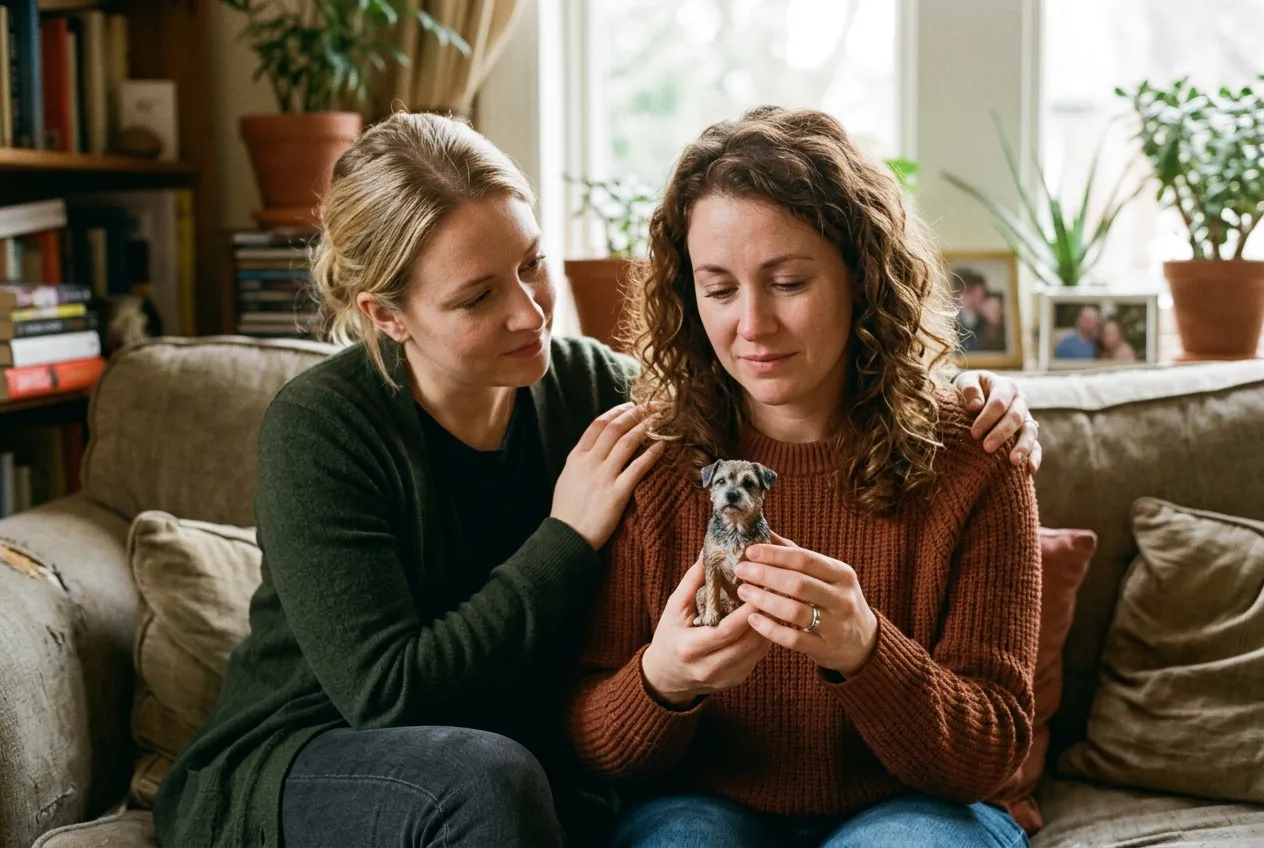
What do you give a friend when the garage door hums shut, the leash hook rattles once, and everyone knows this may be their last pet loss anniversary gift before goodbye?
Quick Takeaways
- Give before the loss, not only after — anticipatory grief often needs witness more than sympathy.
- Choose gifts that create ritual — small repeated actions soothe better than one dramatic gesture.
- Preserve ordinary details now — record sounds, habits, and routines before memory edits them.
- If you want something tangible, explore custom pet figurines — they can anchor memory without replacing grief.
Why a friend gift matters most before the loss
Most people understand sympathy after a pet dies. Fewer know what to do in the weeks before. That in-between season has a name: anticipatory grief. And it can be one of the loneliest forms of love a person goes through.
Your friend may still be giving medication at 6 a.m. They may still hear toenails clicking across the kitchen tile. They may still be lifting an older dog into the car, still washing food bowls, still buying treats that now get eaten more slowly. Life looks normal from the outside. Inside, their nervous system has already begun saying goodbye.
That’s why a thoughtful friend gift can matter so much before the final day.
Not because it “fixes” anything. It won’t. We should be honest about that.
But because a good gift says, I see the sacredness of this moment. I see that your bond is already shifting. I see that you are living with one foot in the present and one foot in memory.
That kind of recognition can be deeply healing.
We’ve worked with many pet families who came to us before the loss, not after. At first, this surprised us. People often assume memorial objects belong only to grief’s aftermath. But in our years working with pet families, we’ve learned something quieter and truer: sometimes the most meaningful memorial begins while the beloved is still here.
That’s the unique part people miss.
A gift given during anticipatory grief is not a funeral object. It is a witness object. It says: this love counts now, not only later.
The commonly overlooked part: grief starts in the soundscape
Here’s something we wish more articles talked about: anticipatory grief often arrives through sound before it arrives through thought.
A slower jingle of tags.
A cough in the night.
The pause before a jump that used to happen without effort.
The missing scratch at the back door because now they sleep through the afternoon.
Your friend may not cry every day. But they may listen differently every day.
And that changes what makes a meaningful gift.
The best gifts in this season don’t just look nice on a shelf. They help a person hold onto the soundtrack of ordinary life—the little rhythms that grief later turns painfully bright.
"Anticipatory grief is love listening more closely because time suddenly feels fragile."
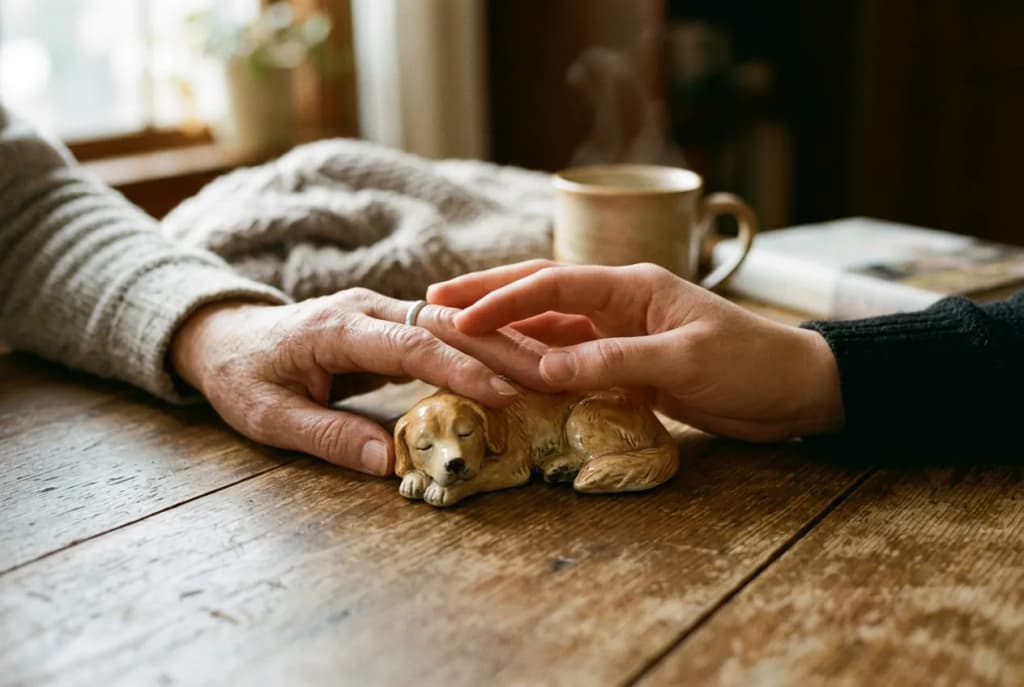
Choosing a pet loss anniversary gift that helps now, not later
There’s a strange pressure around gifts for grief. People worry about being too much, too early, too sentimental, too practical. Honestly, that anxiety makes many people freeze and send nothing.
We think there’s a better way to frame it.
Don’t ask, “What object will make this less sad?”
Ask, “What gift helps my friend stay present without feeling alone?”
That question leads to better choices.
What anticipatory grief really needs
Research on human-animal attachment and bereavement consistently suggests that pet loss can mirror the intensity of other major losses. Organizations like the Association for Pet Loss and Bereavement exist for a reason: this kind of grief is real, layered, and often socially minimized.
Before the loss, people usually need four things:
- Permission to admit what’s happening
- Witness from someone who won’t rush them
- Ritual to hold overwhelming feelings
- Tangible anchors for memory
A strong memorial gift often supports one or more of those needs. A great one supports all four.
The mistake most people make
The mistake most people make is choosing a gift aimed only at cheering someone up.
There’s nothing wrong with comfort. Soft blankets, meal delivery, flowers, and tea all have their place. But anticipatory grief isn’t just sadness. It’s a spiritual dislocation. Your friend is beginning to live in two time zones at once—the life they still have, and the life they fear is ending.
A gift that only says “feel better” can accidentally miss the deeper truth.
What helps more is a gift that says, “This bond is worth honoring while it is still unfolding.”
That can look simple. It can also look surprisingly specific.
A short scenario that explains everything
One customer told us her brother kept standing in the garage longer than usual after walks. He wasn’t doing anything dramatic. He just listened—the metal clink of the leash, the dog’s breathing, the old familiar shake that made the collar tags ring against each other.
That’s anticipatory grief in real life.
Not always sobbing. Often listening.
A practical lens for gift-giving
Here’s a helpful way to sort options. Ask yourself which of these your friend needs most right now:
| Need | What it feels like | Best type of gift | Why it helps |
|---|---|---|---|
| Witness | “I feel alone in how much this hurts.” | Letter, voice note, shared meal | Reduces emotional isolation |
| Ritual | “I don’t know what to do with my love.” | Memory journal, candle, weekly tradition | Gives grief a place to go |
| Preservation | “I’m scared I’ll forget details.” | Photo session, audio recordings, figurine | Captures specific memory cues |
| Relief | “I’m exhausted from caregiving.” | Grocery card, dog-walk help, meal drop-off | Supports the body under stress |
| Legacy | “I need proof this bond mattered.” | Memorial keepsake, framed note, custom object | Makes love visible and lasting |
This is where a lot of gift guides stop at “gift ideas.” But the gift itself is only half the story. The deeper question is what role the gift plays in the inner life of the person receiving it.
And yes, budget matters too. A gift around $250 can feel substantial without becoming overwhelming. It says, “I didn’t grab this on the way.” It carries intention. It can mark an anniversary, a diagnosis, a final season, or simply the realization that time is changing shape.
The anniversary gift that heals: why a figurine can do what photos sometimes can't
Photos are wonderful. We’ll say that plainly. We are not against photo books, framed prints, or digital albums. But here’s the counterintuitive insight: photos often keep memory flat, while a figurine restores something physical about the bond.
That physicality matters more than people expect.
Memory lives in the body, not just the mind
Your friend doesn’t only remember their pet’s face. They remember the shape of the body curled near the tool bench. The angle of one ear. The way the dog leaned while waiting for the car door to open. The cat’s loaf pose on the folded moving blanket in the garage corner.
Grief is deeply sensory. It is built from habits of touch, sound, space, and posture.
A tangible object can meet grief on that level.
That’s one reason many families choose a custom figurine as a pet loss anniversary gift or pre-loss keepsake. Not because it replaces the living animal—it never could—but because it gives the eye and hand a place to rest. A good figurine captures stance, markings, and expression in a way that can make memory feel less vaporous.
One family we worked with placed their figurine near the basket where their senior dog used to nap while someone tinkered in the garage. They told us the object did something subtle but powerful: it changed the room from a place of impending absence into a sacred space of ongoing presence.
That language stayed with us.
Why full-color 3D printing changes the emotional experience
Not all keepsakes work the same way. And if you’re considering a figurine, it helps to know what actually creates realism.
PawSculpt pieces are digitally sculpted by master 3D artists, then precision 3D printed in full color. The color is part of the resin itself, reproduced through advanced full-color 3D printing technology rather than added as a surface layer. After printing, a clear protective coat is applied for durability and sheen.
That matters because markings are often where recognition lives.
The white blaze down the nose.
The uneven sock on one paw.
The reddish tone behind black fur in sunlight.
The tiny asymmetry around the eyes.
These are the details families search for first. Not because they are decorative, but because they hold identity.
A pet is never “a golden retriever” or “a tabby” in grief. A pet is this one.
And that’s where thoughtful 3D pet sculptures can feel so meaningful. They preserve the particular.
Why this gift works especially well for anticipatory grief
A figurine given before the loss does something different from one given after.
After loss, it comforts memory.
Before loss, it invites witnessing.
Your friend can show it to the pet. They can place it somewhere visible. They can use the process of choosing photos and noticing markings as an act of reverence. In some homes, that process becomes part of saying thank you.
That may sound spiritual because, honestly, it is.
We think of the pet-human bond as a kind of daily liturgy. Feeding. Walking. Waiting at the door. Calling a name into the next room. The relationship is made of repeated acts. A figurine enters that rhythm as a quiet altar object—not in a heavy way, just in a truthful one.
"A keepsake heals best when it preserves the ordinary, not just the dramatic."
What photos to gather now if you're considering a figurine
If you think a figurine may be the right interactive gift, gather images sooner than later. This is practical advice, not sales talk. People often wait until after the loss and then realize all their photos are too dark, too far away, or taken at strange angles.
The best images usually include:
- Eye-level photos showing the face clearly
- Side views that reveal body shape and posture
- Natural light shots where markings are accurate
- Close-ups of unique features like paws, ears, chest patches, or a favorite expression
- A favorite habitual pose—lying sphinx-like, sitting crooked, head tilt, curled sleep
What matters most is not perfection. It’s recognition.
If you want to explore the process, PawSculpt’s memorial keepsakes for pets page is the right place to start because you can see how real families translate photos into something tangible without needing to guess about the service.
A useful comparison: what different gifts hold
Not every grief gift carries the same kind of memory. Here’s a simple way to think about it.
| Gift Type | Best for | What it preserves | Emotional effect |
|---|---|---|---|
| Photo book | Shared history | Timeline and events | Reflective, story-based comfort |
| Voice recording | Sound-based memory | Bark, purr, tags, breathing | Immediate, deeply visceral |
| Custom figurine | Physical presence | Posture, markings, expression | Grounding, tangible recognition |
| Journal or letter set | Meaning-making | Thoughts, gratitude, regrets | Clarifying, private healing |
| Care package | Present-day support | Practical comfort | Relief during exhausting days |
The strongest gift strategy often combines two categories: one for care right now, and one for legacy later.
That pairing is powerful.
Five meaningful gift ideas for a friend facing anticipatory grief
This article is centered on the $250 figurine angle, but a genuinely helpful guide should give you options. Sometimes the figurine is exactly right. Sometimes your friend needs something smaller, softer, or more immediate. And sometimes the best gift is a bundle—a main keepsake plus one practical act of support.
Here are the options we most often recommend.
Custom pet figurine
Who it’s for: A friend who wants something lasting, visual, and deeply specific to this pet.
Budget: Around the mid-range thoughtful-gift tier, often chosen near the $250 mark depending on options
Why it stands out: A custom figurine works especially well when your friend is already noticing every detail more intensely—the white whiskers coming in, the slower stance, the way one ear still perks. PawSculpt creates custom pet figurines that are hand-modeled digitally with care, then brought to life through full-color 3D printing in resin, so the pet’s markings and personality come through in a vivid, dimensional way. For many families, it becomes an anchor object for anniversaries, end-of-life vigils, or a memorial shelf later on.
Pro tip or consideration: Choose photos that show the pet’s most recognizable everyday pose, not just the cutest holiday shot.
Sound archive kit
Who it’s for: A friend who keeps saying, “I don’t want to forget the little noises.”
Budget: $20-$80
Why it stands out: This is one of the most overlooked gifts for anticipatory grief. Put together a simple note that says: record the collar jingle, the purr, the snore, the bark at the mail truck, the sound of drinking water, the sigh before sleep. We’ve seen families treasure these recordings as much as photos, sometimes more. Sound goes straight past the intellect and into the body.
Pro tip or consideration: Ask your friend to make recordings in three everyday contexts—resting, greeting, and mealtime.
Caregiver relief bundle
Who it’s for: A friend worn down by meds, appointments, cleanup, and interrupted sleep.
Budget: $40-$150
Why it stands out: This gift doesn’t look sentimental, but it can be merciful. Include easy meals, a grocery card, soft tissues, unscented wipes, and a notebook for medication timing or vet questions. If you know them well, add one “night watch” item—tea, electrolyte packets, lip balm, or a gentle lamp for late check-ins. Grief before loss is often physically exhausting.
Pro tip or consideration: Drop it off quietly and don’t stay long unless invited.
Guided memory journal
Who it’s for: A reflective friend who needs somewhere to place thoughts they can’t say out loud.
Budget: $15-$45
Why it stands out: A blank journal can be intimidating. A guided one is better. Include prompts like: “What sound tells me my pet is home?” “What habit will I miss most?” “What have I learned about love from caring this way?” This turns memory into ritual, not just documentation.
Pro tip or consideration: Tuck in one handwritten note from you to make the first page less lonely.
Shared ritual gift
Who it’s for: A friend who doesn’t want an object as much as a repeated act of companionship.
Budget: $0-$100
Why it stands out: Offer a recurring ritual for the next four weeks: Saturday soup drop-off, Tuesday porch tea, Friday sunset walk with the dog if they’re still able, or a monthly candle-lighting after the loss. Ritual is one of the few things that can hold both dread and devotion at the same time. It creates shape where emotions feel shapeless.
Pro tip or consideration: Put the ritual in your calendar yourself—don’t make your grieving friend manage it.
Which gift matches which kind of friend?
Sometimes people don’t need a “best gift.” They need the right fit.
| If your friend is... | Best gift | Why it fits |
|---|---|---|
| Private and sentimental | Guided memory journal | Gives quiet space without social pressure |
| Visually attached to details | Custom figurine | Preserves markings, expression, posture |
| Overwhelmed by caregiving | Relief bundle | Supports the body during strain |
| Deeply attached to routines | Shared ritual gift | Honors the bond through repetition |
| Afraid of forgetting the soundtrack | Sound archive kit | Captures the noises memory loses fastest |
This table may save you from overthinking. Often the kindest gift is the one that speaks your friend’s emotional language.
The counter-point: when a figurine is not the right gift
We want to be honest here, because intellectual honesty matters more than a neat narrative.
A figurine is not always the best choice.
Sometimes the person is too close to the edge
If your friend is in the final 24 to 72 hours of active decline with their pet, they may not have the emotional bandwidth to engage with a detailed keepsake process. In that window, what helps more might be food, transportation, child care, or simply sitting beside them without asking for updates.
A meaningful object can wait a little.
And that’s okay.
Sometimes tangible items feel too intense
Some people are not comforted by visible memorials right away. They feel ambushed by them. A figurine on the counter may be beautiful for one person and unbearable for another.
If your friend tends to avoid photos after hard losses, take that seriously.
In those cases, a softer memorial gift may work better first:
- A donation in the pet’s name
- A simple card with one specific memory
- An offer to help organize digital photos later
- A scheduled “memory walk” in a month, not now
Sometimes your role is practical, not symbolic
You do not have to be the person who gives the profound object.
Maybe you are the person who shows up with paper towels, electrolyte drinks, and gas money for the emergency vet. Maybe that is your sacred assignment in this friendship. Don’t underestimate it.
One of our strongest memories is of a customer who ordered a figurine months after the loss because, in her words, “At the time, what saved me was my friend taking my laundry basket and bringing it back folded.” That friend gave no keepsake. She gave capacity.
That was love too.
The test we recommend
Before giving a larger keepsake, ask yourself three questions:
- Is this for their comfort, or my need to do something meaningful?
- Are they someone who likes tangible reminders, or someone who needs gentler distance first?
- Will this gift add steadiness, or add emotional weight?
If you can answer those clearly, you’ll probably choose well.
"The kindest gift is not the most impressive one. It’s the one the grieving body can actually receive."
How to give an interactive gift without making the moment heavier
The phrase interactive gift can sound trendy, but in grief support it means something old and human: a gift that invites participation, memory, or ritual rather than passive possession.
That matters because grief is not only something people feel. It’s something they do. They repeat stories. They replay sounds. They circle the house. They touch familiar objects. They keep showing love after there is nowhere obvious to place it.
A good gift gives that love a place to go.
Three ways to make a figurine more healing
If you choose a figurine, the giving matters as much as the object.
1. Pair it with a naming note
Include a short card that names exactly what you see in their bond.
Not “Hope you like this.”
Instead:
- “I wanted to honor the way he waits for you at every door.”
- “I know her little head tilt is part of your daily life.”
- “I wanted you to have something that reflects how much presence he carries in this house.”
Specific language helps because grief often makes people feel invisible in what they are noticing.
2. Give it before a meaningful date
Anniversaries are powerful—diagnosis date, adoption day, last good road trip, surgery date, or the first holiday that feels uncertain. A pet loss anniversary gift doesn’t have to wait for death. In fact, one of the most thoughtful times to give it is before a known threshold.
That timing says: this season matters too.
3. Let the recipient decide the ritual
Don’t prescribe what they should do with it. Some will place it near the bed. Some on a bookshelf. Some in a memorial corner later. Some will keep it in its box for weeks before opening.
All of that is normal.
A small ritual we’ve seen work beautifully
One family created what they called the “three sounds, three stories” ritual.
They placed their keepsake on a side table. Then once a week, they each named:
- one sound they didn’t want to forget,
- one habit they had noticed that week,
- and one story from the pet’s younger years.
It took maybe ten minutes.
But over time, it transformed dread into gratitude with edges. Not easy gratitude. Real gratitude—the kind that can sit beside sorrow without pretending sorrow isn’t there.
If you're ordering a figurine, what to expect from the process
Since we’re speaking practically too, here’s the broad shape of what families usually do when they choose a custom figurine.
- Gather photos that clearly show face, body, markings, and favorite posture.
- Choose a pose or reference image that feels most like the pet in daily life.
- Review the creative interpretation as part of the process on the company’s timeline.
- Receive the finished full-color resin piece, protected with a clear coat.
For current details—timelines, service specifics, and what the team can accommodate—visit PawSculpt’s custom pet figurine service. We’re deliberately not listing fixed business details here because those can change, and accuracy matters.
The PawSculpt perspective
"The best gifts don't erase grief—they give love a form it can return to, again and again."
— The PawSculpt Team
We believe that’s why tactile keepsakes matter. They don’t compete with memory. They stabilize it.
Building a sacred space for memory before the loss arrives
This may be the deepest and most overlooked part of the whole conversation: your friend doesn’t just need a gift. They may need a place for the relationship to be seen.
Not a shrine in a dramatic sense. Just a corner of truth.
Why space matters
Grief gets louder when it has no container.
A leash still hanging in the garage.
The water bowl still under the bench.
The old blanket with the shape of a body no longer resting there.
The soft thud of a tail that has become rare enough to feel precious.
Space holds these things whether we intend it to or not.
Creating a small sacred space before the loss can help because it gently acknowledges what the household already knows. This is changing. This life matters. We will not rush past it.
For some people, that space includes:
- one framed photo,
- one candle,
- one written blessing or note,
- one tangible keepsake,
- and one object of daily care like the collar or favorite toy.
The point is not décor. The point is attention.
A simple ritual for the friend who doesn't know what to say
If you’re giving a gift and want to do it with tenderness, try this four-step ritual. It takes less than five minutes.
- Name the pet aloud.
- Name one ordinary thing you love about them.
- Offer the gift without explaining it too much.
- Leave room for silence, tears, or a subject change.
That last part is important.
Some people will open up immediately. Others will start talking about medication schedules or whether the dog ate breakfast. Follow their lead. Grief often enters sideways.
Don’t forget the remaining pets
Another overlooked truth: the home’s other animals often change too. Veterinary and behavior resources, including guidance from the American Veterinary Medical Association on pet loss and bereavement, remind us that routines matter deeply during periods of loss.
If there are other pets in the home, they may:
- search rooms more often,
- sleep differently,
- vocalize more or less,
- eat off-schedule,
- wait by doors or favorite spots.
A gift that supports routine—walk help, feeding help, a ritual corner that includes them—can ease the whole household, not just your friend.
Here’s a quick reference:
| Behavior after decline or loss | What it may mean | Helpful response |
|---|---|---|
| Waiting by door or bed | Searching behavior | Keep routine stable for 2-3 weeks |
| Reduced appetite | Stress or disruption | Monitor closely and ask a vet if it continues |
| More vocalizing | Confusion, distress | Offer calm presence and predictable cues |
| Clinginess | Need for reassurance | Add short check-ins and gentle contact |
| Withdrawal | Adjustment or sadness | Provide quiet space without forcing interaction |
We’re not vets, so for medical or sudden behavioral concerns, professional guidance matters. But emotionally, the pattern is clear: grief is communal. The house feels it.
The gift beneath the gift
At the deepest level, every meaningful grief gift says the same thing:
Your love is not excessive.
Your sorrow is not embarrassing.
This bond has a legacy.
That may be why people remember these gifts for years. Not because of their retail value, but because they answered a spiritual question at the heart of loss: Did this relationship leave a mark?
Yes. It did.
A note on money, because it matters
Some readers feel uneasy spending around $250 on a keepsake when practical needs are also present. That’s reasonable. There is no morally correct amount to spend on grief.
But here is the nuance we’ve seen over and over: people rarely regret investing in specific remembrance. They more often regret vague gestures that disappear into the blur of a hard season.
If your budget allows, a substantial gift can be wise when:
- the pet has been central to family identity,
- the friend is deeply visual or sentimental,
- the object will likely become part of anniversary ritual,
- or the pet’s decline has been long enough that everyone senses the transition.
If not, choose smaller and more personal. A gift’s holiness is not tied to price.
How to write the note that makes the gift unforgettable
People agonize over this part. The truth is, the note matters almost as much as the object.
Why? Because grief often scrambles language. Your friend may not remember every casserole or bouquet. But they may remember the one sentence that named their bond accurately.
What to say
Aim for specific witness, not generic comfort.
Good examples:
- “I see how he still waits for your footsteps, even on tired days.”
- “I know the sound of her tags in the hallway is part of your home.”
- “You’ve loved him with such steadiness, especially in this hard stretch.”
- “I wanted to honor this season, not wait until after it passed.”
These work because they are concrete. They prove attention.
What not to say
We’ll be real—some common phrases land badly.
Avoid:
- “At least you had so many years.”
- “You can always get another pet.”
- “Try to stay positive.”
- “Everything happens for a reason.”
- “I know exactly how you feel.”
Even if well meant, these phrases reduce or flatten the experience.
A short template you can actually use
If words fail you, here’s a simple structure:
Name the pet. Name the bond. Name the purpose of the gift.
For example:
“Sweet Bailey has brought so much warmth and rhythm to your days. I know this season is heavy, and I wanted to give you something that honors her presence now, while you’re still loving her through it.”
That’s enough.
Maybe more than enough.
Closing the circle
If you are standing in the garage with your friend someday soon—hearing the leash hook tap the wall, noticing how carefully the old dog steps down from the car, feeling the air change around a routine that used to be ordinary—you do not need to solve the moment.
You only need to honor it.
A healing gift does not argue with reality. It does not rush your friend toward closure. It simply says: this bond is sacred, this season is real, and I am willing to witness both. Sometimes that looks like soup and silence. Sometimes it looks like recorded collar tags on a phone. Sometimes it looks like a figurine resting on a shelf, giving shape to a life that changed a household forever.
If you’re choosing a next step, make it concrete. Pick one gift this week. Write one specific note. Preserve one sound today. Don’t wait for the “right” time. Anticipatory grief is already asking for tenderness now.
And if the gift you choose is a pet loss anniversary gift, let it be one that helps your friend keep hearing love—even after the house sounds different.
Frequently Asked Questions
What is a good pet loss anniversary gift for a friend?
A good pet loss anniversary gift is one that feels personal rather than generic. The strongest choices usually do one of three things: preserve a specific memory, create a ritual, or reduce practical stress.
If your friend is sentimental and visual, a keepsake like a figurine may be perfect. If they are overwhelmed, a support bundle or recurring meal drop-off may help more right now.
Is it okay to give a memorial gift before a pet has passed away?
Yes—if it is given with sensitivity. This is often one of the most meaningful times to offer a gift, because anticipatory grief can feel invisible and unsupported.
The key is tone. Give the gift as an act of witness, not as a declaration that the end has already come. You are honoring the bond in the present tense.
Why are custom pet figurines meaningful for grief?
They preserve more than a face. A well-made figurine can capture posture, markings, expression, and the physical presence that memory sometimes struggles to hold.
That’s why many families find them grounding. If you want to explore this option, PawSculpt’s process uses advanced full-color 3D printing in resin to reproduce the pet’s colors directly in the material, which helps preserve those identifying details in a vivid, lasting way.
What should I include with an interactive gift for anticipatory grief?
Add a short note and one simple prompt. You might invite your friend to record three favorite sounds, write one story each week, or place the keepsake somewhere meaningful.
Keep it light. The purpose of an interactive gift is not to assign emotional homework—it’s to offer a gentle pathway into memory and ritual.
How do I support a friend dealing with anticipatory grief over a pet?
Start with concrete support. Offer one meal, one errand, one walk, or one standing check-in each week for a month. Specific offers are easier to accept than “let me know if you need anything.”
And name what you see. A sentence like “I know this season with her is heavy” often comforts more than a long speech.
Ready to Celebrate Your Pet?
Every pet has a story worth preserving. Whether you're honoring a beloved companion who's crossed the rainbow bridge or choosing a meaningful pet loss anniversary gift for a friend facing anticipatory grief, a custom PawSculpt figurine captures those details that make your pet one-of-a-kind.
Visit pawsculpt.com to learn more about our process and guarantees