
Don't Let Your Betta Fish Be Forgotten: 3 Ways to capture Fin Iridescence in Resin (And 1 Limitation)
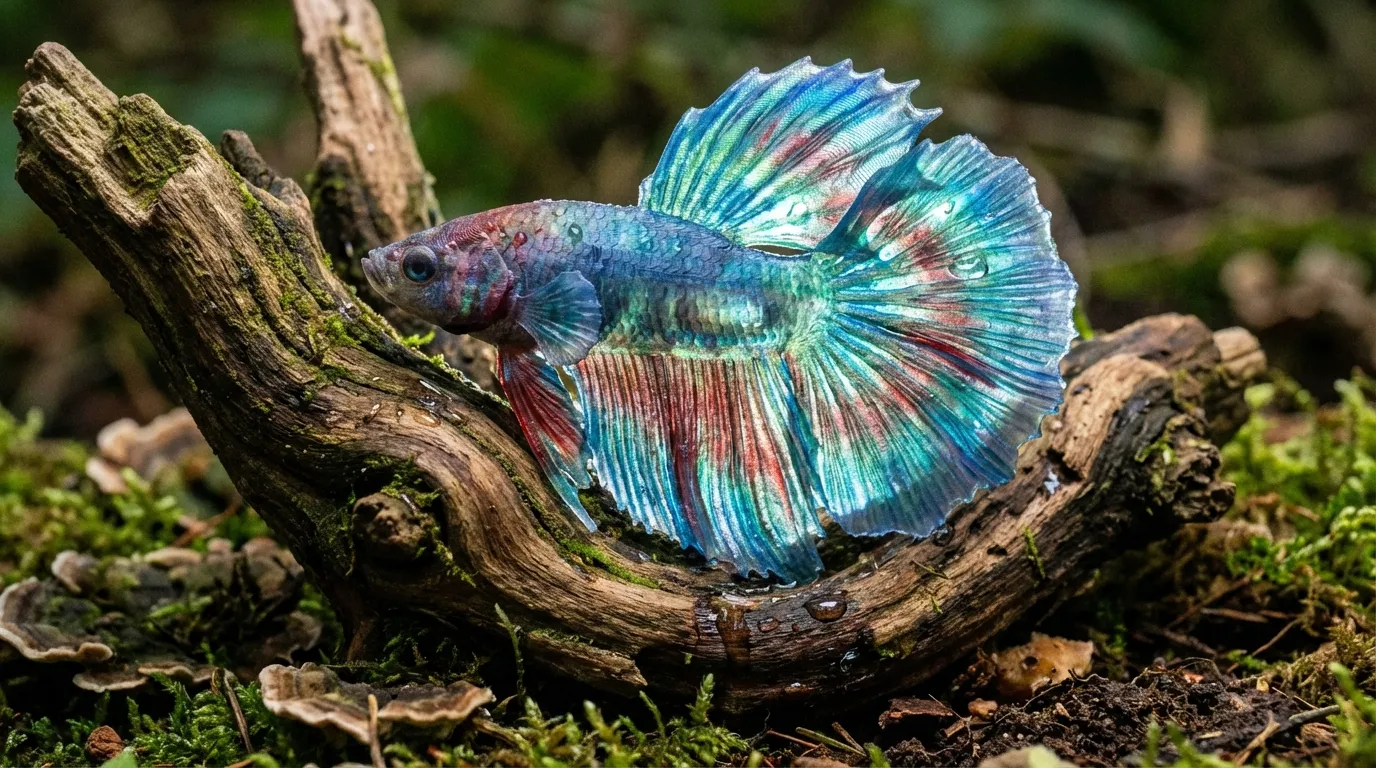
The trowel sliced through the damp soil beneath the hydrangeas, turning over earth that smelled of rain and finality. In the small, velvet-lined box resting on the grass, Indigo’s scales caught a stray sunbeam, flashing that specific, electric blue that never seemed quite real—a final spark of betta fish memorial brilliance before returning to the dark.
Quick Takeaways
- Iridescence is structural light — standard pigments cannot replicate the physics of fish scales; you need light-refracting materials.
- Grief has no size limit — feeling devastated over a fish is a valid spiritual disruption, regardless of what society says.
- Lighting angles matter — to capture your betta's soul in photos, you must photograph from slightly above to catch the light refraction.
- 3D printing captures translucency — unlike painting, custom figurines use full-color resin to mimic the semi-transparent nature of fins.
The Sacred Geometry of a Small Life
There is a profound misconception in our culture that the weight of our grief should correspond to the physical weight of the body we have lost. We are taught that a dog weighs more on the heart than a hamster, and a cat more than a fish. But the soul does not abide by the laws of physics or mass. The soul deals in energy, in presence, and in the specific frequency of connection.
When a betta fish passes, the silence that descends upon the room is disproportionate to the size of the tank. It is a watery void. The hum of the filter becomes a deafening reminder of absence. You realize, perhaps for the first time, how much movement that small creature contributed to the energy of your home. They were a living mandala, a constantly shifting pattern of color and light that served as a focal point for your own meditation, whether you realized it or not.
In the metaphysical sense, water is the element of emotion and the subconscious. A betta fish is a guardian of that emotional realm, a bright spirit navigating the waters of your daily life. When they transition, that vessel breaks. The challenge for the grieving guardian is not just "getting over it," but finding a way to honor a creature whose beauty was composed almost entirely of light.
The Problem of Pigment vs. Light
Here lies the spiritual and artistic struggle: How do you memorialize a creature whose primary beauty is not pigment, but physics?
A dog’s fur is a color. A cat’s nose is a color. But a betta fish? That isn't blue pigment you are seeing. It is structural color. It is iridescence caused by light refracting through microscopic crystal-like structures in their scales and fin rays. When you try to take a flat photo, or commission a traditional oil painting, the result often feels "dead" or flat. It captures the shape, but it misses the spark.
To truly honor the spirit of a betta, we must look for mediums that allow light to pass through them, just as it passed through your companion's fins. We are looking for transparency, depth, and refraction.
The Unspoken Weight: Validating "Micro-Grief"
Before we discuss the mechanics of preservation, we must clear the spiritual debris that prevents many fish owners from healing. There is a specific, corrosive shame attached to grieving a fish. It is the voice of the outside world saying, "It was just a fish. You can get another one for five dollars."
"Grief isn't a problem to be solved. It's a love story that continues after the last chapter."
This minimization of your loss is a violation of your spiritual contract with the animal. You were their entire universe. You controlled the sun (the tank light), the rain (water changes), and the harvest (feeding time). That level of total dependency creates a profound energetic bond.
Common, yet hidden emotions in fish loss:
- The "Flush" Guilt: The societal norm of flushing fish is deeply traumatic for many. It feels like treating a beloved soul as waste. Creating a proper burial ritual or keeping a physical memorial is an act of rebellion against this dismissal.
- Husbandry Shame: Because fish are sensitive, many owners spiral into "Did I change the water enough? Was the heater right?" We plague ourselves with technicalities to avoid feeling the sadness.
- The Empty Tank Anxiety: Staring at a glass box of water with nothing in it creates a cognitive dissonance. It is a "ghost habitat."
Acknowledging these feelings is the first step in the ritual of remembrance. You are allowed to be devastated. You are allowed to want a legacy for a creature that weighed less than an ounce.
Way 1: The Ethereal Archive (High-Dynamic Range Photography)
The first method of capturing the iridescence is through the manipulation of light itself. Most people have blurry, dark photos of their fish. But if you have time—or if you are looking to memorialize a fish through existing photos—you must understand how to digitally resurrect the light.
If your companion is still with you, or if you are looking through old photos to select one for a memorial, look for the "Flare Moment."
In the wild, the flare is a display of dominance. In the home, it is a display of spirit. It is the moment the soul expands to fill the maximum amount of space. A betta with clamped fins is hiding their light; a flaring betta is projecting it.
The Ritual of the Screen
When we view our pets on screens, we are looking at light projected at us. This is why bettas often look better on a high-resolution phone screen than in a printed photograph. The backlight of the screen mimics the sun hitting the scales.- Isolate the Subject: Use editing software to black out the background completely. This removes the distraction of filters and plastic plants, leaving only the pure energy of the fish floating in the void.
- Saturation vs. Vibrance: Do not crank the saturation; it makes the fish look like a cartoon. Increase vibrance and luminance. You want to enhance the glow, not just the color.
- The Digital Frame: Placing a high-quality digital frame near their old tank location can be a powerful transition ritual. It keeps the "movement" of light in that corner of the room, easing the shock of the empty tank.
Way 2: The Alchemical Fix (Resin and Layering)
If we move from the digital to the physical, we enter the realm of alchemy—transforming matter to mimic life. Resin is the closest material we have to water that can be frozen in time.
There is a Japanese art form involving painting layers of goldfish into resin, giving the illusion of 3D life. However, for a betta, this is incredibly difficult to commission because of the fins. The fins of a betta are like spun silk or smoke. Painting them opaquely destroys their magic.
If you choose this route, you are looking for an artist who understands glazing. They must use transparent mediums, building up the color in 20 or 30 microscopic layers. This is a meditation in itself. The artist is reconstructing the body of your pet, layer by layer, trapping light between the sheets of acrylic.
The Spiritual Downside:
This method is static. It traps the fish in a "view from above" perspective, usually inside a bowl or box. It is beautiful, but it often feels like looking at a specimen rather than a companion. It lacks the face-to-face connection you had when you peered through the glass.
Way 3: The Totem (Full-Color 3D Transparency)
This brings us to the most modern, and perhaps most spiritually resonant, method of capturing a betta's essence: Full-Color 3D Printing in Resin.
At PawSculpt, we have found that traditional opaque materials (like clay, stone, or plaster) fail betta fish completely. A stone fish feels heavy; a betta is weightless. A clay fish is solid; a betta is fluid.
To capture the iridescence, we utilize a technology that prints color inside the material, not just on top of it. This is a crucial distinction.
The Science of the Soul-Print
Imagine a printer that doesn't use ink on paper, but droplets of colored resin that are cured by light, layer by microscopic layer (a process involving voxels, or 3D pixels).- Subsurface Scattering: Real skin and real scales allow light to penetrate slightly before bouncing back. This is what makes living things look "alive." Our full-color resin mimics this. The light enters the figurine and interacts with the color suspended inside.
- The Fin Problem: In a digital sculpt, our artists can model the fins to be impossibly thin, almost gossamer. When printed in resin, these areas retain a translucency that mimics the real biological structure of a fin.
- No Brushstrokes: Because there is no hand-painting involved, there are no brushstrokes to break the illusion. The color gradient—that seamless shift from royal blue to turquoise to Cambodian red—is continuous, just like in nature.
Why this matters for grief:
Holding a physical object that interacts with light helps ground the energy of the loss. When you hold a custom figurine of your betta up to a window, the sun shines through the fins. It recreates that moment of seeing them in the tank. It transforms the memory from something painful and absent into something present and beautiful.
Memorial Comparison Matrix
| Memorial Type | Captures Iridescence? | Tactile Connection | Spiritual Resonance | Best For... |
|---|---|---|---|---|
| Traditional Photo | Low (Often reflects glare) | None | Medium (Visual only) | Scrapbooks & lockets |
| Oil/Acrylic Painting | Medium (Depends on artist) | None | High (Artist interpretation) | Wall art & grand displays |
| Resin Painting (Layers) | High | Low (Usually encased) | Medium (Specimen-like) | Desk ornaments |
| PawSculpt Figurine | Very High (Translucent) | High (Holdable) | High (Totem/Effigy) | Altars & "Tank-side" shrines |
The One Limitation: The Dance of the Veil
We must be honest about the one thing no artist, no machine, and no photograph can capture.
You cannot capture the undulation.
A betta fish is never truly still. Even when sleeping on a leaf, their pectoral fins are making tiny, rhythmic adjustments. Their gills are pulsing. The way their long, veil-like tails drift behind them like a bride’s train in a current—that is motion, and motion is life.
Any memorial, whether it is a 3D print or a painting, captures a single millisecond of their existence. It freezes the dance.
The Counterintuitive Insight:
This limitation is actually a spiritual gift. The stillness of the memorial forces you to acknowledge the transition. If the memorial moved, it would be a ghost. Because it is still, it is a statue. It marks the end of the physical contract and the beginning of the memory contract.
Do not look for the movement in the object. Look for the movement in your memory, triggered by the object. The figurine is the key; your mind is the room it opens.
Rituals for the Water and the Vessel
Once you have decided on a physical memorial—be it a print, a painting, or a sculpture—you must deal with the physical remains of their habitat. This is often the hardest part for fish owners. Dismantling the tank feels like dismantling a home.
The Water Return Ritual
Do not just pour the tank water down the drain. That water held their life force.- Take the water to your garden or a potted plant.
- Pour it into the earth.
Say the words: "From water to earth, the cycle continues. Your energy now feeds new life."*
- This grounds the "fluid" energy of the grief into something stable (the earth).
The Tank Cleansing
Clean the tank, but do not rush to fill it. Leave it empty and clean for a period of mourning—perhaps 7 days, or 49 days (a common period in Eastern traditions). Let the space be empty. Place your betta fish memorial or figurine inside the dry tank, lit by the tank light. Create a diorama of memory before you eventually decide to introduce new life."We do not 'move on' from a pet who has passed. We move forward with them, tucked safely into the pocket of our hearts."
Creating a Sacred Space for the Smallest Spirits
When we create a physical representation of a pet, we are engaging in one of humanity’s oldest impulses: the creation of an effigy. We are saying, "This being mattered. This being existed. And here is the proof."
For a betta fish, whose life was lived in a specific element (water) that we cannot inhabit, the bond is mysterious. You crossed the barrier between air and water to love them. They crossed the barrier between instinct and connection to recognize you.
Whether you choose a digital archive, a commissioned painting, or a full-color 3D printed figurine, the goal is the same: to catch the light. To preserve that flash of iridescent brilliance that greeted you every morning when the tank light flickered on.
Frequently Asked Questions
How do I take good photos of my betta for a memorial?
Lighting is everything. Turn off all room lights and use only the tank light to prevent glass glare. Try to photograph them when they are "flaring" to capture the full geometry of their fins. If they move too fast, take a high-resolution 4K video and extract a still frame later.Is it silly to get a memorial for a fish?
It is never silly to honor a connection. The "smallness" of the pet does not dictate the size of the love. Many people find that having a tangible object helps validate a grief that society often ignores.Can 3D printing really capture the colors of my betta?
Yes. Unlike hand-painting, which sits on top of the surface, our full-color 3D printing technology embeds the color into the resin itself. This allows for the gradients and translucency that define a betta's beauty.What should I do with my betta's tank after they die?
We recommend a "water return" ritual—pouring the tank water into a garden or houseplant to return the energy to the earth. You can then clean the tank and use it as a lit display case for your memorial figurine for a time, treating it as a shrine before deciding if you are ready for a new companion.Ready to Celebrate Your Pet?
Every pet has a story worth preserving, no matter how small their physical form. Whether you're honoring a beloved betta who danced for you every morning or celebrating a companion still swimming by your side, a custom PawSculpt figurine captures the ethereal beauty that made them unique.
Free instant AI preview • 3D artist preview within 7 days • 5 free revisions