Christmas Gift That Outlasts the Tree: A Custom Figurine of Your Scottish Fold
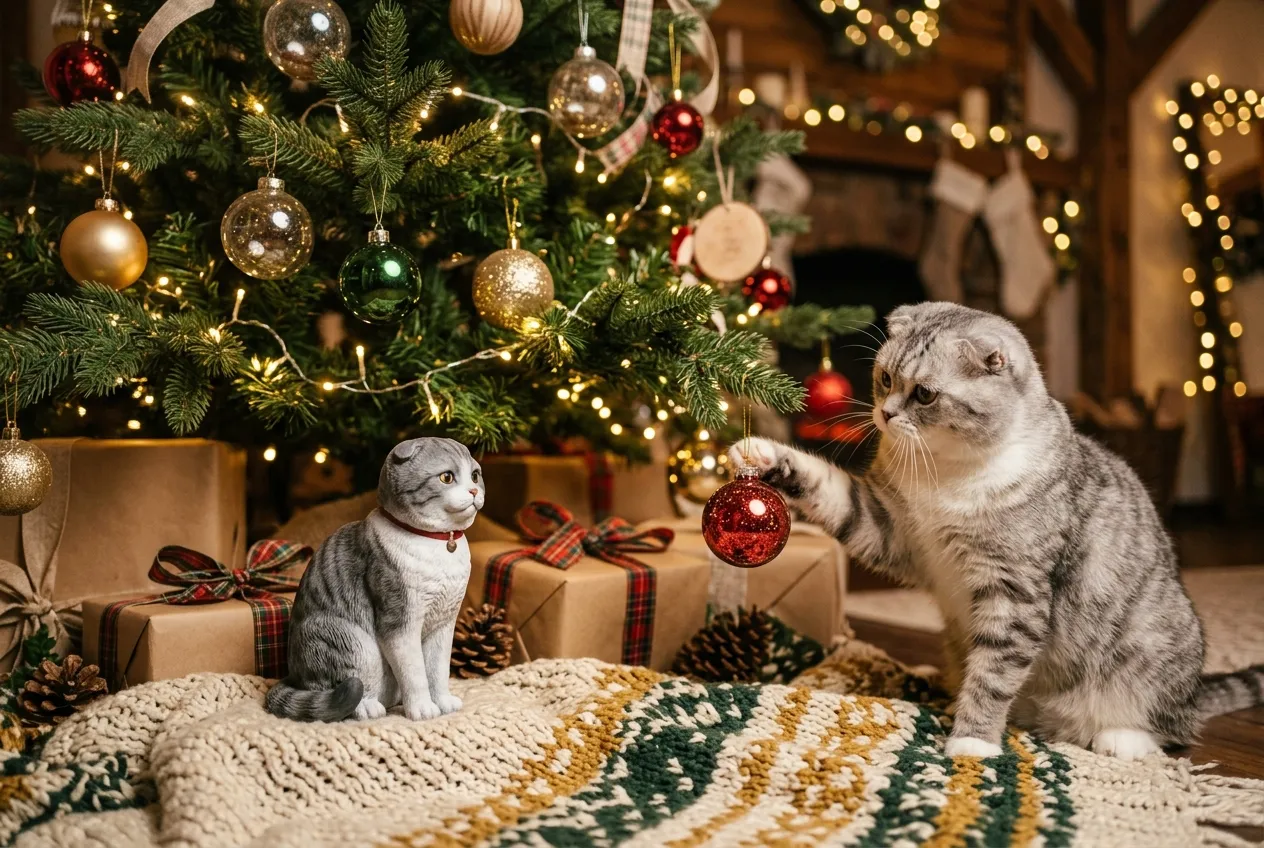
You're sitting in the parked car, engine off, and your Scottish Fold is chirping from the carrier in the backseat—that strange, birdlike trill they make when the world outside the window is too interesting to ignore. It's a sound no recording ever captures right, and it hits you: this is the kind of detail a christmas gift for a cat lover should actually preserve.
Quick Takeaways
- The best cat lover gifts capture personality, not just appearance — a Scottish Fold's quirks matter more than their breed label
- Sound and habit are the real memory anchors — gifts that evoke daily rituals outlast generic presents
- Custom figurines freeze a specific moment in time — explore PawSculpt's full-color 3D-printed figurines to see how it works
- Not all "personalized" gifts carry equal emotional weight — learn to distinguish meaningful customization from surface-level engraving
- Timing your order matters more than you think — holiday seasons create bottlenecks for any custom product
Why Most Christmas Gifts for Cat Lovers Miss the Point
Here's the thing about shopping for someone who loves their Scottish Fold: you're not really shopping for a cat person. You're shopping for someone in a very specific relationship with a very specific animal. And that distinction matters more than most gift guides acknowledge.
Walk into any pet store in November and you'll find an avalanche of cat-themed merchandise. Mugs with whisker prints. Socks with cartoon tabbies. Ornaments that say "Cat Mom" in cursive. These aren't bad gifts, exactly. But they speak to a category—cat ownership—rather than to the particular, unrepeatable bond between one person and one animal.
The Scottish Fold owner in your life doesn't just have a cat. They have a cat who sits in that bizarre, flat-backed "Buddha pose" that Folds are famous for. A cat whose ears fold forward in a way that makes every expression look perpetually curious. A cat who probably follows them from room to room with the quiet persistence of a small, furry shadow.
"The gifts that start conversations are the ones that capture something only the owner would recognize."
— The PawSculpt Team
A generic cat gift says, "I know you like cats." A great gift says, "I see the specific cat you love, and I understand why."
That's the gap this article is designed to help you close.
The Overlooked Psychology of Gift-Giving Between Humans and Their Pets
There's a counterintuitive truth buried in the research on meaningful gifts: the recipient's emotional response correlates more strongly with perceived thoughtfulness than with monetary value. A $200 gift card feels generous but forgettable. A $40 item that references a private joke or a shared memory can become someone's most treasured possession.
For Scottish Fold owners specifically, the private language of their relationship is rich. The way the cat kneads a particular blanket. The specific pitch of their purr (Folds tend toward a softer, lower register than most breeds). The way they tilt their already-tilted ears when they hear a familiar voice.
When you give a gift that references this private language, you're not just giving an object. You're telling someone: I pay attention to what you love. And that's a fundamentally different emotional transaction than handing over something with a paw print on it.
The Anatomy of a Scottish Fold: What Makes Them So Difficult (and Rewarding) to Capture
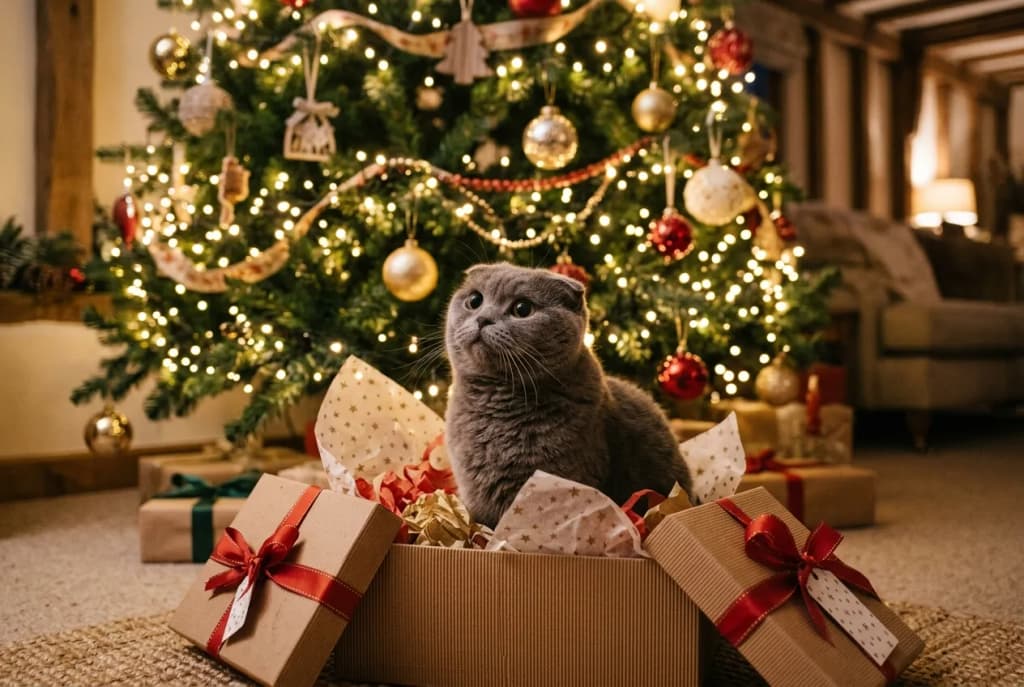
Scottish Folds are, from a purely visual standpoint, one of the most distinctive domestic cat breeds alive. Their folded ears—the result of a natural genetic mutation first documented in Scotland in 1961—give them an owl-like appearance that photographs beautifully but presents genuine challenges for anyone trying to reproduce their likeness in three dimensions.
The Ear Problem
Let's start with the obvious. Those ears aren't just "folded." They exist on a spectrum. The Cat Fanciers' Association recognizes varying degrees of fold, from a loose single fold to the tight triple fold that presses ears almost flat against the skull. Your gift recipient's Fold likely has ears that sit at a very specific angle—and if you're commissioning any kind of custom likeness, that angle matters enormously.
We've worked with hundreds of Scottish Fold owners at PawSculpt, and the ear detail is consistently the first thing they check when reviewing a digital preview. Not the color. Not the pose. The ears. Because the ears are what make their cat their cat, as opposed to any other round-faced feline.
The Body Language Factor
Scottish Folds are also unusually expressive in their posture. They sit upright. They sprawl flat on their backs. They perch on surfaces with a composure that borders on regal. This postural vocabulary is part of what makes them so beloved—and so challenging to represent in a single static form.
| Scottish Fold Trait | Why It Matters for a Custom Gift | What to Look For |
|---|---|---|
| Ear fold degree | Defines the cat's entire facial character | Photos showing ears from multiple angles |
| Eye color and shape | Folds have notably round, wide-set eyes | Close-up in natural light, no flash |
| Sitting posture | The "Buddha sit" is iconic to the breed | Candid shots of natural resting position |
| Coat pattern | Folds come in nearly every color/pattern | Full-body photo showing markings clearly |
| Tail thickness | Some Folds have notably thick, rounded tails | Side-angle photo with tail visible |
If you're considering a custom figurine—whether from PawSculpt or another service—understanding these breed-specific details will help you provide better reference material and get a more accurate result.
A Note on Scottish Fold Health
This isn't a veterinary article, and we're not qualified to give medical advice. But it's worth mentioning that the same gene responsible for those charming folded ears (the Fd gene) can also cause osteochondrodysplasia, a cartilage and bone condition. Many Scottish Fold owners are deeply aware of this, and their love for their cat carries an undercurrent of protectiveness that outsiders might not fully appreciate.
A gift that honors the specific animal—not just the breed aesthetic—acknowledges this deeper layer of the relationship. It says: I know this isn't just a cute cat to you. This is a creature you've chosen to care for with full knowledge of their vulnerabilities.
The Christmas Gift Spectrum: From Forgettable to Permanent
Not all gifts occupy the same emotional tier. And understanding where different options fall on the spectrum of permanence can help you make a more intentional choice.
Tier 1: Consumable Gifts (Gone by January)
- Premium cat treats or subscription boxes
- Catnip toys (destroyed within days, honestly)
- Holiday-themed cat collars or bandanas
These are fine as stocking stuffers. They bring a moment of joy. But they don't last, and for someone whose relationship with their Scottish Fold is a central part of their daily emotional life, a consumable gift can feel like a missed opportunity.
Budget: $15–$50
Tier 2: Functional Gifts (Useful but Not Sentimental)
- High-quality cat trees or scratching posts
- Automatic feeders or water fountains
- Grooming tools designed for dense Fold coats
Better. These show you understand the practical realities of cat ownership. A good water fountain, in particular, is something most cat owners won't buy for themselves but genuinely appreciate. But functional gifts serve the cat more than the owner's emotional connection to the cat.
Budget: $30–$200
Tier 3: Personalized Gifts (Sentimental but Variable Quality)
- Custom pet portraits (painted, digital, or illustrated)
- Engraved jewelry with the cat's name
- Photo books or calendars
- Custom figurines
This is where things get interesting—and where the quality gap widens dramatically.
Budget: $25–$300+
Tier 4: Experiential Gifts (Memorable but Intangible)
- Professional pet photography sessions
- Donations to Scottish Fold rescue organizations in the cat's name
These create memories rather than objects. Valuable, but they don't give the recipient something to hold.
Budget: $50–$500
"A gift that outlasts the Christmas tree isn't about durability. It's about whether the emotion it carries still resonates in March."
The sweet spot for most people shopping for a Scottish Fold owner sits in Tier 3—personalized gifts that combine emotional resonance with physical permanence. But within that tier, the range of quality and impact is enormous.
Custom Cat Christmas Gifts: Separating the Meaningful from the Merely Monogrammed
The word "custom" has been diluted almost to meaninglessness in the age of print-on-demand. You can get a "custom" phone case with your cat's face on it in 48 hours for $20. Is it personalized? Technically. Does it carry emotional weight? Rarely.
True customization—the kind that makes someone's breath catch when they open the box—requires three things:
- Specificity of detail (not just the cat's face, but the particular way their markings fall)
- Intentionality of form (the object itself should feel considered, not mass-produced)
- Durability of material (something that can sit on a shelf for years without degrading)
The Photo-to-Product Pipeline
Most custom pet gifts start with a photograph. And this is where many people unknowingly sabotage the quality of their gift. The photo you submit determines the ceiling of what any artist or technology can produce.
For a Scottish Fold specifically, here's what makes the difference:
Essential photos to gather (ideally without the owner noticing):
- One well-lit, straight-on face shot showing both ears clearly
- One full-body side profile showing coat pattern and body proportions
- One "personality shot"—the pose or position that most captures the cat's character
- One close-up showing eye color in natural (not artificial) light
Common photo mistakes that reduce quality:
| Mistake | Why It Hurts | Quick Fix |
|---|---|---|
| Flash photography | Washes out coat color, creates demon eyes | Use window light or a well-lit room |
| Too far away | Loses detail in fur pattern and facial features | Get within 3-4 feet if possible |
| Cat in motion | Blurs the exact features you need captured | Wait for a resting moment |
| Heavy filters | Distorts true colors of coat and eyes | Submit unedited originals |
| Only one angle | Leaves gaps in the 3D interpretation | Aim for 3-5 different angles |
If you're ordering a custom figurine—say, a scottish fold figurine from a service like PawSculpt—the digital sculptors working on your piece are essentially translating two-dimensional photographs into a three-dimensional object. Every detail you provide reduces the amount they have to guess. And guessing, even educated guessing, is the enemy of accuracy.
How Full-Color 3D Printing Changed the Game
Here's something most people don't realize about custom pet figurines: the technology behind them has undergone a quiet revolution in the past decade.
Older methods relied on generic molds with surface-level customization—think of a standard cat-shaped blank that gets modified slightly and then painted to match your pet. The result was often... close. Recognizably cat-shaped. But not recognizably your cat.
Modern full-color 3D printing works on a fundamentally different principle. The figurine is digitally sculpted from scratch by a 3D artist who models your specific pet's anatomy, posture, and proportions. Then it's printed in full-color resin, where the color is embedded directly into the material itself, voxel by voxel. There's no painting stage. No surface coating of pigment that might chip or fade. The color is the material.
The only manual step in PawSculpt's process is applying a protective clear coat that adds UV resistance and a subtle sheen. Everything else—the shape, the color, the texture of the fur—is produced by the printer with a precision that human hands simply can't match at that scale.
This matters for a Christmas gift because it means the figurine you give in December will look the same in December five years from now. The marmalade swirl on your friend's Fold's left shoulder won't yellow. The particular green of their eyes won't dull. It's a permanent record of a living, breathing animal, frozen at a specific moment in their life.
The Counter-Point: When a Custom Figurine Isn't the Right Gift
Intellectual honesty requires acknowledging that a custom Scottish Fold figurine isn't the perfect gift for every person in every situation. And pretending otherwise would undermine everything we've said about thoughtfulness and specificity.
A custom figurine might not be the right choice if:
- The recipient is actively grieving a recent loss. Timing matters enormously here. A figurine of a cat who passed away last week can feel like a beautiful gesture or an emotional ambush, depending on where the person is in their grief process. If the loss is very fresh (within the first few weeks), consider waiting. A gift card for a future custom order—when they're ready—might be more compassionate than the finished product.
- The recipient values experiences over objects. Some people genuinely don't want more things. They'd rather have a donation made in their cat's name, or a professional photo session, or even just a heartfelt letter describing what their cat means to you. Know your audience.
- You don't have access to good photos. A figurine is only as accurate as the reference material behind it. If you can only find one blurry Instagram photo of the cat, the result may disappoint. Better to choose a different gift than to commission something that doesn't do the animal justice.
- The cat is very young and still changing. Kittens change dramatically in their first year. A figurine of a 4-month-old Scottish Fold kitten will look noticeably different from the adult cat within months. For kittens, consider waiting—or frame the figurine explicitly as a "kitten portrait" that captures a fleeting stage.
"Knowing when not to give a gift is its own form of generosity."
This kind of discernment is what separates a thoughtful gift-giver from someone who just clicks "add to cart." The fact that you're reading an article this long about choosing the right present suggests you're already the former.
The Sound of a Scottish Fold: Why the Best Gifts Evoke More Than Sight
We promised a unique angle, and here it is: the most overlooked dimension of pet memory is sound.
Think about it. When you picture your cat (or your friend's cat), you probably see them first—the round face, the folded ears, the particular way they curl up on the couch. But the memories that hit hardest, the ones that ambush you in ordinary moments, are almost always auditory.
The soft thud of paws landing on a hardwood floor. The rhythmic rumble of a purr against your chest at 2 AM. The specific chirp—Scottish Folds are famous for their unusual vocalizations—that means "I see a bird" or "you're home" or "I would like dinner now, please."
These sounds form the acoustic wallpaper of life with a cat. You stop consciously hearing them after a while. They become part of the ambient texture of your home, as unremarkable and essential as the hum of the refrigerator. And then, when they're gone—whether because the cat has passed or because you're simply away from home—the absence is deafening.
No physical gift can reproduce sound. But the best physical gifts can evoke it.
A figurine of a Scottish Fold captured mid-chirp, mouth slightly open, ears perked forward—that posture triggers the auditory memory in a way that a sleeping-cat pose never could. A figurine showing the cat in their alert, ears-forward listening position recalls the sound of a door opening, the jingle of keys, the specific creak of the floorboard that always made them look up.
This is why pose selection matters so much when commissioning a custom piece. The pose isn't just about how the cat looks. It's about what the cat was doing—and by extension, what sounds surrounded that moment.
Choosing a Pose That Triggers Memory
When working with a service like PawSculpt to create a custom scottish fold figurine, you'll typically be asked to select or suggest a pose. Most people default to one of two options: sitting upright or lying down. Both are safe choices. Neither is wrong.
But consider these alternatives:
- The head tilt — Folds do this constantly, and it's almost always accompanied by a specific sound (your voice, a strange noise, the crinkle of a treat bag)
- The stretch — Mid-yawn or mid-stretch captures a moment of total unselfconsciousness that feels deeply intimate
- The window perch — Looking outward, ears forward, tracking something invisible to humans. This pose carries the implied soundtrack of birdsong, traffic, rain on glass
- The approach — Walking toward the viewer, tail up, which every cat owner associates with the sound of greeting chirps
The pose you choose becomes the story the figurine tells. And the best stories have soundtracks.
A Gift-Giver's Timeline: Planning a Custom Cat Christmas Gift
Custom work requires lead time. This is non-negotiable, regardless of which company you choose. The holiday season compounds the challenge because every custom gift service experiences a surge in orders starting in late October.
Here's a general framework for planning (specific timelines vary by provider, so always check directly):
| When You Order | What to Expect | Stress Level |
|---|---|---|
| September–Early October | Comfortable lead time, full attention to detail | Low |
| Late October | Still manageable, but queues are building | Moderate |
| November | Rush territory—check availability before ordering | High |
| December | Most custom services have closed holiday orders | Very High |
The mistake most people make is treating a custom figurine like an Amazon purchase—something you can order on December 18th and expect by the 25th. Custom work doesn't operate on that timeline, and rushing the process compromises quality.
If you're reading this in November or December and the window has closed for a physical delivery, consider this approach: give the promise, not the product. Print a photo of the cat, write a note explaining that a custom figurine is being created in their likeness, and let the anticipation become part of the gift. Some of the most emotionally impactful gifts we've seen at PawSculpt arrived in January or February—long after the tree came down—because the recipient had been looking forward to them for weeks.
The tree is temporary. The figurine isn't. That's the whole point.
What to Look for in Any Custom Pet Figurine Service
Whether you choose PawSculpt or another provider, these are the quality markers that separate a keepsake from a disappointment:
Digital Preview Before Production
Any reputable service should show you a digital rendering of the figurine before it's printed or produced. This is your chance to check accuracy—ear angle, coat pattern, eye color, overall proportions. If a company doesn't offer a preview stage, that's a red flag. You're essentially gambling that they'll get it right on the first try.
Material Durability
Ask what the figurine is made of. Full-color resin (the material PawSculpt uses) is among the most durable options available. The color is integrated into the material rather than applied on top, which means it won't chip, peel, or fade under normal display conditions. UV-resistant coatings add an extra layer of protection against sunlight.
Other materials to be aware of:
- Polymer clay — Beautiful but fragile; can crack if dropped
- Ceramic — Durable but heavy; limited color accuracy
- Painted resin — Surface color can chip over time with handling
- 3D-printed PLA plastic — Inexpensive but prone to warping in heat
Revision Policy
Things don't always come out perfect on the first digital draft. A good service builds revision rounds into their process. Check the provider's website for specifics on how many revisions are included and what the process looks like—for PawSculpt, you can find those details at pawsculpt.com.
Size and Scale
Most custom figurines range from 3 to 8 inches. Consider where the recipient is likely to display it. A desk at work? A mantel at home? A bedside table? Size affects both visual impact and practical placement.
The Deeper Meaning: Why We Turn Living Things into Objects
There's a philosophical thread running beneath all of this that's worth pulling on, even briefly.
Humans have been creating likenesses of their animals for at least 35,000 years. The cave paintings at Chauvet in southern France include detailed depictions of horses, lions, and bears rendered with a specificity that suggests these weren't generic animals—they were known animals. Particular creatures that the artists had observed, perhaps lived alongside, perhaps loved.
The impulse to preserve a living being in permanent form isn't sentimental weakness. It's one of the oldest creative drives in human history. We do it because we understand, on some level that precedes language, that everything alive is temporary. And the act of making a permanent record—whether in pigment on stone or in full-color resin—is our way of arguing with that impermanence.
A custom figurine of a Scottish Fold isn't just a Christmas gift. It's a small act of defiance against time.
That might sound grandiose for a 5-inch cat statue. But talk to anyone who has one on their shelf—especially if the cat it represents is no longer alive—and they'll tell you: it's not grandiose at all. It's exactly the right size for the feeling it holds.
"Every figurine we create is a small argument against forgetting. That's what makes this work matter."
— The PawSculpt Team
Wrapping It (Literally): Presentation Tips That Elevate the Moment
You've done the hard work of choosing a meaningful, specific, lasting gift. Don't undermine it with careless presentation.
A few suggestions:
- Skip the standard gift bag. A custom figurine deserves a box. If the figurine arrives in its own packaging (most do), consider wrapping that box inside a slightly larger one with tissue paper for an extra layer of reveal.
- Include a handwritten note. Not a card. A note. On actual paper. Write one specific thing you've noticed about the recipient's relationship with their cat. "I love how Mochi always sits on your laptop when you're trying to work" is worth more than any Hallmark verse.
- Consider the unwrapping environment. If you're giving this at a large family gathering, the emotional impact might get lost in the chaos. A quieter moment—maybe Christmas morning before the extended family arrives, or a private exchange on Christmas Eve—lets the recipient actually feel the gift instead of performing gratitude for an audience.
- Photograph their reaction. Not to post online (unless they want to). But because the moment someone sees their specific cat rendered in permanent, accurate detail is a moment worth preserving in its own right.
The Sound After the Paper Tears
We started in a car, with a Scottish Fold chirping from the backseat. Let's end there too—or somewhere close.
The sound of wrapping paper tearing on Christmas morning is one of those universal acoustic markers of the season. It's chaotic and joyful and over too quickly. But after the paper is gone and the box is open, there's a different sound: the small, sharp intake of breath that happens when someone sees something they didn't expect to feel so much about.
That's the sound a custom cat christmas gift is designed to produce. Not the polite "oh, how nice" of a generic present, but the genuine, involuntary gasp of recognition. That's my cat. That's exactly my cat.
And somewhere nearby, the actual cat—the living, breathing, chirping Scottish Fold—will probably be ignoring the whole scene entirely, more interested in the crinkle of discarded wrapping paper than in their own likeness rendered in full-color resin.
Which is, honestly, the most Scottish Fold thing imaginable.
The figurine will outlast the tree, the wrapping paper, and the leftover holiday cookies. It will sit on a shelf or a desk or a nightstand, and every time the recipient glances at it, they'll hear—just for a second—that particular chirp. The one no recording ever captures right. The one that means home.
Frequently Asked Questions
What makes a custom Scottish Fold figurine different from a generic cat figurine?
A generic figurine represents the breed. A custom figurine represents your cat. The difference is in the details—the specific degree of ear fold, the exact placement of tabby stripes or calico patches, the particular roundness of your Fold's eyes. Custom pieces are digitally sculpted from your pet's actual photographs, so the result is a portrait in three dimensions, not a breed template.
How far in advance should I order a custom cat figurine for Christmas?
The safest window is September through early October. By November, most custom services are operating at peak capacity, and December orders often can't be fulfilled before the 25th. If you've missed the window, giving a printed photo with a note promising the figurine is a thoughtful alternative—the anticipation becomes part of the gift.
What photos work best for creating a custom Scottish Fold figurine?
You'll want at least three to five photos: a clear face-on shot showing both ears, a full-body side profile, and a close-up of the eyes in natural light. Avoid flash photography and heavy filters, as these distort the colors that the 3D printing process needs to reproduce accurately. Candid shots in natural resting poses tend to produce the best results.
Are custom pet figurines painted by artists?
It depends on the provider. PawSculpt uses full-color 3D printing technology, where color is printed directly into the resin material voxel by voxel—no painting involved. The only manual step is a protective clear coat. This means the color won't chip or peel the way surface-applied paint can over time.
What is the best Christmas gift for a Scottish Fold cat owner?
The most impactful gifts are ones that acknowledge the specific cat, not just cat ownership in general. A custom figurine, a professional photo session, or even a heartfelt letter describing what you've noticed about their bond with their Fold will resonate far more than generic cat-themed merchandise. The key is specificity—show that you see their particular animal, not just the category.
How durable are full-color resin pet figurines?
Full-color resin is one of the most durable materials available for custom figurines. Because the color is integrated into the material rather than applied as a surface layer, it resists chipping, peeling, and fading. A UV-resistant clear coat adds further protection against sunlight. Under normal indoor display conditions, these figurines maintain their appearance indefinitely.
Ready to Celebrate Your Scottish Fold?
Every Scottish Fold has a personality that defies their quiet reputation—the chirps, the Buddha sits, the owl-eyed stare that makes you feel simultaneously judged and adored. A custom PawSculpt figurine captures those details in full-color resin, preserving the exact cat your loved one comes home to every day. It's the kind of christmas gift for a cat lover that still means something long after the ornaments are packed away.
Visit pawsculpt.com to explore the full process, pricing, and guarantee details