
Cleaning the Cage One Last Time: A Ritual for Your Late Syrian Hamster
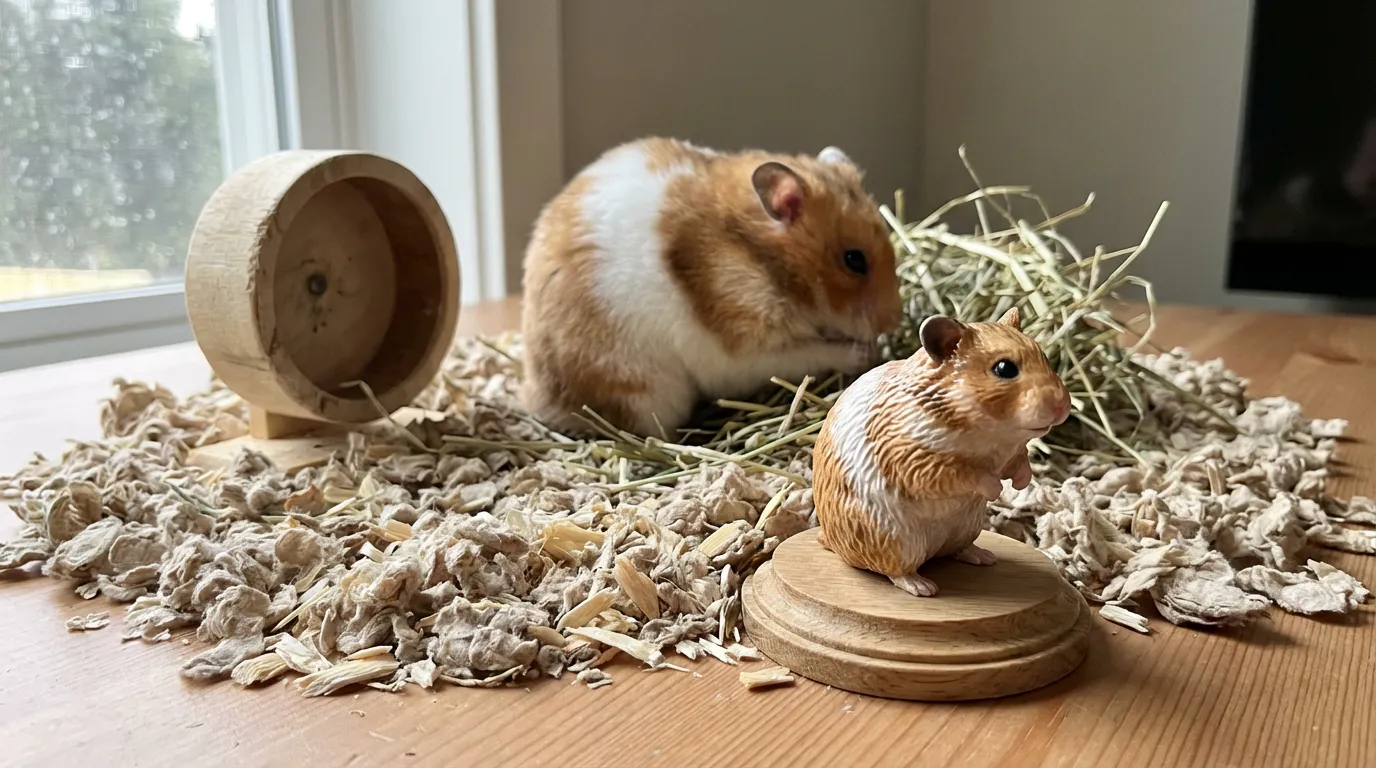
"The smallest things take up the most room in your heart." — A.A. Milne
It sits in the corner of the home office, a plastic and wire metropolis that used to be the center of your nightly routine. The silence is heavier than you expected. For two years, the background track of your work calls and late-night typing was the rhythmic whir-whir-whir of a wheel or the frantic scratching of tiny claws against plastic tubing. Now, the stillness feels almost aggressive. You look at the cage, and your chest tightens. You know you have to clean it out eventually. But dismantling that little world feels final in a way that saying goodbye at the vet didn't.
Quick Takeaways:
- There is no timeline: You do not need to clean the cage immediately. Waiting a week (or a month) is perfectly acceptable.
- The "Trash Day" Rule: Never clean the cage on the evening before trash pickup. It makes the process feel too disposable.
- Save a keepsake: Before you scrub everything down, save a specific wooden chew or order a custom figurine to hold the space on your desk where the cage used to be.
- It’s an excavation, not a chore: Treat the cleaning process as an archeological dig of their life, not a sanitation task.
The "Just a Hamster" Isolation
Here is the hardest part about losing a small pet, something we hear constantly from the families we work with: the world expects you to get over it by lunch.If you lose a dog, neighbors bring casseroles. If you lose a cat, coworkers understand why your eyes are puffy on Zoom. But when you lose a Syrian hamster? You often grieve in a silo. You might feel foolish for weeping over a creature that weighed less than a stick of butter.
Please hear us on this: Your grief is valid because your love was real.
The size of the grief corresponds to the amount of care you gave, not the size of the animal. You were that hamster’s entire universe. You controlled the sun (the lights), the rain (the water bottle), and the harvest (the food bowl). Dismantling that universe is a profound act, and feeling shattered by it doesn't make you dramatic. It makes you human.
The Timing: Why You Should Wait
Common advice says to "rip the band-aid off" and clean the cage immediately to avoid the painful reminder. We disagree.In our experience, rushing this process often leads to regret. When the grief is raw, your instinct is to erase the pain, which means erasing the trigger (the cage). But once the adrenaline fades, you might wish you had checked that little hoard of seeds one last time.
The Counterintuitive Strategy:
Cover the cage with a light blanket for a few days. It stops the visual shock of seeing an empty habitat, but it keeps the "presence" in the room while you process the initial shock.
The Trash Day Rule:
This is a specific tip that one of our long-time customers shared with us, and it’s brilliant. Do not clean the cage the night before garbage day.
If you clean the cage on a Tuesday night for a Wednesday pickup, walking that bag of bedding to the curb feels psychologically identical to throwing your pet away. It feels like disposal. Instead, clean the cage the day after trash day. Let the bag sit in your bin for a week. By the time the truck comes, the emotional link between the bedding and the pet has severed slightly, making the final departure less visceral.
The Excavation Ritual
When you are ready to clean, reframe the activity. You aren't "cleaning up a mess." You are performing a closing ceremony. You are an archaeologist uncovering the secrets of a life.Syrian hamsters are secret-keepers. As you sift through the bedding, look for their hidden treasures.
- The Hoard: You’ll likely find a stash of lab blocks or seeds buried deep in a corner or inside a hide. Acknowledge it. They worked hard for that stash. It’s evidence of their instinct and their health.
- The Nest: Observe how they constructed their sleeping area. Did they shred the toilet paper you gave them? Did they mix in the soft carefresh bedding?
- The Chews: Look at the wooden blocks or the bars of the cage. Those marks are the physical imprint of their existence.
A Micro-Story of Regret:
We once spoke to a pet parent named Sarah. She cleaned her hamster’s cage in a frenzy of tears an hour after he passed. She threw everything out. A week later, she realized she had thrown away his favorite wooden carrot—the one he’d gnawed down to a nub. She would have given anything to have that nub back to sit on her bookshelf.
Action Step: Keep one physical item that isn't the cage. A wooden bridge, a specific ceramic bowl, or even a small glass jar filled with some of their clean, unused bedding (so you can remember the smell of their habitat).
Confronting the "Relief" (The Emotion No One Admits)
We need to talk about the shadow side of caring for rodents. Hamsters can be messy. They can be smelly if you miss a spot cleaning. They are nocturnal and can be incredibly loud when you’re trying to sleep.When they pass, alongside the crushing sadness, you might feel a tiny, fleeting flicker of relief. I can sleep through the night tonight. I don't have to scrub the tubes this weekend.
And then, immediately after the relief, comes the guilt. It hits you like a physical blow. How can I be relieved? Did I not love them enough?
This is the "relief-guilt cycle," and it is entirely normal. Being relieved that the labor of caretaking has ended does not negate the love you felt for the soul you cared for. You can miss them desperately and also appreciate a full night's sleep. Allow yourself that complexity.
Transitioning the Space
Once the cage is clean, you have a physical void in your home office. The desk corner looks wrong. It looks too big.Some people rush to get another hamster to fill the cage. If that works for you, great. But for many, seeing a new hamster in "their" cage feels like a betrayal.
If you aren't ready for a new pet, but you can't stand the empty space, you need to reclaim that territory intentionally. Don't just leave it empty to gather dust.
- The Plant Method: Place a vibrant, living plant in that spot. It signifies life continuing.
- The Memorial Shrine: This is where many of our clients find comfort. Since you can't keep a large wire cage on your desk forever, replacing it with a permanent tribute helps the brain adjust.
We’ve seen beautiful setups where families take the hamster’s ceramic food bowl, fill it with polished stones, and place a custom figurine in the center. Because our artists work from your photos, they can capture that specific way your hamster sat up on its hind legs to beg for a treat, or the unique pattern of their coat. It creates a focal point for your memories that is beautiful rather than painful.
Moving Forward
The final step of the ritual is deciding what to do with the habitat.If you plan to get another hamster eventually, scrub the cage with a mixture of water and white vinegar (avoid harsh chemicals that linger). Rinse it thoroughly and dry it in the sun. Then, pack it away. Do not leave it out empty. Put it in the garage or a closet.
When you bring it back out in six months or a year, it won't be "Hammy's Cage" anymore. It will be a clean slate for a new friend.
But for today, just sit in the chair. Look at the empty corner. It’s okay to cry over a creature that fit in your pocket. It turns out, love doesn't care about square footage.
Frequently Asked Questions
How soon should I clean my hamster's cage after they die?
There is no "correct" timeline for grief. Some people find the presence of the empty cage too painful and clean it immediately. Others feel that dismantling the cage is like erasing their pet and need to wait weeks. We recommend waiting at least 48 hours. This gives the initial shock time to wear off and prevents you from throwing away items (like favorite chew toys or hides) that you might later wish you had kept as memorials.Is it normal to feel guilty about the relief of not cleaning a cage?
Yes, this is incredibly common and rarely discussed. Caretaking, even for a small pet, is work. It involves smells, messes, and noise. Feeling a sense of relief that the labor has ended is a biological response to a reduction in stress; it is not a reflection of your love. You can be heartbroken that they are gone and simultaneously relieved that you don't have to scrub a cage this Saturday. Both feelings can exist at the same time.What should I do with leftover hamster food and bedding?
If you have unopened bags or open bags that are still fresh and sanitary, please consider donating them. Local animal shelters, small animal rescues, or even school classrooms with pets often rely on donations. It can feel healing to know your pet's supplies are helping another animal in need. However, any food or bedding that was actually inside the cage at the time of passing should be discarded for hygiene reasons.How do I sanitize a hamster cage for a new pet?
If you plan to reuse the cage, you must remove all scent markers of the previous hamster to prevent stress for the new one. Disassemble the entire habitat. Wash every part with hot, soapy water to remove debris. Follow this with a pet-safe disinfectant or a solution of 50% white vinegar and 50% water. Rinse everything thoroughly—hamsters have sensitive respiratory systems—and let it dry completely in the sun if possible. Throw away any porous items like wooden chews or unsealed wooden houses, as these cannot be fully sanitized.Honor Their Memory Forever
Your pet's story deserves to be preserved in a way that captures their unique spirit. A custom PawSculpt figurine transforms your cherished memories into a timeless keepsake—every whisker, every marking, every detail that made them irreplaceable.
Free instant AI preview • 3D artist preview within 7 days • 5 free revisions