
Gotcha Day Gift Ideas for the Rescue Parrot Who Changed Your Life
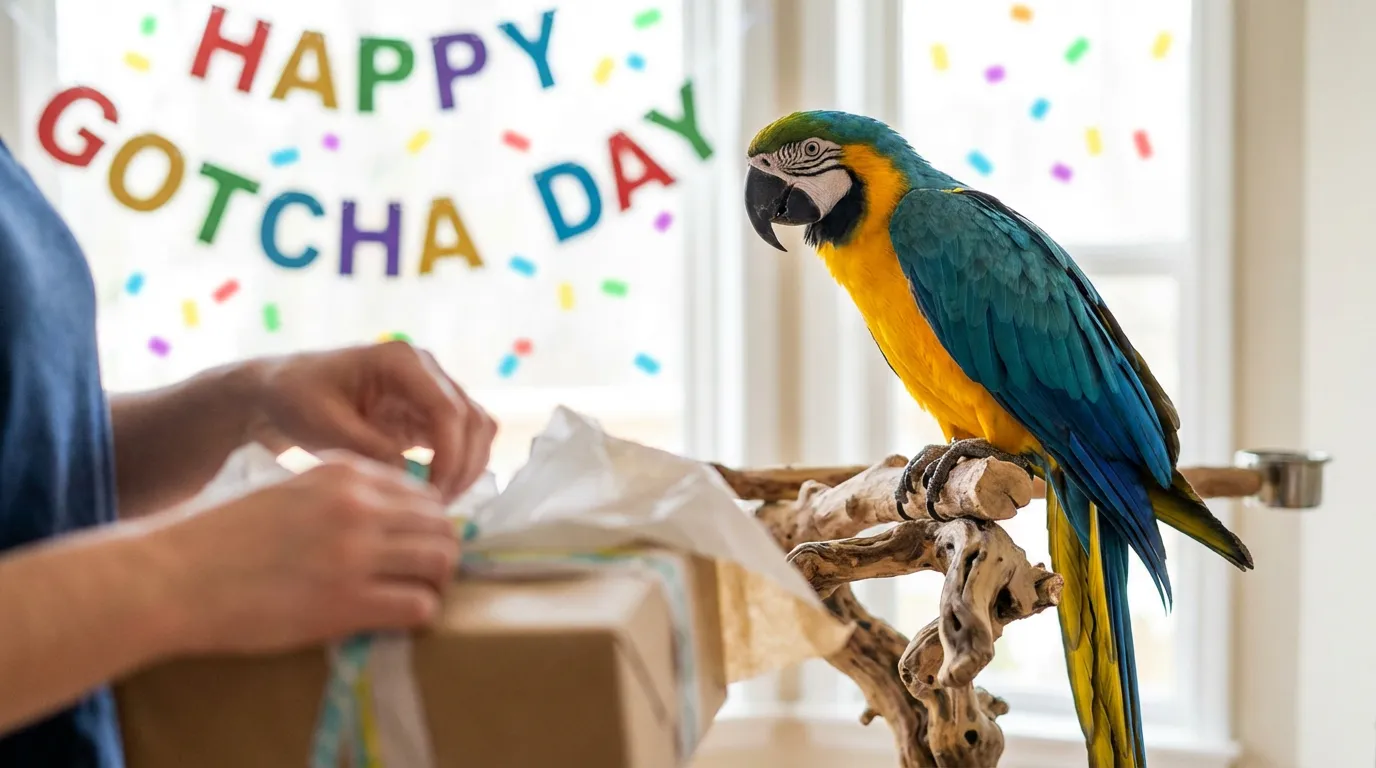
The kitchen clock read 6:00 AM, and the house was still dark, but the rhythmic clink-clink-clink of a beak tapping against stainless steel bars had already begun. Three years ago, that sound would have been a terrified shriek, or worse, the unnerving stillness of a bird too afraid to move. You remember sitting on the cold linoleum floor those first few weeks, reading a book aloud just to get him used to your voice, watching a creature who had only known neglect slowly decide to trust again. Now, that morning tapping isn't a demand—it's a greeting. It’s the sound of a bird who knows he’s home, who knows breakfast is coming, and who knows he is safe.
That transition from a frightened stranger to a feathered family member is what makes a rescue parrot’s "Gotcha Day" so profound. It’s not just an adoption anniversary; it’s a victory lap for survival.
Quick Takeaways:
- For the Destroyer: Indestructible foraging toys that channel natural shredding instincts.
- For the Foodie: Gourmet chop subscriptions or bake-at-home bird bread mixes.
- For the Sentimental Owner: Custom figurines that capture your bird’s unique markings and personality.
- For the Bonding Duo: Training clicker sets and puzzle games you solve together.
- Budget: Gifts range from DIY ($0) to premium keepsakes ($150+).
Why Parrot Gotcha Days Hit Different
Let’s be real for a second: rescuing a parrot is rarely a fairytale in the beginning. Unlike adopting a puppy who might lick your face immediately, a rescue parrot often comes with baggage packed tight. We’ve heard stories from our community of birds who wouldn't step up for six months, or who only bonded with one specific family member while screaming at everyone else.
Celebrating a Gotcha Day for a parrot is acknowledging the work. It’s celebrating the fact that you survived the biting phase, the screaming phase, and the "why did I do this?" phase. It’s honoring the complex intelligence of an animal that has the emotional capacity of a toddler and the problem-solving skills of an engineer.
Most gift guides will tell you to just buy a bag of nuts. But if you’ve spent years rehabbing a plucker or teaching a terrified Amazon to step up, you know a bag of walnuts doesn't quite cut it. You need gifts that acknowledge the journey.
The "Enrichment Heavy" Gifts (Because Boredom is the Enemy)
A bored parrot is a destructive parrot. But more than that, a bored parrot is a sad parrot. The best gifts for highly intelligent rescues are ones that make them think.
The "Work for Your Dinner" Foraging Wheel
- Best For: The African Grey or Cockatoo who solves puzzles faster than you do.
- Budget: $25 - $45
- Why it works: In the wild, parrots spend 70% of their day looking for food. In our homes, they spend 5 minutes eating from a bowl. A high-quality acrylic foraging wheel forces them to manipulate barriers to get a treat. It mimics that natural "hunt."
- Pro Tip: Start with the "easy" setting. If it's too hard initially, they might give up and get frustrated. Let them win early.
Subscription Boxes for Shredders
- Best For: The bird who thinks your baseboards are a snack.
- Budget: $30 - $50/month
- Why it works: You can never have enough wood, cardboard, and woven palm leaves. Services like Squawk Box or Polly Wanna Bird Box deliver safe, dye-free toys specifically designed to be destroyed.
Counterintuitive Insight: We often try to buy "durable" toys to save money. But for a parrot, a toy that lasts forever is a boring toy. The joy is in the destruction. If they destroy a $20 toy in an hour, that was a successful* hour.
Memorializing the Bond (Gifts for You & Them)
Sometimes, the best gift is one that solidifies the bond you’ve built. These are less about chewing and more about cherishing.
Custom 3D Replica of Your Bird
- Best For: The owner who knows every single feather pattern on their bird’s wings.
- Budget: Premium ($100+)
Why it works: Parrots are visually distinct. A generic "green parrot" statue doesn't look like your Eclectus or your* Amazon. At PawSculpt, we’ve seen an uptick in avian orders because mass-produced items just don't capture the specific way a rescue bird holds their crest or the unique coloring of a mutation.
- The Emotional Hook: It’s a way to freeze time. Birds live a long time, but they change. Having a custom figurine of your rescue from the year they finally fully trusted you is a powerful tangible memory.
The "Flock" Photo Session
- Best For: Birds who are comfortable with new objects (and cameras).
- Budget: $150 - $300 (varies by photographer)
- Why it works: Most people have a million blurry photos of their bird moving. Hiring a photographer who specializes in pets (and understands flash sensitivity) can give you that one stunning portrait that captures their soul.
- Pro Tip: Do this at home. Taking a rescue bird to a studio is often too stressful and will result in photos of a terrified bird, which is the opposite of what we want.
Edible Luxuries: The Way to a Beak’s Heart
Food is love, especially for a creature that might have been malnourished in a previous home.
Warm Mash or "Birdy Bread" Kits
- Best For: The comfort eater or the bird transitioning off a seed diet.
- Budget: $10 - $20
- Why it works: Warm, soft food is incredibly comforting to parrots—it reminds them of being fed as chicks. Baking a loaf of spicy pepper bread or cooking up a warm grain mash fills the kitchen with smells that signal "good things are happening."
- Why it matters: Sharing a warm meal (you eating your dinner, them eating their warm mash) is a primal flock activity. It deepens the bond.
Exotic Fruit Sampler
- Best For: The adventurous eater.
- Budget: $30 - $60
- Why it works: Go to an Asian market or specialty grocer and find dragon fruit, horned melon, or fresh figs (check safety lists first, of course). Watching your bird explore a texture they’ve never seen before is hilarious and enriching.
The Gift of Environment: Upgrading the Habitat
If your rescue came from a small cage, they likely appreciate space more than the average bird.
The "Outdoor" Aviary or Travel Backpack
- Best For: The bird who stares longingly out the window.
- Budget: $100 - $500+
- Why it works: Sunlight is vital for feather health and mood. A secure travel backpack (like the Pak-o-Bird) allows your rescue to safely explore the world with you.
- Safety Note: Harness training is great, but for many older rescues, it’s traumatic. A backpack or a secure outdoor aviary offers safety without the invasive handling of a harness.
A Java Wood Tree Stand
- Best For: Getting the bird out of the cage and into the living room.
- Budget: $150 - $400
- Why it works: These are sandblasted coffee trees. The wood is incredibly hard (great for beaks) and varies in diameter, which is excellent for foot health.
- The "So What?": It gives them a designated "place" in the family room. They aren't just visiting your space; they have their own furniture. It integrates them into the flock dynamic.
What We Often Get Wrong About Rescue Birds
In our years creating custom pet keepsakes, we’ve chatted with thousands of owners, and a common theme emerges with bird parents: the guilt of "not doing enough."
We see owners buying $500 worth of toys that the bird ignores, then feeling like failures. Here is the counterintuitive truth: Agency is the best gift.
For a rescue bird who likely had zero control over their life for years, the ability to choose is a luxury.
- Give them two treats and let them pick one.
- Open the cage door and let them choose to come out, rather than forcing them.
- Let them choose to destroy the expensive toy or the cardboard box it came in.
The gift isn't really the object; it's the autonomy.
Celebrating the "Un-Instagrammable" Moments
When you look back at your journey with your rescue parrot, the moments that stick probably aren't the ones that look perfect on social media. It’s not the perfectly posed photo.
It’s the time you were crying over a bad day, and your bird quietly climbed down and put a foot on your hand. It’s the first time they fell asleep with their head tucked into their wing while you were in the room—the ultimate sign of vulnerability.
Gotcha Day is about honoring that trust. Whether you choose a high-tech foraging toy, a delicious feast, or a lifelike replica to sit on your desk while you work, the message is the same: "I see you. I value you. And I’m glad you’re here."
So, go ahead and make a big deal out of it. Bake the bread. Buy the loud toy. Sing "Happy Gotcha Day" off-key. Your bird might look at you like you’ve lost your mind, but deep down, in that complex little dinosaur brain, they know exactly what it means. They know they are home.
Frequently Asked Questions
What is the best Gotcha Day gift for a parrot who is afraid of new toys?
For phobic birds, the "bigger is better" rule does not apply. A large, colorful new object can trigger a fear response. Instead, focus on edible treats or toys made of materials they already trust (like paper or cardboard). You can also introduce the gift slowly—place it across the room for a few days, then on the table near the cage, letting the bird acclimate to its presence before offering it directly.How can I celebrate my parrot's adoption anniversary if I don't know the exact date?
This is very common with rescues! Many owners simply choose the day they brought the bird home. If you don't remember that, pick a date that feels significant—like the first time they stepped up for you, or simply the first day of the adoption month. The specific calendar date matters far less than the tradition of celebrating how far you've come together.Are custom figurines safe to put inside a parrot's cage?
No, absolutely not. Custom figurines are keepsakes for human enjoyment, not bird toys. Even small parrots have incredibly strong beak pressure that can crush resin, clay, or plastic. Ingesting these materials can be fatal. These artistic tributes should be kept on a shelf, desk, or mantelpiece—safely out of reach of curious beaks.What treats are safe for a parrot's special occasion?
While every species has different dietary needs, generally safe "high-value" treats include nuts in the shell (walnuts, almonds), warm cooked grains like quinoa or oatmeal, plain scrambled eggs (cooked with no oil or salt), or fresh tropical fruits like papaya, mango, or pomegranate seeds. Always avoid avocado, chocolate, caffeine, onions, and anything high in salt or sugar.Give a Gift They'll Treasure Forever
Looking for something truly meaningful? A custom PawSculpt figurine captures the personality and spirit of their beloved pet in stunning detail—a gift that says "I understand how much they mean to you."
Free instant AI preview • 3D artist preview within 7 days • 5 free revisions