A Graduation Gift That Helps a New Dog Dad Remember His Beagle's Old Habits
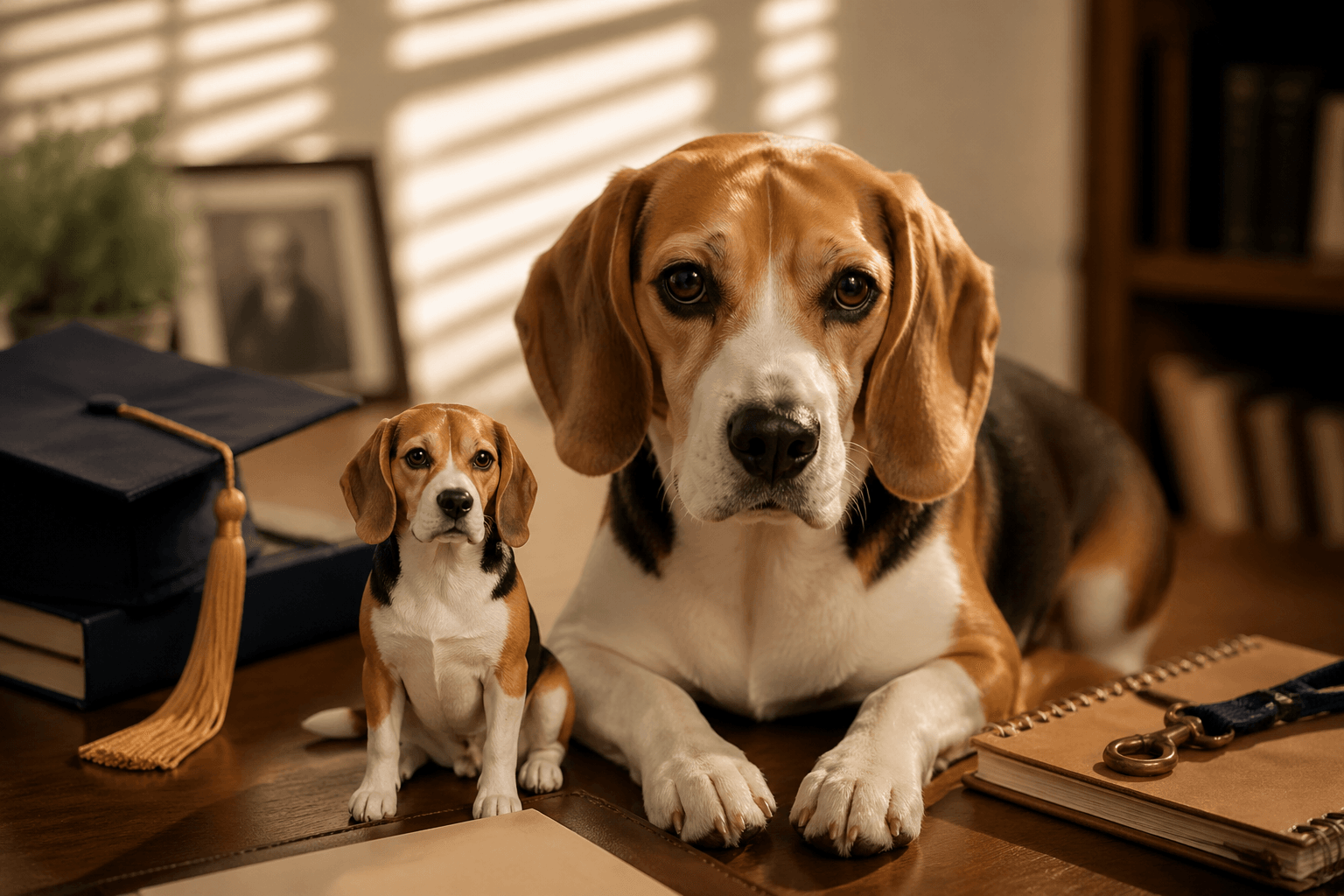
“Dogs do speak, but only to those who know how to listen.” — Orhan Pamuk. On a damp walking trail, with wet oak leaves darkening the path, the best graduation gift for dog dad may be the one that remembers the beagle habit nobody else noticed: the sideways glance before every squirrel chase.
Quick Takeaways
- Choose a gift that preserves behavior, not just appearance — old habits are what grief misses first.
- Ask for three sensory memories — scent, sound, and routine make a keepsake more personal.
- Match the gift to his life stage — graduation gifts should honor both change and continuity.
- If you want something tangible, explore custom pet figurines at PawSculpt that preserve markings and expression.
- Don’t default to funny dog merch — the most meaningful gifts often feel quietly specific.
Why a Graduation Gift for Dog Dad Should Remember Habit, Not Just Milestone
Graduation gifts are usually built around momentum. A new watch. A leather portfolio. A travel bag. The message is clear: move forward. But a young man leaving one chapter of life doesn’t only need propulsion. He also needs continuity.
That matters even more if the dog who shaped his daily life is aging, gone, or no longer part of his everyday routine.
We’ve seen this again and again at PawSculpt. Families come to us thinking they need to preserve a face—the blaze on the muzzle, the white paws, the long velvet ears. Then, in the details they share, another truth emerges. What they’re really trying to save is a pattern of life. The way the beagle circled twice before lying on the laundry pile. The way he pawed the pantry at 6:12 every morning. The way his coat held the faint smell of sun-warmed grass and that unmistakable hound musk after a walk.
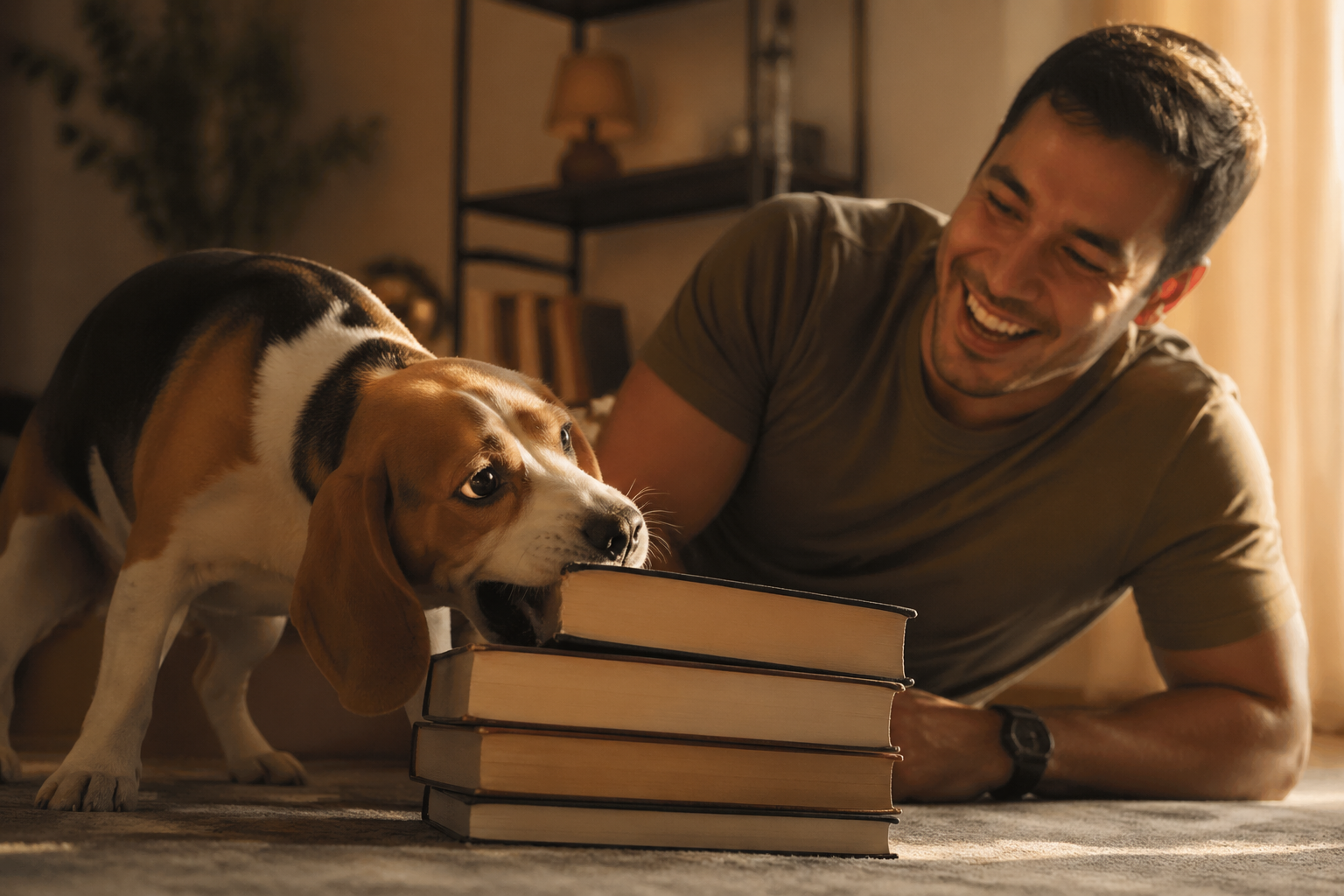
One of our customers, Marina, ordered a graduation gift for her younger brother, Eli, right after his college commencement. Their beagle, Jasper, had passed the previous winter. Eli was doing what graduates are supposed to do—sending résumés, touring apartments, sounding optimistic on the phone. But Marina noticed what he kept mentioning wasn’t Jasper’s death in grand terms. It was habit. He missed stepping over Jasper in the hallway. He missed hearing tags knock against the water bowl. He missed that slightly earthy, corn-chip scent on the dog bed near the back door after rain.
That is the overlooked angle in pet gifting: people rarely ache for the abstract pet; they ache for the interruption of routine.
And that changes what makes a gift meaningful.
The mistake most people make
The mistake most people make is choosing a gift that says, “Here is a dog item,” rather than, “Here is your dog’s way of being in the world.”
Those are very different things.
A mug with a beagle silhouette may be pleasant. A framed quote may be kind. But if you want the gift to land—to really land—you need specificity. You need the old habits. You need the private language between dog and person.
That’s especially true with beagles. The American Kennel Club’s breed guide for Beagles notes what owners know in their bones: beagles are expressive, scent-driven, vocal, and deeply routine-oriented. Their personalities are not generic sweetness. They are made of rituals. Nose to ground. Pause at the porch. Sudden pull toward rabbit scent. A dramatic flop into a favorite blanket that smells like home.
So if you’re looking for a Beagle memory gift, don’t just ask what the dog looked like. Ask:
- What did he always do before meals?
- Where did he sleep when he wanted comfort?
- What sound announced him before you saw him?
- What did his blanket, collar, or ears smell like after a walk?
- Which habit used to annoy everyone—and now breaks their heart?
That last question matters more than people expect.
Because grief is strange. It often clings to the mildly inconvenient things. The scratch at the door. The stubborn pause halfway down the sidewalk. The selective hearing. The insistence on sniffing one exact patch of wet grass every single day.
"What you miss first is rarely the face. It’s the rhythm."
Why graduation intensifies memory
Graduation is a threshold ritual. Anthropologists would call it a rite of passage—a formal crossing from one identity into another. And every threshold sharpens absence.
A new apartment can make an old dog habit echo louder than a familiar house ever did. In childhood homes, routines become invisible because they’re constant. In new spaces, their absence becomes architectural. No nails tapping behind you in the kitchen. No warm body by the backpack. No hound smell lingering on a fleece throw after a rainy walk.
We’ve watched customers discover this within weeks of a move. A recent graduate unpacks books, chargers, laundry detergent, framed photos. Everything functional arrives. But what feels missing is not utility. It’s a witness. The dog who knew him before ambition had language. Before professional titles. Before polished answers.
And that’s why a good graduation gift for a dog dad can do something unusual: it can honor achievement without pretending that growth means detachment.
That’s not sentimentality. It’s emotional accuracy.
The Best Beagle Memory Gift Ideas, Ranked by What They Actually Preserve
Not all gifts preserve the same thing. Some hold image. Some hold story. Some hold touch. The best choice depends on what kind of remembering he needs.
Below is a practical comparison, because emotion is easier to navigate when you can see the options clearly.
| Gift Type | Budget | Best For | What It Preserves Best | Possible Limitation |
|---|---|---|---|---|
| Custom pet figurine | $$–$$$ | Graduates who want a display piece with lasting presence | Expression, markings, posture, visual personality | Requires strong reference photos |
| Photo book with captions | $–$$ | Story-driven recipients | Timeline, anecdotes, family context | Can stay closed on a shelf |
| Framed collar + photo | $–$$ | Memorial-focused gifts | Authentic object, sentimental symbolism | Preserves object more than habit |
| Custom illustration | $$–$$$ | Art-loving recipients | Mood, stylized interpretation | Less literal detail than 3D keepsakes |
| Voice-note compilation | Free–$ | Families with lots of videos | Bark, howl, spoken memories | Intangible; harder to display daily |
Custom pet figurine
Who it’s for: The graduate who wants something tactile and visible—not tucked in a drawer or buried on a phone.
Budget: $$–$$$
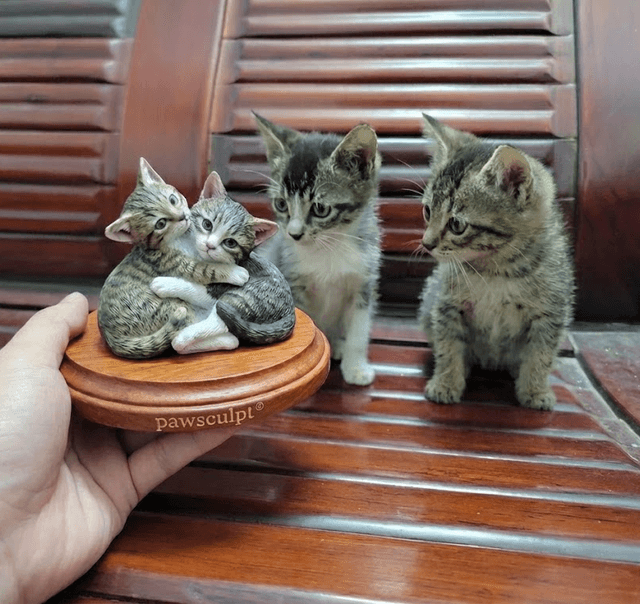
Why it stands out: A custom pet figurine can hold a dog’s physicality in a way flat images can’t. For a beagle, that matters. The slope of the ears, the alert lean of the chest, the asymmetry of a blaze, the slight expectation in the eyes—these details often carry more emotional truth than a generic memorial phrase. At PawSculpt, the work is digitally sculpted by master 3D artists, then precision 3D printed in full color, which means the pet’s markings are reproduced directly in full-color resin rather than applied afterward. The result has vivid color, fine print texture, and a protected surface sheen from a clear coat.
There’s also a counterintuitive benefit here: displayed objects create repeated, low-intensity moments of connection. That can help more than “special occasion” keepsakes because healing often happens through ordinary glances, not ceremonies.
Pro tip: Choose photos that show the dog’s default expression, not just the cutest one.
Photo book built around habits
Who it’s for: The dog dad who narrates stories well and likes to revisit context.
Budget: $–$$
Why it stands out: Most photo books are chronological. That’s fine, but honestly, our favorite version is thematic. Build sections like “His Doorway Post,” “Snack Patrol,” “Rainy Porch Face,” or “The Couch Corner He Claimed.” That structure preserves behavioral identity, which is often what memory loses first under stress.
Add captions that record the small things no algorithm can infer: “Always sneezed once before barking,” “Smelled like cedar and old blanket after daycare,” “Wouldn’t eat until someone stood nearby.” Those are the details a graduate will revisit at 11:40 p.m. in a new apartment.
Pro tip: Keep it under 40 pages unless you know he loves long albums—shorter books get reopened more often.
Framed collar with a written note
Who it’s for: Someone in fresh grief who needs authenticity over artistry.
Budget: $–$$
Why it stands out: There is power in the original object. The worn collar hole. The softened leather. The metal tag rubbed smooth where it hit the buckle. These signs of use carry time inside them. They are almost archaeological.
But here’s the part many guides skip: the note matters more than the frame. Not a poem from the internet. A note that names three habits precisely. “You always knew he needed out before anyone else did.” “He waited outside your room when you were sick.” “He stole your sock, not anyone else’s.” Specificity is dignity.
Pro tip: If the collar still holds scent, seal it in an archival bag first before framing to reduce further loss.
Custom illustration from a familiar scene
Who it’s for: A design-conscious graduate furnishing a new place.
Budget: $$–$$$
Why it stands out: Illustrations can capture atmosphere better than exact realism. A beagle on a porch with summer light. A dog on a trail under bare November branches. A rain-dark doorway with muddy paws. If the memory is place-bound, illustration can be deeply effective.
Still, stylization is a tradeoff. Some recipients want poetry. Others want likeness. Know which one he values.
Pro tip: Commission the scene from his point of view—not from a posed studio angle.
Voice-note and video memory archive
Who it’s for: The emotionally practical person who doesn’t want more objects.
Budget: Free–$
Why it stands out: Sound goes where image can’t. The little throat noise before a beagle howl. The rhythm of nails on hardwood. The snuffle against a coat pocket. We’ve seen families underestimate how powerful audio can be until they hear a familiar bark after months of silence.
Still, sound alone can be too fleeting for some people. It’s often best as a companion gift, not the only one.
Pro tip: Label files by habit, not date—“Breakfast whine,” “Porch bark,” “Post-walk snore.”
How to Choose a Graduation Gift for Dog Dad Based on the Habit He Misses
This is where the article becomes practical. Because the right gift is not just about budget or aesthetics. It’s about which absence is loudest.
Marina figured this out with her brother after a simple phone call. She asked, “What do you miss most about Jasper?” Eli didn’t say, “Everything.” He said, “The way he used to stand in the kitchen doorway and pretend not to beg.” That answer told her more than any generic sympathy language could.
If he misses the dog’s presence in a room
Choose something visible and dimensional.
A figurine on a desk, bookshelf, or entry table works because it restores a focal point. Not in a literal sense, of course. But the eye wants a place to land. In grief, the room can feel structurally wrong. A tangible object helps recompose the space.
This is one reason people are increasingly drawn to 3D pet sculptures rather than purely flat memorial items. They don’t just remind you of the pet. They occupy space the way memory does.
If he misses routine
Choose a gift that records sequence.
A habit-based journal, a photo book arranged by daily rituals, or a set of short family notes can preserve timing: morning scratch at the door, noon nap patch, evening leash dance. Routine is deeply regulating. Losing it can unsettle mood more than people expect.
Research on the human-animal bond from institutions like the NIH has long supported what pet owners know intuitively: animals help structure emotional life. Remove the animal, and the clock of the day changes.
That’s why preserving routine isn’t indulgent. It’s stabilizing.
If he misses scent
This one is overlooked because scent is difficult to package—and because people are shy about talking about it. But smell may be the most potent trigger of memory (neurologically, it has a direct route into emotion and recall). The faint sweetness of shampoo on the neck. The dusty warmth of a dog bed. Rain on the porch boards mixed with hound fur.
You cannot fully preserve scent forever. We’ll be honest about that. Fabric loses it. Air changes it. Time takes it.
But you can document scent in language. And that’s not trivial. Ask family members to describe the dog’s smell in one sentence each. The answers are often astonishingly intimate:
- “Like warm toast and fallen leaves.”
- “Like the backseat after a muddy park trip.”
- “Like old flannel and sunshine.”
- “Like grass, kibble, and sleep.”
Put those lines into a card, a book, or the description that accompanies the gift. Words won’t replicate scent. But they can preserve its texture in memory.
"Memory lives in the senses before it lives in language."
If he misses the dog’s comic flaws
Do not sanitize the dog into sainthood.
This is our strongest opinion in the article, and we mean it. The funniest, most exasperating habits are often the most beloved later. Counter-surfing. Selective deafness. Squirrel hysteria. The beagle’s dramatic refusal to come inside when the grass smelled too interesting.
A serious gift can still include mischief. In fact, it should.
Because memory without flaws becomes generic. And generic memory doesn’t comfort. It merely decorates.
A simple matching guide
Use this table if you’re deciding quickly and want to choose based on personality rather than product type.
| If he’s this kind of dog dad | He’ll likely love | Why it works |
|---|---|---|
| Quiet, sentimental, private | Custom figurine or framed collar | Lets him connect without having to explain it |
| Storyteller, nostalgic, family-oriented | Habit-based photo book | Gives him narrative, not just image |
| Minimalist, practical | Audio archive or one display piece | Meaningful without visual clutter |
| Design-conscious, moving into a new place | Illustration or sculptural keepsake | Blends memory with home-making |
| Freshly grieving and overwhelmed | Simple note + one strong object | Too many pieces can feel emotionally noisy |
The Overlooked Art of Preserving a Beagle’s “Old Habits”
A beagle is not remembered only by color pattern. A beagle is remembered by method.
How he investigated the hem of a grocery bag.
How he delayed every walk by seven minutes because one patch of grass contained the morning paper of the neighborhood.
How he entered a room already sniffing, as if facts lived at floor level.
That’s why a true Beagle memory gift should gather not just images, but evidence of ritual.
What to ask family members before choosing the gift
In our years working with pet families, we’ve found that the best gifts start with five short questions. Ask siblings, parents, roommates, or anyone who lived with the dog. Tell them to answer quickly—overthinking makes people generic.
- What did he do every day at nearly the same time?
- What smell do you associate with him most?
- What tiny behavior would a stranger never know?
- Which habit used to annoy you and now feels precious?
- What expression was most “him”?
You can gather these in a group text in under 24 hours.
And the answers will do something remarkable. They’ll reveal that memory is communal but uneven. One person remembers the porch. Another remembers the car rides. Another remembers the sound of the beagle shaking his ears so hard his tags clicked against the crate.
That unevenness is not a problem. It’s the portrait.
Micro-story: why one angle mattered more than twenty photos
One order that stuck with us came from a family whose beagle had one odd, unmistakable habit: before taking a treat, he always looked to the left—as if checking for legal counsel. They had dozens of clear photos. Beautiful ones. But the image they chose for the final keepsake wasn’t the sharpest. It was the one with that familiar, sideways expression.
That’s what made the piece breathe.
Not perfection. Recognition.
Turning habit into gift language
If you’re giving the present at a graduation dinner or mailing it after the ceremony, include wording that names the old habits directly. Here are stronger examples than “He’ll always be with you”:
- “For the mornings he waited by your door before you woke up.”
- “For the beagle stare that meant he heard a snack wrapper from two rooms away.”
- “For the trail walks he slowed down, one scent at a time.”
- “For the old habits that made home feel like home.”
That last one often resonates with graduates because they are, by definition, renegotiating the meaning of home.
Why preserving habit can help more than preserving “best moments”
This is the counterintuitive insight many people miss: peak moments are not always the strongest anchors.
You might assume the most healing memory would be a birthday, a holiday, a final goodbye, or a spectacular adventure. Sometimes, yes. But often the more stabilizing memories are plain ones. Tuesday night on the couch. Damp fur after a routine walk. The smell of fleece and rain. A beagle asleep with one ear folded inside out.
Why? Because ordinary repetition forms attachment. The nervous system trusts what repeats. So when you preserve routine, you preserve something deeper than drama. You preserve the texture of belonging.
"The best gifts don't just preserve a face—they preserve the private rituals that made a pet recognizable from across the room."
— The PawSculpt Team
What Makes a Custom Pet Figurine Feel True Instead of Generic
Not every keepsake succeeds. Some are technically competent and emotionally flat. Others are less flashy but somehow exact. The difference is usually not price or size. It’s truthfulness.
And truthfulness comes from details chosen well.
Start with the right photos
If you’re considering a figurine, whether from PawSculpt or another maker, image quality matters—but not in the way people assume. High resolution helps, yes. But the more important factor is representative accuracy.
For a beagle, useful photos usually include:
- A clear front view at eye level
- A side profile showing ear length and body posture
- Natural lighting that reveals true coat color
- One image showing the dog’s normal expression, not just excitement
- Optional context shots of favorite bandana, blanket, or stance
This quick table shows what tends to work best.
| Photo Type | Why It Matters | Best Practice | Avoid |
|---|---|---|---|
| Front view | Captures facial symmetry and expression | Eye-level, natural light | Wide-angle distortion |
| Side view | Shows muzzle length, ear fall, posture | Full body if possible | Cropped body shots |
| Top/three-quarter view | Helps with head shape and markings | Neutral background | Heavy shadows |
| Context photo | Reveals personality and stance | Favorite chair, porch, trail | Busy backgrounds |
| Close-up detail | Useful for unique markings | Focus on blaze, paws, collar | Filters that alter color |
Expression is more important than “smile”
People often choose the happiest-looking image. We understand why. But a dog’s “happy face” is not always the most accurate face. Some beagles look most themselves when mildly suspicious, mildly hopeful, or fully intent on a scent just out of frame.
That’s the face you want.
The point is not to manufacture cheer. It is to capture recognition.
Material and process matter because permanence matters
Here’s where clarity is important. PawSculpt creates figurines using advanced full-color 3D printing technology in full-color resin, with color printed directly into the material voxel by voxel. That means the markings are part of the object itself—not a superficial color layer. After printing, a protective clear coat is applied for durability and sheen.
Why does this matter emotionally? Because material honesty matters. A keepsake should not pretend to be something it isn’t. We actually think the subtle fine grain of a quality 3D print can be beautiful. It reads as authentic process, not fake perfection.
Look, grief doesn’t need an object that feels mass-generic. It needs one that feels intentionally made.
The role of posture
A surprising number of people focus only on the face. But posture may be what triggers recognition fastest. A beagle leaning forward with the chest slightly engaged. A sit with asymmetrical paws. A standing pose that suggests alertness rather than formality.
Marina figured this out during her brother’s gift process. At first she chose the classic portrait image of Jasper looking straight at the camera. Then she changed course. The better image showed Jasper angled toward the back door, nose slightly lifted, as if he had just caught the scent of rain. Eli’s reaction, when he opened the gift, centered on posture first: “That’s exactly how he used to stand before asking out.”
That sentence tells you everything.
Pair the object with language
Even the best keepsake lands more deeply when it arrives with a sentence that guides the eye. You are not explaining the gift. You are naming the memory it holds.
Good examples:
- “This is the look he gave before checking the yard after rain.”
- “We wanted to keep the posture that meant he was about to follow his nose.”
- “This captures the version of him you knew in ordinary life.”
If you decide to explore memorial keepsakes for pet families, this is the part many people skip—and the part they later say mattered most.
Practical Gift Ideas Beyond the Keepsake: How to Build a Complete Graduation Moment
A single object can be enough. But sometimes the most meaningful graduation gift is a small constellation of thoughtful pieces, each doing a different job.
One preserves likeness. One preserves story. One helps the transition into adult life.
That combination is especially useful if the graduate is moving to a new city, starting work, or leaving the family home where the dog once shaped the daily atmosphere.
Item bundle 1: Figurine + short letter + one candid print
Who it’s for: The sentimental graduate who doesn’t want an overwhelming package.
Budget: $$–$$$
Why it stands out: This trio works because each piece answers a different emotional need. The figurine gives presence. The letter gives interpretation. The candid print gives movement and context. Together they create a gift that feels complete without becoming cluttered.
The letter should be no more than 200 words. Long letters often become emotionally diffuse. Three paragraphs is enough: one habit, one memory, one wish for the future.
Pro tip: Print the photo matte, not glossy—matte usually feels warmer and reduces glare in apartments with strong window light.
Item bundle 2: New-home kit with dog memory thread
Who it’s for: A graduate moving into a first apartment or shared house.
Budget: $$–$$$
Why it stands out: Include one practical item (throw blanket, key tray, mug) and one memory item connected to the dog. This prevents the gift from feeling purely elegiac. It says, “Your past belongs in your future.” That’s powerful at transition points.
We’re not huge fans of novelty dog décor here. Better to choose a neutral object and let the pet memory piece carry the emotional weight.
Pro tip: Add a note that ties the two items together: “For your new place—and the old companionship that taught you what home feels like.”
Item bundle 3: Family memory archive
Who it’s for: The graduate whose family expresses love through stories.
Budget: $–$$
Why it stands out: Ask five people for one paragraph each about the beagle’s old habits. Compile them in a simple booklet or folder. This kind of gift often becomes more valuable over time because it contains multiple witnesses, not just one perspective.
And here’s the overlooked part: ask contributors to include one smell, one sound, and one repeated action. Those constraints make the writing vivid.
Pro tip: Don’t edit every sentence into perfection. Leave a little personality in the phrasing.
Item bundle 4: Custom figurine + audio QR card
Who it’s for: Someone who misses both sight and sound.
Budget: $$–$$$
Why it stands out: Pair a tangible display piece with a small printed card linking to a private audio file or family video folder. This creates a layered memory experience: visual recognition in daily life, sound on the days he wants to feel closer.
A lot of gift guides miss this point, but multi-sensory remembrance often feels more grounding than a single-format gift. Not because bigger is better. Because grief is sensory.
Pro tip: Keep the audio short—30 to 90 seconds is usually enough to be moving without becoming emotionally overwhelming.
A simple budget breakdown
If you’re choosing among options, this table can help you decide what kind of memory you want to prioritize.
| Budget Level | Best Gift Option | Preserves | Best Occasion Fit |
|---|---|---|---|
| $ | Written memory set + printed photo | Story, habit, voice | Low-key graduation celebration |
| $$ | Framed collar or photo book | Object history, routine | Family dinner or mailed gift |
| $$–$$$ | Custom illustration or figurine | Likeness, expression, presence | Milestone graduation gift |
| Mixed budget | Practical new-home item + memory piece | Transition + remembrance | Move-out or first apartment |
What to Say When You Give a Beagle Memory Gift to a New Dog Dad
The gift matters. The language around it matters too.
People often become stiff around pet memory, especially during happy occasions like graduation. They’re afraid of “bringing down the mood.” So they either avoid mentioning the dog altogether or speak in clichés.
Neither helps.
The better approach is to name joy and grief in the same sentence. That’s not awkward. That’s adulthood.
What actually helps more than “He’d be proud”
We understand the instinct behind “He’d be proud.” But animals don’t function in memory the same way human elders do. For many recipients, that phrase feels imported—too polished, too humanized.
What tends to work better is language tied to lived reality:
- “He knew your routines better than anyone.”
- “He was there for the version of you that existed before all this.”
- “You grew up with his habits woven into your days.”
- “This felt like the right way to bring him with you into what’s next.”
That last phrase is especially useful for a graduation gift for dog dad because it frames remembrance as accompaniment, not backwardness.
A script you can adapt
If you want a practical example, here’s one that works in a card, toast, or quiet handoff:
“Graduation marks a beginning, but beginnings can make old routines feel sharper. We wanted to give you something that remembers Jasper the way you knew him—not only how he looked, but how he stood in the doorway, how he tracked every scent on a walk, how he made ordinary days feel structured and familiar.”
- Validates the life transition.
- Makes room for memory.
- Names habits specifically.
That’s why it lands.
If the dog is still alive, but aging
This article also applies if the beagle hasn’t passed and you’re giving a gift that honors a shared history while the dog is still here. In some ways, this is even more powerful.
Because remembrance is not only for after.
A gift that captures old habits while the dog still performs them can become a celebration rather than a rescue mission. The graduate can look at it and think, yes, this is him right now. This is the porch pause. This is the snack radar. This is the exact expression before he pretends not to beg.
Honestly, we wish more people would do this earlier.
Waiting until loss can make gift decisions rushed, guilty, and emotionally foggy. Preserving now allows for clarity.
How PawSculpt Fits Into a Thoughtful Gift Strategy Without Becoming the Whole Story
We’ll be direct: PawSculpt is not the answer to every gift situation.
If the recipient hates display objects, choose something else. If photos are poor and no one can locate accurate references, a written memory archive may be better. If grief is extremely fresh—days, not weeks—simplicity may be kinder than a major reveal.
But for many graduates, especially those building a first adult space, a figurine can be uniquely effective because it combines visual detail, permanence, and presence.
Our team has learned from thousands of pet families that the strongest orders often arrive with unusual reference notes. Not “brown eyes, tri-color coat.” More like: “Please capture the skeptical expression before he accepted a treat.” Or: “His ears always looked extra long when he’d just come in from rain.” Or: “He leaned forward when he smelled the trail before anyone else did.”
Those notes matter because digital craftsmanship is interpretive. A great likeness is not only about anatomy. It is about emphasis.
At PawSculpt, pieces are hand-modeled digitally with care, then brought to life through full-color 3D printing. That process suits pet memory especially well because color information—the saddle pattern, the white-tipped paws, the warm variation around the muzzle—is built into the resin itself. The final clear coat protects the surface and adds a finished sheen while keeping the natural texture of the print.
For graduates, we often think the best placement is not a central memorial shrine but an integrated living space:
- on a bookshelf near school photos,
- on a desk beside the first job offer letter,
- by an entryway tray in a new apartment,
- or on a nightstand where quiet routines still matter.
That placement says something subtle and important. The dog is not locked in the past. The dog remains part of the emotional architecture of adulthood.
And that, really, is the point.
"A meaningful gift doesn’t freeze love in time. It lets love travel."
A Thoughtful Process for Choosing the Right Beagle Memory Gift in 48 Hours
Sometimes you don’t have weeks to plan. Graduation invitations arrive. Shipping windows get tight. Family opinions multiply. So here’s a fast, sane framework.
Step 1: Identify the dominant memory type
Choose one:
- Visual — “I miss seeing him in the room.”
- Routine — “I miss what he did every day.”
- Sensory — “I miss his smell, sounds, and presence.”
- Narrative — “I miss the stories he gave us.”
This prevents scattershot buying.
Step 2: Gather three “proof details”
Ask for:
- one habit,
- one sensory memory,
- one phrase the family always used about him.
Example:
- Habit: waited by the door at 7 a.m.
- Sensory memory: smelled like wet leaves after walks
- Family phrase: “He’s conducting perimeter checks”
Now you have material specific enough to make any gift better.
Step 3: Choose the format that matches his temperament
Not yours. His.
If he is emotionally private, don’t give a giant public display piece at a loud party. If he’s expressive and nostalgic, don’t reduce the dog to a minimalist token with no words. Fit matters.
Step 4: Add one sentence of interpretation
This is the bridge between object and meaning.
Examples:
- “We chose this because it captures the posture you knew before every walk.”
- “This keeps one of his ordinary habits close while everything else changes.”
- “We didn’t want graduation to erase the daily life that got you here.”
That last one is especially strong. Because it tells the truth.
Step 5: Leave room for his reaction
Do not force a performance.
Some graduates will cry immediately. Some will laugh. Some will go quiet and text you the next morning. All of those responses are normal. Grief and gratitude don’t always arrive on schedule.
If you’re worried about emotional intensity, give the gift in a quieter moment—after the ceremony, during breakfast, on a walk, in the car, at the new apartment door. Transitional spaces often invite more honest reactions than banquet tables do.
Closing the Circle: What a Good Gift Really Gives
On that damp trail, what lingers is not only the sight of a dog ahead of you. It is the small, practiced pause—the nose lifted, the leash tightening, the whole body reading a world humans can only partly enter.
That is what people mean when they say they miss a dog’s old habits. They miss a way of being accompanied.
A graduation gift can acknowledge achievement, yes. But the best one does something quieter and more durable. It tells a young man that growing up does not require erasing the creature who taught him daily loyalty, rhythm, and attention. It tells him that memory belongs in forward motion.
So here’s the practical next step: write down three habits today before you buy anything. One routine. One sensory detail. One expression. If you can name those clearly, the right gift usually reveals itself.
And if you choose a keepsake—whether it’s a letter, a photo archive, or a figurine—choose the version that remembers the beagle not as an icon, but as a participant in ordinary life.
Because in the end, love is often recognized not by its grand speeches, but by the old familiar pause at the edge of the trail.
Frequently Asked Questions
What makes a good graduation gift for a dog dad?
A good graduation gift for dog dad feels personal enough that no one else could have received it. That usually means it preserves a specific relationship detail—an old routine, a favorite trail habit, a familiar expression—instead of relying on generic dog-themed humor or broad sentimental language.
Is a custom pet figurine a good Beagle memory gift?
Yes—especially for beagles, whose personality often lives in posture, ears, alertness, and expression as much as in color. A figurine can be a strong Beagle memory gift when it’s based on accurate photos and paired with language that names the habit or moment it represents.
What photos work best for a custom dog figurine?
Use clear, naturally lit photos that show true coat color and the dog’s normal expression. Front and side angles are most useful, and one full-body shot helps capture stance and posture. If you’re considering custom pet figurines, photos that feel “most like him” usually matter more than photos that feel formally perfect.
Should I give a pet memory gift at a happy event like graduation?
Yes, if you present it with care. Graduation is a transition, and transitions often make important bonds feel more vivid. The gift doesn’t have to darken the celebration; it can deepen it by honoring the life that shaped the graduate before this next chapter began.
What if the dog is still alive but getting older?
That may actually be the ideal moment. Preserving a dog’s markings, posture, and old habits while they are still part of daily life often leads to a more joyful and less pressured experience. And honestly, the photos are usually easier to gather while everyone is calm.
Ready to Celebrate Your Pet?
Every pet has a story worth preserving. Whether you're honoring a beloved companion who's crossed the rainbow bridge or celebrating your furry friend's unique personality, a custom PawSculpt figurine captures those details that make your pet one-of-a-kind. For a truly meaningful graduation gift for dog dad, the right keepsake can carry an old beagle habit gently into a brand-new chapter.
Create Your Custom Pet Figurine →
Visit pawsculpt.com to learn more about our process and guarantees