
Divorce and Pet Loss: Grieving the Corgi You Left Behind With an Ex
Does the weeding ever get easier when you're doing it alone? You’re on your knees in the garden, trowel in hand, pulling up dandelions, and for a split second, your body tenses in anticipation of a cold, wet nose shoving into your elbow or a low, demanding "woof" asking why you aren't throwing the ball yet. But when you turn your head, the grass is empty. The silence isn't peaceful; it's heavy. Your Corgi isn't dead—he’s just not yours anymore. He’s three miles away, living in a house you used to call home, with a person you used to call your partner.
Quick Takeaways:
- It's Called "Ambiguous Loss": Grieving a pet that is still alive is a psychologically distinct, valid form of trauma that lacks social rituals (like funerals) to help you process it.
- The "Clean Break" Fallacy: While experts often recommend cutting ties with an ex, doing so with a pet often feels like abandonment, triggering intense guilt that needs to be reframed.
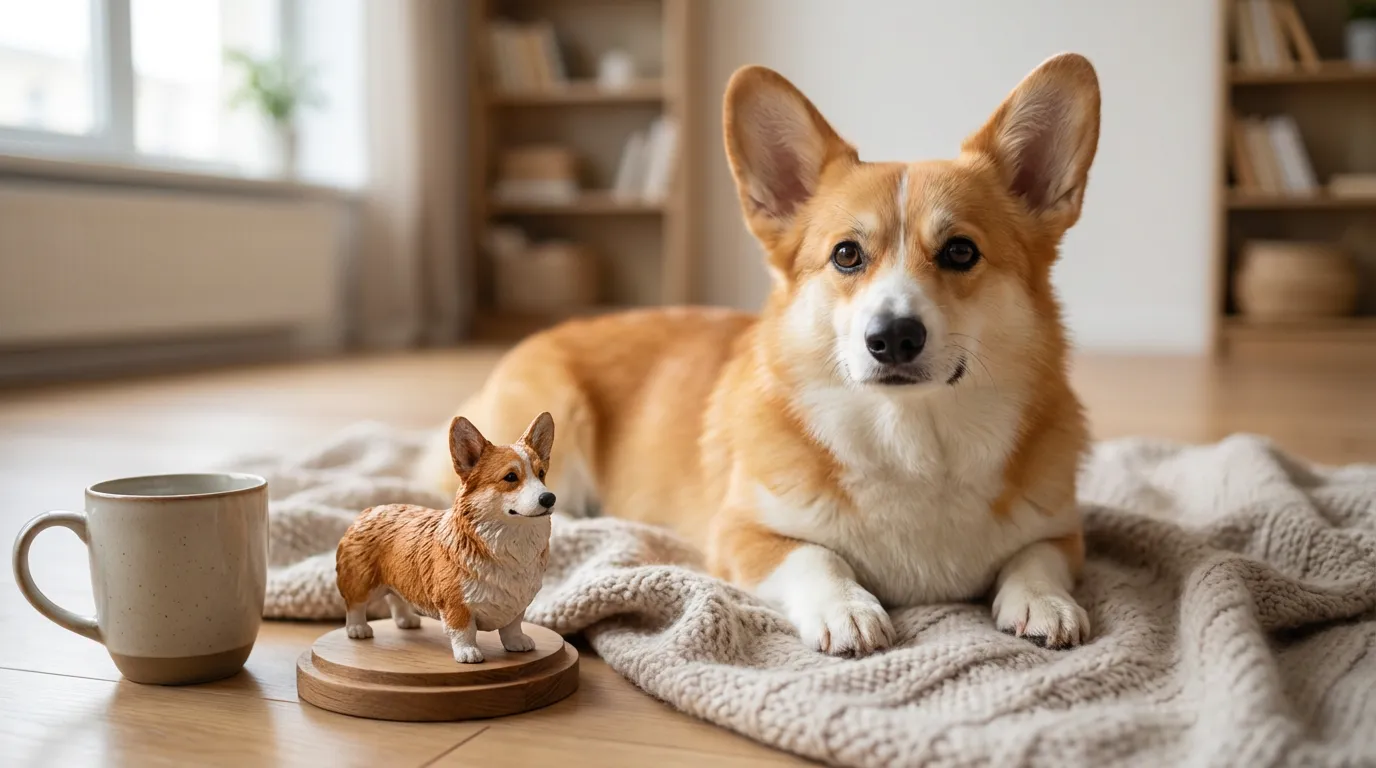
- Physical Anchors Help: Because you don't have a grave to visit or an urn to keep, creating a tangible tribute—like a photo book or a custom figurine of your dog—can provide a necessary focal point for your grief.
- Avoid the "Rebound" Puppy: Rushing to fill the void with a new pet often leads to unfair comparisons; give yourself time to mourn the specific personality you lost first.
The unique agony of "Ambiguous Loss"
There is a stack of sympathy cards at the Hallmark store for the death of a dog. There are zero cards for "I lost my dog in the divorce settlement."
This is what psychologists call "ambiguous loss." It’s a type of grief that feels suspended in mid-air because there is no closure. When a pet dies, there is a finality that, while devastating, allows the healing process to begin. The brain understands "gone."
But when your dog is alive, healthy, and chasing squirrels in someone else’s backyard, your brain gets stuck in a loop. You wonder if they are eating the brand of kibble they like. You wonder if the ex remembers to give them their joint supplement. You wonder if they are waiting by the door for you.
We worked with a customer recently who described this feeling as "emotional phantom limb syndrome." She told us about waking up in her new apartment and instinctively stepping over the spot where her dog used to sleep, only to remember he wasn't there. The grief is complicated by the lack of social validation. Friends might say, "At least he’s alive and happy," or "You can just get another dog." They mean well, but they miss the point. You aren't grieving the species; you are grieving a specific relationship, a specific routine, and a specific soul that you feel you’ve abandoned.
The Corgi factor: Why this breed hits harder
While this applies to any pet, losing daily contact with a Corgi carries a specific weight because of how this breed operates. Corgis are herders. They are "Velcro dogs" in the truest sense. They don't just live in your house; they manage your movement.
If you’ve lived with a Corgi, you know they are rarely more than two feet away from you. They supervise your bathroom trips. They trip you in the kitchen. They herd you from the living room to the bedroom. Their presence is physically intrusive in the most loving way possible.
When that presence is suddenly subtracted from your life, the physical space around you feels wrong. You miss the "sploot" on the rug. You miss the "frapping" (frantic random acts of play) in the hallway.
One of the hardest parts of leaving a Corgi behind in a breakup is the knowledge of their loyalty. You know they are looking for you. This isn't narcissism; it's biology. They are bred to keep the flock together. By leaving the relationship, you have essentially split the flock, and the guilt of knowing your dog is likely confused or anxious about your absence can be more crushing than the breakup itself.
The "Ex" factor: Navigating the urge to check in
Here is the counterintuitive truth that hurts to hear: Cutting off contact with the dog might be the only way to heal, even if it feels like betrayal.
In the age of social media, we often torture ourselves. You might find yourself checking your ex’s Instagram stories, not to see the ex, but to catch a glimpse of the dog in the background. You want proof of life. You want to see that they are happy.
But here is the darker emotion that almost no one admits to: You are terrified to see them happy without you.
If you see a video of your Corgi playing fetch with your ex (or worse, your ex’s new partner), a wave of complicated jealousy hits. You want them to be happy, of course. But seeing them thrive when you are in so much pain feels like an invalidation of your bond. Did you matter? Did they forget you that quickly?
This digital stalking keeps the wound fresh. It resets your grief clock every time you look. We usually advise people to block the ex, not out of malice, but to create a "sanctuary of silence" where your brain can stop processing new information about the dog and start processing the loss.
Addressing the guilt of "Abandonment"
Let’s talk about the elephant in the room: The feeling that you failed your dog.
Maybe you moved into a place that didn't allow pets. Maybe the ex had the bigger yard. Maybe the ex paid for the dog originally, so legally, you had no leg to stand on. Whatever the reason, you walked out the door, and the dog stayed.
The guilt that comes from this is corrosive. You feel like a bad parent. You feel like you broke a promise.
But here is a perspective shift: Leaving was an act of survival for you, and ensuring stability was an act of love for them.
Dogs, especially routine-oriented breeds like Corgis, thrive on stability. If you were moving into a chaotic transitional situation—couch surfing, a small apartment, a high-stress environment—taking the dog with you might have been for your comfort, not theirs. Leaving them in their familiar home, with their familiar yard, even with a person you can no longer tolerate, is often the most selfless decision you can make.
You didn't abandon them. You prioritized their stability over your desire to possess them. That is the definition of love.
Creating rituals for the absent
When a pet dies, we have rituals. We bury them. We keep their ashes. We hold a ceremony. When you lose a pet to a divorce, you have... nothing. You just have an empty leash and a box of toys you couldn't bear to throw away.
To process this grief, you need to externalize it. You need to create a place for your love to go.
The "Memory Box" (But keep it closed)
Gather the photos, the spare collar, and the toys you took with you. Put them in a nice box. But—and this is key—do not leave them out on display immediately. Put the box on a high shelf. It is there. You haven't erased them. But you aren't staring at the empty collar every day.Tangible Tributes
Because there is no grave to visit, many people find comfort in creating a physical representation of the dog. This is where our work at PawSculpt often intersects with these stories. We’ve had clients send us photos of the dog they lost custody of, asking to capture a very specific expression—that side-eye Corgis are famous for, or the way one ear flopped.Having a custom figurine isn't about replacing the living dog. It’s about acknowledging that the dog was, and is, a massive part of your life story. It gives you a physical object to look at and say, "I loved you, and I miss you," without having to engage in the toxic cycle of contacting an ex. It validates the relationship. It says: This dog mattered.
The "Unsent Letter"
Write a letter to your dog. It sounds cheesy, but it works. Tell them why you left. Tell them you didn't want to go. Tell them you hope they are getting extra belly rubs. You obviously can't mail this (and please, do not mail it to your ex), but the act of getting the words out of your head and onto paper breaks the loop of rumination.The trap of the "Rebound Dog"
About three months after the split, when the silence in the apartment becomes deafening, you will be tempted to get a puppy.
Wait.
If you get a dog now, you aren't getting a new dog. You are trying to get that dog back. You will subconsciously compare the new puppy to your old Corgi. You’ll get frustrated when the new dog doesn't have the same quirks, or isn't as well-trained, or bonds differently.
This is unfair to the new dog. They deserve to be loved for who they are, not for the ghost they are replacing.
Wait until you can look at other dogs with excitement rather than desperation. Wait until you want a dog, not just relief from grief.
Moving forward (without forgetting)
The garden will eventually get weeded. The routine will eventually settle. You will learn to walk into your apartment without bracing for impact.
Grieving a dog you left behind is a lonely road, but it is a testament to the depth of your capacity to care. The fact that it hurts this much means the bond was real. No court order or breakup can retroactively erase the mornings you spent together, the walks, or the quiet moments on the couch.
Those memories are yours. Custody of the dog might be exclusive, but custody of the memories is yours to keep forever. You carry them with you, invisible but heavy, a silent pack of one, moving forward into your new life.
Frequently Asked Questions
Is it normal to grieve a pet that is still alive with my ex?
Absolutely. Psychologists refer to this as "ambiguous loss" or "disenfranchised grief." Your brain and body are reacting to the sudden absence of a major attachment figure. Just because the pet is alive doesn't mean your relationship with them hasn't "died" in a practical sense. Give yourself permission to mourn as if it were a physical loss.Should I ask for visitation rights for my pet after a breakup?
This depends entirely on the nature of the breakup. If things are amicable and you can co-parent without conflict, it can work. However, for most people, "pet visitation" is just a way to keep a painful wound open. It prevents you from moving on and can actually be confusing for the dog, who may experience anxiety every time you leave again. Often, a clean break is the kindest thing for everyone involved.How do I stop feeling guilty about leaving my dog behind?
Guilt is usually the result of a narrative you're telling yourself—that you "abandoned" them. Try to look at the facts objectively. Did you leave them in a safe home? Did you leave them where they have a yard and resources? If so, you made a sacrifice for their stability. You took on the pain of leaving so they wouldn't have to deal with the stress of moving or a lower quality of life.Is it weird to have a memorial for a dog that isn't dead?
It is not weird; it is a coping mechanism. Since you cannot visit the dog, you need a place to direct your affection and grief. Many people find that having a tangible object—like a framed photo series or a custom figurine—helps them acknowledge the loss. It validates that the relationship was real and significant, even if it's over.Honor Their Memory Forever
Your pet's story deserves to be preserved in a way that captures their unique spirit. A custom PawSculpt figurine transforms your cherished memories into a timeless keepsake—every whisker, every marking, every detail that made them irreplaceable.
Free instant AI preview • 3D artist preview within 7 days • 5 free revisions