
The Vacant Sunbeam: Afternoon Grief for a Sun-Loving Senior Persian
The coffee mug in your hand is lukewarm, but you haven't taken a sip in ten minutes. From the front porch swing, you watch the 2:00 PM sunlight creep across the wooden slats, hitting that specific spot near the railing where the paint is worn thin. You shift your legs to make room, an automatic reflex honed over fifteen years, before the realization hits you like a physical blow to the chest. The spot is empty. There is no white fluff accumulating in the cracks of the wood, no soft snoring vibrating through the bench, no demanding meow complaining that the sun has moved two inches to the left. You pull your legs back in, feeling foolish and hollow, staring at a patch of sunlight that is now just light, no longer a vessel for a living, breathing soul.
Quick Takeaways:
- Afternoon Grief is Real: Mornings and evenings get the most attention in grief guides, but the quiet, sun-drenched afternoons often hit hardest for owners of senior cats.
- The "Relief-Guilt" Cycle: It is entirely normal to feel relief that their high-maintenance care routine is over, followed immediately by crushing guilt.
- Physical Triggers: Your body remembers the weight and warmth of your cat long after your mind accepts they are gone.
- Tangible Memorials Help: Creating a physical touchstone, like a custom figurine placed in their favorite sunbeam, can help bridge the gap between memory and reality.
The Silence of the Afternoon Watch
We talk a lot about the empty food bowl in the morning or the cold spot in the bed at night. But for those of us who shared our lives with senior Persians—creatures of habit who turned lounging into an Olympic sport—the afternoons are the silent killers.
If you worked from home or spent your days around the house, you knew the rhythm. At 11:00 AM, they moved to the rug. At 2:00 PM, the porch or the window sill. At 4:00 PM, the back of the sofa. You didn't need a clock; you had a cat.
When that rhythm breaks, the silence in the house during the daylight hours feels heavy. It’s not just that they are gone; it’s that the house feels paused. You might find yourself walking softly past their favorite chair so as not to wake them, only to remember there is no one to wake. This specific type of "afternoon grief" is disorienting because it happens when the world is awake, busy, and bright. It feels wrong to be grieving when the sun is shining so aggressively.
The "Ghost Weight" Phenomenon
Many of the families we work with at PawSculpt describe a physical sensation of "ghost weight." You might feel a phantom pressure against your shin while making lunch, or the sensation of a heavy, purring warmth settling on your lap when you sit down to read. This isn't your mind playing tricks on you; it's your nervous system trying to recalibrate after years of constant sensory input. Your body literally misses the weight of them.
The Secret Guilt of the High-Maintenance Senior
Here is the part of grief that people rarely whisper, let alone write about in blog posts: the relief.
Senior Persians are beautiful, majestic, and often incredibly high-maintenance. By the end, you were likely dealing with matting fur that needed daily attention, eye cleaning, perhaps medication schedules that ruled your life, or litter box issues that ruined your floors. You became a nurse first and a pet parent second.
When they pass, there is a moment—maybe the first time you can leave the house for more than four hours without worrying, or the first time you don't have to wake up at 3:00 AM to check on them—where you feel a wave of freedom.
And then, almost instantly, you feel like a monster.
We need to be very clear about this: You are not a bad person for feeling relief.
That relief isn't about wanting them gone. It is your body and mind exhaling after a marathon of caretaking. You were hyper-vigilant for months or years, attuned to every change in breathing or appetite. When that vigilance is no longer required, the sudden drop in stress hormones feels like relief. It is biological, not emotional betrayal.
The guilt that follows is a liar. It tries to tell you that you didn't love them enough. The truth? The fact that you exhausted yourself caring for them is the ultimate proof of that love.
Reclaiming the Sunbeams
So, what do you do with the empty spots? The window sill that looks too bare, the porch swing that feels too big?
The instinct is often to scrub the house clean. To put away the beds, hide the toys, and vacuum up every last stray hair. But for many, erasing the evidence of their existence too quickly can trigger a panic response—a fear that they will be forgotten.
Instead of clearing the space, try "dedicating" it.
The Sunbeam Ritual
Identify the three spots your Persian loved most. Instead of leaving them emptily staring at you, place something intentional there.
- The Window Sill: A small, hardy succulent or a prism that catches the light.
- The Sofa Corner: A textured pillow that feels similar to their fur (faux fur or velvet often works best).
- The Porch: This is where many of our clients choose to place a permanent memorial.
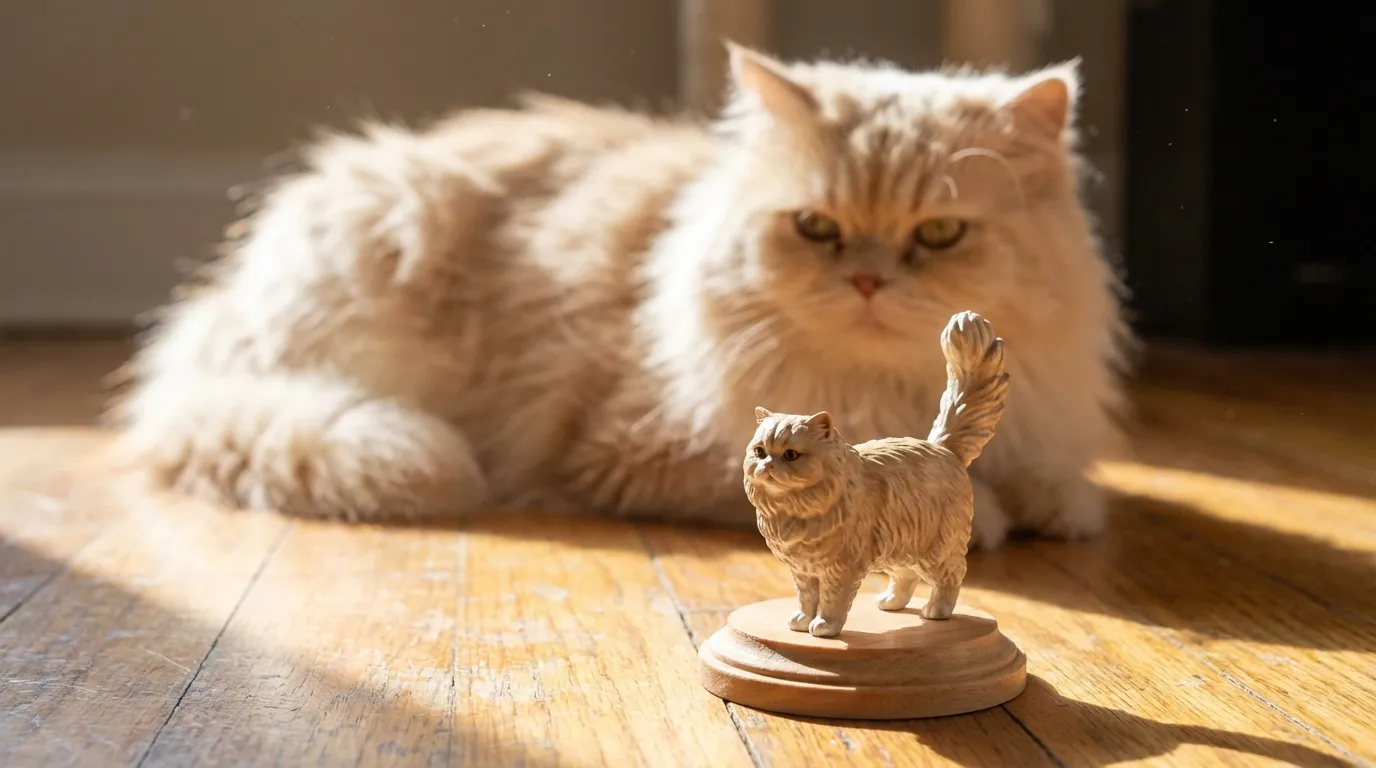
We’ve seen families place a custom figurine in the exact spot on the bookshelf where their cat used to supervise the room. Unlike a flat photograph, a 3D representation captures the volume and presence of the animal. When the afternoon sun hits that spot, the shadow it casts is familiar. It’s a way of saying, “This space is still yours.” It doesn't replace them, but it acknowledges that they were here, and they mattered.
The Grooming Void
With Persians specifically, the bond is often built through grooming. You didn't just pet them; you maintained them. You spent hours combing through that dense undercoat, wiping tear ducts, and trimming pantaloons. It was a labor of love that created a profound tactile bond.
When they are gone, your hands feel restless. You might find yourself absentmindedly reaching for a comb that isn't there.
Handling the Tactile Loss:
- Keep the Brush: Don't throw away their favorite brush immediately. For many, holding the handle and running a thumb over the bristles (which often still hold their scent) is a grounding technique during a panic attack.
- Texture Substitution: It sounds strange, but holding a weighted blanket or a very soft, high-quality faux fur throw can help soothe the physical ache in your arms. Your brain craves the sensory input of "soft and heavy."
- Journaling the Routine: Write down the care routine you used to do. "Clean eyes, brush left flank, check paws." Getting it out of your brain and onto paper tells your mind, "We don't need to remember this schedule anymore. It is safe to let it go."
Navigating the "Just a Cat" Comments
The isolation of losing a senior pet is compounded when well-meaning friends don't get it. They see a 16-year-old animal and think, "Well, they had a good long life." They expect you to bounce back in a week.
But a 16-year-old Persian wasn't just a pet; they were a witness. They were there when you moved into this house. They were there through the breakup, the new job, the marriage, the pandemic. They were the constant background hum of your life. Losing them is like losing the narrator of your story.
The Counterintuitive Approach to Isolation:
Don't force yourself to socialize with people who don't understand. It is okay to retreat. However, do not isolate yourself from other pet owners.
Find a community—whether it's an online breed-specific group or a local pet loss support circle—where you can say, "I miss cleaning his eyes," and have people nod in understanding rather than looking at you like you're crazy. Validation is the antidote to the shame of grief.
When to Move the Belongings
There is no timeline for this. We know a woman who kept her Persian’s water bowl filled for six months because the sound of the water pump was the only thing that helped her sleep. We know another couple who packed everything away three hours after the vet visit because the sight of the empty bed was physically painful.
Both are correct.
However, if you find yourself unable to move anything after several months, or if the shrine to your pet is preventing you from using your living space, it might be time for a gentle transition.
- Get a nice, sturdy box. Not a cardboard shipping box, but something decorative.
- Place the items inside (toys, collars, brushes).
- Do not tape it shut.
- Place the box in a closet or on a shelf that is accessible.
This tells your brain: “We are not throwing them away. We are just moving their things to a safe place.”
This is also where art plays a role. Replacing a raggedy, hair-covered cat tree with a beautiful piece of art or a memorial sculpture allows you to reclaim your home’s aesthetic while still honoring the memory. It transitions the space from a "shrine to the dead" to a "celebration of the life."
The Sun Will Shift, But the Warmth Remains
Eventually, you will sit on that porch swing again. You will watch the sun move across the slats, and you will notice that the light is just light. It is beautiful, and warm, and it is yours.
You will realize that the grief doesn't shrink, but your life grows around it. The sharp edges of the afternoon silence will soften. You will stop expecting to hear the meow, and instead, you will smile when you remember it.
The vacant sunbeam isn't a void. It's a space where love used to nap. And if you close your eyes, right around 2:00 PM, you can still feel the warmth.
Frequently Asked Questions
Why is the grief for a senior pet different from a younger one?
When you lose a senior pet, you aren't just losing an animal; you are losing a witness to a significant chapter of your life. A cat that lived for 15 or 18 years has seen you through jobs, relationships, and moves. The grief is compounded by the loss of deep-set routines—the way you slept, the way you moved through your house—which were dictated by the pet's needs for over a decade.Is it normal to feel relief after a sick cat dies?
Yes, and it is vital that you forgive yourself for this. This is known as "caregiver relief." When you have spent months or years managing medications, cleaning up messes, and worrying about a declining animal, your body is in a constant state of high alert. When they pass, that pressure valve releases. The relief you feel is for the end of the suffering and the stress, not for the end of the life.How do I handle the "ghost weight" sensation?
That feeling of a cat jumping on the bed or rubbing against your leg is a very common physiological response. Your brain has created a neural pathway expecting that sensation. To help, try sleeping with a weighted blanket or keeping a soft, tactile pillow nearby. Acknowledge the feeling—"I feel like he's here"—rather than trying to ignore it. It usually fades with time as your brain re-maps your environment.What is a good way to memorialize a cat without clutter?
Many pet owners worry about turning their home into a shrine. A great compromise is to choose one high-quality, artistic representation rather than keeping every toy and bed. A custom figurine, a professional portrait, or a small shadow box with their collar allows you to have a dedicated "memory spot" that blends with your home decor, rather than dominating it.How long does the intense sadness last?
Grief is not linear. You might feel fine for three weeks and then fall apart in the grocery store because you saw their brand of food. Generally, the acute, "I can't breathe" phase softens after a few months, but the "afternoon grief" or missing their presence can last much longer. Be patient with yourself; you are relearning how to live in your own house.Honor Their Memory Forever
Your pet's story deserves to be preserved in a way that captures their unique spirit. A custom PawSculpt figurine transforms your cherished memories into a timeless keepsake—every whisker, every marking, every detail that made them irreplaceable.
Free instant AI preview • 3D artist preview within 7 days • 5 free revisions