The Guilt of Getting a New Puppy After Losing Your Soul Dog
Does looking into those brand-new, eager puppy eyes sometimes make you feel like a traitor? You’re sitting on the floor of your home office, a fresh squeaky toy lies untouched near your knee, and instead of the unbridled joy everyone told you to expect, you feel a crushing weight in your chest because this puppy—cute as they are—simply isn't him. It’s a specific, suffocating kind of heartache that hits when you realize the silence in the house has been broken, but not by the bark you were desperate to hear.
This isn't just "puppy blues." This is the collision of grief and new life, a complex emotional intersection where love feels uncomfortably like betrayal. You might find yourself flinching when the new puppy plays with your soul dog’s favorite stuffed dragon, or feeling a flash of irrational anger when they don't understand the routine that your old boy knew by heart.
We see this constantly in our work with grieving families. The arrival of a new dog doesn't automatically close the wound left by the one you lost; in fact, it often rips it wide open, exposing layers of guilt you didn't know were there. But here is the truth that grief often hides: loving a new dog does not subtract from the love you hold for the one who passed. The heart is not a battery with a limited charge; it is a muscle that expands.
Quick Takeaways:
- The "Traitor" Feeling is Normal: Guilt is actually a sign of your deep loyalty, not a sign that getting a new dog was a mistake.
- Don't Compare Drafts to Masterpieces: You are comparing a puppy (a rough draft) to your soul dog (a finished masterpiece of a relationship).
- Create Physical Space for Grief: Keepsakes like custom figurines allow you to honor the past separately from the present.
- The "Relief" Factor: It is okay to enjoy the freedom of a healthy dog after the trauma of caretaking; do not punish yourself for this relief.
- Actionable Step: Establish new routines and walking routes for the puppy so you aren't constantly walking in a ghost's footsteps.
The "Betrayal" Instinct: Why It Hurts to Move On
Why does signing adoption papers feel like signing a resignation letter from your loyalty to your late pet? The guilt of getting a new puppy is rarely about the new dog; it is almost entirely about the fear of forgetting the old one.
There is a terrifying, unspoken worry that if we let ourselves fully love this new creature, the memories of our soul dog will begin to fade. We hold onto the pain because the pain feels like the last tangible connection we have to them. Letting go of the sadness feels like letting go of them.
The Secret Guilt of Relief
We need to talk about something uncomfortable—something most pet owners are too ashamed to whisper even to their closest friends.After months, maybe years, of managing a senior dog's decline—the medication schedules, the incontinence, the sleepless nights, the lifting them up the stairs—there is a sudden, jarring ease that comes with a new, healthy puppy. Suddenly, you can just... go for a walk. You don't have to check breathing rates. You don't have to carry a towel everywhere.
And you might feel relief.
Then, immediately after that relief washes over you, the guilt hits you like a freight train. You feel like a monster for enjoying the freedom. Please hear us when we say this: You are not a bad person for feeling relief. That relief is your body and mind recovering from chronic caregiver stress. It does not mean you loved them any less; it means you loved them enough to exhaust yourself for their comfort. The new puppy represents a different phase of life, not a replacement of the previous bond.
The "Replacement" Myth: Reframing the Narrative
The word "replace" is the most dangerous word in the grieving pet owner's vocabulary. It implies a swap. One out, one in. Like changing a lightbulb.
But you know, and we know, that a soul dog is irreplaceable.
The "Finished Product" Fallacy
Here is a counterintuitive insight that might change how you view your new puppy's behavior. Right now, you are likely falling into the trap of comparing a "finished product" to a "rough draft."Your soul dog, by the time they passed, could probably read your mind. They knew that a certain sigh meant you were getting up for a snack (and they should follow), and a different sigh meant you were stressed. You had 10, 12, maybe 15 years of shared language.
Your new puppy is a blank slate. They are a rough draft. When they chew the baseboard your old dog never touched, or when they don't settle down instantly when you start a movie, you aren't just annoyed—you're grieving the loss of that telepathic connection.
Try this mental shift: Instead of looking for your old dog in the new puppy's eyes, look for the potential. Remember that your soul dog was once a chaotic, messy, uncoordinated puppy too. You built that bond brick by brick. You have to give yourself permission to build a new house, even if the blueprint is different.
Practical Strategies to Navigate the Guilt
Okay, so the feelings are normal. But how do you actually live with them without resenting the puppy or drowning in sorrow? We’ve gathered these strategies from the thousands of families we’ve worked with who have walked this exact line.
1. Change the Rituals
If your old dog always walked a specific loop around the neighborhood at 7:00 AM, do not take the puppy on that exact route at that exact time. Not yet.The muscle memory of grief is powerful. Walking the "Ghost Route" will only highlight the empty space where your old dog used to heel.
- The Fix: Drive to a park the old dog never visited.
- The Fix: Use a different style of leash or harness.
- The Fix: Create a new "good morning" ritual that is unique to this puppy.
By creating new pathways, you allow the puppy to be an individual rather than an understudy trying to learn a role they can't fill.
2. Create a "Legacy" Distinction
One of the hardest parts of bringing a new dog home is the physical takeover. The new dog is in the old dog's bed. The new dog is eating from the old dog's bowl. This visual overwriting of history can trigger intense defensiveness.It helps to create a distinct, physical space that is only for your soul dog. This is where tangible memorials become psychological tools, not just decorations.
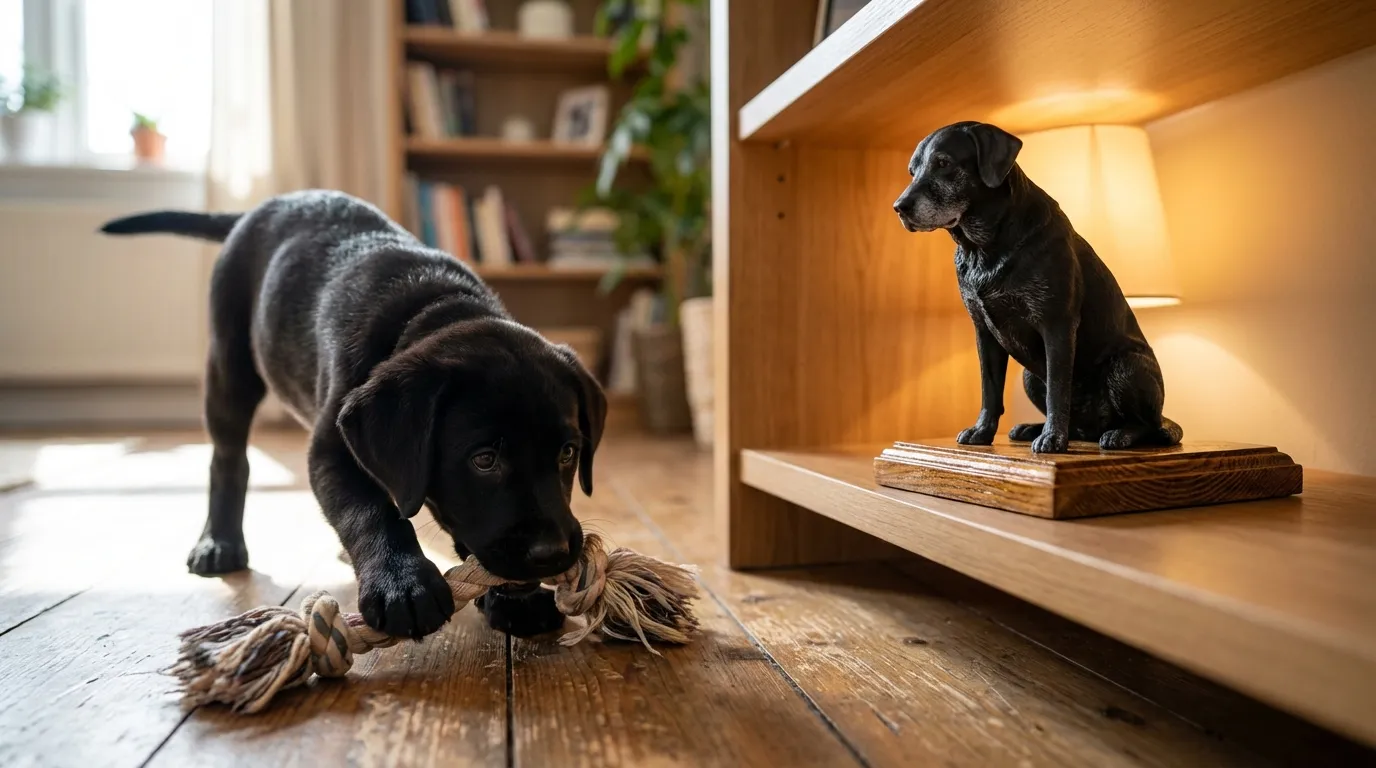
We’ve seen families create a "memory shelf" where the new puppy isn't allowed to reach. This might include the old collar, a favorite photo, or a custom figurine that captures the specific way they used to tilt their head. Having a 3D representation of your pet—something you can actually run your thumb over—can ground you when the grief feels abstract and overwhelming. It creates a boundary: This spot belongs to him. The rest of the house is open for new love.
3. The "Zero Comparison" Hour
Designate time where you consciously stop comparing. It’s hard to do this 24/7, so start small. For one hour in the evening, observe the puppy strictly as a biologist might observe a new species.Notice their quirks that are entirely their own. Maybe your old dog was a dignified sleeper, but this puppy sleeps on their back with legs in the air. Laugh at it. Acknowledging these differences helps separate the two identities in your brain.
When You Feel Like You Made a Mistake
There will be a moment—usually at 3 AM when the puppy is whining, or right after they’ve had an accident on the rug—where you will think: I can’t do this. I made a mistake. I just want my old dog back.
This is the "Regret Spike." It is temporary.
When this happens, you are not actually regretting the puppy; you are regretting the loss of your comfort zone. Your old dog was your comfort zone. The puppy is chaos.
The Counter-Move:
When the regret hits, talk to your old dog. Seriously. Speak out loud. Say, "This puppy is a nightmare, buddy. You would have hated him."
Acknowledging the absurdity of the situation to the memory of your old dog brings them back into the room as a co-conspirator, rather than a replaced observer. It sounds strange, but many pet parents find that "complaining" to their late pet about the new one helps bridge the gap. It keeps the relationship with the deceased pet active and present.
Integrating the Past with the Present
How do you honor the legacy of a soul dog while raising a new one? You make the new dog a beneficiary of the old dog's love.
We often hear from customers who tell us they view their new dog not as a replacement, but as a student. They’ll say, "Barnaby would have wanted another dog to have this warm bed."
Tangible Touchstones
Sometimes, you need something physical to bridge the gap. Digital photos on a phone screen are great, but they lack weight. They lack presence.This is why we treat our work at PawSculpt with such reverence. When we craft a custom pet figurine, we aren't just making a statue. We are solidifying a memory so that it can stand in the room alongside the new life.
Imagine having a lifelike replica of your soul dog sitting on your desk while the new puppy naps at your feet. It’s a visual reminder that they can coexist. The figurine represents the permanent place in your heart; the puppy represents the active place in your life. Both are valid. Both are necessary.
The Name Game
Should you use a nickname? Should you reuse a collar?- Names: Never reuse a name. That name is retired. It belongs to the Hall of Fame.
- Gear: Don't put the old collar on the new puppy immediately. It won't fit right, physically or metaphorically. Let the puppy earn their own gear.
- Toys: This is controversial, but we suggest keeping one or two "sacred" toys that stay with your memorial items, and donating or washing the rest for the new pup.
The Timeline Myth: "Too Soon" is Subjective
Your friends might tell you to wait. "Give it six months," they say. "Take time to heal."
But here is the reality: Silence is deafening for some, and healing for others.
If you are the type of person who needs the click-clack of nails on hardwood to feel like a home is a home, then waiting six months isn't "healing"—it's torture. We have worked with clients who ordered a memorial piece ten years after a loss, and others who ordered one the day before going to the shelter for a new puppy.
There is no "correct" timeline for grief. If you got a puppy "too soon" according to society's standards, but it's helping you get out of bed in the morning, then it wasn't too soon.
Moving Forward: The Expansion of the Heart
As the weeks turn into months, a shift will happen. You will stop looking for your old dog in the puppy's face, and you will start seeing the puppy for who they are.
And then, one day, you’ll do something—maybe a specific hike, or a cuddle on the couch—and you’ll feel a warm, familiar feeling. You’ll realize that by loving this new dog, you are actually honoring the old one.
Your soul dog taught you how to love. They taught you patience. They taught you how to read non-verbal cues. They prepared you for this. The new puppy is the recipient of all that education.
So, when you look at that custom figurine on the shelf, and then down at the chaotic ball of fur chewing your shoelace, know this: You aren't loving the new dog instead of the old one. You are loving the new dog because of the old one.
The betrayal is a lie your grief tells you. The truth is much simpler: You have enough love for both.
Frequently Asked Questions
Is it normal to resent my new puppy after losing my dog?
Yes, absolutely. This is often called "grief interference." You aren't truly resenting the puppy; you are resenting the situation. You are resenting the fact that the puppy is chaotic while your old dog was calm, or that the puppy is here while your old dog is not. This feeling usually fades as you stop comparing the "rough draft" (puppy) to the "finished masterpiece" (your late dog).How long should I wait to get another dog after mine dies?
There is no medical or psychological rule for this. Some people need months or years of silence to process the loss. Others find the silence of an empty house traumatic and need the noise of a new dog to function. If you have the resources, time, and love to give, the timeline is entirely yours to decide. Do not let friends or family dictate your grief clock.Will getting a new dog make me forget my old one?
No. The fear of forgetting is a natural defense mechanism, but love is not a finite resource. A new dog creates new neural pathways and memories, but they do not overwrite the old ones. In fact, many owners find that a new puppy reminds them of their old dog's puppyhood, unlocking memories they hadn't thought of in years. Using physical memorials can help create a dedicated space for your past pet so you feel secure that their memory is safe.Should I get a dog that looks like my deceased pet?
We generally advise caution here. While it seems comforting, getting a "clone" often triggers subconscious expectations. If the new dog looks exactly like the old one but acts completely differently, it can cause cognitive dissonance and frustration. Choosing a different breed, size, or color often helps your brain categorize the new dog as a separate individual, making bonding easier.How do I stop feeling guilty about being happy with a new puppy?
Remind yourself that your late dog’s mission was your happiness. Animals live entirely in the present moment; they do not hold grudges about you moving on. The "relief" you might feel having a healthy pet after caring for a sick one is valid—it is your nervous system decompressing. Happiness and grief can coexist; feeling joy with a new puppy does not cancel out the sorrow of your loss.Honor Their Memory Forever
Your pet's story deserves to be preserved in a way that captures their unique spirit. A custom PawSculpt figurine transforms your cherished memories into a timeless keepsake—every whisker, every marking, every detail that made them irreplaceable.
Free instant AI preview • 3D artist preview within 7 days • 5 free revisions