
The New Rabbit Owner Starter Kit: 12 Gifts They Need (And 4 They'll Never Use)
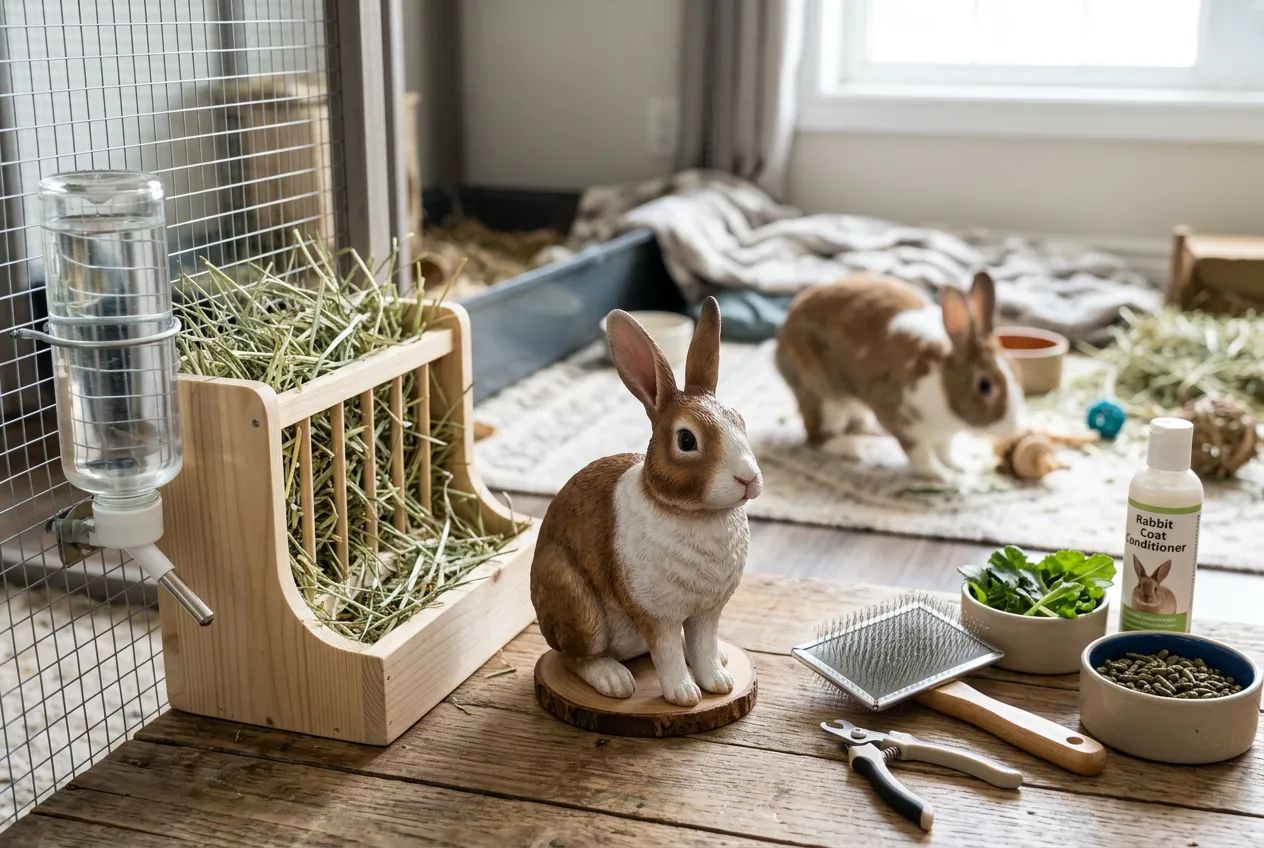
Three years ago, this desk held a laptop, a cold mug of coffee, and nothing else. Now a Holland Lop figurine sits next to the monitor—ceramic eyes fixed on the room's only window—and every Zoom call starts with the same question: "Wait, is that your rabbit?" That small shift in desktop real estate tells you everything about what happens when someone becomes a new rabbit owner. The whole geography of a home rearranges.
If you're shopping for new rabbit owner gifts, you've probably already scrolled past a dozen generic lists recommending the same hay rack and the same pastel-colored water bottle. We spent the better part of four months testing, sourcing, and surveying actual rabbit owners—first-timers and veterans alike—to build something more useful. Here's what we found: the gifts that genuinely improve a rabbit's first months at home aren't always the ones that look cutest in a flat-lay photo.
Quick Takeaways
- Skip the starter cage kits — most bundle low-quality items that experienced owners replace within weeks
- Prioritize enrichment over aesthetics — rabbits need mental stimulation more than Instagram-worthy accessories
- The best rabbit starter kit combines practical essentials with one meaningful keepsake — like a custom pet figurine that captures the rabbit's unique markings from day one
- Budget $80–$200 for a thoughtful gift package — or focus on a single standout item that solves a real problem
- Four popular gifts consistently go unused — we'll tell you which ones so you don't waste money
The Gifts That Actually Matter: What First-Time Rabbit Owners Won't Tell You
Here's the counterintuitive insight most gift guides miss: new rabbit owners don't know what they need yet. They've done research, sure. They've watched YouTube videos. But the gap between "I read about rabbit care" and "I'm currently chasing a bunny who just chewed through my phone charger at 2 AM" is enormous.
That gap is where the best gifts live.
The standout gifts on this list address problems that surface during weeks two through six of rabbit ownership—the period after the initial excitement fades and the reality of hay everywhere, territorial marking, and 3 AM binkies (those joyful mid-air twists rabbits do) sets in. Generic gift lists focus on day-one supplies. We're focusing on what keeps a new owner sane, bonded, and confident through month three and beyond.
"The best gifts don't just sit on a shelf—they start conversations and spark memories."
— The PawSculpt Team
Let's get into it.
The 12 New Rabbit Owner Gifts Worth Giving
1. An X-Pen (Exercise Pen), Not a Cage
Who it's for: Any first-time rabbit owner, especially apartment dwellers.
Budget: $35–$75
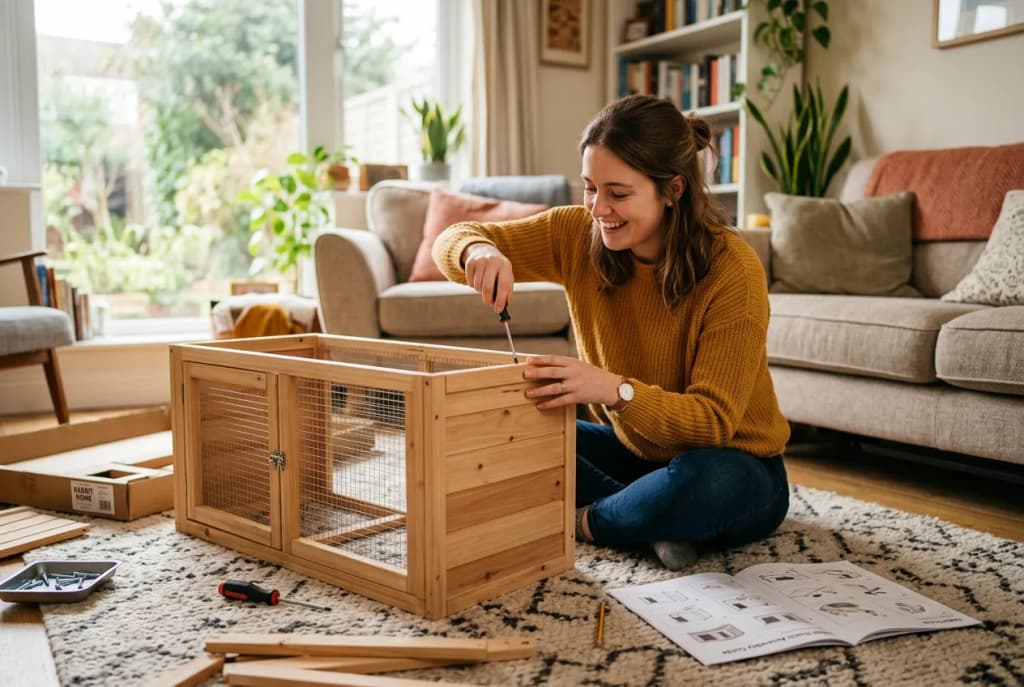
Worth noting: the single most impactful gift you can give a new rabbit owner is space—literally. Most first-time owners buy a cage that's far too small because pet stores market "rabbit starter cages" that barely fit a dwarf breed. A 48-inch tall exercise pen (the kind marketed for puppies) transforms rabbit care overnight.
The standout here is the ability to configure it into different shapes. Against a wall, it becomes a long run. In a corner, it forms an L-shape. A new owner who's been watching their rabbit press its nose against cage bars will tear up when they see it binky across six square feet for the first time.
Pro tip: Choose a pen at least 36 inches tall. Holland Lops may look sedentary, but a motivated rabbit can clear 30 inches without breaking a sweat.
2. A High-Quality Hay Feeder That Reduces Waste
Who it's for: The new owner who's already frustrated by hay scattered across every surface.
Budget: $15–$40
Here's something nobody mentions in beginner guides: hay waste is the number-one daily annoyance for new rabbit owners. Not behavioral issues, not vet costs—hay. It gets everywhere. It embeds in socks. It migrates to rooms the rabbit has never entered.
A wall-mounted hay feeder with a catch tray (look for wooden ones with slat openings sized for timothy hay strands) reduces waste by roughly 60% compared to a loose pile or a wire-ball feeder. We're not huge fans of the hanging ball-style feeders—rabbits have to contort their necks at unnatural angles, and most buns just yank all the hay out onto the floor anyway.
Pro tip: Pair this with a note about hay types. First-time owners often buy alfalfa (too rich for adults) when they should be using timothy, orchard grass, or oat hay for rabbits over seven months old.
3. A Ceramic or Stainless-Steel Water Bowl (Not a Bottle)
Who it's for: Every new rabbit owner, without exception.
Budget: $8–$20
This is our "please throw away the water bottle" entry. The House Rabbit Society and most exotic veterinarians recommend bowls over bottles because rabbits drink more water from open dishes—up to 40% more, which directly reduces the risk of GI stasis (a potentially fatal digestive slowdown that's the leading emergency-room visit for pet rabbits).
Heavy ceramic crocks (the kind that resist tipping) outperform plastic bowls, which harbor bacteria in scratches and get flipped during zoomies. Stainless steel works too, though some rabbits find their reflection unsettling.
Pro tip: Buy two. Rabbits are more likely to hydrate consistently when water is available in multiple locations within their space.
4. A Natural Seagrass or Willow Activity Mat
Who it's for: The owner dealing with a rabbit that chews everything it shouldn't.
Budget: $8–$18
Destructive chewing isn't a behavioral problem—it's a biological need. Rabbit teeth grow continuously (roughly 2 mm per week), and chewing is how they wear them down. A seagrass mat gives them something appropriate to shred while saving baseboards, cables, and that one corner of the couch.
These mats double as foraging enrichment when you sprinkle a few pellets or dried herb pieces into the weave. Picture a Tuesday evening: the rabbit's in its pen, methodically unraveling a seagrass mat while the owner finally watches a show uninterrupted. That's the gift you're really giving—an hour of peace.
Pro tip: Buy a three-pack. These last about two to three weeks each with an active chewer.
5. Cord Protectors (Split Loom Tubing)
Who it's for: Anyone whose rabbit has free-roam time (which should be everyone).
Budget: $10–$15 for a 25-foot roll
Not glamorous. Not Instagram-worthy. Absolutely essential. Chewed electrical cords are the second most common rabbit emergency behind GI stasis, and a single exposed wire can cause electrocution, burns, or house fires.
Split loom tubing (the black corrugated kind from the automotive aisle, not the flimsy spiral wrap) is the gold standard. It's thick enough that most rabbits lose interest after a few experimental bites, and it's easy to thread existing cords through without unplugging anything.
Pro tip: Include a short printed card with this gift explaining which household cords are highest-risk (phone chargers, lamp cords, and anything running along baseboards).
| Gift Item | Budget Range | Urgency Level | Most Owners Buy This? |
|---|---|---|---|
| X-Pen | $35–$75 | High (Week 1) | No — they buy cages |
| Hay Feeder | $15–$40 | Medium (Week 2–3) | Rarely |
| Water Bowl | $8–$20 | High (Day 1) | No — they use bottles |
| Seagrass Mat | $8–$18 | Medium (Week 2) | Sometimes |
| Cord Protectors | $10–$15 | Critical (Before free-roam) | Almost never |
6. An Exotic Vet Fund or Gift Card
Who it's for: The budget-conscious new owner who hasn't yet realized rabbit vet care is expensive.
Budget: $50–$200 (or whatever you're comfortable contributing)
This is the gift nobody thinks to give, and it's arguably the most valuable item on this list. Rabbit veterinary care requires an exotic animal specialist, not a standard dog-and-cat vet. These visits typically cost 2–3x what a routine cat checkup runs, and many new owners don't discover this until the first wellness exam invoice arrives.
A contribution toward a "vet fund"—whether that's cash in a card, a Venmo transfer with a note, or a gift card to a local exotic vet—removes a genuine financial barrier to proper care. If you can find out which vet they plan to use, some clinics accept prepaid credit toward future visits.
Pro tip: Include the ASPCA's guide to pet care costs with the gift. It normalizes the expense and helps new owners budget realistically.
7. A Digital Kitchen Scale
Who it's for: The detail-oriented owner who wants to monitor their rabbit's health proactively.
Budget: $12–$25
Here's an insider detail that separates casual rabbit owners from informed ones: weekly weigh-ins are the single best early-warning system for health problems in rabbits. A rabbit can lose 10% of its body weight before the change becomes visible under all that fur. By the time you notice your rabbit "looks thinner," you're often weeks into a medical issue.
A kitchen scale that reads in both grams and ounces (with a tare function for the container you'll put the rabbit in) makes this a 30-second weekly habit. We've heard from owners who caught early-stage dental disease, parasites, and even pregnancy (surprise!) through nothing more than a consistent weigh-in log.
Pro tip: Include a simple tracking sheet—printed or digital—with columns for date, weight, notes, and food intake. It becomes invaluable during vet visits.
8. Dried Herb and Forage Mix (Not Treats from the Pet Store)
Who it's for: The owner who's already buying those yogurt drops from the pet aisle (they need to stop).
Budget: $10–$25
We'll be real: most commercially marketed "rabbit treats" are nutritional garbage. Yogurt drops, seed sticks, and those colorful biscuit things contain sugar, dairy, and starches that can wreak havoc on a rabbit's sensitive GI system. Rabbits are strict herbivores. They don't process dairy. Period.
A curated dried herb and forage blend—chamomile, dandelion leaves, rose petals, plantain, nettle—provides enrichment and nutritional variety without the risks. Sprinkled over hay, tucked into a cardboard tube, or scattered across a dig box, these become a daily foraging activity that mimics natural grazing behavior.
Pro tip: Check the ingredient list for any added sugars, oils, or preservatives. The best blends contain nothing but dried plants.
"A rabbit's happiness is measured in binkies per hour, not treats per day."
9. A Rabbit-Safe Dig Box Kit
Who it's for: The owner whose rabbit is trying to dig through the carpet.
Budget: $15–$30 (or DIY for under $10)
Digging is another hardwired rabbit behavior that can't be trained away—only redirected. A dig box is simply a shallow storage bin filled with safe materials: shredded paper (non-glossy), untreated soil, or crinkled packing paper. Some owners add dried herbs for scent enrichment.
The transformation is immediate. A rabbit that's been scratching at carpet corners for weeks will discover the dig box and spend 20 minutes flinging material over its shoulders with a focus that borders on meditative. The owner stops worrying about their security deposit. Everyone wins.
Pro tip: Use a bin with sides at least 6 inches high to contain the mess. Rabbits dig with enthusiasm.
10. A Comprehensive Rabbit Care Book
Who it's for: The new owner who's been relying entirely on Reddit and TikTok.
Budget: $15–$25
Online resources are fragmented, sometimes contradictory, and often outdated. A single authoritative book provides a consistent reference that an owner can return to during 11 PM panic moments ("Is this poop normal?" — a question every rabbit owner asks at least once).
Our top pick is The Bunny Lover's Complete Guide To House Rabbits by Jill Richardson. It's written in plain language, covers medical emergencies, and includes an excellent diet chart. Runners-up include Rabbits For Dummies (more comprehensive on breeds) and When Your Rabbit Needs Special Care (essential for owners of elderly or disabled rabbits).
Pro tip: Write a note inside the cover. Something like "For the nights when Google makes you panic—start here instead."
11. A Cotton or Fleece Liner Set (Washable)
Who it's for: The owner drowning in disposable bedding costs.
Budget: $20–$45 for a set of two
Disposable bedding is expensive, wasteful, and most rabbits scatter it everywhere within hours. Washable cotton or fleece liners are the long-term solution: machine-washable, reusable for months, and available in fun patterns that make the pen look intentional rather than chaotic.
The key detail here is fabric type. Fleece wicks moisture but must be placed over an absorbent layer (puppy pads or towels work). Cotton canvas is more durable for heavy chewers but absorbs moisture directly. Most experienced owners settle on a two-layer system: absorbent bottom, fleece top.
Pro tip: Buy at least two sets so one can be in the wash while the other is in use. Rabbit urine has a high ammonia content—liners should be swapped every two to three days.
12. A Custom Figurine of Their New Rabbit
Who it's for: The owner who's already named the rabbit, set up a dedicated Instagram account, and talks about it more than their job.
Budget: Varies — visit pawsculpt.com for current options
This is the gift that surprised us most during our research—not because it's practical (it isn't), but because of the emotional weight it carries. Every practical gift on this list addresses a need. This one addresses an identity shift. Becoming a rabbit owner is a before-and-after moment for many people, and having a physical representation of their new companion—sitting on that home office desk, next to the monitor, visible during every workday—turns a feeling into an object.
PawSculpt creates museum-quality custom pet figurines using advanced full-color 3D printing technology. The process starts with photos of the actual rabbit: those distinctive ear markings, the specific shade of agouti fur, that one gray patch behind the left ear. Master 3D sculptors digitally model the figurine from reference images, and then the piece is precision-printed in full-color resin—meaning the color is embedded in the material itself, not applied afterward. A protective clear coat adds a subtle sheen and UV resistance, so the figurine holds up on a sunny windowsill or desk.
What makes this stand out from generic rabbit décor is specificity. A mass-produced ceramic bunny looks like every rabbit and no rabbit. A PawSculpt figurine looks like their rabbit—the one currently rearranging its hay feeder at 6 AM.
Pro tip: If you're gifting this, you'll need good photos of the rabbit. Multiple angles, natural lighting, and at least one clear shot of the face work best. Check pawsculpt.com for specific photo guidelines and turnaround details.
| Gift Type | Practical Value | Emotional Value | Shelf Life |
|---|---|---|---|
| X-Pen | ★★★★★ | ★★★ | Years |
| Hay Feeder | ★★★★ | ★★ | 1–3 years |
| Vet Fund | ★★★★★ | ★★★★ | One-time use |
| Dig Box Kit | ★★★★ | ★★★ | Months (refillable) |
| Custom Figurine | ★ | ★★★★★ | Lifetime |
| Care Book | ★★★★ | ★★★ | Years |
The 4 Gifts New Rabbit Owners Will Never Use (Save Your Money)
This is the section most gift guides won't write because it means telling you not to buy things. But our commitment is to your wallet and the rabbit's wellbeing, not to product partnerships.
1. A Rabbit Harness and Leash
Sounds adorable in theory. Looks great in TikTok videos. In practice, fewer than 15% of rabbits tolerate a harness, and the process of acclimating a rabbit to one takes weeks of patient desensitization—weeks that a new owner should spend on litter training and bonding instead.
Worse, an improperly fitted harness can cause spinal injury. Rabbits have delicate skeletal systems (their bones account for only about 8% of body weight, compared to roughly 13% in cats), and a panicked rabbit in a harness can twist or kick hard enough to fracture its own spine.
If the new owner wants to try outdoor time eventually, that's their call after months of indoor bonding. But as a new-owner gift? Skip it.
2. A Rabbit Ball (the Hamster-Ball Style)
These should not exist for rabbits. Full stop. Rabbits overheat easily (they can't pant effectively and have limited sweat glands—only in their lips), and an enclosed plastic ball traps body heat while eliminating the rabbit's primary survival instinct: running to cover when frightened. The stress response alone can cause fatal cardiac events in prey animals.
If you see these marketed for rabbits, walk past them.
3. A Decorative "Bunny Hutch" for Outdoor Use
Those Pinterest-worthy A-frame hutches with the green roofs? They're temperature nightmares. Rabbits are highly sensitive to heat (anything above 80°F is dangerous), and most decorative outdoor hutches provide inadequate ventilation, zero predator protection, and no insulation. A raccoon can tear through chicken wire. A determined dog can flip a lightweight hutch.
Indoor housing is the standard recommendation from rabbit rescue organizations and exotic vets. A pretty outdoor hutch is a decoration, not a habitat.
4. Yogurt Drops, Seed Treats, or "Bunny Cookies"
We covered this above, but it bears repeating in the "don't buy" section because these are the most commonly gifted rabbit items by well-meaning friends and family. They're in every pet store, usually at checkout-counter eye level, and they will cause digestive problems.
Stick to dried herbs, small pieces of fresh banana (a half-inch slice, once or twice a week maximum), or plain oat flakes as training rewards.
"Knowing what not to buy is often more valuable than knowing what to buy."
Building the Perfect Rabbit Starter Kit: A Budget Framework
If you're assembling a bunny owner gift package rather than choosing a single item, here's how we'd allocate the budget at three price points:
| Budget Level | Core Items | Add-On | Total Estimate |
|---|---|---|---|
| Under $50 | Water bowl + seagrass mats (3-pack) + cord protectors | Dried herb mix | $35–$50 |
| $50–$100 | X-pen + hay feeder + water bowl | Care book + herb mix | $75–$100 |
| $100–$200 | X-pen + hay feeder + water bowl + cord protectors + care book | Custom figurine or vet fund contribution | $120–$200+ |
The logic behind this framework: prioritize safety first (cord protectors, proper water source), then enrichment (hay feeder, dig box), then emotional keepsakes (figurine, care book inscription). A rabbit that's safe and stimulated is a rabbit that bonds. A rabbit that bonds is one that stays in the home permanently rather than being surrendered—which happens to an estimated 80% of rabbits purchased around Easter, according to rabbit rescue organizations.
A Day in the Life: How These Gifts Actually Get Used
Let's walk through a real morning. It's 7:15 AM. The rabbit's already awake—they're crepuscular (most active at dawn and dusk), so they've been rearranging their pen since about 5:30. The owner walks into the living room, and the first thing they notice is the hay feeder needs refilling—easy, because the wall-mounted design means they just stuff fresh timothy in from the top without opening the pen. The ceramic water bowl gets dumped, rinsed, and refilled (30 seconds). While the rabbit does its morning laps around the pen, the owner scatters a pinch of dried chamomile and dandelion over the hay—instant foraging enrichment. The seagrass mat from two weeks ago is mostly shredded, so a fresh one goes in. The rabbit immediately starts working at the edges.
Total hands-on time: four minutes. The owner grabs coffee, sits at the desk, glances at the figurine by the monitor, and starts their day. The rabbit is occupied, hydrated, and mentally engaged. That's what a well-chosen rabbit starter kit looks like in practice—not a pile of cute accessories, but a system that makes daily care fast and effective.
The Commonly Overlooked Element: Gifting for the Owner's Identity, Not Just the Rabbit's Needs
Here's what we think most gift guides get fundamentally wrong: they treat the recipient as a caretaker rather than a new pet parent. There's a difference. Caretakers need supplies. Pet parents need acknowledgment.
The shift from "I got a rabbit" to "I'm a rabbit person" happens somewhere around week three, when the owner starts correcting friends ("They're not rodents—they're lagomorphs"), researching hay brands with the intensity of a sommelier, and rearranging furniture to create better bunny-proofed pathways.
Gifts that validate this identity—a care book that treats rabbit ownership as a serious commitment, a 3D-printed figurine that says "yes, your rabbit is special enough to immortalize," even a simple card that acknowledges they're doing something difficult and worthwhile—land differently than another chew toy.
We've worked with enough pet families to know that the gifts people remember aren't always the most expensive. They're the ones that made them feel seen. A new rabbit owner standing in their kitchen at midnight, holding a panicking prey animal and wondering if they made a mistake, doesn't need another toy. They need to know someone understands.
First-Time Rabbit Gifts: What the Budget Really Looks Like
People underestimate rabbit ownership costs consistently. A quick reality check for gift-givers:
| Expense Category | Monthly Estimate | Often Overlooked? |
|---|---|---|
| Timothy hay | $20–$40 | No |
| Fresh vegetables | $15–$30 | Yes — rabbits need daily greens |
| Litter (paper-based) | $15–$25 | No |
| Exotic vet savings | $25–$50 (ideal) | Almost always |
| Enrichment replacement | $10–$20 | Yes |
| Monthly total | $85–$165 |
This is why the vet fund gift (item #6) ranks so high on our list. It's not exciting to unwrap, but it addresses the most common reason rabbits are surrendered to shelters: unexpected costs.
Pairing Gifts with the Right Moment
Not every gift lands well on adoption day. The new owner is overwhelmed, the rabbit is stressed, and everybody's focused on the immediate logistics of "where does this animal sleep tonight?" Here's a timing guide that we think makes a real difference:
Day of adoption: Cord protectors (safety-critical, easy to install immediately). A card with encouragement.
Week one: Water bowl, hay feeder, seagrass mats. These solve the first "this is harder than I expected" moments.
Week two to three: X-pen (by now, the owner realizes the cage is too small). Dig box kit. Dried herb mix.
Month one: Care book (they're ready for deeper learning now). Kitchen scale.
Month two to three: Custom figurine. By this point, the owner has dozens of photos, knows the rabbit's personality, and is emotionally invested enough that a personalized keepsake hits with real impact. This is also when the initial chaos has settled into routine—a figurine becomes a marker of "we survived the learning curve."
Closing: The Corner That Used to Be Empty
Look at the corner of a new rabbit owner's room three months in. It used to hold a floor lamp, maybe a plant. Now there's a pen configured against two walls, a hay feeder mounted at nose height, a dig box with shredded paper scattered in a two-foot radius around it, and a rabbit sprawled flat on its side in that unmistakable "dead bunny flop" that terrifies new owners until they learn it means total relaxation.
The desk across the room has changed too. There's a small figurine where the empty coffee mug used to sit—a Holland Lop with those specific ear markings, printed in full-color resin, catching the morning light from the window.
That shift—from empty corner to occupied territory, from bare desk to claimed space—is the story of every new rabbit owner. The best new rabbit owner gifts don't just fill a cage. They fill a life that's been quietly rearranging itself around a four-pound animal with opinions about hay and an inexplicable hatred of the vacuum cleaner.
Give gifts that understand this. Give gifts that last past the first week. And if you can, give one gift that sits on a shelf and starts every conversation the same way: "Wait—is that your rabbit?"
Frequently Asked Questions
What do you get someone who just got a rabbit?
Focus on practical items they probably haven't bought yet: an exercise pen (not a cage), a ceramic water bowl, cord protectors, and a wall-mounted hay feeder. These solve the biggest first-month frustrations. Avoid pet store impulse items like yogurt drops or tiny cages marketed as "starter kits"—experienced rabbit owners replace these almost immediately.
How much should I spend on a new rabbit owner gift?
A thoughtful gift package runs anywhere from $35 to $200 depending on your budget. Under $50, prioritize safety essentials like cord protectors and a heavy water bowl. In the $50–$100 range, an exercise pen paired with a hay feeder is the standout combination. Above $100, you can add meaningful keepsakes like a custom figurine or contribute to their exotic vet fund.
What gifts should I avoid buying for a new rabbit owner?
Four items consistently go unused or cause harm: rabbit harnesses (most rabbits don't tolerate them, and improper use risks spinal injury), exercise balls (dangerous overheating risk), decorative outdoor hutches (poor temperature regulation and predator protection), and sugar-based treats like yogurt drops or seed sticks. All four are widely available in pet stores, which makes them common gifts—and common mistakes.
Do new rabbits need a cage or a pen?
An exercise pen is the strong recommendation from rabbit rescue organizations and exotic veterinarians. Most commercially sold "rabbit cages" don't meet minimum space requirements. A 48-inch tall puppy exercise pen provides room for binkies, stretching, and natural movement while being reconfigurable for different room layouts. It's the single highest-impact gift on our list.
When is the best time to give a rabbit owner a sentimental gift like a figurine?
Wait until month two or three after adoption. The first few weeks are consumed by logistics—litter training, bunny-proofing, establishing feeding routines. By month two, the owner has bonded deeply, accumulated good photos, and settled into a routine. That's when a personalized keepsake like a custom figurine resonates most.
Are rabbits expensive pets to maintain?
More than most people expect. Monthly costs typically range from $85 to $165 covering hay, fresh vegetables, paper-based litter, enrichment items, and veterinary savings. Rabbit vet care requires an exotic animal specialist, which costs significantly more than standard cat or dog visits. This is exactly why a vet fund contribution is one of the most valuable gifts on our list.
Ready to Celebrate Your New Rabbit?
Every rabbit is a one-of-a-kind companion—from the exact tilt of those ears to the specific patch of color behind a shoulder. Whether you're looking for the perfect new rabbit owner gift or want to commemorate your own rabbit's personality in a way that lasts, a custom PawSculpt figurine captures the details that make your bunny unmistakably yours. Digitally sculpted by expert 3D artists and precision-printed in full-color resin, each piece preserves the markings, posture, and character that photos alone can't hold in your hands.
Visit pawsculpt.com to explore the full process, photo guidelines, and current options