
Honoring the Office Cat: Memorial Ideas for Your Corporate British Shorthair
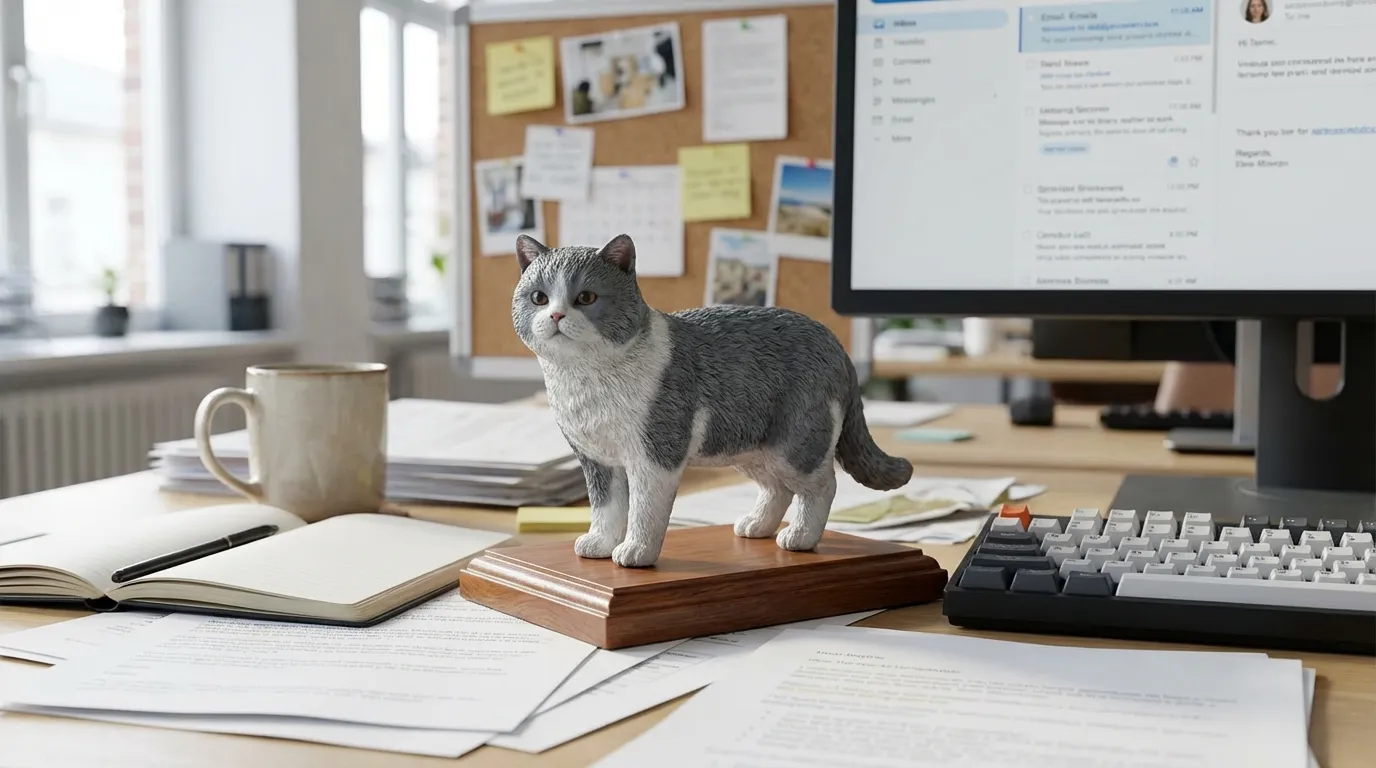
The ergonomic chair in the corner of the conference room still has a faint indentation on the seat cushion, a ghostly reminder of where Barnaby used to hold court during quarterly budget meetings. Three weeks ago, that chair was occupied by sixteen pounds of slate-grey British Shorthair, purring with the deep, resonant rumble of a diesel engine while we debated marketing strategies. Today, the silence in that corner is louder than any argument we’ve ever had over spreadsheets. You reach for a stapler and instinctively glance under the desk, expecting a paw to bat at your shoelaces, but there’s nothing there except empty carpet and a few stray grey hairs the vacuum missed.
Quick Takeaways:
- Office grief is valid: Losing a workplace pet disrupts routines and morale just as deeply as losing a home pet.
- Communal mourning matters: Creating a shared space or ritual helps the entire team process the loss together.
- Tangible tributes work best: Physical reminders, like custom figurines or plaques, anchor the memory in the physical workspace.
- British Shorthairs need specific tributes: Their dignified, stoic nature calls for memorials that reflect their unique "executive" presence.
- Create a lasting tribute: Visit PawSculpt to see how a custom figurine can honor your pet's memory.
The Unique Grief of the "Corporate" Pet
We need to talk about a specific kind of quiet that descends on an office when the team mascot is gone. It’s not just about losing a pet; it’s about losing a colleague who never missed a day of work and was paid entirely in treats and chin scratches.
Most grief guides focus on the home environment—the empty bed in the living room, the untouched food bowl in the kitchen. But what about the workspace? What about the fact that your entire team is mourning simultaneously, yet trying to maintain professional decorum?
There is a distinct, often unacknowledged awkwardness here. You might feel silly tearing up in the breakroom. You might feel guilty that you’re more upset about the cat’s passing than the departure of a human coworker last month. This is normal.
That British Shorthair wasn't just decoration. He was the emotional regulator of the office. When tensions ran high, he was the grounding force—a dense, plush reminder to breathe. The grief you feel is compounded by the disruption of your workday rituals. The 10:00 AM coffee break feels wrong without the ankle rub. The Zoom calls feel empty without the grey tail moving across the screen.
The Counterintuitive Insight: The hardest part of office pet grief isn't the sadness—it's the disruption of productivity guilt. You might feel like you shouldn't be letting "just a cat" affect your work output. But acknowledging the loss actually helps the team get back on track faster than pretending it’s business as usual.
Why British Shorthairs Leave Such a Big Void
If you’ve shared an office with a British Shorthair, you know they aren't like other cats. They don't run around frantically knocking things over. They supervise.
These cats have an executive presence. They sit with the posture of a CEO and the judgment of a senior auditor. Losing a British Shorthair feels less like losing a playful kitten and more like losing a founding partner of the firm.
Because of their stoic, undemanding nature, they often become the "quiet confidant" for employees. We’ve heard stories from teams where the office cat was the only one who knew about a pending resignation or a pregnancy before anyone else, simply because he was the one sitting there while the employee took the stressful phone call.
When memorializing a British Shorthair, you can’t just go with "cute." You need "dignified." You need "substantial." A flimsy photo frame doesn't capture the gravity of a cat who looked like he owned the building.
Tangible Tributes for the Workspace
When a pet belongs to a family, the memorial stays in the home. When a pet belongs to a company, the memorial needs to be professional enough for client visits but personal enough for the team.
The "Boardroom" Portrait
Forget the standard snapshot. Commission a digital painting or a high-quality print of your British Shorthair that mimics the style of old "founder portraits."- Why it works: It honors the cat’s role as a "supervisor" and adds a touch of whimsy that fits the British Shorthair’s naturally round, serious face.
- The twist: Place it not in the breakroom, but in the lobby or a main meeting room. It validates the pet's importance to the company culture.
The Desk Sentinel
This is where we see teams finding the most comfort. A photograph is flat; a British Shorthair was anything but. Their distinct "cobby" body shape—broad chest, thick legs, round head—is sculptural by nature.We’ve worked with several creative agencies that commissioned custom figurines of their office cats. One design firm had their British Shorthair, "Sir Winston," immortalized in his favorite sleeping position—a perfect "shrimp" curl. They keep the figurine on the reception desk.
What’s fascinating is how visitors interact with it. It becomes an icebreaker. It allows the receptionist to tell a story about Sir Winston, keeping his memory active in the daily dialogue of the office. It transforms the grief from a heavy silence into a shared story.
The "Productivity" Plaque
Did your cat have a favorite spot? Maybe the top of the warm printer or a specific window sill?- The Idea: Install a small, tasteful brass plaque in that spot.
- Inscription: "Reserved for [Name] - Head of Morale, 2012-2024."
- Why it matters: It acknowledges the physical space the cat occupied. It stops people from awkwardly avoiding the spot and gives them permission to smile when they look at it.
Navigating the "Relief-Guilt" in a Professional Setting
Here is the uncomfortable truth that few office managers want to admit: sometimes, there is relief mixed with the sadness.
Maybe toward the end, the cat had accidents on the carpet that needed professional cleaning. Maybe managing medications disrupted the workflow. Maybe you were constantly worried a client would sit on a hair-covered chair.
When the cat passes, that low-level anxiety vanishes, and immediately, you feel terrible for feeling good about it.
We need to be clear: This relief doesn't mean you didn't love the cat. It means you are a professional who cares about your workspace, and managing a geriatric animal in an office environment is incredibly difficult. You were balancing two impossible tasks—running a business and running a hospice. Forgiving yourself for that flash of relief is the first step toward genuine healing.
Collaborative Memorials: Bringing the Team Together
Grief can be isolating, even in an open-plan office. One person might be devastated, while the new hire who only knew the cat for a week seems indifferent. This disparity can cause friction.
The "Memory Slack" Channel
Create a dedicated channel in Slack or Teams specifically for photos and stories of the cat.- Why: It creates a digital container for grief. People can opt-in to look at it when they need a smile, but it doesn't dominate the #general channel where work needs to happen.
- Pro Tip: Encourage people to post "unprofessional" photos—the cat sleeping on a keyboard, or stealing a sandwich. These candid moments are often the most cherished.
The Charity Legacy
British Shorthairs are prone to certain health issues, like Hypertrophic Cardiomyopathy (HCM).- The Action: Instead of flowers, organize a company donation match to a charity that researches feline heart health or supports senior cat rescue.
- The Impact: It turns a passive loss into an active good. It gives the team a sense of agency—"We are doing this in his name."
When to Remove the Physical Items?
This is the most common question we get from office managers: When do we move the bed?
If you move it too soon, the team feels like the company is heartless ("They just erased him!"). If you leave it too long, it becomes a shrine that makes the office feel sad and stagnant.
The Rule of Thumb: Wait one week for the big items (litter box, food bowls), and up to a month for the comfort items (beds, scratchers).
However, do not remove them when the office is empty.
Do not let employees come in on a Monday morning to find everything gone. That feels like a theft. Announce it: "We’re going to be donating Barnaby’s beds to the local shelter this Friday. If anyone wants to say a final goodbye to his corner, please do so."
This transparency respects the team's emotional connection to the items.
Moving Forward: The "Replacement" Anxiety
"When are we getting another office cat?"
You might hear this question the day after the loss, or you might not hear it for a year. The anxiety about getting another pet is real. You don't want to feel like you're replacing the unique personality of your British Shorthair.
- The Truth: You can't replace a British Shorthair. Their temperament is so specific that getting a high-energy breed (like a Bengal or Siamese) as a successor might actually be jarring for the office.
- The Strategy: If and when you decide to adopt again, consider a different coat color or gender. If you had a Blue British Shorthair, maybe look for a Cream or a Bi-color. It helps the brain categorize the new cat as a "new colleague" rather than an "imposter."
And remember, it is okay to have a gap. An office without a cat is just an office for a while. That empty space honors the weight of the presence that used to fill it.
A Final Thought on Executive Presence
We remember a creative director telling us about her British Shorthair, Arthur. She said, "He didn't do anything, but he made us feel like everything was under control."
That is the legacy of the office cat. They absorb our stress. They offer a non-judgmental ear. They remind us that deadlines are important, but so is a patch of sunlight on the floor.
Whether you choose a charitable donation, a framed portrait, or a lifelike figurine that captures that signature grumpy expression, the goal is the same: to acknowledge that for a time, you all worked for a cat. And he was the best boss you ever had.
Frequently Asked Questions
Is it professional to have a memorial for a cat in the office?
Absolutely. Acknowledging the loss of an office pet demonstrates emotional intelligence and empathy—traits that are highly valued in modern business culture. A tasteful memorial, like a small plaque or a high-quality figurine, doesn't detract from professionalism; it enhances the humanity of your workspace. Clients often appreciate seeing the "human" side of a corporation.How do we handle employees who are grieving differently?
Grief is individual. Some team members might be devastated, while others are ready to move on quickly. Both reactions are valid. The key is to provide optional outlets for grief. A memorial service might be too much for some, but a digital "memory wall" allows people to participate on their own terms. As leadership, validate the sadness without mandating it.What is the best memorial gift for a boss who lost their office cat?
If the cat belonged to the owner or boss but lived at the office, the loss is personal and professional. Avoid gag gifts or cheap trinkets. Go for quality. A custom-sculpted figurine that captures the cat's specific markings and posture is a standout choice because it serves as art. Alternatively, a donation to a feline research foundation in the company's name is a respectful gesture.Should we get a new office cat immediately?
We strongly recommend waiting. "Rebound" pets in an office setting can be difficult because the team will inevitably compare the new cat to the old one. If your British Shorthair was calm and the new kitten is chaotic, it can cause stress. Give the office time to reset its equilibrium—usually 3 to 6 months—before discussing a new addition.Honor Their Memory Forever
Your pet's story deserves to be preserved in a way that captures their unique spirit. A custom PawSculpt figurine transforms your cherished memories into a timeless keepsake—every whisker, every marking, every detail that made them irreplaceable.
Free instant AI preview • 3D artist preview within 7 days • 5 free revisions