
RV Travel Without Your Co-Pilot: Grieving a Senior Labrador on the Road
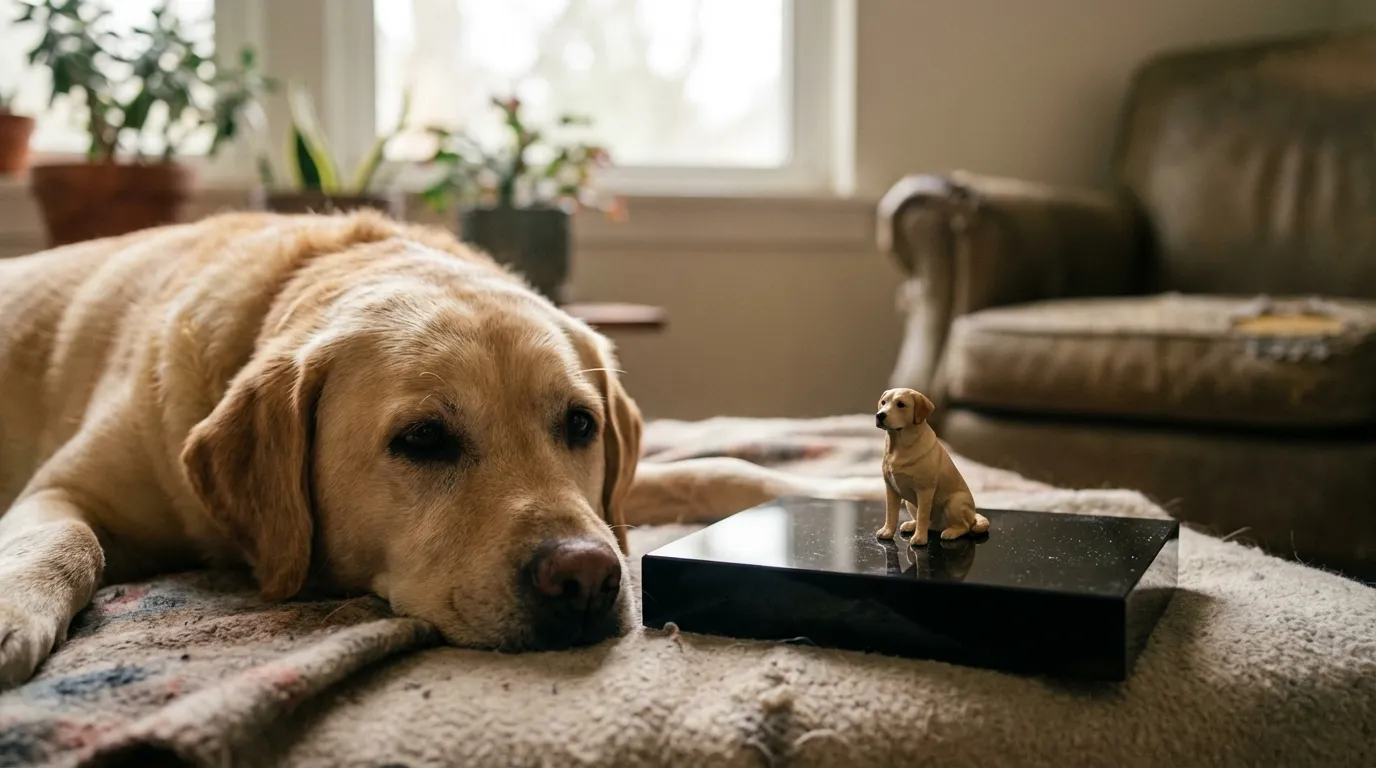
"Grief is like the ocean; it comes on waves ebbing and flowing. Sometimes the water is calm, and sometimes it is overwhelming. All we can do is learn to swim." — Vicki Harrison
The metal steps of the RV feel colder when there isn't a warm, gray-muzzled chin resting on the top stair, watching the campground wake up. For the last six years, your morning coffee on the patio mat was accompanied by the rhythmic thumping of a heavy tail against the tire and the expectant look of a Labrador ready for his morning patrol. Now, the awning casts a shadow over an empty spot on the outdoor rug, and the silence of the rig is louder than the highway ever was.
Traveling with grief isn't just about sadness; it's about navigating a lifestyle built for two, now piloted by one. When your home has wheels, every new destination can feel like you're driving further away from the last place you held them.
In this guide, we'll cover how to navigate the unique challenges of RV life after pet loss, from handling campground questions to finding space-saving ways to honor your co-pilot.
The Physics of Grief in 200 Square Feet
In a traditional house, you can close the door to the spare room. You can avoid the backyard for a few days. But in an RV or van, you are living inside the memory. The physics of grief change when your living room, bedroom, and kitchen are all within arm's reach of where your dog's bed used to be.
We’ve spoken to many nomads who say the hardest part isn't the big moments—it's the muscle memory of the tiny space. You still step over the invisible lump in the hallway. You still reach for the leash when the diesel engine turns off. In a confined space, your body remembers their physical presence even when your mind knows they are gone.
"Grief isn't a problem to be solved. It's a love story that continues after the last chapter."
The counterintuitive truth: Most people try to "fill the space" immediately by rearranging the furniture or buying new rugs. However, we've found that keeping the layout exactly the same for a few weeks can actually reduce anxiety. Your brain is mapping the space based on years of habit; changing the physical layout while processing emotional loss can lead to a sense of disorientation that makes the grief feel more chaotic.
The Relief You Feel (And the Guilt That Follows)
Let’s talk about the emotion almost no RVer wants to admit, but nearly everyone feels: Relief.
When you travel with a senior Labrador, your logistics are grueling. You’re constantly lifting 70 pounds of dead weight up steep entry stairs. You’re planning routes based on veterinary availability rather than scenic views. You’re waking up three times a night to help them navigate a narrow hallway in the dark. You’re stressing about the rig’s temperature every time you need to run into a grocery store.
When they pass, that physical burden vanishes instantly. Suddenly, you can hike that non-dog-friendly trail. You can drive six hours without a potty stop. You can leave the AC off.
And then, the guilt hits you like a blowout on the interstate.
This is normal. Feeling relief that the struggle is over doesn't mean you didn't love them. It means you were carrying a heavy load—both physically and emotionally—out of love. Acknowledging that the "caregiver fatigue" has lifted is not a betrayal of their memory. It is simply the body exhaling after holding its breath for months.
Handling the "Where's Your Co-Pilot?" Question
Campgrounds are social places. Fellow travelers who saw you last season, or friendly neighbors who just want to chat, will inevitably ask, "Hey, didn't you have a dog?" or "Where's the big guy today?"
This can be a devastating ambush when you're just trying to unhook your sewer hose.
Strategies for the Campground Conversation:
- The "Brief and Bright" Method: "He's running free at the Rainbow Bridge now. We miss him, but we're grateful for the miles we had." This signals the topic is closed without being rude.
- The Pre-emptive Strike: If you have a visible memorial decal or a custom figurine on your dashboard, it often communicates the loss silently, allowing perceptive neighbors to offer condolences rather than awkward questions.
- The "Not Today" Lie: It is 100% okay to say, "He's resting inside," if you simply do not have the emotional bandwidth to discuss his death with a stranger in aisle 4. You do not owe your grief to the public.
Memorializing in Miniature: Space-Saving Tributes
When you live in a sticks-and-bricks house, you can plant a tree or dedicate a garden bench. In an RV, weight limits and counter space are premium currency. You can't carry a heavy stone urn or a large framed portrait gallery.
Here is a comparison of memorial options specifically suited for the nomadic lifestyle:
| Memorial Type | Space Required | Durability for Travel | Emotional Impact |
|---|---|---|---|
| Dashboard Figurine | Minimal (3-5 inches) | High (can be secured with museum putty) | High (feels like they are still co-piloting) |
| Window Decal | Zero (Surface area) | High (weatherproof) | Medium (public declaration) |
| Ashes in Jewelry | Wearable | High | High (personal/private) |
| Digital Photo Frame | Low (Wall mounted) | Medium (requires power/mounting) | Medium (visual rotation) |
| Scattering Ceremony | None (Location based) | N/A | High (leaving a piece of them at favorite spots) |
Many of the families we work with choose to create a "traveling shrine" on the dashboard. A small, custom sculpture of their Labrador, secured with museum putty, allows the dog to continue watching the road. It turns the passenger side—often the emptiest feeling part of the cab—back into a space of connection.
"We've seen families heal by holding something tangible. In a moving home, grief needs a steady anchor that doesn't shift with the miles."
— The PawSculpt Team
The Ritual of the Rearview Mirror
There is a specific pain in driving away from the place where your pet took their last breath. It feels like abandonment. As the wheels turn, the distance on the GPS grows, and panic can set in. I am leaving him behind.
To combat this, we recommend the "Soil and Soul" Ritual.
Before you leave the location where they passed (or their favorite campsite), collect a tiny vial of soil or a small rock. Place this in a designated spot in the rig. When you reach your next destination—perhaps a place they would have loved, like a beach in Oregon or a forest in Maine—sprinkle a tiny bit of that soil there.
This reframes the journey. You aren't driving away from them; you are taking them to new places. You are continuing their adventure. This shift in perspective is vital for labrador memorial healing on the road. According to the Association for Pet Loss and Bereavement, creating active rituals helps transition grief from a passive state of suffering to an active state of honoring.
When to Get Back on the Road
If you are stationary when the loss happens, the urge to flee can be strong. The RV feels like a cage. Conversely, if you are moving, you might feel the desperate need to stop and hide.
The 48-Hour Rule: Do not make major travel decisions for two days following the loss. Grief impairs cognitive function, affecting reaction times and judgment—critical skills for driving a 30,000-pound vehicle.
Give yourself permission to stay an extra week. Pay the extra site fee. If you need to scream, drive the tow vehicle to a remote BLM (Bureau of Land Management) spot. The thin walls of an RV park can make you feel like you have to grieve quietly. Find a place where you can be loud.
"The road is long, but you never travel it alone when you carry their memory in your heart."
Moving Forward, Not Moving On
Eventually, you will find yourself laughing at a podcast again. You will see a squirrel and smile, thinking about how your Lab would have nearly taken out the awning support trying to chase it.
You might even consider a new co-pilot one day. And if you do, know that the new puppy isn't replacing the old one. The heart expands; it doesn't trade. But until then, honor the silence on the steps. It’s not empty space. It’s the room they left for you to grow into your new normal.
As you check your tire pressure and pull in the slides, take a glance at that empty seat. They aren't there physically, but in every mile you drive, in every sunset you watch, and in the freedom of the road you both loved—they are right there with you.
Frequently Asked Questions
How do I handle my pet's ashes while traveling in an RV?
Safety is the priority. Avoid ceramic urns that can shatter on bumpy roads. Opt for a wooden box or a metal urn, and secure it to a shelf using museum putty or industrial velcro. If you plan to cross borders (into Canada or Mexico), keep the cremation certificate with your other important documents, as border agents may ask about the contents.Is it normal to hate my RV after my dog died in it?
Absolutely. This is a form of spatial grief. The rig can feel like a container for your sadness. Before you make an impulsive decision to sell the RV (which many regret later), try "resetting" the space. Change the throw pillows, get a new rug, or park in a completely different type of environment (e.g., switch from forest to desert) to break the sensory association.How long should I wait before getting another dog for RV life?
RV life adds a layer of complexity to new pet ownership—housebreaking a puppy in a campground is challenging, and a rescue dog may have anxiety about the constant movement. Wait until you have the emotional patience for training. If you are getting a dog just to fill the silence, it might be too soon. If you are getting a dog because you miss the companionship, you might be ready.What if I can't find a vet on the road for euthanasia?
This is a major fear for nomads. We recommend using resources like the Lap of Love directory, which helps locate mobile veterinarians who can come to your campsite. This allows your pet to pass in their familiar "home" rather than a sterile clinic in a strange town.Ready to Celebrate Your Co-Pilot?
Every mile you traveled together is part of a story worth preserving. Whether you're honoring a senior Labrador who navigated every hiking trail by your side or celebrating the spirit of a pet who loved the open road, a custom PawSculpt figurine captures the unique tilt of their head and the wisdom in their eyes.
Free instant AI preview • 3D artist preview within 7 days • 5 free revisions