
First Spring Shedding: Missing the Mess of Your Late Golden Retriever
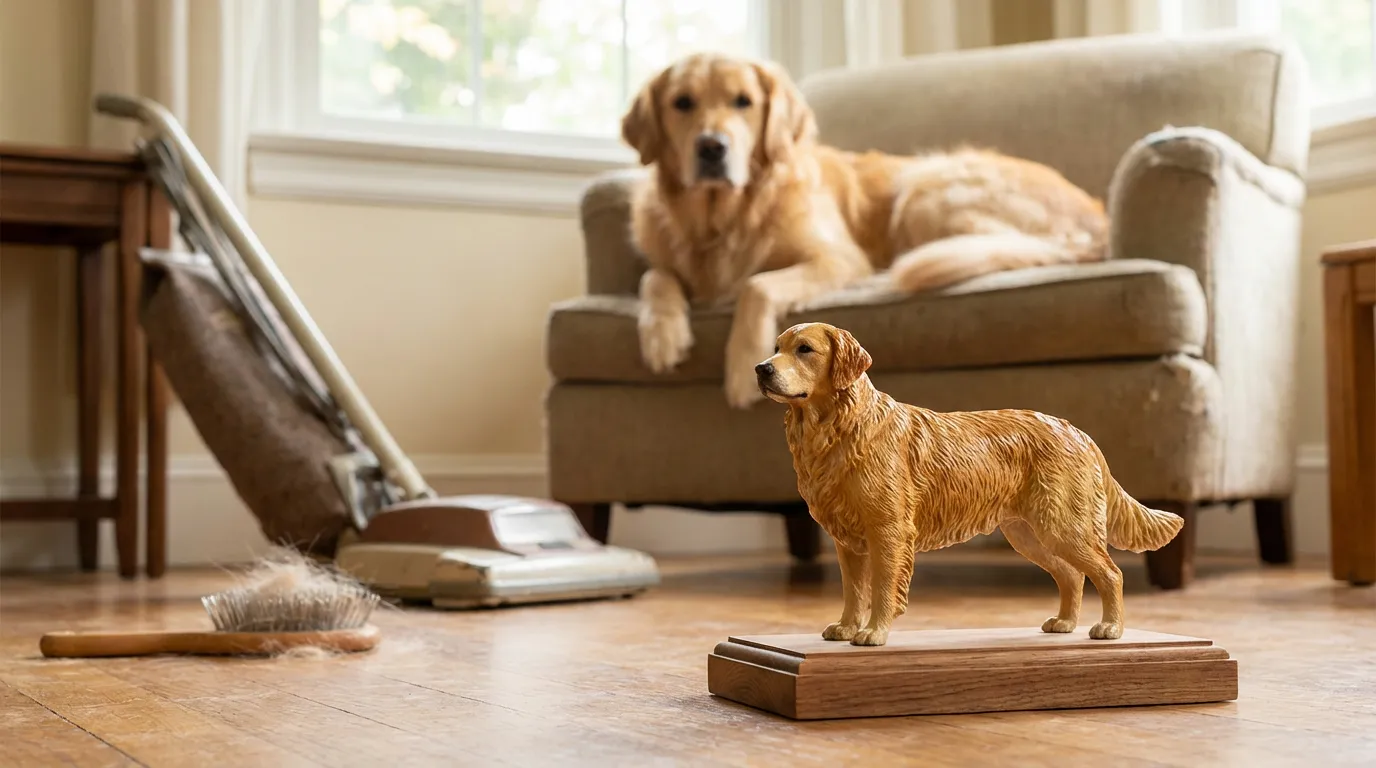
A single Golden Retriever produces enough undercoat during a heavy shedding season to fill three standard pillowcases. It is a biological fact that usually elicits groans and eye-rolls from owners, but today, standing in the center of your bedroom, that fact hits differently. The morning sun cuts across the hardwood floor, illuminating the dust motes dancing in the air, but the familiar tumbleweeds of gold hair are gone. You reach under the bed frame, your hand bracing for the soft, static-cling of fur that has lived there for a decade, but your fingers only find cold, clean wood. It is the first spring in twelve years that you haven't needed to empty the vacuum canister three times a week, and the cleanliness feels less like a luxury and more like an erasure.
Quick Takeaways:
- The "Clean House" Guilt: Feeling bad about enjoying a cleaner home is a common, yet rarely discussed, side effect of pet loss. It does not mean you loved them less.
- Physical Triggers: Finding stray hairs months later isn't just debris; it's a somatic connection to your dog's physical presence.
- Preservation vs. Cleaning: It is perfectly acceptable to save a bag of fur or delay vacuuming specific corners until you are ready.
- Creating Tangible Memories: When photos aren't enough to fill the space, many owners find comfort in a custom pet figurine that captures their Golden's unique stance and spirit.
The Silence of the Vacuum Cleaner
We talk often about missing the bark, the greeting at the door, or the weight on the end of the leash. We rarely talk about missing the mess. But for Golden Retriever owners, the fur—that ubiquitous "Golden Glitter"—was a lifestyle. It was a condiment in your food, a fiber woven into your sweaters, and a permanent texture on your sofa.
When that mess vanishes, it creates a sensory void that is surprisingly painful.
The vacuum cleaner, once a tool of necessity, becomes a symbol of finality. We’ve heard from families who leave the vacuum in the closet for weeks, terrified that sucking up those last few visible hairs under the radiator means removing the last physical evidence that their dog existed in this space. It sounds irrational to the outside world, but grief doesn't follow logic. Cleaning feels like deleting.
There was a comfort in the chore. It was an act of service. You brushed them, you vacuumed after them, you lint-rolled your blazer because of them. Those micro-actions were woven into the fabric of your day. Without them, the day has holes in it.
The Complicated Guilt of a Clean Floor
Here is the emotion that almost no one admits to, but we see it constantly in the messages we receive: The guilt of relief.
You might find yourself sitting on your couch, wearing black leggings, and realizing for the first time in years that you don't look like you rolled in a haystack. You might look at your pristine car upholstery and feel a sudden, sharp pang of satisfaction.
And then, immediately, the shame hits.
How can I be happy about clean car seats when my best friend is gone?
This emotional whiplash is normal. You are not betraying your Golden by appreciating a clean floor. You are simply experiencing the removal of a stressor (constant cleaning) that happened to be attached to the source of your greatest joy. The two are separate. You can hate the shedding and love the dog. The absence of the shedding does not mean you are celebrating the absence of the dog.
One of our clients, Sarah, told us about the first time she dropped a piece of cheese on the kitchen floor three weeks after losing her Golden, Bailey. She instinctively waited for the scramble of paws. When silence followed, she picked up the cheese, threw it away, and then cleaned the spot with disinfectant. "It was so easy to clean," she told us. "And I hated how easy it was. I wanted the mess back."
Navigating "Spring Cleaning Grief"
Spring is particularly cruel for Golden Retriever parents. This is usually the season of the "blow out"—that time of year when tufts of soft, crimped undercoat seem to explode from their flanks.
If you are facing your first spring cleaning without them, the urge to purge might war with the urge to hoard. Here is a counterintuitive insight: Don't clean everything at once.
Most grief guides suggest "keeping busy" or "refreshing your space." We disagree. Radical changes to your environment can shock your system. If you scrub the baseboards, wash the slipcovers, and shampoo the carpets all in one weekend, you wake up Monday morning to a sterile house that smells like lemon pledge and emptiness.
A Gentler Approach to the Leftovers:
- The "Later" Jar: If you find a large clump of fur behind the dresser, and you can't bear to throw it away, don't. Put it in a small glass jar. You don't have to display it, but you don't have to trash it. It buys you time to decide.
Bird Nesting (With Caution): Some people put fur out for birds to nest with. Note: Only do this if your dog was not on topical flea/tick medication, which can be toxic to nestlings.*
- The Winter Coat Surprise: Be prepared for the "time capsule" moments. You will put on a winter coat next November and find a treat in the pocket or a golden hair woven into the wool. These aren't setbacks; they are hellos.
Replacing the Physical Presence
The hardest part about the lack of fur is that fur takes up space. It has volume. It has texture. Photos are flat; they live on screens or behind glass. But the mess your Golden made was tactile.
This is often the point where families come to us at PawSculpt. They aren't looking for a generic statue; they are looking for something that occupies space in the room the way their dog did. They miss the specific way their Golden's tail fanned out (the "feathers") or the unique cowlick on the chest.
We've found that having a tangible object—something you can physically touch—helps bridge the gap between the chaotic mess of a living dog and the sterile silence of a home without one. A custom figurine doesn't shed, and it doesn't need to be vacuumed, but it catches the light on the mantle and casts a shadow. It asserts a presence. It says, I was here, and I mattered.
When the Dust Settles
Eventually, the house will stay clean. You will stop reaching for the lint roller before you walk out the door. The phantom weight on the end of the bed will fade.
This transition doesn't mean you are forgetting. It means the memory is moving from the physical world—the fur, the dirt, the nose prints on the glass—into the internal world.
There will come a day when you find a single, long golden hair woven into the back of a rarely used drawer. It might be three years from now. You won't feel that crushing weight in your chest. You'll pick it up, hold it against the light, and smile at the tenacity of a love that refuses to be completely swept away.
Frequently Asked Questions
Why do I feel guilty about my house being cleaner after my pet died?
This is known as "relief guilt," and it is incredibly common. You are confusing the relief of not having to do a chore (vacuuming/cleaning) with the relief of the pet being gone. They are not the same thing. You can hate the mess and love the dog. Appreciating a clean floor does not negate the grief you feel for your companion.What should I do with my deceased dog's leftover fur?
If throwing it away feels too final, you don't have to. Many pet parents keep a small "tuft" in a glass vial or memory box. There are also artists who can spin dog fur (chiengora) into yarn for bracelets, or felt it into small hearts. If you do choose to discard it, try doing so with a small ritual, thanking them for the warmth they brought to your life.How long does the "phantom pet" sensation last?
You might hear their nails clicking on the hardwood or see a flash of gold out of the corner of your eye for several months. For most people, these sensory hallucinations fade within 1 to 3 months as the brain rewires its predictive patterns. However, returning to specific seasonal triggers—like the first spring shedding season—can briefly bring these sensations back.Is it unhealthy to delay cleaning my house after pet loss?
It is not unhealthy; it is self-preservation. Scrubbing away the scent and physical evidence of your pet can feel like a "second death." If you need to leave the nose prints on the sliding glass door for another month, leave them. Clean when the pain of the mess outweighs the comfort of the memory, not a moment sooner.Honor Their Memory Forever
Your pet's story deserves to be preserved in a way that captures their unique spirit. A custom PawSculpt figurine transforms your cherished memories into a timeless keepsake—every whisker, every marking, every detail that made them irreplaceable.
Free instant AI preview • 3D artist preview within 7 days • 5 free revisions