
Summer Safety: Protecting Your French Bulldog from Heat and Humidity
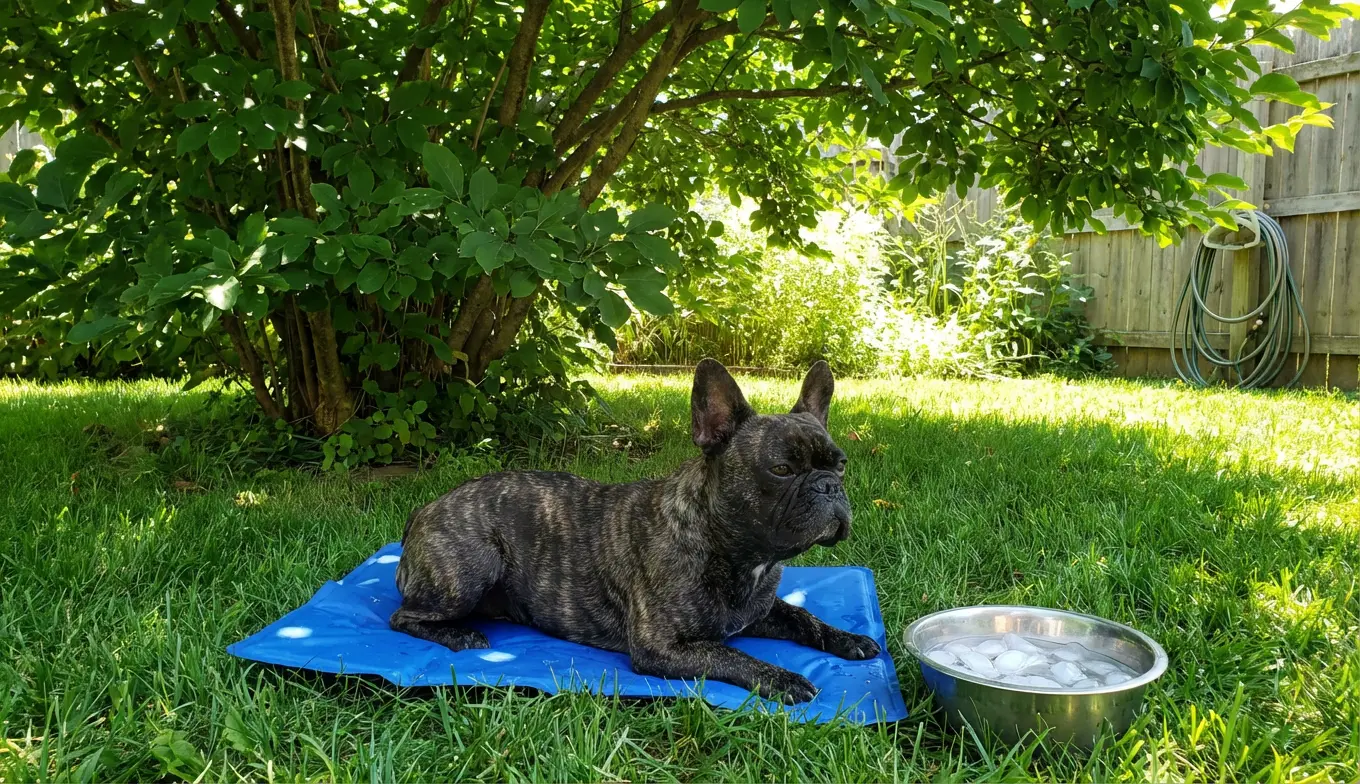
Ten years ago, a summer drive meant rolling the windows down, cranking the radio, and letting the wind whip through the cabin while the dog stuck his head out, ears flapping like flags in a gale. It was chaotic, loud, and carefree. Last Saturday, the scene inside my SUV looked entirely different. The windows were sealed tight to keep the climate control efficient. The radio was low. My eyes weren't just scanning the road; they were darting to the rearview mirror every thirty seconds, checking the backseat thermometer I’d velcroed to the crate. It read 71°F—safe. But I was still listening, straining to hear the specific rhythm of breathing coming from the backseat.
When you love a French Bulldog, summer stops being a season of endless beach days and starts feeling like a three-month risk management exercise. The carefree drives of the past have been replaced by a hyper-vigilance that only brachycephalic breed owners truly understand. We trade wind in our hair for the peace of mind that comes from hearing a steady, unobstructed snore rather than a ragged gasp.
Quick Takeaways:
- The "Rule of 150": If the temperature (Fahrenheit) plus the humidity percentage equals more than 150, it's too dangerous for a long walk.
- Cool form the bottom up: Dogs lose heat through their paws and stomach. Wet towels on the back can actually trap heat; cooling mats are superior.
- Recovery Lag: Frenchies take 3x longer to cool down than they take to heat up.
- Indoor Risks: Sunlight magnified through windows can turn a nap spot into a heat trap within minutes.
The Anatomy of Overheating (It’s Not Just the Nose)
We often talk about the "smushed face" as the culprit, but that’s an oversimplification that can get dogs in trouble. The issue isn't just the short nose; it's the internal plumbing.
Imagine trying to cool down a boiling pot of water by blowing on it through a coffee stirrer. That is essentially what your Frenchie is doing every time they pant. Their soft palates are often elongated, and their tracheas are narrower than other breeds.
Here is the counterintuitive insight that many owners miss: Panting generates heat.
For a Labrador, panting is an efficient cooling mechanism. For a Frenchie, the muscular effort required to move air through that restricted airway generates significant internal body heat. There is a tipping point—usually around 15 minutes of exertion—where the heat generated by the effort of panting exceeds the heat lost through panting. Once they cross that threshold, they enter a thermal runaway cycle that is incredibly difficult to reverse without intervention.
We’ve seen photos sent to us for custom pet figurines where the dog looks happy, with a wide, tongue-lolling grin. But to the trained eye, a tongue that is overly wide and spoon-shaped at the end isn't a smile—it's a sign of respiratory distress. Learning to distinguish a "happy pant" from a "survival pant" is the most critical skill you can develop.
The Silent Killer: Humidity vs. Heat
Most guides will tell you to watch the thermometer. We’re telling you to watch the hygrometer (humidity gauge).
A dry 85°F day in Arizona might actually be safer for your Frenchie than a 75°F day in Florida with 90% humidity. Why? Because dogs rely on evaporation from their tongue and nasal passages to cool blood. When the air is saturated with moisture, evaporation stops working.
We recommend the "Rule of 150" for french bulldog summer care. Add the temperature (in Fahrenheit) to the humidity percentage.
- < 120: Safe for normal activity.
- 120 - 150: Use caution, limit exertion.
- > 150: Potty breaks only. No walks.
For example: 80°F + 80% humidity = 160. That is a red zone day, even if 80°F doesn't feel "that hot" to you.
Strategic Cooling: What Actually Works
There is a common misconception that dumping ice water on an overheating dog is the best rapid response. Veterinary professionals warn against this. Ice-cold water constricts the blood vessels (vasoconstriction) in the skin, which actually traps the superheated blood in the body's core, causing the internal temperature to spike further.
Instead, focus on "conduction cooling."
The Wet Shirt Mistake:
Don't just drape a wet towel over your Frenchie's back and leave it there. As the water in the towel warms up to the dog's body temperature, it creates a sauna effect, trapping heat against the skin. If you use wet towels, you must have a fan blowing on them to create evaporation, or change them constantly.
- Use cool (not ice) water on the paws.
- Rub rubbing alcohol on the paw pads (it evaporates faster than water, pulling heat away quickly—just ensure they don't lick it).
- Use a gel-based cooling mat indoors.
Speaking of indoors, we have to mention the "Sunbeam Trap." Frenchies are comfort seekers. They will instinctively curl up in a warm sunbeam on the carpet. In winter, this is cute. In July, the glass of your patio door acts as a magnifier. A dog can overheat while dead asleep. During peak summer months, we recommend keeping the shades drawn or blocking off sun-drenched areas of the house.
Capturing Summer Memories Safely
Despite the dangers, summer is when we get the best lighting for photos. The golden hour light in the backyard or the early morning light on the porch highlights the velvet texture of a Frenchie's coat beautifully.
This is often when our customers snap the reference photos they eventually send to us at PawSculpt. There is something about the way a Frenchie sits—that unique "frog dog" sploot—that defines their personality.
If you are planning a summer photo session (or just want cute Instagram content), keep it short. Five minutes of shooting, ten minutes of cooling. If you capture that perfect moment—a head tilt, a goofy grin, or a regal stance—consider preserving it. While photos live on your phone, a custom dog figurine brings that physical presence into your home permanently. It’s a way to celebrate their vitality without risking their health in the heat.
The "Recovery Lag" Phenomenon
This is the part that catches even experienced owners off guard. You take your Frenchie for a walk. They seem fine. You get home, give them water, and sit down. Ten minutes later, they are panting harder than they were on the walk.
This is the "Recovery Lag." Because their cooling mechanisms are inefficient, their body temperature may continue to rise for a short period after exercise stops.
- Active Monitoring: Stay with them for the first 20 minutes post-walk.
- Forced Cool Down: Even if they don't look distressed, wipe their paws with a cool cloth.
- Hydration: Offer small amounts of water frequently, rather than letting them guzzle a huge bowl (which can lead to bloat or regurgitation).
If the panting doesn't subside or slow down after 10-15 minutes of rest in a cool room, this is a warning sign. If their gums turn from bubblegum pink to brick red, purple, or blue, that is an immediate medical emergency.
A Note on Anxiety and Heat
Here is a factor rarely discussed in brachycephalic dog safety guides: Anxiety accelerates overheating.
If your Frenchie gets worked up when the doorbell rings, or gets stressed in the car, their body temperature rises rapidly regardless of the ambient temperature. A stressed Frenchie in a 75-degree car is at higher risk than a calm Frenchie in an 80-degree room.
During summer, managing your dog's emotional state is part of managing their thermal state. If you know a situation will stress them out (like a crowded vet waiting room or a chaotic family BBQ), preemptively cooling them or removing them from the situation is vital.
The New Normal
We’ll be honest—owning a Frenchie in the summer can feel like a part-time job. You become a meteorologist, a nurse, and a bodyguard all at once. The carefree days of just opening the door and letting the dog run are gone.
But when you look at that little face—the one that looks at you with absolute, unadulterated adoration—you know it's worth the extra effort. The AC bill might be higher, and your walks might be shorter, but the safety of your best friend is non-negotiable.
So, keep the car cool. Watch the humidity. And listen for that snoring. In the heat of July, a steady, rhythmic snore from the cool comfort of the living room is the most beautiful sound in the world.
Frequently Asked Questions
What is the maximum safe temperature for a French Bulldog?
While every dog is different, we generally consider anything above 80°F (26°C) to be the danger zone. However, the thermometer tells only half the story. High humidity drastically lowers the safe temperature threshold. On a humid day, even 70-75°F can be hazardous if the sun is direct. Always factor in the humidity index.Can French Bulldogs swim to cool down?
You should never assume a Frenchie can swim. Their physiology—large heavy heads and dense muscular bodies—makes them naturally sink. While water is excellent for cooling, stick to shallow kiddie pools where the water only reaches their belly, or ensure they are wearing a top-rated canine life jacket and are within arm's reach at all times.Do cooling vests actually work for Frenchies?
They can be helpful, but you need the right type. Standard "evaporative" vests (which you soak in water) work well in dry heat (like Arizona) but can essentially become warm wet blankets in high humidity (like Florida). For humid areas, we recommend cooling vests that utilize frozen gel pack inserts, as they rely on conduction rather than evaporation to lower body temperature.What are the early signs of heatstroke that owners often miss?
Before a dog collapses, there are subtle signs. Watch for "spoon tongue" (where the tongue gets very wide and curls at the tip), thick ropy saliva, and a change in the sound of their panting from a rhythm to a rasp. If their gums change from pink to dark red or purple, they are in critical distress.Celebrate Your Pet's Unique Personality
Every pet has quirks and characteristics that make them one-of-a-kind. A custom PawSculpt figurine captures those details—the way they tilt their head, their favorite pose, the spark in their eyes.
Free instant AI preview • 3D artist preview within 7 days • 5 free revisions