
The Quiet Dignity of the Last Walk: Honoring a Greyhound's Final Lap
The hallway runner used to be a launchpad, a strip of fabric that could barely contain the explosive energy of a 45mph sprinter eager for the morning air. Now, it is just a rug where he struggles to find traction, the silence amplifying the absence of that rhythmic, frantic click-click-slide that once signaled the start of our day. The contrast between the blur of motion he used to be and the stillness he has become is the loudest thing in the house.
Quick Takeaways
- The "Athlete's Decline" — A Greyhound's loss of mobility hits harder because their identity is built on speed; acknowledge this specific pain.
- Dignity over Duration — For sighthounds, quality of life often means the ability to stand and move without fear; prioritize this over counting days.
- The "Lean" Legacy — Their physical need for contact doesn't fade; maximize touch and "leaning" time in the final weeks.
- Preserving the Pattern — Complex markings like brindle are best captured through PawSculpt's color-accurate 3D printing rather than traditional photos.
The Athlete's Paradox: When the Racing Stops
We need to talk about the specific heartbreak of loving a Greyhound. While losing any dog is devastating, watching a sighthound age is a unique dismantling of physics. You aren't just watching a pet get old; you are witnessing a finely tuned biological machine lose its primary function.
For years, your life was defined by their explosive bursts of energy. The "zoomies" in the backyard, the impossible angles they achieved while "roaching" on the sofa, the way their deep chests heaved after a sprint. They are creatures of extremes: 0 to 45 mph in seconds, and then a comatose nap for 18 hours.
When that engine starts to fail, the emotional toll on the owner is complex. You might feel a profound sense of injustice. Why should legs designed for such magnificence be the first things to betray them?
The Osteosarcoma Reality
We have to address the elephant in the room. If you are reading this, you likely know the statistics. Osteosarcoma (bone cancer) is the cruel thief that takes far too many Greyhounds. It moves fast. Often, the transition from "he seems a little sore" to a crisis point happens in days, not months.This speed forces Greyhound owners to make decisions under extreme pressure. Unlike kidney failure or heart disease, which can have long, slow declines, the structural compromise of a Greyhound's leg is an immediate emergency.
The Counterintuitive Insight:
Most people think "fighting" for their dog means extending life at all costs. But with a Greyhound, whose bone density is different from other breeds, the bravest thing you can do is often to stop the race before the finish line becomes traumatic. A fracture is a terrifying end. Choosing a peaceful passing before the bone breaks is not "giving up." It is the ultimate protection.
"We cannot protect them from death, but we can protect them from fear. That is the final bargain of the leash."
The Emotional Landscape: Relief is Not Betrayal
Here is the truth that few pet owners want to admit, but almost all feel: There is a wave of relief when the end finally comes.
And immediately following that relief comes a crushing weight of guilt.
You might think, How can I be relieved that my best friend is gone? But you aren't relieved they are gone. You are relieved that the vigilance is over. You are relieved that you no longer have to watch every step they take, terrified that this is the step that causes a break. You are relieved that the sound of a whimper in the night has stopped.
This is especially potent with Greyhounds. Because they are so stoic—often hiding pain until it is excruciating—owners become hyper-attentive. You become a nurse, a physical therapist, and a guard. When that duty ends, the exhale you release is natural. It doesn't mean you loved them less. It means you loved them enough to carry their anxiety for them, and now you can both put it down.
Planning the "Last Walk" (Or The Last Lie-Down)
The concept of a "last walk" is a romanticized ideal in dog culture. We imagine a slow stroll through the park, sniffing every tree. But for a Greyhound with compromised mobility, a walk might be a source of stress, not joy.
Instead of forcing a walk, consider the "Last Sunbeam."
Greyhounds are solar-powered. Their thin skin and low body fat make them seekers of warmth. If their legs are failing, bring the outdoors to them. Open the patio doors. Lay their thickest, softest duvet in a patch of sunlight.
Sensory Details to Focus On:
- The Food: Greyhounds are notorious foodies. If they are still eating, this is the time for the "forbidden" menu. Chocolate is obviously out until the very last second, but a rare steak, a cheeseburger, or vanilla ice cream? Yes.
- The Touch: A Greyhound's love language is "The Lean." They press their weight against your thighs to say "I am here." When they can no longer stand to lean, you must lean into them. Spoon them. Let them feel the weight of your body against theirs.
- The Sound: If they were racers, they might associate loud noises with stress. Keep the environment quiet. Soft classical music or just the sound of your voice is enough.
Memorializing the Unique Geometry of a Greyhound
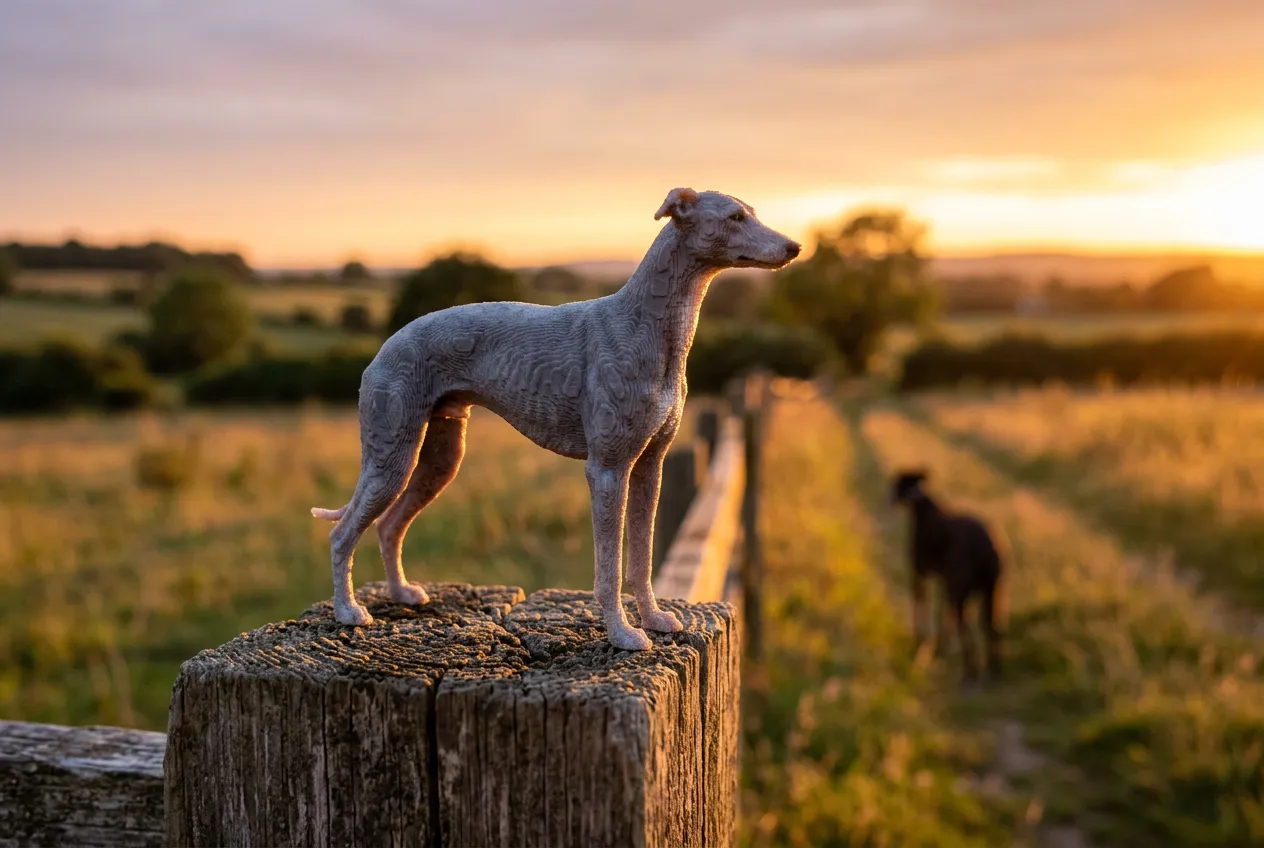
When the silence settles in the hallway, the desire to hold onto something tangible becomes overwhelming. We've found that Greyhound owners, in particular, struggle with generic memorials. A generic "dog angel" statue doesn't capture the impossible aerodynamics of a sighthound's head or the specific way their ears fold back (the "rose ear").
This is where specificity matters. A Greyhound isn't just a dog; they are a collection of angles and curves that defy logic.
The Challenge of the Coat
Greyhounds often have complex coat patterns—brindles, ticking, and specific patches of white. Traditional memorials often fail here.- Photography: Photos are great, but they are flat. You can't see the depth of the chest.
- Paintings: Paintings capture color, but not the tactile curve of the spine.
This is why we utilize full-color 3D printing technology at PawSculpt. We don't hand-paint our figurines. Why? because even the most skilled painter struggles to replicate the exact, chaotic beauty of a brindle coat with a brush.
Our process uses a voxel-level injection of color directly into the resin. This means the brindle pattern isn't a layer of paint sitting on top of the model; it is integral to the material itself, just as the pigment is integral to your dog's fur. We digitally sculpt the deep chest, the long tuck-up, and the slender snout based on your photos, then print it in vibrant, permanent color.
"We've seen families heal by holding something tangible. Grief needs an anchor, and for a Greyhound owner, that anchor is often the specific silhouette of that long, elegant nose."
— The PawSculpt Team
The Pack Dynamic: When One Leaves
Greyhounds are rarely solitary creatures. They are pack animals, often raised in kennels with other dogs from puppyhood. If you have a multi-dog household, the loss of one ripples through the others.
Signs of Grief in Surviving Greyhounds:
| Sign | Description | What to Do |
|---|---|---|
| The Search | Pacing the house, checking the lost dog's bed. | Do not discourage it. Let them realize the absence on their own. |
| The Howl | Sudden vocalization, often triggered by sirens or nothing at all. | Join them? Sometimes comforting them quietly is better. |
| Appetite Loss | Refusing meals or eating slowly. | Add high-value toppers (broth, chicken) but stick to the routine. |
| Clinginess | Following you room to room more than usual. | Increase physical touch. They need "The Lean" just as much as you do. |
Pro Tip: If you are euthanizing at home (which we highly recommend for anxious Greyhounds), allow the other dogs to sniff the body afterward. It sounds morbid to humans, but for dogs, it provides immediate closure. They understand death; they do not understand disappearance.
Tangible Tributes: Beyond the Urn
How do you honor a dog whose life was defined by speed?
- The Collar Shadow Box: Greyhound collars are iconic—wide, often tasseled or decorative (Martingales). They are art pieces. Don't hide them in a drawer. Frame the collar with their racing muzzle or a photo of their "gotcha day."
- Donate the Coat: Greyhounds have wardrobes better than most humans. Their winter coats are specialized and expensive. Donating your dog's coats to a local Greyhound rescue is a powerful way to let their warmth protect another dog.
- The Custom Figurine: As mentioned, a PawSculpt custom figurine offers a presence on your shelf that a photo cannot. It captures the light hitting their shoulder blades in a way that 2D media misses.
Moving Forward: The Quiet House
The hardest part of losing a Greyhound is the space they leave behind. For such skinny dogs, they occupy a massive amount of square footage. They are "furniture dogs." You will look at the sofa and see the empty spot where a tangle of long legs used to be.
You will miss the "chatter"—that weird, vibrating teeth-clicking sound they make when they are happy. You will miss the nose-pokes.
It is okay to not be okay. It is okay to feel that relief we talked about. And it is okay to eventually open your heart to another needle-nosed alien. The Greyhound community often says they are "like potato chips—you can't have just one." But that doesn't mean the one you lost wasn't the whole world.
They ran their race. They crossed the finish line. And now, they can rest.
Frequently Asked Questions
How do I know when it is time to say goodbye to my Greyhound?
This is the hardest question. With Greyhounds, focus on mobility and dignity. Can they get up to greet you? Can they go outside without panic? If the pain from osteosarcoma or arthritis is causing them to withdraw from the family or struggle to stand, the kindest choice may be to help them pass before a catastrophic bone fracture occurs.Why do Greyhounds chatter their teeth?
If you're remembering your dog, you likely miss this sound. Teeth chattering in Greyhounds is almost always a sign of pure joy or affection. It’s their version of a cat's purr. It’s a beautiful memory to hold onto—a sign that they felt safe and happy with you.What is the best way to memorialize a Greyhound?
Because they have such unique gear, many owners create shadow boxes with their wide Martingale collars and racing muzzles. However, for a lifelike tribute, custom 3D printed figurines are increasingly popular. They capture the specific "roach" back or "sphinx" pose that is so characteristic of the breed.Is osteosarcoma common in Greyhounds?
Unfortunately, yes. It is one of the leading causes of death for the breed. It is aggressive and moves fast. If your Greyhound develops a sudden limp that doesn't resolve with rest, see a vet immediately for X-rays. Knowing the enemy early gives you time to manage pain and plan a dignified exit.Ready to Celebrate Your Pet?
Every pet has a story worth preserving, but a Greyhound's story is written in the unique elegance of their form. Whether you are honoring a beloved sprinter who has crossed the rainbow bridge or celebrating your couch potato's unique personality, a custom PawSculpt figurine captures those details—from the brindle coat to the rose ears—that make your hound one-of-a-kind.
Free instant AI preview • 3D artist preview within 7 days • 5 free revisions