
The Space at Your Feet: Cooking Dinner After Losing a 'Velcro' Vizsla
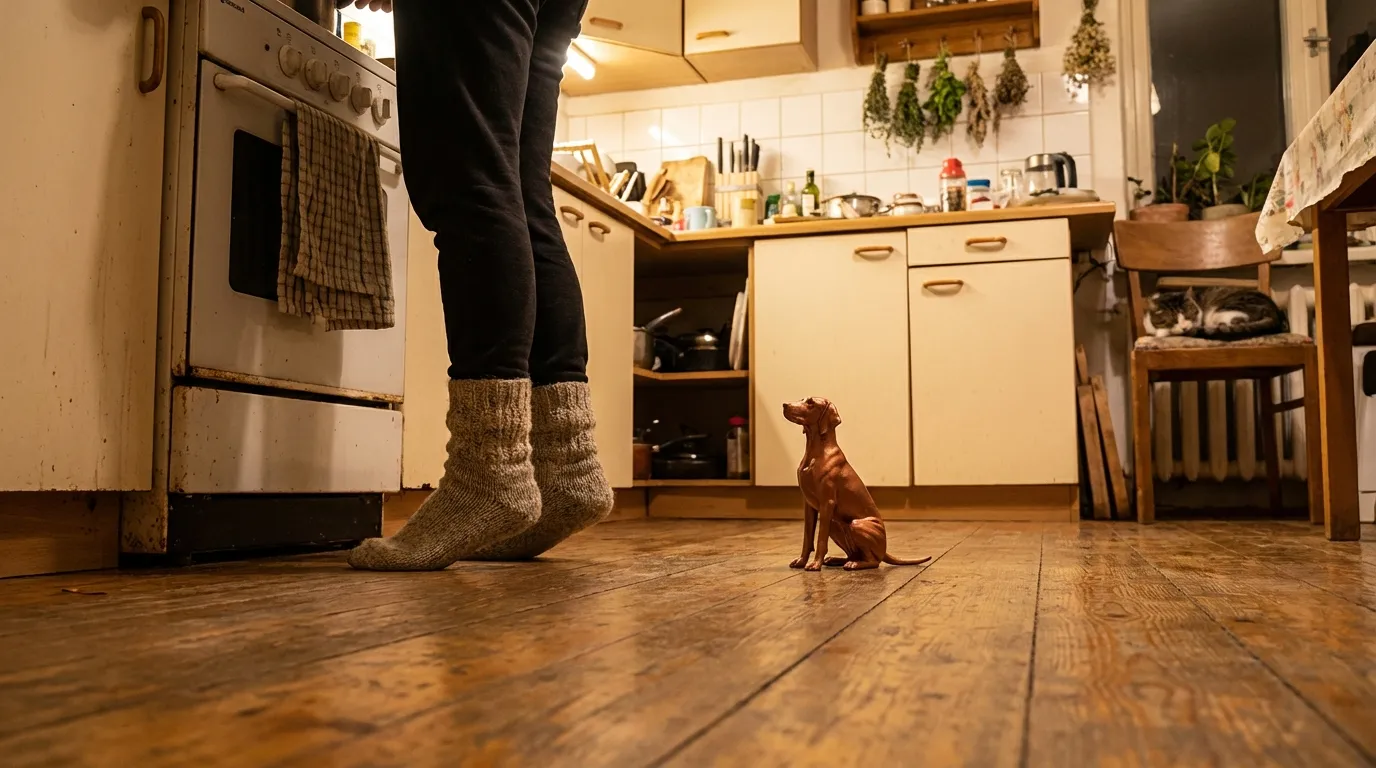
The sharp thwack of the knife against the cutting board echoed too loudly, missing the answering click-clack of nails on the hardwood. For the first time in twelve years, I didn't have to shuffle my feet to avoid tripping over the warm weight that defined our life with velcro dog loss.
Quick Takeaways
- Physical habit loops — your body will instinctively "step over" a dog that isn't there for weeks.
- The "Relief-Guilt" Trap — feeling relief at having personal space is normal, even if it makes you feel terrible.
- Kitchen rituals — repurpose their feeding station into a small, respectful memorial corner.
- Tangible presence — placing a custom pet figurine near the stove can help ground you during difficult meal prep times.
The "Velcro" Void: Why the Kitchen is the Hardest Room
Most grief guides talk about the empty bed or the unused leash. But for those of us who loved Vizslas, Weimaraners, or other "Velcro" breeds, the grief hits hardest in the dynamic spaces—specifically, the kitchen.These weren't just dogs that slept on the couch; they were supervisors. They were sous-chefs who specialized in floor cleanup. They were physical obstacles we learned to navigate with a muscle memory so deep it feels like a phantom limb when they're gone.
We worked with a customer recently who told us she couldn't bake for three months after her Vizsla passed. "I dropped a piece of cheese," she said, "and I just stood there waiting for the vacuum sound. When it didn't come, I had to bend down and pick it up myself. That silence broke me."
The Phantom Step
You know the move. The "Vizsla Shuffle." It’s that half-slide, half-step you do while carrying a pot of boiling water to ensure you don't trample the 50-pound ginger shadow glued to your calves.When that physical feedback loop is broken, your body doesn't get the memo immediately. You might find yourself:
- Checking behind you before backing up from the sink.
- Stepping high over a threshold where they used to lay.
- Saving the "crusts" of your sandwich automatically.
This isn't just sadness; it's a neurological glitch. Your brain has wired the presence of your dog into your daily motor functions. Untangling that wiring takes longer than the initial wave of sorrow.
"Grief for a velcro dog isn't just emotional; it's a physical rehabilitation of how you move through your own home."
The Secret Guilt of Personal Space
Here is the counterintuitive truth that few pet owners admit, but we hear it often in our community: There is a moment of relief, and it feels awful.You turn around with a hot baking sheet and... the path is clear. You don't have to worry about a tail getting caught in the fridge door. You can eat a snack on the couch without a wet nose nudging your elbow.
For a split second, the ease of movement feels good. And then, almost instantly, the guilt crashes down. How can I be relieved? I would give anything to trip over them again.
Please hear this: This reaction is normal. Caring for a high-attachment animal requires constant, low-level vigilance. When that vigilance is no longer needed, your nervous system exhales. It doesn't mean you loved them any less. It just means your body is recognizing a change in load.
Rewiring the Dinner Routine
Dinner time is often the "witching hour" for vizsla memorial grief. The biological rhythm of the house is disrupted. Here is what we’ve found helps navigate those empty evenings.1. Change the sensory input
If the silence of the chopping board is too much, change the audio landscape. Put on a podcast or music before you start cooking. You need to fill the sonic void that the click-clack of their nails used to occupy.2. The "Tribute Bite"
One family we know kept a small ceramic bowl on the counter. Every time they cooked, they put the usual "dog tax"—the carrot end, the piece of gristle—into the bowl. At the end of the night, they took it to the garden and buried it near their dog's favorite spot. It turned a painful habit into a purposeful ritual.3. Reclaiming the Floor Space
The empty spot where the food bowl sat can feel like a black hole. Don't just leave it empty.| Memorial Strategy | Emotional Impact | Best For |
|---|---|---|
| The "Shrine" | High visibility, constant reminder | Owners who need to see their pet daily |
| The Plant | Symbolizes new life, fills the space | Those who need a softer transition |
| The Empty Space | High pain, eventual acceptance | Those who prefer "ripping the band-aid off" |
| The Figurine | Comforting presence, tangible | Those who miss the look of the dog nearby |
When Photos Aren't Enough
We live in a digital age where we have thousands of photos of our pets. But for a Velcro dog, a photo on a screen often feels flat. It lacks the dimension that these dogs occupied. They were 3D beings who took up 3D space.This is where we see the profound impact of daily routine grief management through physical objects.
"We've seen families heal by holding something tangible. Grief needs an anchor, especially for dogs that were physically attached to us."
— The PawSculpt Team
At PawSculpt, we use advanced full-color 3D printing technology to create figurines that do more than just look like a generic breed. Because we digitally sculpt based on your specific photos, we can capture the specific way your Vizsla sat with one hip rolled under, or the unique white patch on their chest.
Unlike hand-painted miniatures which can sometimes lose the fine texture of fur, our full-color resin 3D prints capture the gradient of that rust-gold coat directly in the material. It allows you to place a small, physical representation of them on the windowsill above the sink—right where they used to watch you peel potatoes.
Moving Forward, Not Moving On
There is a difference. Moving on implies leaving them behind. Moving forward means carrying them with you, just in a different way.The space at your feet will eventually feel less empty. The "Vizsla Shuffle" will fade from your muscle memory. But the love that created those habits? That stays.
According to the American Kennel Club, Vizslas are defined by their desire to be close. They don't just want to be near you; they want to be on you. Losing that intensity of connection leaves a massive void.
Don't rush to fill it. Cook dinner slowly. Cry into the pasta if you have to. And if you catch yourself stepping over a ghost dog in the middle of the kitchen, don't correct yourself. Take it as a sign that for a long time, you were the center of someone's entire world.
Frequently Asked Questions
Why is the grief for a "velcro" dog different?
Grief for clingy breeds involves breaking physical habits, not just emotional bonds. Your body is accustomed to their constant physical proximity—touching your leg, sitting on your feet—which creates "phantom" sensory experiences. You are literally relearning how to move through your home without them.How long does the "phantom dog" feeling last?
Research suggests that neurological habit loops typically take anywhere from 21 to 66 days to reset. However, for a pet you had for over a decade, you may instinctively step over where they used to lie or listen for their nails on the floor for several months.Is it normal to feel relief after a high-needs dog passes?
Yes, absolutely. This is often called "caregiver relief" and is almost always followed by a wave of guilt. It is a biological response to a reduction in constant vigilance and responsibility. It does not mean you didn't love them; it means your nervous system is resting.What is the best way to memorialize a dog in the kitchen?
Since the kitchen is a high-traffic area, keep it simple. Many owners create a small station where the food bowl used to be. A custom figurine, a resilient potted plant (like a Snake Plant), or a small framed photo can "hold the space" so it doesn't feel jarringly empty every time you walk in.Ready to Celebrate Your Pet?
Every pet has a story worth preserving, especially the ones that followed us into every room. Whether you're honoring a beloved "velcro" companion who has crossed the rainbow bridge or celebrating your current shadow, a custom PawSculpt figurine captures the posture and personality that made them yours.
Free instant AI preview • 3D artist preview within 7 days • 5 free revisions